9 Best Happiness Apps For Your Phone
| App Name | Best For | Key Features | AC Rating | Pricing |
|---|---|---|---|---|
| Life7 | Complete mental wellness | Binaural beats, guided meditations, CBT therapy, sleep stories | 4.8/5 | Free trial, weekly/monthly/yearly plans |
| Happify | Science-based happiness activities | Positive psychology games, resilience tracks, mood tracking | 4.5/5 | Free basic, premium subscription |
| Calm | Sleep and relaxation | Sleep stories, celebrity narrations, masterclasses | 4.6/5 | Free trial, annual subscription |
| Headspace | Guided meditation beginners | Structured courses, animations, focus music | 4.5/5 | Free trial, monthly/annual plans |
| Insight Timer | Free meditation content | 100,000+ free meditations, community features, live events | 4.7/5 | Free, optional premium |
| Five Minute Journal | Quick daily gratitude | Morning/evening prompts, photo attachments, mood tracking | 4.4/5 | Free basic, premium subscription |
| Gratitude | Gratitude journaling and affirmations | Vision boards, daily prompts, voice recording | 4.5/5 | Free basic, premium subscription |
| SuperBetter | Building mental resilience | Gamified challenges, power-ups, quests | 4.3/5 | Free basic, premium subscription |
| Three Good Things | Simple nightly reflection | Minimalist design, daily prompts, no ads | 4.4/5 | Free |
#1. Life7 – Best for Complete Mental Wellness
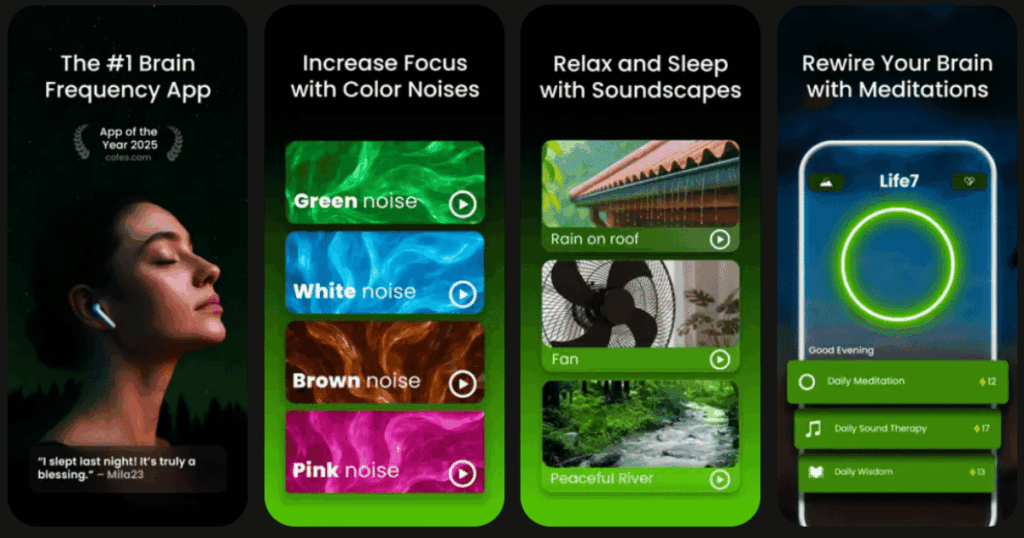
Life7 is the ultimate happiness app that covers everything you need for mental wellness in one place. This app combines meditation, sleep support, therapy techniques, and mood tracking into a single platform. With over 312 million meditation minutes logged and 1200+ editorial mentions, Life7 has proven itself as a leader in the wellness space.
What makes Life7 stand out is its incredible variety. You get access to binaural beats, solfeggio frequencies, and brain wave music. There are also breathing exercises, hypnotherapy sessions, and cognitive behavioral therapy tools. The app even offers vagus nerve stimulation and transcendental meditation for deeper healing.
Key Features:
- Green, white, brown, and pink noise plus 432 Hz and 528 Hz frequencies for deep relaxation
- SOS sessions designed to calm anxiety and panic attacks instantly
- Gamified approach where you earn XP and unlock premium soundscapes through meditation
What I like: I love how Life7 offers something for every mood and situation. The daily check-ins keep me on track, and the streak feature motivates me to stay consistent. The 8D sleep audio is unlike anything I’ve tried before. It feels like the sound moves around my head, which helps me drift off faster. The Backdrop Mode is also genius because I can mix soundscapes with sleep stories for a custom experience.
What I don’t like: The free content is a bit limited compared to what you unlock with premium. It would be nice to have more free sessions to try before committing to a subscription.
Pricing: 7-day free trial available. Weekly, monthly, and yearly subscription plans offered. Frequent special offers available.
Platforms: iOS and Android
#2. Happify – Best for Science-Based Happiness Activities

Happify uses science-based activities and games to help you reduce stress, overcome negative thoughts, and build greater resilience. The app is built on techniques developed by leading scientists in positive psychology, mindfulness, and cognitive behavioral therapy.
The app works by having you choose specific tracks based on your goals. Each track has activities, games, and writing exercises designed to shift your mindset over time. Users can earn medals for completing exercises as they work through the program.
Key Features:
- Interactive games and activities based on positive psychology research
- Personalized tracks for specific goals like conquering negative thoughts or building confidence
- Progress tracking with happiness scores and insights
What I like: I appreciate how Happify makes working on my mental health feel like a game. The activities are quick and fun, which makes it easy to stick with. The tracks are really well designed and cover specific issues I actually deal with. Seeing my progress over time keeps me motivated.
What I don’t like: The free basic plan includes limited access to tracks. Some of the best content requires the premium subscription, which can feel frustrating when you’re just getting started.
Pricing: Free basic plan with limited features. Premium subscription available for full access to all tracks and insights.
Platforms: iOS and Android
#3. Calm – Best for Sleep and Relaxation
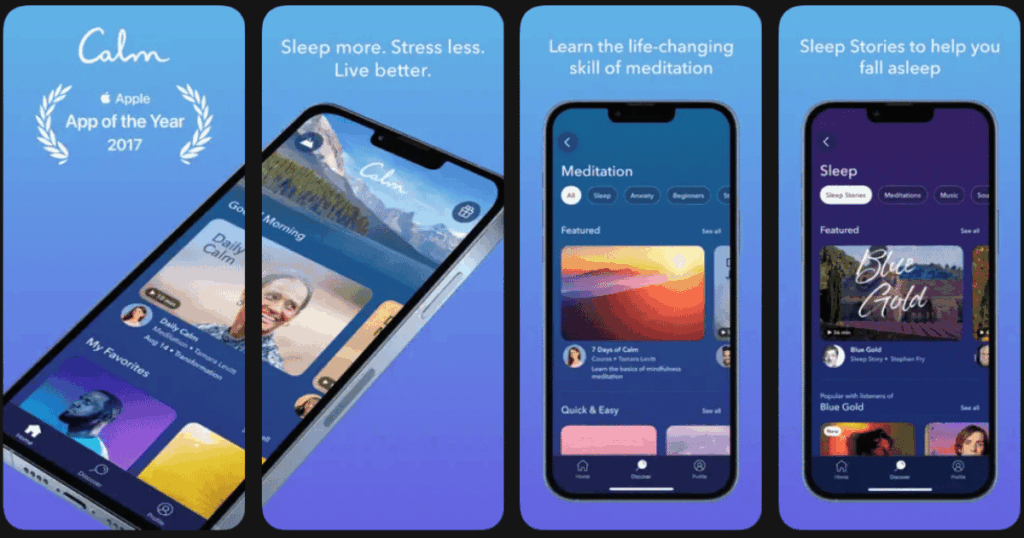
Calm is the #1 mental health app designed to help you manage stress, sleep better, and live a happier, healthier life. The app is especially famous for its Sleep Stories feature, which are bedtime stories for adults narrated by celebrities.
With over 500 Sleep Stories in the library, there are options for both adults and kids. Celebrity narrators include big names like Harry Styles and Matthew McConaughey.
Key Features:
- Hundreds of hours of guided meditation covering anxiety, stress, sleep, and more
- Exclusive music tracks for focus, relaxation, and sleep with new music added weekly
- Masterclasses taught by world-renowned experts
What I like: The Sleep Stories are absolute game changers for me. I used to struggle falling asleep for hours, but now I drift off within minutes. Parents have reported that Calm’s sleep stories helped improve their kids’ sleeping patterns. The variety of meditation topics means there’s always something that fits my mood.
What I don’t like: The aesthetic may not be for everyone, and some find the interface boring compared to more colorful alternatives. Also, the daily meditations are about 10 minutes long, which might feel too long for beginners.
Pricing: Calm costs monthly or annually and comes with a seven-day free trial. Lifetime membership also available.
Platforms: iOS and Android
#4. Headspace – Best for Guided Meditation Beginners
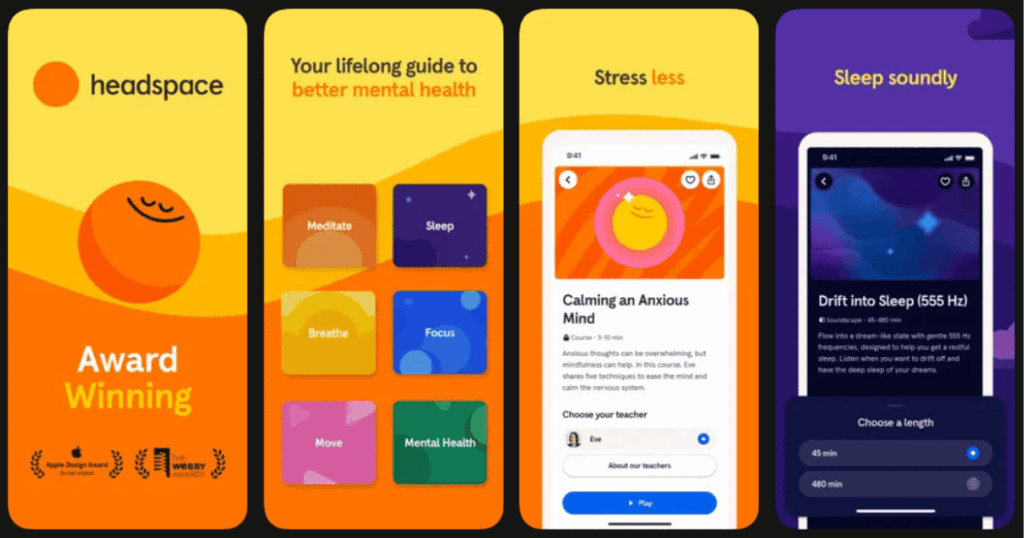
Headspace is a leading meditation app that aims to improve your happiness and well-being through mindfulness. It offers guided meditation sessions, mindfulness practices, and sleep aids.
The app takes a very structured approach to teaching meditation. This makes it perfect for people who have never meditated before and want clear guidance on how to start.
Key Features:
- Animated videos that explain meditation concepts in simple terms
- Structured courses that build your skills step by step
- Focus music and movement exercises for variety
What I like: Headspace’s friendly and straightforward approach makes meditation accessible and enjoyable. The animations are cute and actually help explain what meditation is supposed to feel like. The structured courses gave me a clear path to follow, which reduced my anxiety about doing it wrong.
What I don’t like: Headspace uses the same five meditation teachers over and over again, which can give the app a monotonous feel. After a while, I started craving more variety in voices and teaching styles.
Pricing: Free trial available. Monthly and annual subscription plans. Lifetime option also offered.
Platforms: iOS and Android
#5. Insight Timer – Best for Free Meditation Content

With 100+ new free guided meditations and sleep tracks added daily, more meditation is practiced on Insight Timer than anywhere else. This app offers an incredible library without forcing you into a paid subscription.
The app offers yoga, mood tracking, private mentoring, and workshops. It started as a simple meditation timer but has grown into a full community platform.
Key Features:
- Access to over 190,000 guided meditations and music tracks
- Live events like yoga and meditation sessions with real teachers
- Customizable meditation timer for unguided practice
What I like: Insight Timer holds one of the biggest free guided meditation libraries out of any mindfulness app available. I love that I can explore so many teachers and styles without paying anything. The community features make me feel connected to other meditators around the world.
What I don’t like: The app can feel cluttered with social features that don’t help everyone meditate. Some meditation courses are geared towards more advanced practitioners.
Pricing: Much of the content is free. Premium plan costs monthly or annually with a seven-day free trial.
Platforms: iOS and Android
#6. Five Minute Journal – Best for Quick Daily Gratitude

The Five Minute Journal uses proven principles of positive psychology to bring you a more positive outlook on life. It’s based on the popular physical journal and keeps the experience beautifully simple.
You’re prompted every morning and evening with questions about gratitude, daily intentions, and highlights from your day. The app is perfect for busy people who want a quick mental health boost.
Key Features:
- Morning and evening guided prompts that take just minutes to complete
- Daily inspiring quotes and weekly challenges to keep you motivated
- Photos and video attachments to capture special moments
What I like: The design is clean and distraction-free, encouraging consistency. I love that it forces me to think about gratitude twice a day. The time commitment is so small that I never have an excuse to skip it. The weekly challenges add a fun element that keeps things fresh.
What I don’t like: Some users have reported issues with date selection when journaling after midnight. The premium features require a subscription, which means some of the best tools are locked away.
Pricing: The app is available with a completely free basic version and premium features available for an additional cost under monthly, yearly and lifetime plans.
Platforms: iOS and Android
#7. Gratitude – Best for Gratitude Journaling and Affirmations

The Gratitude app is a carefully designed self-care tool to help you focus on your mental health. It combines journaling, affirmations, and vision boards into one comprehensive platform.
The app will send you reminders with prompts to help you build the habit of journaling. You can also add photos to entries and record journals in your voice.
Key Features:
- Hundreds of affirmations that you can listen to or read, plus the ability to write your own
- Vision board creation tool for manifestation and goal setting
- Daily Zen section with quotes, motivation, and real-life stories
What I like: I appreciate how this app combines multiple wellness tools in one place. The affirmations feature is powerful because I can record my own voice. Hearing myself speak positive words makes them feel more real. The vision board helps me stay focused on my goals.
What I don’t like: The app can feel a bit overwhelming with all its features. Sometimes I just want to write quickly without navigating through multiple sections. The prompts can also get repetitive after extended use.
Pricing: Free basic version with limited features. Premium subscription unlocks all tools and content.
Platforms: iOS and Android
#8. SuperBetter – Best for Building Mental Resilience

SuperBetter was originally founded and invented by Jane McGonigal, a researcher and game designer who is also a TED Talker and bestselling writer. The app turns building resilience into an actual game.
The SuperBetter app wants to make you more resilient. It uses gaming principles to help you tackle challenges, build mental strength, and recover from setbacks.
Key Features:
- Gamified quests and power-ups that make mental health work feel like play
- Scientific backing from research on resilience and positive psychology
- Community features to connect with other players on similar journeys
What I like: SuperBetter makes working on my mental health actually fun. The game mechanics keep me engaged in a way that normal therapy exercises never could. I love completing quests and watching my resilience stats grow. It’s perfect for anyone who struggles with traditional self-help approaches.
What I don’t like: The gaming approach might not appeal to everyone. Some people prefer a more serious, traditional approach to mental health. The app can also feel a bit childish for adults who want something more sophisticated.
Pricing: Free basic version available. Premium subscription unlocks additional features and content.
Platforms: iOS and Android
#9. Three Good Things – Best for Simple Nightly Reflection

Three Good Things is a gratitude-focused daily journal designed to cultivate a habit of gratitude in your life. The concept is simple: each night, you write down three good things that happened and reflect on your role in making them happen.
The app is based on research by Dr. Bryan Sexton at Duke University. Studies found this simple practice increased happiness more effectively than some medications.
Key Features:
- Minimalist, distraction-free interface for quick nightly entries
- Daily reflection prompts that help identify your role in positive events
- Privacy-focused design with no ads or unnecessary tracking
What I like: The app respects data privacy and has genuinely good intentions to improve your life. I love how simple it is. There’s no complicated setup or overwhelming features. The focus on just three things makes it easy to complete even on busy days. It’s become a peaceful part of my bedtime routine.
What I don’t like: The simplicity might feel too basic for some users. There are no advanced features like mood tracking or meditation. If you want a more comprehensive app, you might need to use this alongside something else.
Pricing: Completely free with no ads.
Platforms: iOS and Android
Do Happiness Apps Actually Work?
Yes, happiness apps can genuinely improve your mental wellbeing when used consistently. Studies have shown that techniques in positive psychology, mindfulness, and cognitive behavioral therapy can lead to positive changes in mood and outlook.
The key is finding an app that matches your personality and sticking with it. Some people thrive with gamified approaches like SuperBetter or Happify. Others prefer quiet reflection through journaling apps like Five Minute Journal or Three Good Things. Meditation-focused users might love Life7, Calm, or Insight Timer.
Research shows that even five minutes of daily gratitude practice can shift your brain toward positivity over time. The best app is one you’ll actually use every day.
How Do I Choose the Right Happiness App for Me?
Start by thinking about what you struggle with most. If sleep is your biggest issue, try Calm or Life7 with their sleep stories and soundscapes. If you deal with negative thought patterns, Happify’s science-based approach might work better. For quick daily habits, Five Minute Journal or Three Good Things require minimal time commitment.
Most apps offer free trials or free basic versions. Take advantage of these to test different options before committing to a subscription. Pay attention to how the app makes you feel after a week of use.
Consider your learning style too. Visual learners might enjoy Headspace’s animations. Audio-focused people might prefer Life7’s extensive sound library. Writers might thrive with journaling apps.
Are Free Happiness Apps Worth Using?
Absolutely. Insight Timer holds one of the biggest free guided meditation libraries available. Three Good Things is completely free with no ads. Many apps like Happify and Gratitude offer solid free versions that can make a real difference.
Free versions often have limitations, but they’re a great starting point. You can always upgrade later if you find the app valuable. Don’t let cost stop you from starting your mental wellness journey. The most important thing is building consistent habits, whether that’s with a free app or a premium one.