9 Best Personality Disorder Apps For Your Phone
| App Name | Best For | Key Features | AC Rating | Pricing |
|---|---|---|---|---|
| Life7 | All in one mental wellness | CBT tools, binaural beats, sleep stories, breathing exercises | 4.8/5 | Free trial, then subscription |
| DBT Coach | Learning DBT skills | Video lessons, diary cards, 100+ exercises | 4.6/5 | Free version, premium available |
| Woebot | AI powered CBT support | Mood tracking, daily check ins, gratitude journal | 4.5/5 | Free |
| Wysa | AI emotional support | CBT and DBT techniques, meditation, live coaching | 4.4/5 | Free version, premium available |
| Sanvello | Stress and anxiety management | Guided journeys, community support, mood tracking | 4.3/5 | Free version, premium available |
| Daylio | Quick mood tracking | Icon based journaling, activity tracking, statistics | 4.5/5 | Free version, premium available |
| Moodfit | Data driven mood insights | CBT exercises, thought records, gratitude tools | 4.2/5 | Free version, premium available |
| Calm | Sleep and relaxation | Sleep stories, guided meditation, nature sounds | 4.6/5 | Free version, premium available |
| Headspace | Mindfulness meditation | Guided sessions, focus tools, stress relief exercises | 4.5/5 | Free trial, then subscription |
#1. Life7 – Best for All in One Mental Wellness
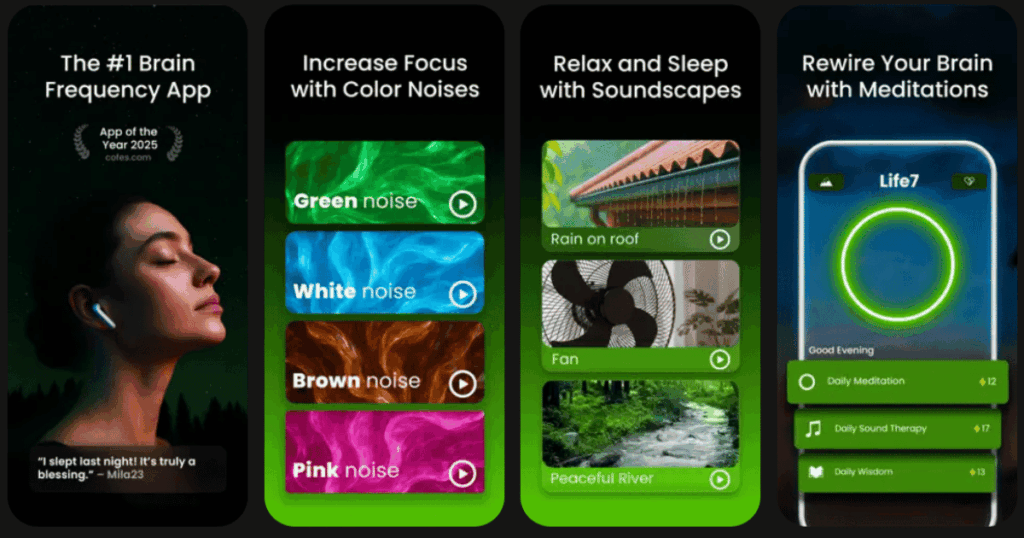
Life7 is my top pick for anyone dealing with personality disorders or mental health challenges. This app brings everything you need into one place. You get tools for anxiety, stress, depression, PTSD, and more.
What makes Life7 special is its huge library of content. They have over 312 million meditation minutes logged by users. The app has been mentioned in over 1200 media outlets.
You can find CBT therapy tools, hypnotherapy sessions, and vagus nerve stimulation exercises. There are also calming sounds like green noise, white noise, brown noise, and pink noise. The binaural beats and solfeggio frequencies help calm your mind.
Key Features:
- SOS sessions for panic attacks and instant anxiety relief
- Daily check ins with meditation, music therapy, and wisdom sessions
- Sleep stories for adults and children plus dreamy soundscapes
What I like: I really love how Life7 covers so many bases. The breathing exercises help calm my nervous system fast. The affirmations feel powerful and help me think better about myself. The gamified approach keeps me coming back. I earn XP and unlock new content as I meditate. The mood tracker lets me save my thoughts each day. Plus the CBT tools are easy to use even for beginners.
What I don’t like: The free version is a bit limited. You need to subscribe to get the full experience. But they do offer frequent special deals that make it more affordable.
Pricing: Free trial for 7 days. Weekly, monthly, and yearly plans available with special offers.
Platforms: iOS and Android
#2. DBT Coach – Best for Learning DBT Skills
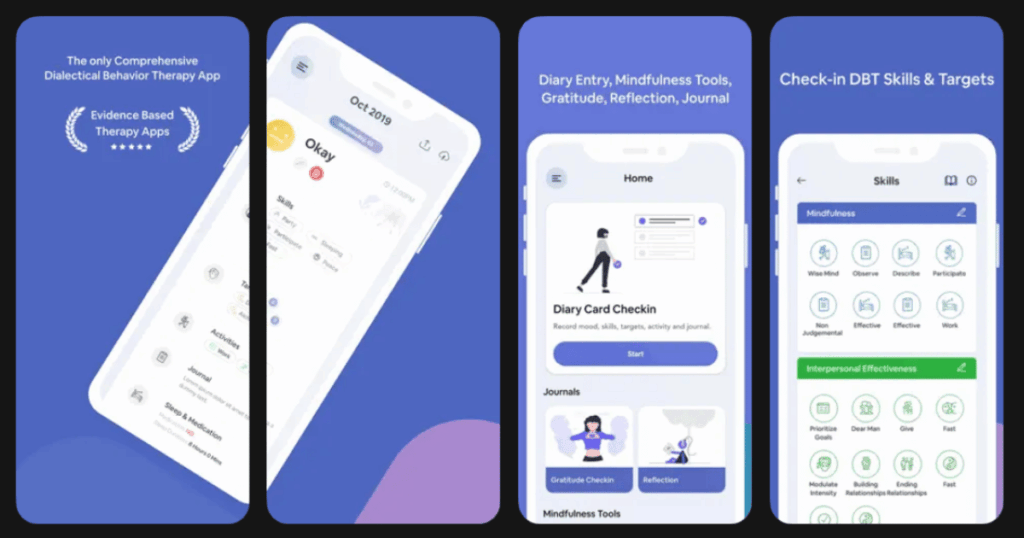
DBT Coach is made for people who want to learn Dialectical Behavior Therapy skills. DBT was created to help people with Borderline Personality Disorder. This app teaches you the same skills used in therapy sessions.
The app has over 100 video lessons with fun animations. These help you remember the skills longer. You can also complete exercises that are like real DBT worksheets.
Key Features:
- Diary card for tracking skills and behaviors
- Over 200 animations and 100 exercises
- Progress tracking with awards and achievements
What I like: I find this app super helpful for learning real DBT skills. The videos explain things clearly. The diary card helps me stay on track. I can even share my progress with my therapist. The exercises feel like actual therapy homework but in a fun way.
What I don’t like: The premium version costs extra money. Some crisis tools are locked behind the paywall which feels frustrating.
Pricing: Free version available with basic features. Premium unlocks all content.
Platforms: iOS and Android
#3. Woebot – Best for AI Powered CBT Support

Woebot is a cute robot that uses CBT to help you feel better. The app checks in with you daily and guides you through helpful exercises. Research shows Woebot can reduce depression symptoms in just two weeks.
Over 1.5 million people have talked to Woebot. The app has won awards including Best Overall Mental Health Solution in 2023.
Key Features:
- Daily mood tracking and check ins
- Gratitude journaling tools
- CBT techniques in a chat format
What I like: Woebot feels like talking to a friend who knows psychology. The pre written responses make chatting easy. I love the gratitude journal feature. The app helps me spot negative thinking patterns and change them. It is available any time day or night.
What I don’t like: The conversations can feel scripted sometimes. You need an access code from a provider or employer to use it now.
Pricing: Free through employer or healthcare provider.
Platforms: iOS and Android
#4. Wysa – Best for AI Emotional Support

Wysa is an adorable penguin chatbot that offers emotional support. The app uses both CBT and DBT techniques. It has over 100 therapeutic exercises to help with stress, anxiety, and low mood.
Wysa received FDA Breakthrough Device status. This shows the app has real potential to help people.
Key Features:
- AI chatbot available 24/7
- Guided meditations and yoga exercises
- Option to connect with human coaches
What I like: Wysa feels easy to use and non judgmental. The toolkit of exercises is great for quick relief. I appreciate having both AI support and real coach options. The privacy features keep my conversations anonymous and encrypted.
What I don’t like: The chatbot does not always understand what I mean. Sometimes the responses miss the point of what I said.
Pricing: Free version with basic features. Premium costs around 75 dollars per year. Coaching sessions cost extra.
Platforms: iOS and Android
#5. Sanvello – Best for Stress and Anxiety Management

Sanvello takes a full approach to mental health. The app offers mood tracking, guided journeys, community support, and even therapy options. It is used by over 3 million people.
The app partners with AbleTo to provide virtual coaching and therapy services.
Key Features:
- Evidence based CBT tools and exercises
- Peer community for support
- Guided meditations and coping strategies
What I like: Sanvello gives me lots of ways to work on my mental health. The community feature helps me feel less alone. The guided journeys teach me new coping skills step by step. I can track my moods and see patterns over time.
What I don’t like: The free version has limited features. You need premium or qualifying insurance to unlock everything.
Pricing: Free version available. Premium requires subscription or qualifying health insurance.
Platforms: iOS and Android
#6. Daylio – Best for Quick Mood Tracking

Daylio makes tracking your mood super easy. You do not have to write anything if you do not want to. Just pick an emoji and your activities. The app shows you how your habits affect your feelings.
The app has over 393,000 reviews on Google Play with a 4.8 star rating.
Key Features:
- Icon based mood logging takes under a minute
- Charts and statistics show mood patterns
- Customizable activities and goals
What I like: I love how fast and simple Daylio is. On busy days I can still log my mood in seconds. The colorful icons make it feel fun. The statistics help me see which activities boost my mood and which ones bring me down.
What I don’t like: The app does not teach coping skills. It is just for tracking so you need other resources to actually improve.
Pricing: Free version covers most features. Premium costs around 36 dollars per year.
Platforms: iOS and Android
#7. Moodfit – Best for Data Driven Mood Insights

Moodfit helps you understand what affects your emotions. The app uses CBT tools like thought records and gratitude journals. Verywell Mind named it Best Overall Mental Health App multiple years in a row.
The app tracks your mood multiple times per day. It shows you patterns through charts and graphs.
Key Features:
- Mood journals with personalized insights
- CBT based thought records
- Goal tracking and breathwork tools
What I like: Moodfit shows me exactly what triggers my mood changes. The thought records help me catch negative thinking. The gratitude journal shifts my focus to good things. The nervous system tools help me calm down fast.
What I don’t like: The app can feel hard to navigate at first. The free version is pretty limited.
Pricing: Free basic plan. Premium costs around 30 dollars per year.
Platforms: iOS and Android
#8. Calm – Best for Sleep and Relaxation
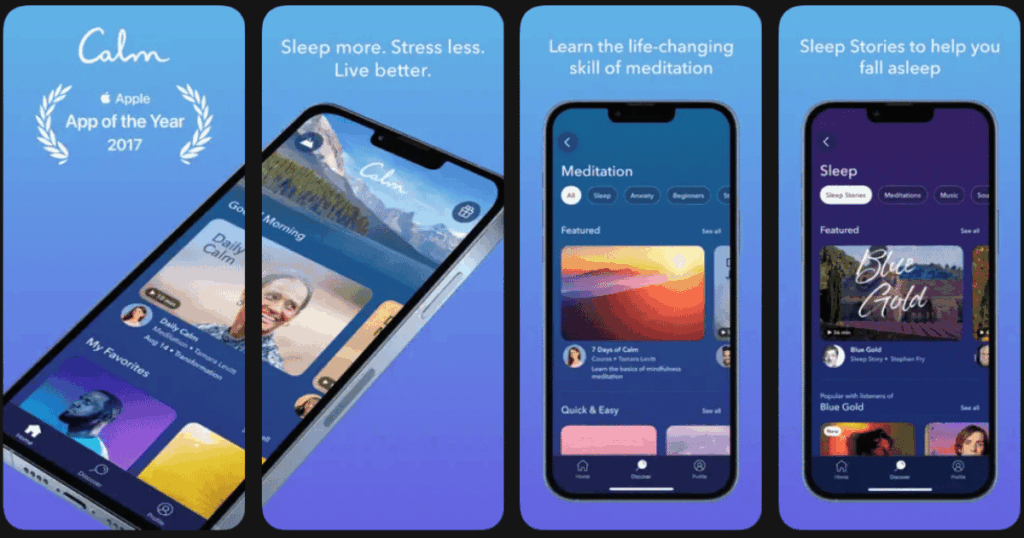
Calm is one of the most popular meditation apps in the world. The app focuses on helping you relax and sleep better. The Sleep Stories feature is loved by millions of users.
New content is added regularly to keep things fresh.
Key Features:
- Hundreds of guided meditations
- Sleep stories narrated by famous voices
- Nature sounds and breathing exercises
What I like: Calm really helps me wind down at night. The Sleep Stories knock me out fast. The guided meditations are perfect for beginners. The nature sounds create a peaceful background for work or sleep.
What I don’t like: Most content requires a subscription. The price is higher than some other apps.
Pricing: Limited free version. Premium subscription required for full access.
Platforms: iOS and Android
#9. Headspace – Best for Mindfulness Meditation
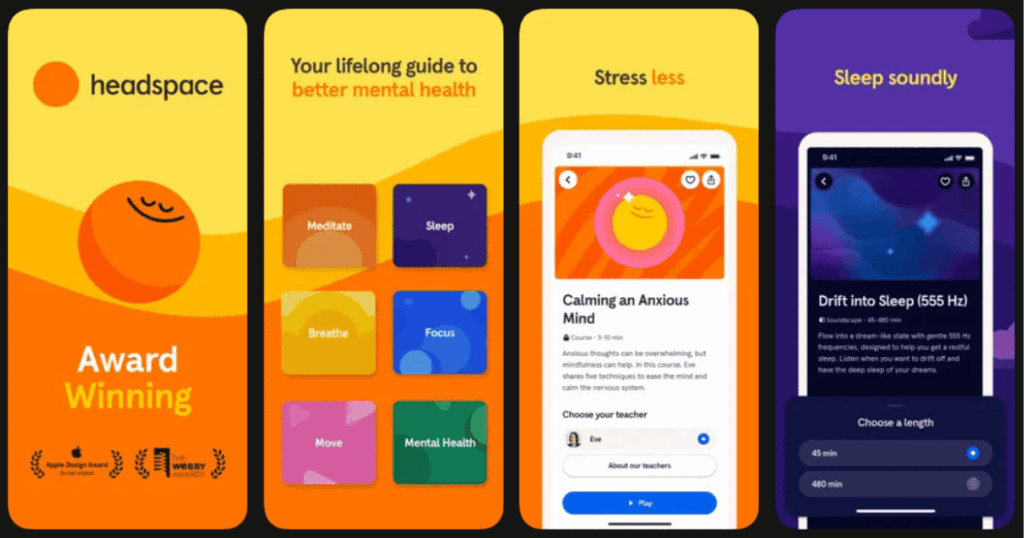
Headspace teaches you how to meditate step by step. The app has over 1000 guided sessions for stress, focus, and sleep. CBT based exercises help you manage anxiety.
The app offers mental health coaching for extra support.
Key Features:
- Beginner friendly meditation courses
- Focus music and sleep exercises
- Stress relief tools backed by research
What I like: Headspace made meditation easy for me as a beginner. The courses build on each other nicely. The animations explain mindfulness concepts clearly. I feel calmer after just 10 minutes of practice.
What I don’t like: The subscription cost can add up. Some features feel locked away unless you pay.
Pricing: Free 14 day trial. Annual and monthly subscription plans available.
Platforms: iOS and Android
Can Apps Really Help with Personality Disorders?
Yes apps can help with personality disorders. But they work best alongside professional therapy. Apps teach skills like emotional regulation, distress tolerance, and mindfulness. These are the same skills taught in DBT therapy for Borderline Personality Disorder.
Studies show that CBT apps reduce symptoms of anxiety and depression. DBT apps help people practice skills between therapy sessions. The key is to use apps as a tool, not a replacement for professional care.
If you struggle with intense emotions or unstable relationships, apps give you support any time you need it.
What Features Should I Look for in a Mental Health App?
Look for apps that use evidence based methods like CBT or DBT. These approaches are proven to help. Check if the app offers mood tracking, because seeing patterns helps you understand yourself.
Privacy matters too. Make sure the app keeps your data safe and encrypted. Read reviews from other users to see if the app actually works.
Also consider cost. Many apps offer free versions with basic features. Try a few before committing to a paid subscription.
Are Mental Health Apps Safe to Use?
Most reputable mental health apps are safe. They use encryption to protect your conversations. However they are not a substitute for emergency care.
If you are in crisis, contact a professional or call a crisis hotline. Apps cannot diagnose conditions or prescribe medication. They are tools for support and skill building.
Always check an app’s privacy policy before sharing personal information. Stick with well reviewed apps from trusted developers.