9 Best Social Anxiety Apps For Your Phone
| App Name | Best For | Key Features | AC Rating | Pricing |
|---|---|---|---|---|
| Life7 | All in one mental wellness | SOS sessions, CBT, breathing exercises, sleep stories | 4.8/5 | Free trial, then subscription |
| Calm | Sleep and relaxation | Sleep stories, guided meditations, nature sounds | 4.5/5 | Free version, premium subscription |
| Headspace | Beginner friendly meditation | CBT courses, daily meditations, AI support | 4.6/5 | Free trial, then subscription |
| Woebot | AI powered therapy chat | CBT chatbot, mood tracking, daily check ins | 4.4/5 | Free with access code |
| Sanvello | CBT tools and peer support | Mood tracking, community forums, coaching | 4.3/5 | Free version, premium subscription |
| Rootd | Panic attack relief | Panic button, breathing exercises, grounding tools | 4.5/5 | Free version, premium subscription |
| MindShift CBT | Teen and young adult anxiety | Coping cards, fear ladders, community forum | 4.2/5 | Free |
| Happify | Gamified mental wellness | CBT games, learning tracks, positive psychology | 4.1/5 | Free version, premium subscription |
| Finch | Self care through pet care | Virtual pet, habit tracking, journaling | 4.7/5 | Free version, premium subscription |
#1. Life7 – Best for All in One Mental Wellness
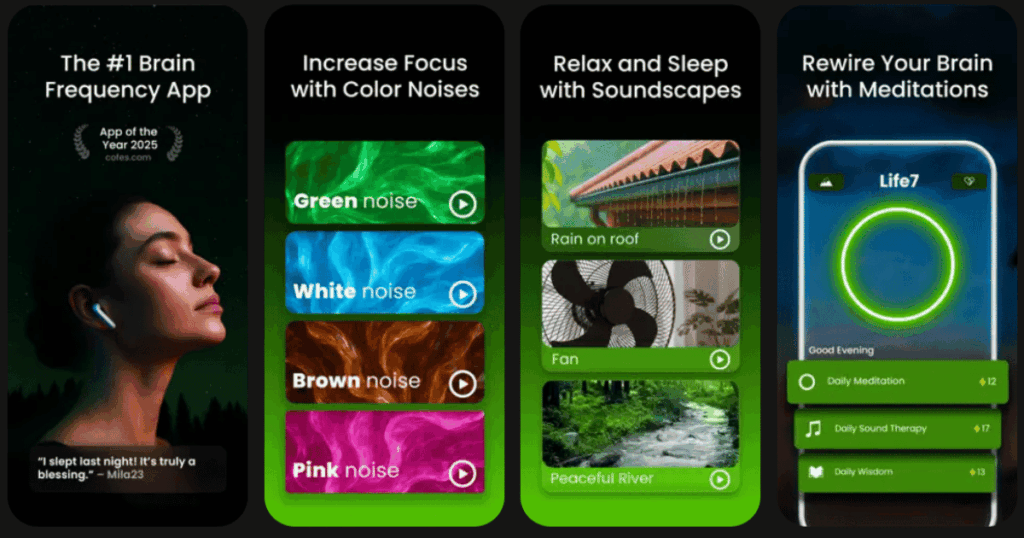
Life7 is a powerful mental wellness app that covers everything you need for social anxiety. I found it offers an amazing mix of tools all in one place. This app has over 1200 editorial mentions and 312 million meditation minutes logged by users worldwide.
What makes Life7 stand out is the variety of features it packs in. You get SOS sessions for panic attacks and anxiety emergencies. There are breathing exercises to calm your nervous system fast. The app also includes CBT (cognitive behavioral therapy) and hypnotherapy for deeper healing.
Life7 covers sleep too with bedtime stories for adults and children. You can listen to white noise, brown noise, pink noise, and green noise. The binaural beats and solfeggio frequencies help your brain relax. I love that you can mix soundscapes with meditations using the Backdrop Mode.
Key Features:
- SOS sessions to calm anxiety and panic attacks quickly
- CBT, hypnotherapy, and vagus nerve stimulation tools
- Daily sessions including meditation, music therapy, and wisdom
What I like: The all in one approach really works for social anxiety. You can track your mood, save thoughts for the day, and build meditation streaks. The gamified approach lets you earn XP and unlock premium soundscapes. I appreciate how Life7 offers short guided meditations for beginners. The daily check ins help you stay on track with your mental health goals.
What I don’t like: The free content is a bit limited. You will need to subscribe to get the full experience. But the free trial lets you test everything before committing.
Pricing: 7 day free trial available. Weekly, monthly, and yearly plans offered. Frequent special offers pop up.
Platforms: iOS and Android
#2. Calm – Best for Sleep and Relaxation
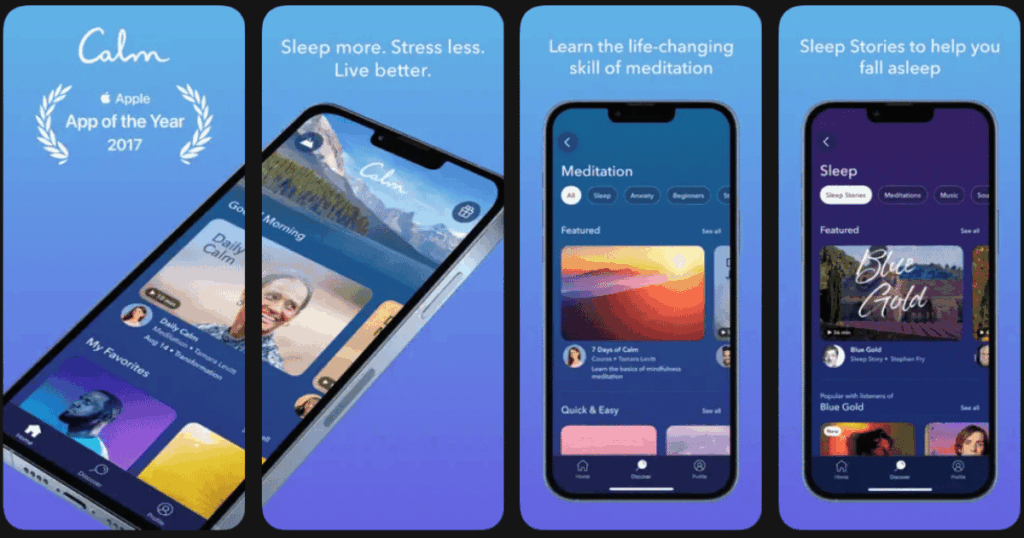
Calm is one of the most popular meditation apps out there. It helps with anxiety, sleep problems, and stress. The app has won multiple awards including Apple’s Best of 2018 Award.
The sleep stories are narrated by celebrities like Matthew McConaughey and Stephen Fry. These bedtime stories help you drift off to peaceful sleep. Calm also offers hundreds of guided meditations covering anxiety, stress, and focus.
The app includes a Panic SOS feature for moments of acute stress. You can do body scans and breathing exercises anytime. There are also relaxing soundscapes and nature sounds to help you unwind after a stressful social situation.
Key Features:
- Over 500 sleep stories with new ones added weekly
- Panic SOS and body scan features for immediate relief
- Masterclasses taught by world renowned experts
What I like: The variety of content is incredible. I can always find something that matches my mood. The daily calm meditation is a nice way to start each morning. The app looks beautiful and feels calming just to open.
What I don’t like: Most of the good features are locked behind a paywall. The annual subscription can feel pricey compared to some alternatives.
Pricing: Free version with limited content. Premium subscription available monthly or yearly. Student discounts offered.
Platforms: iOS and Android
#3. Headspace – Best for Beginner Friendly Meditation
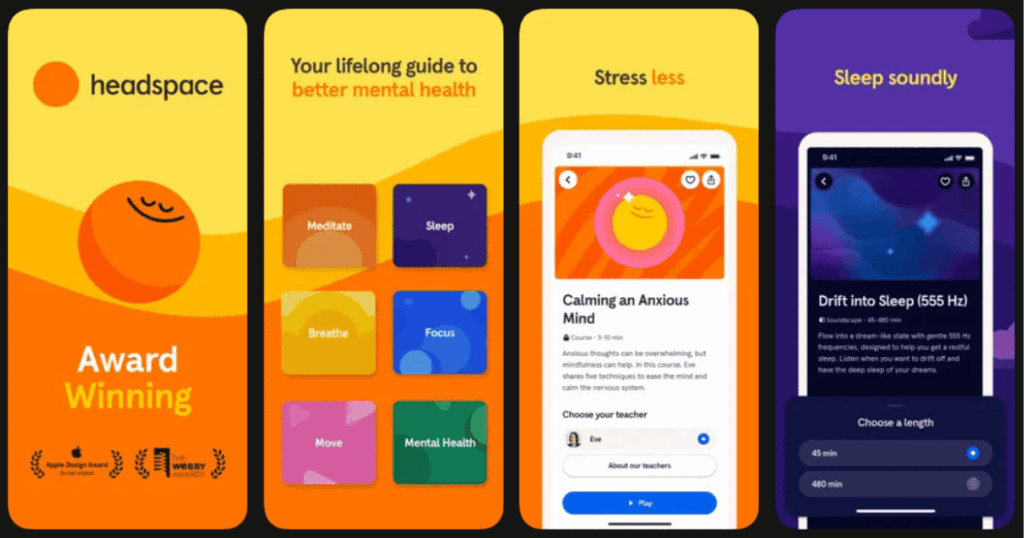
Headspace makes meditation easy for people who have never tried it. The app uses animated videos and clear instructions to teach you mindfulness. Research shows just two weeks of Headspace use can reduce anxiety.
The app offers over 500 guided meditations. Topics include managing anxiety, building self esteem, and calming social fears. Headspace also has CBT based courses that help you change negative thinking patterns.
I found the app really helpful for social anxiety because of its structured approach. You start with basics and build up your skills over time. The Ebb AI companion provides support anytime you need it.
Key Features:
- CBT based programs for anxiety and stress management
- Over 500 guided meditations from 3 minutes to 30 minutes
- Access to licensed therapists and mental health coaches
What I like: The beginner courses are well designed. They don’t assume you know anything about meditation. The focus music helps me concentrate during work. Sleepcasts are perfect for winding down at night after a stressful day.
What I don’t like: The free version is very limited. The interface can feel overwhelming with so many options to choose from.
Pricing: 7 day free trial for monthly plans. 14 day trial for annual plans. Monthly or yearly subscriptions available.
Platforms: iOS and Android
#4. Woebot – Best for AI Powered Therapy Chat

Woebot is a friendly AI chatbot that uses CBT to help with anxiety. You can chat with Woebot anytime, day or night. The app has exchanged millions of messages with users around the world.
The chatbot asks questions and guides you through thought exercises. It helps you notice negative thinking patterns. Then it teaches you how to challenge those thoughts with healthier ones.
Woebot uses CBT, mindfulness, and dialectical behavior therapy (DBT). The app was developed by clinical psychologists from Stanford. It has been featured on 60 Minutes and covered in The New York Times.
Key Features:
- AI chatbot available 24/7 for in the moment support
- Daily check ins and mood tracking features
- Evidence based CBT, mindfulness, and DBT techniques
What I like: Talking to a robot removes the pressure of human judgment. This is huge for social anxiety! Woebot remembers our conversations and builds on them. The techniques I learned have actually helped during real anxiety moments.
What I don’t like: The chatbot responses can sometimes feel repetitive. You need an access code from a provider or employer to use it fully.
Pricing: Currently free through participating providers and employers.
Platforms: iOS and Android
#5. Sanvello – Best for CBT Tools and Peer Support

Sanvello (formerly Pacifica) combines CBT tools with a supportive community. The app helps you manage anxiety, depression, and stress. It has been evaluated in research studies and shown to be effective.
The app offers mood tracking, guided meditations, and thought journals. You can learn to identify negative thinking patterns. Then use CBT exercises to challenge and change them.
What sets Sanvello apart is the peer support community. You can connect with others who understand social anxiety. Some health insurance plans even cover Sanvello, which is a nice bonus.
Key Features:
- CBT tools, mood tracking, and mindfulness exercises
- Community message boards for peer support
- Option to connect with coaches or licensed therapists
What I like: The daily challenges keep me engaged. The thought record feature helps me understand my anxiety triggers. I appreciate being able to share my progress with a professional through the app.
What I don’t like: The community forums can be hit or miss. Some discussions are more helpful than others. The premium features get expensive if you add coaching.
Pricing: Free version with basic features. Self care package available monthly or yearly. Coaching and therapy sessions cost extra.
Platforms: iOS and Android
#6. Rootd – Best for Panic Attack Relief

Rootd was made specifically for panic attacks and anxiety. The app includes a virtual panic button for immediate help. When you feel a panic attack coming, Rootd guides you through it step by step.
The app asks a few questions about how you are feeling. Then it provides personalized calming exercises. You get breathing techniques, grounding exercises, and encouraging messages.
Rootd was created by someone who experienced panic attacks herself. This shows in how understanding and helpful the app feels. The design is simple and easy to use even when you are panicking.
Key Features:
- Virtual panic button for immediate relief during attacks
- Guided breathing and grounding exercises
- Educational content about anxiety and panic
What I like: The panic button is a game changer. Having a plan during panic attacks makes them less scary. The exercises are easy to follow even when my mind is racing. The app feels like having a supportive friend in my pocket.
What I don’t like: The app focuses mainly on panic attacks. It is less helpful for general everyday social anxiety. Some features require the premium version.
Pricing: Free version with basic features. Premium subscription unlocks full content.
Platforms: iOS and Android
#7. MindShift CBT – Best for Teen and Young Adult Anxiety
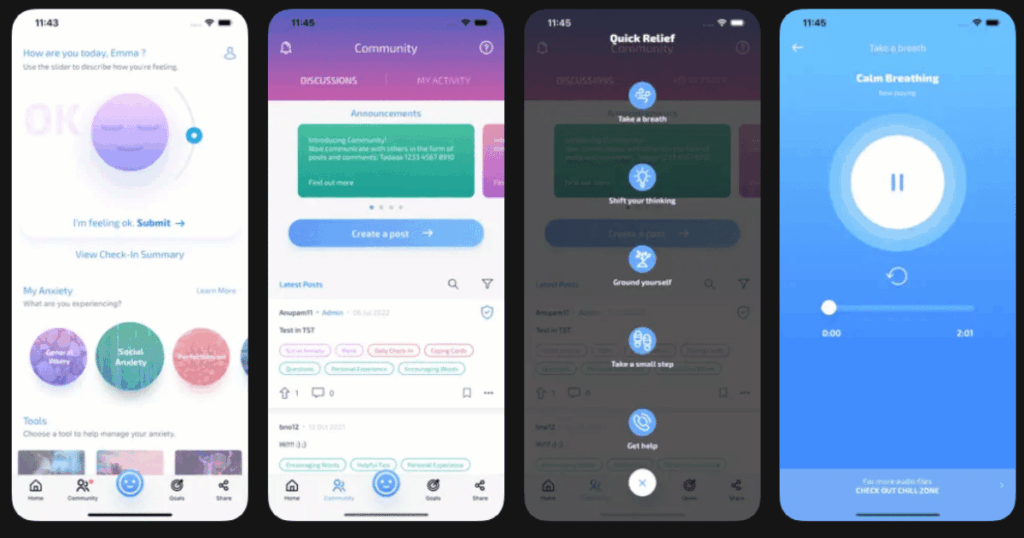
MindShift was created specifically for adolescents and young adults. The app helps with social anxiety, test anxiety, perfectionism, and panic. It uses CBT techniques in an easy to understand way.
The app offers coping cards with positive statements you can save. Fear ladders help you gradually face your fears. Daily check ins let you track your mood and anxiety levels over time.
MindShift was developed by the Anxiety Disorders Association of British Columbia. It has been reviewed and approved by mental health professionals. The community forum lets you connect with other young people facing similar challenges.
Key Features:
- Coping cards and fear ladders for gradual exposure
- Community forum for peer support
- Chill Zone with guided meditations and relaxation exercises
What I like: The app speaks to young people without talking down to them. The belief experiments help challenge anxious thoughts. I like being able to see my progress over time through the check in history.
What I don’t like: The app is text heavy without many videos or visuals. The two week limit on viewing past entries can be frustrating.
Pricing: Completely free
Platforms: iOS and Android
#8. Happify – Best for Gamified Mental Wellness

Happify uses games and activities to boost your mood and reduce anxiety. The app is based on CBT and positive psychology. Experts including PhDs and meditation teachers created the content.
You take a short assessment to find your biggest strengths. Then Happify recommends activities and tracks tailored to your goals. Each activity takes about ten minutes and explains the science behind why it works.
The app includes learning tracks on topics like managing stress and building self confidence. Games make working on your mental health feel fun instead of like a chore.
Key Features:
- Science backed games and activities based on CBT
- Over 30 learning tracks created by mental health experts
- Progress tracking to see your improvement over time
What I like: The gamified approach makes self help feel less overwhelming. I actually look forward to completing activities. The community feature lets you connect with other users without pressure.
What I don’t like: The subscription cost is higher than some alternatives. It can be hard to see how all the activities connect to lasting change.
Pricing: Free version with limited content. Premium subscription monthly or yearly.
Platforms: iOS and Android
#9. Finch – Best for Self Care Through Pet Care
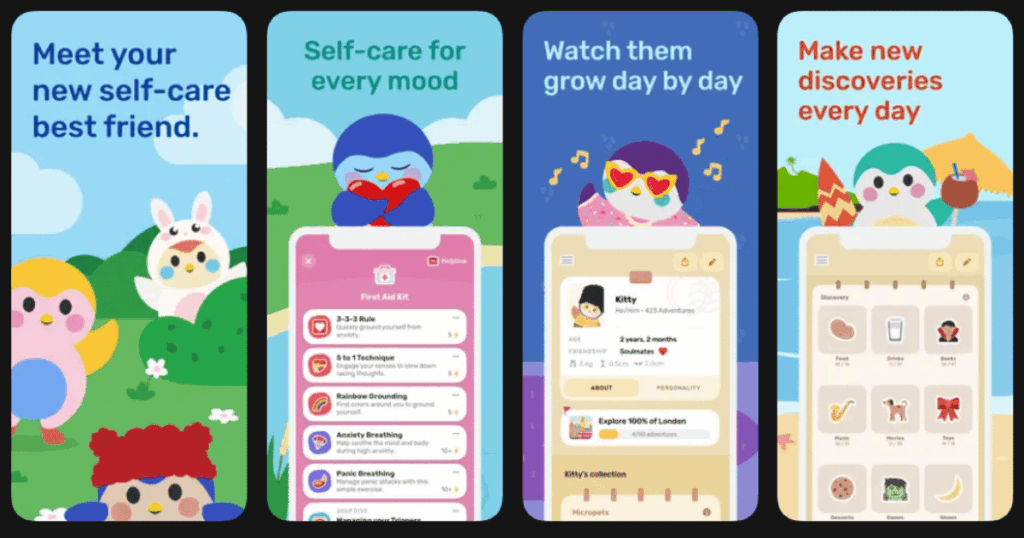
Finch takes a unique approach to mental health. You care for a cute virtual bird by caring for yourself. Each time you complete a self care goal, your Finch grows and goes on adventures.
The app offers breathing exercises, guided journaling, and mood tracking. You set small daily goals like drinking water or taking a break. As you check them off, your pet collects rewards and evolves.
Finch is especially popular with people who have ADHD, anxiety, or depression. The gentle approach removes guilt and pressure. Many users say the app helped them get out of bed and accomplish basic tasks during hard times.
Key Features:
- Virtual pet that grows as you complete self care tasks
- Breathing exercises and guided journaling prompts
- Weekly insights on your mood patterns and triggers
What I like: Taking care of Finch motivates me to take care of myself. The app feels warm and encouraging without being pushy. The journaling prompts help me understand my anxiety patterns better. I love sending positive vibes to friends on the app.
What I don’t like: The app can feel cluttered with many features to explore. There is no walk through when you first start. Pricing differs between iOS and Android users.
Pricing: Free version available. Finch Plus subscription yearly. Prices vary by platform.
Platforms: iOS and Android
Do Social Anxiety Apps Really Work?
Research shows that mental health apps can help reduce anxiety symptoms. A 2019 meta analysis found that app based interventions significantly lower anxiety levels. Apps using CBT principles tend to be most effective.
However, apps work best as one part of your mental health toolkit. They are great for daily practice and in the moment support. But for severe social anxiety, you may also need therapy with a professional. Many apps like Sanvello and Headspace can connect you with licensed therapists if needed.
The key is consistency. Using an app regularly for several weeks helps build new habits and thinking patterns. Even just ten minutes a day can make a real difference over time.
Are Social Anxiety Apps Free?
Most social anxiety apps offer a free version with basic features. You can try breathing exercises, some meditations, and mood tracking without paying. This lets you test the app before committing to a subscription.
Premium subscriptions usually cost between 10 to 15 dollars per month. Annual plans offer better value, often around 50 to 80 dollars per year. Some apps like MindShift CBT are completely free. Others like Woebot are free through employers or health providers.
Student discounts are available on many apps. Some health insurance plans also cover certain mental health apps. Check with your provider to see what is available to you.
Which App Is Best for Social Anxiety?
The best app depends on your specific needs. If you want an all in one solution, Life7 offers the most complete package. It combines meditations, therapy techniques, sleep support, and mood tracking in one place.
For panic attacks specifically, Rootd is hard to beat. The panic button feature provides immediate help when you need it most. If you prefer talking things through, Woebot offers 24/7 AI chat support.
I recommend starting with free versions of a few apps. See which one feels most comfortable and useful to you. The best app is the one you will actually use consistently. Everyone responds differently, so give yourself time to find your perfect fit.