9 Best Mental Health Apps For Depression
| App Name | Best For | Key Features | AC Rating | Pricing |
|---|---|---|---|---|
| Life7 | All in one mental wellness | CBT, binaural beats, sleep stories, SOS panic relief | 4.8/5 | Free trial, subscription plans |
| Headspace | Beginners learning meditation | Guided courses, sleep content, CBT techniques | 4.7/5 | Free trial, subscription plans |
| Calm | Sleep and relaxation | Sleep stories, celebrity narrations, mood tracking | 4.6/5 | Free trial, subscription plans |
| Wysa | AI powered emotional support | CBT chatbot, DBT exercises, coaching option | 4.6/5 | Free version, premium available |
| Woebot | Free CBT therapy tools | AI chatbot, daily check ins, mood tracking | 4.5/5 | Free |
| Sanvello | Community peer support | Guided journeys, peer forums, therapist access | 4.5/5 | Free version, premium available |
| Youper | Personalized CBT education | AI conversations, mood tracking, therapy techniques | 4.4/5 | Free trial, subscription plans |
| Bearable | Detailed symptom tracking | Customizable logs, reports, provider sharing | 4.4/5 | Free version, premium available |
| MoodTools | Depression focused self help | Safety planning, journaling, CBT activities | 4.3/5 | Subscription plans |
#1. Life7 – Best for All in One Mental Wellness
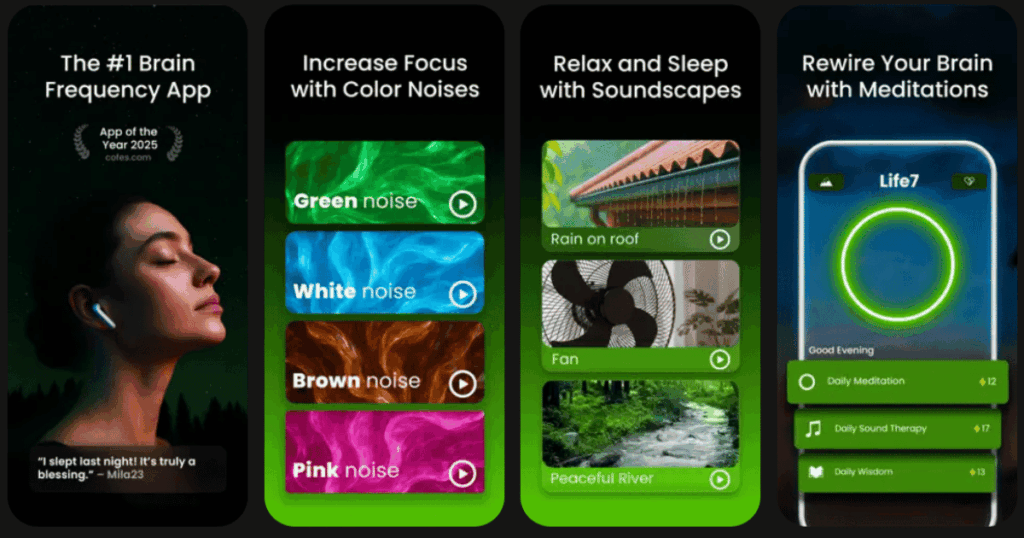
Life7 is the most complete mental health app I have found. It brings together everything you need to manage depression in one place. You get guided meditations, sleep stories, breathing exercises, and proven therapy techniques like CBT.
What makes Life7 special is the variety. You can try binaural beats, different sound frequencies, and hypnotherapy sessions. The app also has SOS tools for panic attacks. This means help is always right there when you need it most.
The app tracks your progress with a custom dashboard. You can build streaks and even share wins with friends. New content drops daily so you always have fresh sessions to try.
Key Features:
- CBT, hypnotherapy, and vagus nerve stimulation all in one app
- Multiple sound therapy options including binaural beats and solfeggio frequencies
- SOS sessions for immediate anxiety and panic relief
What I like: I really enjoy how Life7 covers so many bases. Whether I need help sleeping, want to calm down fast, or work on deeper healing, it has something for me. The daily content keeps things fresh and I love the gamified approach with XP points. The mood tracker helps me see my patterns over time. Plus the breathing exercises actually calm my nervous system in minutes.
What I don’t like: The free version is a bit limited. You need to upgrade to access most of the good stuff. But the free trial lets you test everything first.
Pricing: 7 day free trial available. Weekly, monthly and yearly plans offered. Frequent special promotions.
Platforms: iOS and Android
#2. Headspace – Best for Beginners Learning Meditation
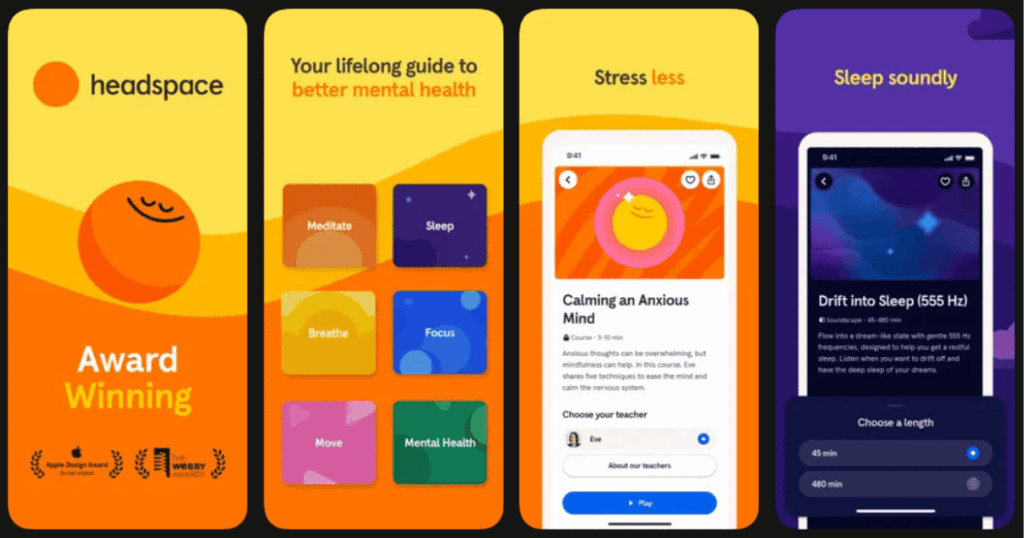
Headspace has helped millions of people start meditating. The app uses friendly cartoons and simple explanations. This makes meditation feel less scary for newcomers.
Research backs up this app. Studies show it can reduce symptoms of depression and anxiety. The structured courses build your skills step by step.
You get sleep content, focus music, and even movement exercises. The app teaches CBT techniques through easy to follow lessons.
Key Features:
- Structured beginner courses with video animations
- Sleep sounds and meditation content for rest
- CBT and mindfulness techniques taught in simple ways
What I like: Headspace holds your hand through the learning process. The animations explain tricky concepts like visualization in fun ways. I appreciate how each course builds on the last. The app reminds you to practice daily which helps build the habit.
What I don’t like: After using it for a while the meditations can feel similar. More advanced users might want more variety. The free content is also pretty limited.
Pricing: Free trial available. Monthly and annual subscription options.
Platforms: iOS and Android
#3. Calm – Best for Sleep and Relaxation
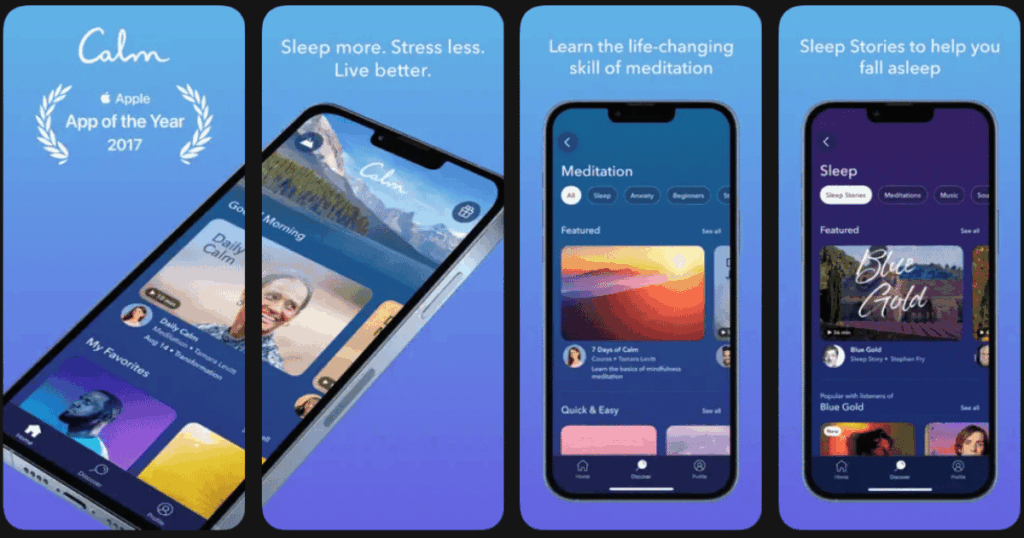
Calm shines when it comes to helping you relax and sleep better. The app has over 100 sleep stories read by famous voices. Think Matthew McConaughey and Harry Styles helping you drift off.
Studies show Calm can reduce stress and improve mindfulness. The beautiful nature scenes and sounds create a peaceful experience right when you open the app.
You can track your mood daily and explore meditations by topic. The content library keeps growing with new additions.
Key Features:
- Huge library of celebrity narrated sleep stories
- Beautiful nature sounds and scenes
- Daily check ins and mood tracking
What I like: The sleep stories are amazing. I never make it past ten minutes before falling asleep. The app looks beautiful and feels calming even before you start a session. I love being able to customize the background sounds. The variety of content means I never get bored.
What I don’t like: Finding specific content can feel overwhelming with so many options. The subscription price is higher than some other apps. Navigation takes some getting used to.
Pricing: Free trial period. Annual subscription available.
Platforms: iOS and Android
#4. Wysa – Best for AI Powered Emotional Support

Wysa is like having a supportive friend in your pocket. The AI penguin chatbot uses CBT and DBT techniques to help you work through tough feelings. You can talk to it anytime day or night.
The app has earned FDA Breakthrough Device status. Studies show it helps reduce depression and anxiety symptoms for active users.
If you need more support you can add real human coaching. The coaches communicate through text so you stay anonymous.
Key Features:
- AI chatbot trained in CBT and DBT techniques
- Optional live coaching with mental health professionals
- Yoga, breathing and meditation exercises
What I like: Wysa is there whenever I need to vent or work through something. I like that the conversations feel private and judgment free. The exercises actually help me reframe negative thoughts. No login required means true privacy. The cute penguin makes hard conversations feel easier.
What I don’t like: Sometimes the AI responses feel scripted. The bot can get confused if you share too much detail at once.
Pricing: Limited free version available. Premium subscription with more features. Coaching sessions available for extra cost.
Platforms: iOS and Android
#5. Woebot – Best for Free CBT Therapy Tools

Woebot gives you access to real CBT therapy techniques without spending a dime. The friendly robot checks in daily and walks you through helpful exercises.
Clinical studies show Woebot can reduce depression symptoms in just two weeks. The app was built by actual psychologists who know what works.
The conversations help you identify negative thought patterns. Then Woebot teaches you how to challenge and change them.
Key Features:
- Completely free with no premium version
- Daily check ins and mood tracking
- CBT exercises designed by clinical psychologists
What I like: I love that everything is truly free. No paywalls or locked features. Woebot checks in at the same time each day which builds routine. The pre filled responses make conversations quick and easy. I feel like I am learning real therapy skills I can use forever.
What I don’t like: Conversations can get repetitive over time. There is no option to talk with a real person if you need more support.
Pricing: Free
Platforms: iOS and Android
#6. Sanvello – Best for Community Peer Support

Sanvello combines CBT tools with a supportive community. You can join chat groups and discussion boards with people who understand what you are going through. This connection helps when depression makes you feel alone.
The app tracks your anxiety, stress and depression scores over time. You watch your progress and see what helps most.
Guided journeys teach you new skills through audio lessons. You also get access to coaching and therapy options.
Key Features:
- Active peer support community with chat and forums
- Clinically validated mood and symptom tracking
- Guided courses based on CBT principles
What I like: The community aspect sets Sanvello apart. Reading other people’s stories helps me feel less alone. The guided journeys are well designed and easy to follow. I appreciate being able to connect my progress with my therapist. The weekly assessments help me see real improvement.
What I don’t like: Finding active chat groups can take some searching. Some of the best features need a paid subscription.
Pricing: Free version with basic features. Premium subscription unlocks more content. Therapy add ons available.
Platforms: iOS and Android
#7. Youper – Best for Personalized CBT Education

Youper feels like having a therapist in your pocket. The AI adapts to your specific needs and guides you through personalized CBT and ACT exercises. Daily check ins track how you are really feeling.
The app creates custom conversations based on your emotional patterns. It learns what works best for you over time.
Youper was developed with input from real therapists. The experience feels similar to actual therapy sessions.
Key Features:
- AI that adapts to your personal emotional patterns
- Daily mood check ins with personalized prompts
- CBT and ACT techniques tailored to your needs
What I like: Youper gets smarter the more I use it. The conversations feel personal and relevant to my specific struggles. I like how it tracks patterns I might not notice myself. The therapy techniques are explained clearly. Each session builds on what I have learned before.
What I don’t like: No free version is available after the trial ends. The chatbot is the only support option with no human coaches.
Pricing: 7 day free trial. Annual subscription required for continued access.
Platforms: iOS and Android
#8. Bearable – Best for Detailed Symptom Tracking
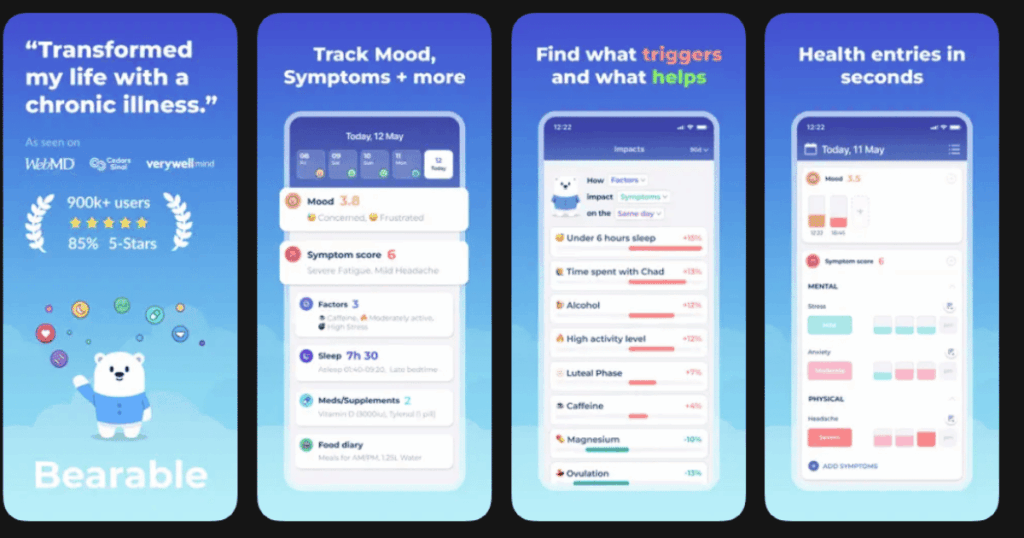
Bearable is perfect if you want to understand your depression triggers. The app lets you track moods, symptoms, medications and habits in detail. Then it shows you patterns and connections.
You can customize what you track to match your needs. The reports are easy to share with your doctor or therapist.
Seeing data about my own patterns helps me make better choices. Knowledge is power when managing mental health.
Key Features:
- Highly customizable tracking for moods, symptoms and habits
- Visual reports showing patterns and connections
- Easy export to share with healthcare providers
What I like: The level of detail in Bearable is amazing. I can track almost anything that affects my mental health. The reports help me see what makes my depression better or worse. Sharing data with my therapist makes our sessions more productive. The free version includes all the essential tracking features.
What I don’t like: The detailed tracking takes time and effort. Some people might find it overwhelming to log so much information.
Pricing: Free version with core features. Premium subscription for advanced analysis.
Platforms: iOS and Android
#9. MoodTools – Best for Depression Focused Self Help
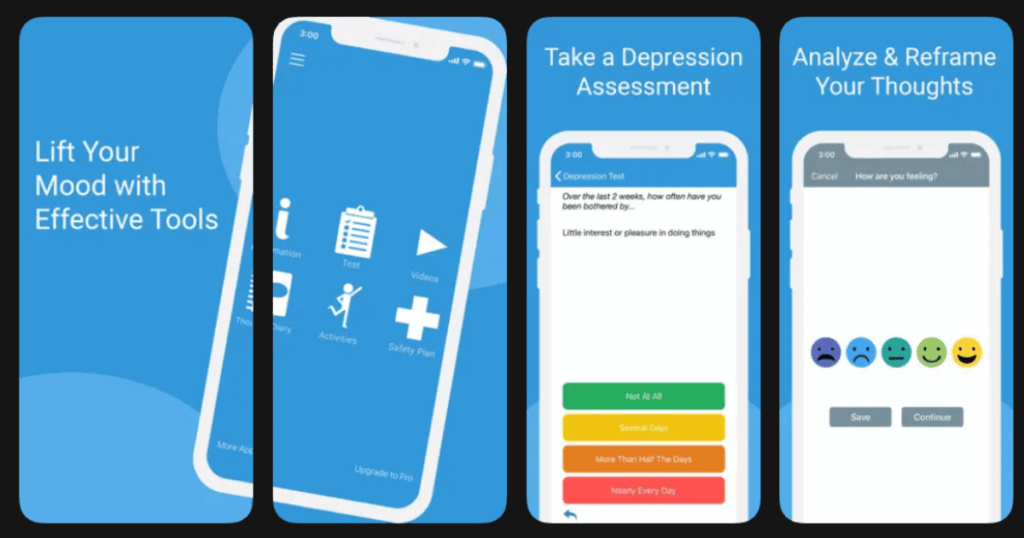
MoodTools was built specifically for people dealing with depression. Every feature targets depression symptoms directly. The app includes a safety plan feature which is important for harder days.
You get journaling prompts, videos and CBT activities. The thought diary helps you challenge negative thinking patterns.
The app keeps things simple. No overwhelming features or confusing menus. Just practical tools when you need them.
Key Features:
- Built in safety planning for crisis moments
- Thought diary using CBT techniques
- Journaling prompts and educational videos
What I like: MoodTools does one thing really well. Every feature actually helps with depression specifically. The safety plan gives me peace of mind on tough days. The thought diary is simple but effective. I appreciate the no nonsense approach without extra fluff.
What I don’t like: The design is not as polished as other apps. Fewer features overall compared to all in one apps.
Pricing: Monthly and annual subscription options.
Platforms: iOS and Android
Do Mental Health Apps Really Help With Depression?
Yes, research shows mental health apps can make a real difference. Studies have found that apps using CBT techniques can reduce depression symptoms. People who use these apps often feel better within weeks.
That said, apps work best alongside other treatment. They are not meant to replace therapy or medication for serious depression. Think of them as helpful tools in your wellness toolkit.
The key is finding an app that fits your needs and using it regularly. Even ten minutes a day can add up to real improvements over time.
Are Mental Health Apps Safe to Use?
Most popular mental health apps are safe when you choose carefully. Look for apps that clearly explain their privacy policies. Check if they are HIPAA compliant if sharing sensitive data matters to you.
Read reviews and check if mental health professionals helped develop the app. Apps backed by research tend to be more trustworthy. Avoid apps that make big promises without evidence.
Remember that apps are not meant for emergencies. If you are in crisis, please reach out to a professional or call a crisis line instead.
How Do I Choose the Right Depression App For Me?
Start by thinking about what you need most right now. Do you want to learn meditation? Try Headspace or Life7. Need someone to talk to anytime? Wysa or Woebot might be perfect.
Consider your budget too. Some apps like Woebot are completely free. Others offer free trials so you can test before buying.
Most importantly, pick an app you will actually use. The best app is the one that fits into your daily routine. Try a few different options until you find your match.