9 Best Mental Health Apps For Athletes
| App Name | Best For | Key Features | AC Rating | Pricing |
|---|---|---|---|---|
| Life7 | Complete mental wellness training | Binaural beats, guided meditations, SOS panic relief, sleep stories | 4.8/5 | Free trial, then subscription plans |
| Champion’s Mind | Sports psychology skill building | 12 skill modules, visualization exercises, 28-day challenges | 4.6/5 | Free version, premium subscription |
| Headspace | Meditation beginners in sports | Sport-specific packs, NBA partnership content, sleep tools | 4.5/5 | Free trial, then subscription |
| Calm | Sleep and stress management | Sleep stories, nature sounds, breathing exercises | 4.5/5 | Free version, premium subscription |
| Restoic | Performance mindset development | Binaural beats, sports psychology methods, athlete testimonials | 4.4/5 | Free trial, monthly or yearly plans |
| AthletesTogether | Peer support and community | Personalized playbooks, gamified experience, expert content | 4.3/5 | Free version available |
| SOAR Health App | Anonymous peer support for student athletes | Peer community, stigma-free environment, wellness tools | 4.2/5 | Free for schools |
| Healthy Minds Program | Science-backed free meditation | Four pillars framework, neuroscience lessons, free access | 4.4/5 | Completely free |
| Sanvello | CBT-based anxiety relief | Mood tracking, CBT tools, guided journeys | 4.3/5 | Free version, premium available |
#1. Life7 – Best for Complete Mental Wellness Training
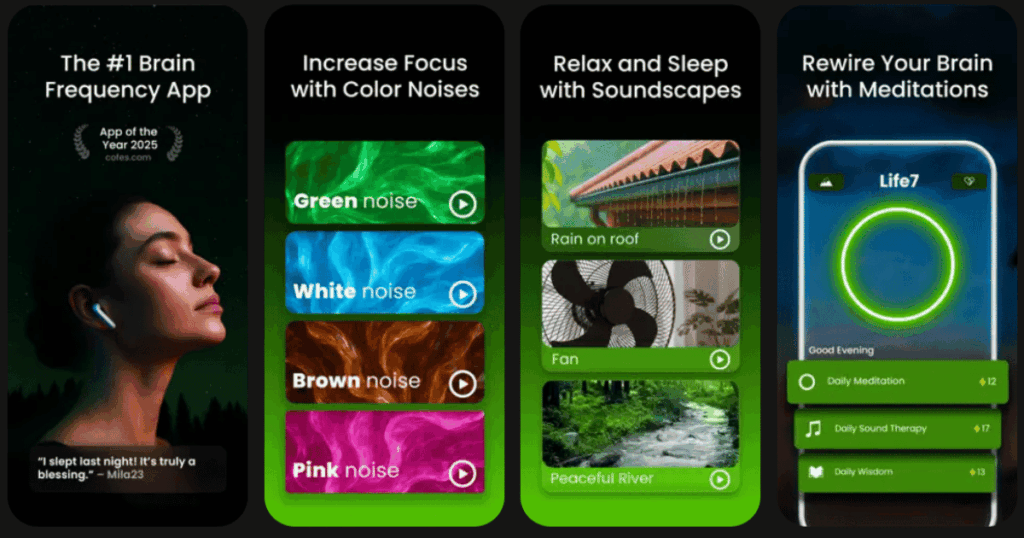
Life7 is my top pick for athletes looking for an all-in-one mental wellness solution. This app combines everything you need to support your mental game in one place. It offers guided meditations, sleep stories, breathing exercises, and unique brain frequency sounds like binaural beats and solfeggio frequencies.
What makes Life7 stand out is its variety. You get access to SOS sessions for panic attacks, cognitive behavioral therapy tools, hypnotherapy, and even vagus nerve stimulation exercises. The app also features daily check-ins and a gamified approach that rewards you with XP for completing sessions.
Key Features:
- Binaural beats, isochronic tones, and 432 Hz/528 Hz frequencies for deep relaxation
- SOS panic attack relief and breathing exercises for pre-game anxiety
- Sleep stories, REM music, and bedtime visualizations for better recovery
What I like: I really appreciate how Life7 covers so many bases. Whether I need a quick 5-minute breathing exercise before a big game or a deep sleep meditation after training, it’s all here. The brain frequency sounds are super unique. I haven’t found anything like them in other apps. The daily meditation and music therapy sessions help me stay consistent.
What I don’t like: The free version is pretty limited. You’ll want to upgrade to premium to get the full experience. This might not work for athletes on a tight budget.
Pricing: 7-day free trial available. Weekly, monthly, and yearly subscription plans offered with frequent special promotions.
Platforms: iOS and Android
#2. Champion’s Mind – Best for Sports Psychology Skill Building
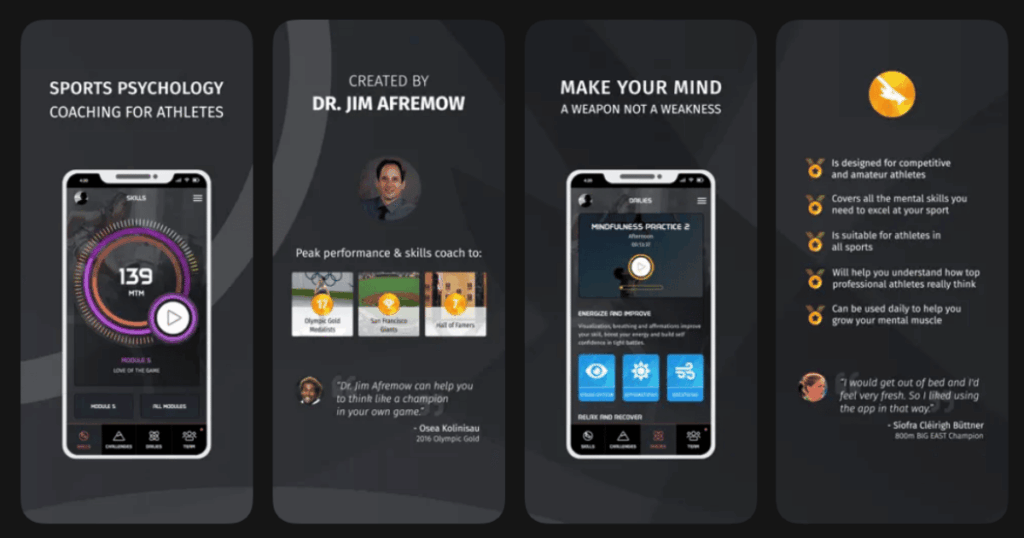
Champion’s Mind was created by sports psychologist Dr. Jim Afremow. He has worked with Olympic gold medalists and professional athletes. This app focuses specifically on mental performance training for competitive athletes.
The app includes 12 skill modules covering topics like confidence, focus, and mental toughness. You also get 28-day challenges that help you build lasting mental habits. Many athletes use this app while traveling to training or competitions.
Key Features:
- 12 sport psychology skill modules designed by experts
- Visualization and affirmation exercises for pre-competition prep
- 28-day mental training challenges for habit building
What I like: Champion’s Mind feels like having a sports psychologist in your pocket. The content is made specifically for athletes, not just general mindfulness. The audio format works great for listening on the bus ride to games. I also love the testimonials from real athletes who’ve used these techniques.
What I don’t like: It works more like an audiobook than an interactive app. If you prefer hands-on exercises or interactive features, you might find it a bit passive.
Pricing: Free version with basic content. Premium subscription unlocks full library.
Platforms: iOS and Android
#3. Headspace – Best for Meditation Beginners in Sports
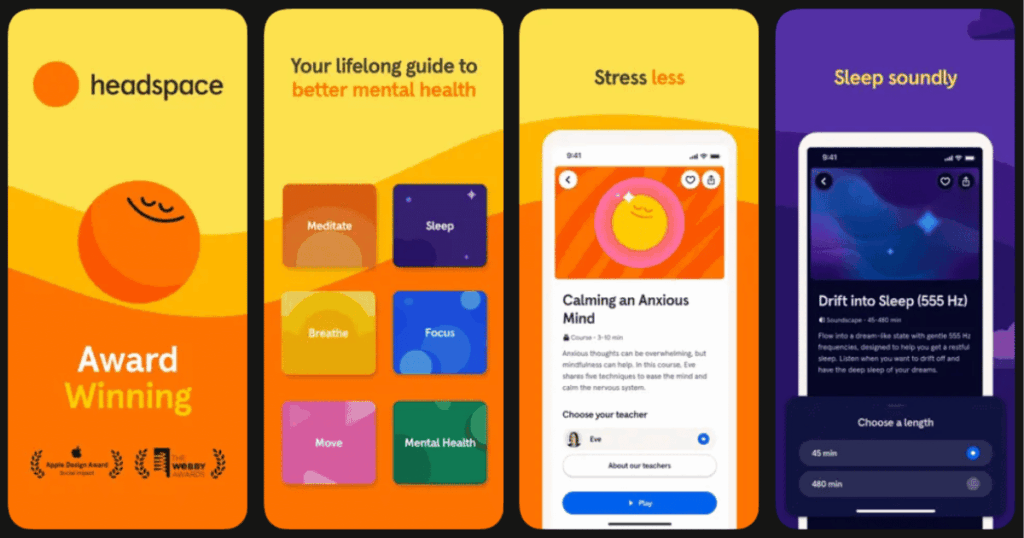
Headspace is one of the most popular meditation apps in the world. It has special content designed just for athletes called Headspace for Sport. The app partnered with the NBA and WNBA to create performance mindset content.
Many college and professional sports teams use Headspace. MLS, U.S. Soccer, and Texas Tech Athletics all have partnerships with the app. This makes it a trusted choice for serious athletes.
Key Features:
- Sport-specific 10-session packs for training, competition, and recovery
- Performance Mindset series developed with NBA/WNBA athletes
- Beginner-friendly guided meditations with clear instructions
What I like: Headspace makes meditation easy to understand, especially if you’re new to it. The sport-specific packs are really helpful. I use the pre-competition pack before games and the recovery pack afterward. The production quality is excellent, and Andy Puddicombe’s voice is very calming.
What I don’t like: The sport content is somewhat limited compared to their general library. Also, the subscription can feel pricey if you only want the sport-specific features.
Pricing: Free trial period. Monthly and annual subscription options available. Student discounts offered.
Platforms: iOS and Android
#4. Calm – Best for Sleep and Stress Management
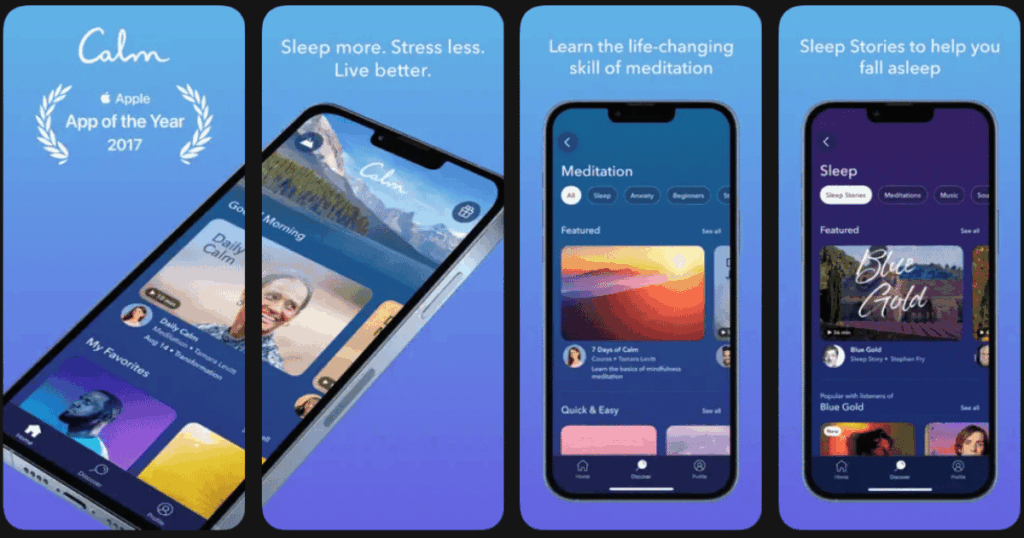
Calm is another hugely popular mindfulness app. It focuses heavily on sleep and relaxation. Athletes can use Calm to improve recovery through better sleep and stress reduction.
The app features Sleep Stories narrated by celebrities and calming voices. It also includes breathing exercises, nature sounds, and meditation programs for different goals like managing anxiety and improving focus.
Key Features:
- Sleep Stories to help you fall asleep faster after training
- Daily Calm sessions for consistent mindfulness practice
- Nature soundscapes and relaxing music for stress relief
What I like: Calm is amazing for recovery and sleep. After hard training days, I use the Sleep Stories to wind down. The Daily Calm feature keeps me consistent with mindfulness. The app is beautifully designed and feels peaceful just opening it.
What I don’t like: It lacks sport-specific content. You won’t find pre-game visualization or performance-focused exercises here. It’s more general wellness than athlete-specific training.
Pricing: Limited free content. Premium subscription required for full access.
Platforms: iOS and Android
#5. Restoic – Best for Performance Mindset Development
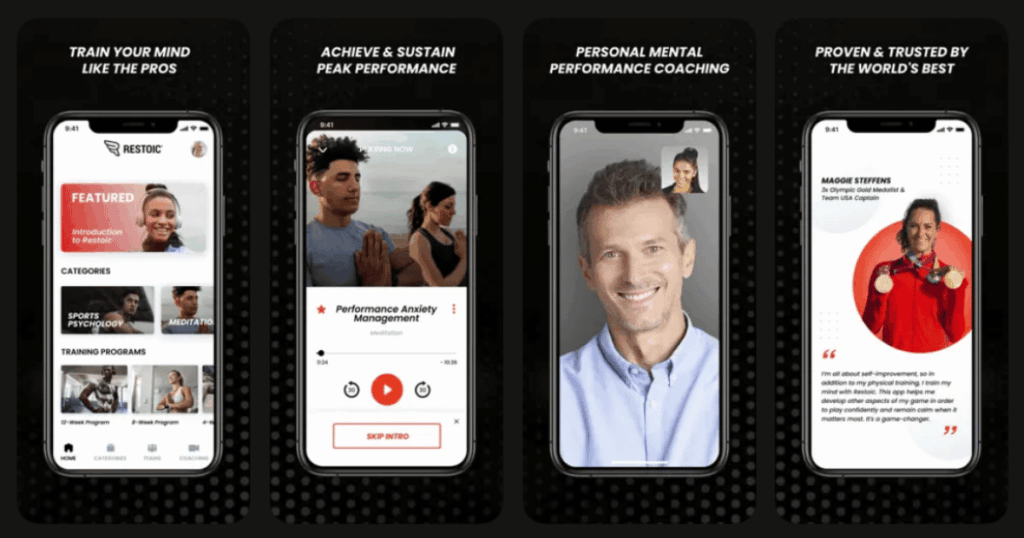
Restoic calls itself the number one app for athlete mental performance training. It was developed with leading sports psychologists, NCAA champions, and world-class athletes. The app uses cognitive behavioral methods to boost performance.
The app focuses on the mental side of sports that most athletes never learn. It includes content on confidence, resilience, focus, and mindfulness specifically for competitive environments.
Key Features:
- Binaural beats for flow state and enhanced focus
- Sports psychology methods backed by science
- Breathing exercises for pre-game energy and stress relief
What I like: Restoic really understands what athletes need. The content feels authentic because former athletes and sports psychologists created it. I especially love the binaural beats for getting into the zone before competition. The app also has great testimonials from college athletes.
What I don’t like: The app is smaller than giants like Headspace or Calm. The content library isn’t as extensive. You might run through the material faster than expected.
Pricing: Free trial available. Monthly and yearly subscription plans.
Platforms: iOS and Android
#6. AthletesTogether – Best for Peer Support and Community
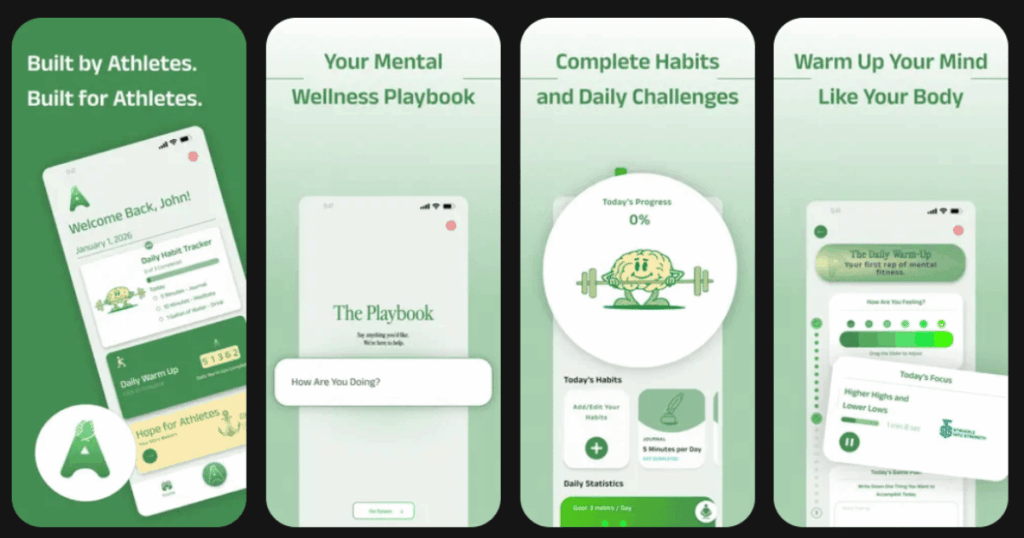
AthletesTogether was built by former athletes who understand mental health challenges in sports. The app focuses on community support and connecting athletes who face similar pressures.
It offers expert-led content from sports psychologists and mental performance consultants. The app also features stories from real athletes who have overcome mental health challenges.
Key Features:
- Personalized playbooks to address emotional states
- Gamified experience with unlockables and challenges
- Content from top sports psychologists and mental skills coaches
What I like: The community aspect makes this app special. Knowing other athletes face the same struggles is comforting. The personalized approach helps me work on my specific challenges. I also appreciate that former athletes built it, so the content feels real.
What I don’t like: The app is newer and still growing. The user community might be smaller than you’d hope for. Depending on your sport, you might not find many peers in your exact situation.
Pricing: Free version available. Premium features require subscription.
Platforms: iOS and Android
#7. SOAR Health App – Best for Anonymous Peer Support for Student Athletes
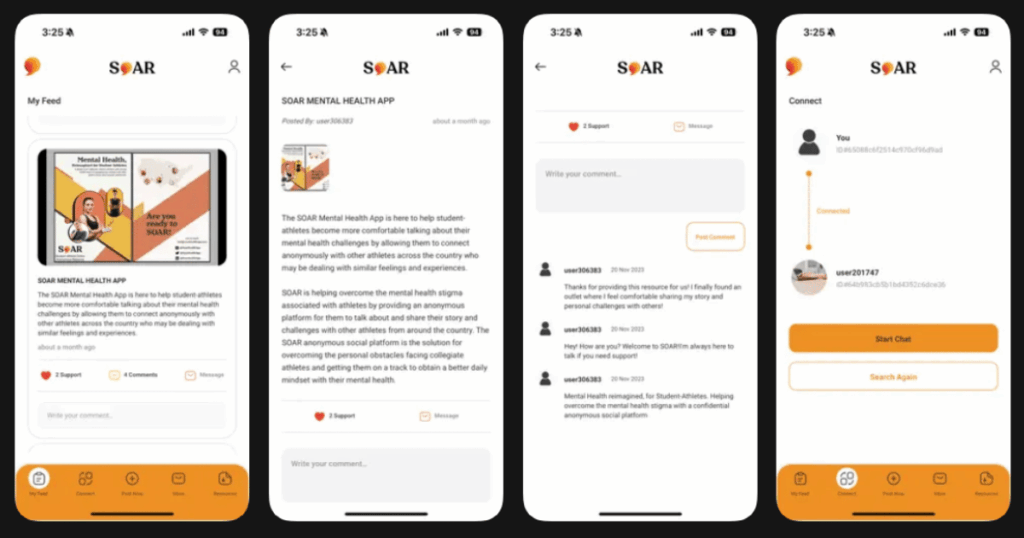
SOAR Health App was created by former UConn baseball player Bobby Melley. The app provides a safe, anonymous space for student athletes to discuss mental health challenges without fear of judgment.
The app focuses on ending the mental health stigma in athletics. It connects student athletes with peers who understand the unique pressures of balancing sports and academics.
Key Features:
- Completely anonymous peer support community
- Safe space for honest conversations about mental health
- Designed specifically for the student athlete experience
What I like: The anonymity feature is huge. Many athletes fear speaking up about mental health. SOAR removes that barrier. I can share my struggles without worrying about coaches or teammates finding out. The community truly understands student athlete life.
What I don’t like: The app works best through school partnerships. If your school isn’t partnered with SOAR, the community might be limited. It also focuses mainly on peer support rather than professional guidance.
Pricing: Free for schools that partner with SOAR. Individual access may vary.
Platforms: iOS and Android
#8. Healthy Minds Program – Best for Science-Backed Free Meditation
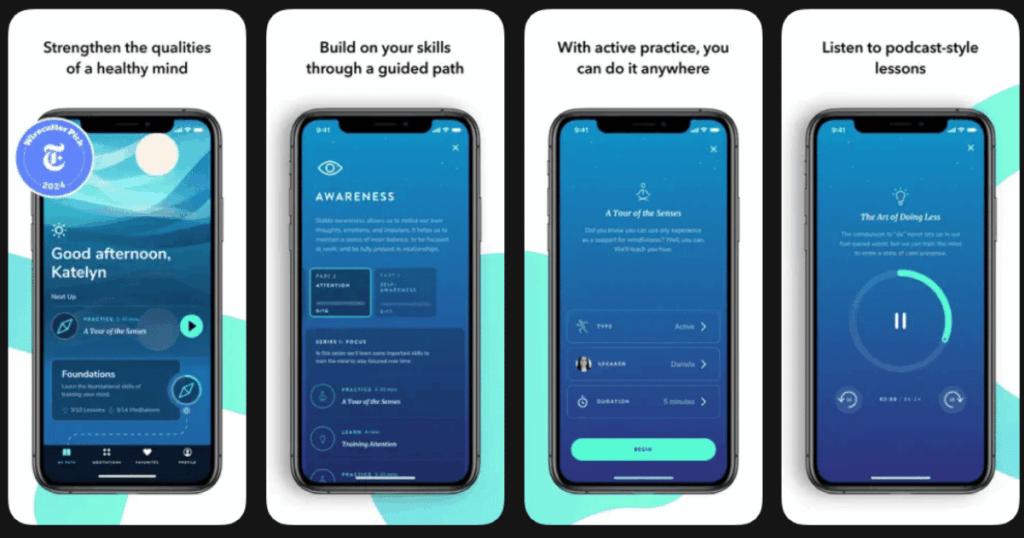
The Healthy Minds Program app comes from the Center for Healthy Minds, led by neuroscientist Dr. Richard Davidson. This app is completely free and based on cutting-edge brain science research.
The app teaches four pillars of wellbeing: awareness, connection, insight, and purpose. Each pillar includes lessons explaining the science plus meditation practices to build those skills.
Key Features:
- Four-pillar framework based on neuroscience research
- Mini-podcasts explaining the science behind each practice
- Completely free with no hidden paywalls
What I like: The fact that it’s totally free is amazing. But beyond that, the science-backed approach gives me confidence it actually works. Learning why meditation helps my brain makes me more motivated to practice. The four-pillar system provides clear structure and progress.
What I don’t like: It doesn’t have sport-specific content. The app targets general wellbeing rather than athletic performance. You’ll need to adapt the practices to your sport yourself.
Pricing: Completely free.
Platforms: iOS and Android
#9. Sanvello – Best for CBT-Based Anxiety Relief

Sanvello uses cognitive behavioral therapy techniques to help manage anxiety, stress, and depression. The app is clinically validated and used by millions of people. Many health insurance plans even cover premium access.
For athletes dealing with performance anxiety or everyday stress, Sanvello provides practical tools. It includes mood tracking, guided journeys, and coping techniques.
Key Features:
- Clinically validated CBT tools and techniques
- Mood and health tracking to identify patterns
- Guided journeys for anxiety, stress, and depression
What I like: The CBT approach is different from other apps. Instead of just meditation, Sanvello teaches you to change negative thought patterns. The mood tracking helps me see connections between my mental state and performance. It feels like actual therapy tools in an app.
What I don’t like: The interface isn’t as polished as Calm or Headspace. Some features feel dated. Also, like others on this list, it’s not designed specifically for athletes.
Pricing: Free version with basic features. Premium subscription available. Some insurance plans cover premium access.
Platforms: iOS and Android
What Are the Benefits of Mental Health Apps for Athletes?
Mental health apps offer several key benefits for athletes at all levels. First, they provide privacy and convenience. Many athletes hesitate to seek traditional therapy due to stigma or busy schedules. Apps let you work on mental skills anytime, anywhere.
Second, these apps teach valuable mental performance skills. Techniques like visualization, breathing exercises, and positive self-talk can directly improve your game. Professional athletes have used these methods for years.
Third, apps help with recovery and sleep. Getting quality rest is essential for athletic performance. Many apps include sleep stories and relaxation techniques that help you recover faster between training sessions.
Finally, apps make mental health support accessible. Not everyone can afford a sports psychologist. Apps provide affordable access to expert-created content and evidence-based techniques.
How Often Should Athletes Use Mental Health Apps?
Consistency matters more than duration when using mental health apps. Most experts recommend starting with just 5 to 10 minutes daily. This builds the habit without overwhelming your schedule.
Many athletes find success using apps at specific times. A morning meditation can set a positive tone for training. Pre-competition breathing exercises can calm nerves. Evening sleep content can improve recovery.
The key is finding what works for your routine. Some athletes prefer daily practice. Others use apps only before competitions or after tough losses. Listen to your body and mind to find your ideal frequency.
Can Mental Health Apps Replace Sports Psychologists?
Mental health apps are excellent tools, but they have limits. They work best for building general mental skills and maintaining daily mental wellness. Apps can teach meditation, breathing techniques, and positive thinking habits.
However, apps cannot replace professional support for serious mental health issues. If you’re experiencing depression, severe anxiety, or other clinical conditions, please seek help from a licensed professional.
Think of apps as part of your mental fitness toolkit. Just like you might use a foam roller at home but still see a physical therapist for injuries, apps complement but don’t replace professional mental health care. Many athletes use both apps and sports psychologists together for the best results.