9 Best Mental Health Apps For Healthcare Workers
| App Name | Best For | Key Features | AC Rating | Pricing |
|---|---|---|---|---|
| Life7 | Complete mental wellness toolkit | Binaural beats, guided meditations, sleep stories, CBT exercises | 4.8/5 | Free trial, weekly/monthly/yearly plans |
| Headspace | Stress reduction and mindfulness | Guided meditations, sleep content, 24/7 support | 4.6/5 | Free version, premium subscription |
| Calm | Sleep improvement and relaxation | Sleep stories, breathing exercises, celebrity narrations | 4.7/5 | Free version, yearly subscription |
| Wysa | AI powered emotional support | CBT tools, mood tracking, 24/7 chat support | 4.5/5 | Free version, premium with coaching |
| Happify | Building positive habits | Science based games, CBT activities, mood boosters | 4.3/5 | Free version, premium subscription |
| BetterHelp | Professional online therapy | Licensed therapists, video sessions, messaging | 4.4/5 | Weekly subscription |
| Sanvello | CBT based stress management | Guided journaling, mood tracking, therapy access | 4.2/5 | Free version, monthly subscription |
| Bearable | Tracking mental and physical health | Symptom logging, habit tracking, detailed insights | 4.4/5 | Free version, yearly subscription |
| Talkspace | Comprehensive therapy with medication | Text therapy, video sessions, psychiatry services | 4.3/5 | Weekly subscription, accepts insurance |
#1. Life7 – Best for Complete Mental Wellness Toolkit
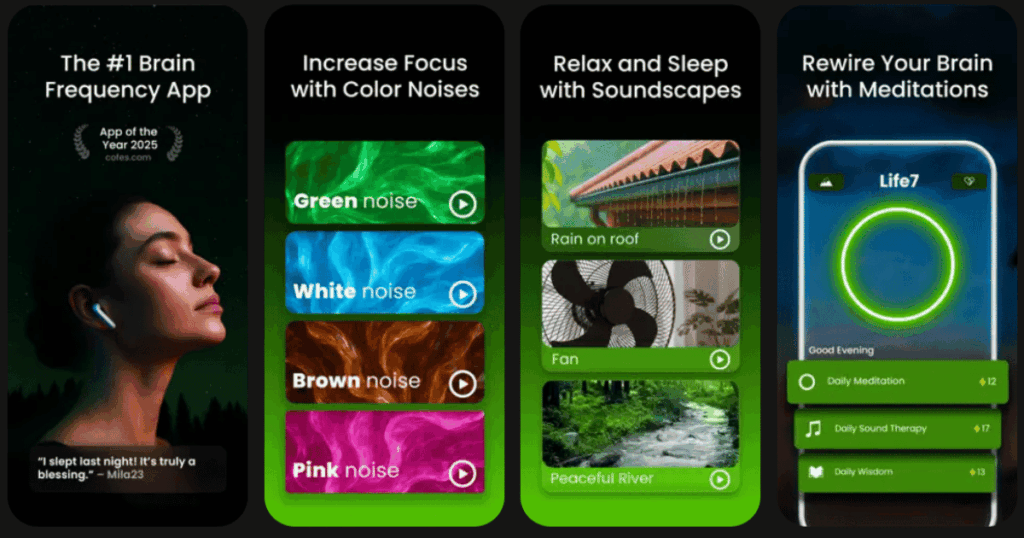
Life7 is the ultimate mental health app for busy healthcare workers who need support around the clock. This app packs everything you need into one place. It offers binaural beats, calming soundscapes, and guided meditations to help you decompress after intense shifts.
What makes Life7 stand out is its variety. You get green noise, white noise, brown noise, and pink noise options. There are also special frequencies like 432 Hz and 528 Hz for deep relaxation. The app includes sleep stories for both adults and kids, making it perfect for the whole family.
Key Features:
- SOS sessions designed specifically to calm anxiety and panic attacks during or after stressful shifts
- Daily check ins, meditations, and wisdom sessions to build consistent wellness habits
- Hypnotherapy, CBT exercises, and vagus nerve stimulation all in one app
What I like: I really appreciate how Life7 covers so many bases. Whether I need quick breathing exercises between patients or a full sleep story after a 12 hour shift, it has me covered. The gamified approach keeps me motivated. I can earn XP and unlock new content as I progress. The mood tracking feature helps me spot patterns in my stress levels throughout the week.
What I don’t like: The free version is a bit limited. You will probably want to upgrade to premium to access the full library of content. It can feel overwhelming at first with so many options to explore.
Pricing: 7 day free trial available. Weekly, monthly, and yearly plans offered with frequent special deals.
Platforms: iOS and Android
#2. Headspace – Best for Stress Reduction and Mindfulness
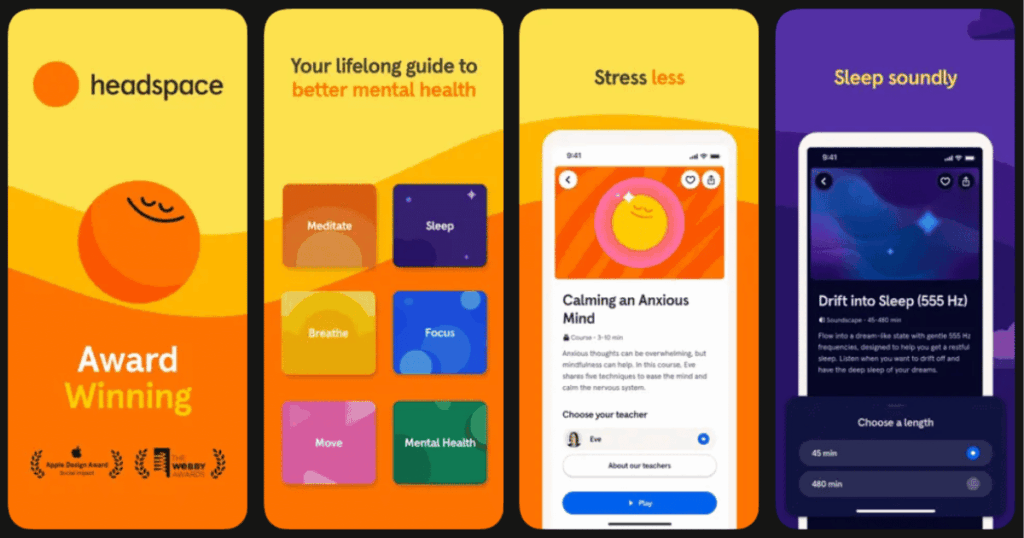
Research shows that Headspace can effectively reduce stress among healthcare workers. Studies found that using the app improved compassion satisfaction and decreased burnout in hospital nurses.
The app offers structured meditation programs that fit perfectly into busy schedules. Even 10 minutes between shifts can make a real difference. The guided meditation makes it easier for people with a lot on their minds to get calm and focused.
Key Features:
- Sleep stories, guided meditation, and stress release workouts designed for shift workers
- Quick tools like the 60 second Breathe Bubble and Panic SOS for immediate relief
- 24/7 mental health coaching available in just 2 minutes
What I like: The app promotes inner calm and has been shown to reduce fear and anxiety in healthcare workers. I love how the structured programs break things down into manageable daily sessions. The sleep content is particularly helpful after working night shifts. The interface is clean and easy to navigate even when you are exhausted.
What I don’t like: The premium version can be pricey for those paying out of pocket. Some of the meditation sessions may feel too long when you only have a few minutes to spare.
Pricing: Free plan with limited features. Premium subscription around $40 per year.
Platforms: iOS, Android, Web, Apple Watch, and more
#3. Calm – Best for Sleep Improvement and Relaxation
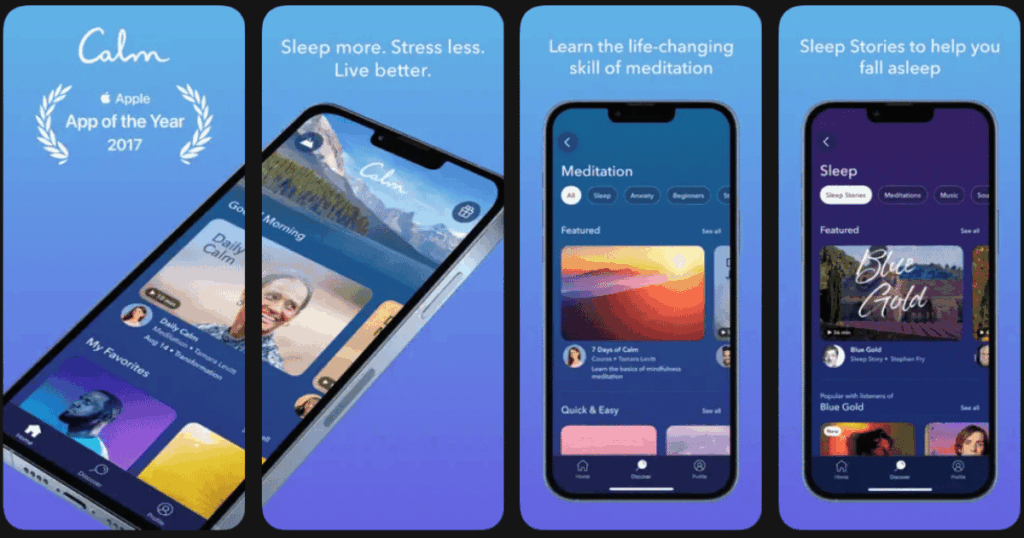
Calm is one of the most popular mental health apps available, offering over 500 Sleep Stories, soundscapes, and guided meditations to support better rest. For healthcare workers dealing with irregular schedules, quality sleep is everything.
The app is designed with simplicity in mind. You can quickly find what you need without scrolling through endless menus. This remains one of the most downloaded meditation apps for good reason.
Key Features:
- Sleep stories narrated by celebrities like Harry Styles, Matthew McConaughey, and Bob Ross
- Daily Calm provides fresh meditation content every single day
- Calm Body offers stretches and exercises for physical tension relief
What I like: The sleep stories and bedtime visualizations help you rest after back to back shifts. I find the celebrity narrated stories genuinely relaxing. The Daily Calm feature gives me something new each day so content never feels stale. The masterclasses on topics like anxiety and gratitude offer deeper learning when I have extra time.
What I don’t like: The subscription cost is higher than some competitors. You need premium access to unlock most of the good content, and the free version feels quite limited.
Pricing: Free plan with limited features. Premium around $40 per year.
Platforms: iOS, Android, Web
#4. Wysa – Best for AI Powered Emotional Support

Wysa strongly engages healthcare workers, especially those with mild to moderate symptoms of anxiety. In one study, 80% of healthcare staff who used Wysa completed at least 2 sessions, with users averaging about 11 sessions over several weeks.
The friendly AI penguin offers 24/7 support without judgment. You can vent, work through problems, or practice coping skills anytime you need. Wysa has high usability and engagement ratings and has helped both general populations and patients with anxiety and depression.
Key Features:
- Combines an empathetic AI with over 150 CBT, DBT, and mindfulness tools
- Optional access to licensed mental health coaches for text based therapy sessions
- Anonymous and secure mood check ins with personalized support suggestions
What I like: Wysa made their premium tools free for frontline healthcare workers during the pandemic. The app feels like chatting with a caring friend at 3 AM when you cannot sleep. It never judges you and always offers helpful techniques. The sleep and anxiety interventions have strong repeat use rates among healthcare workers.
What I don’t like: Advanced insights and human coaching require the premium tier. Like most chatbots, it has limited long term memory of your past conversations.
Pricing: Free version with core features. Premium subscription for full access and coaching.
Platforms: iOS and Android
#5. Happify – Best for Building Positive Habits

Happify is a science based platform designed to help you build lasting happiness. It features games, tools, and exercises that help shift your mindset and promote wellness while reducing stress.
The app takes a playful approach to mental health. Instead of feeling like work, the activities feel like games. Rooted in cognitive behavioral therapy, it provides structured activities to encourage positivity.
Key Features:
- Science backed games and activities based on positive psychology research
- Personalized tracks for specific goals like reducing stress or improving relationships
- Community features to connect with others on similar journeys
What I like: Happify is perfect for short breaks or unwinding after a long shift. The game format keeps things light and engaging. I appreciate how it focuses on building strengths rather than just fixing problems. The quick activities fit into even the busiest days.
What I don’t like: Some activities can feel repetitive over time. The premium cost may be too high for users who just want basic stress relief features.
Pricing: Free version available. Premium subscription for full access.
Platforms: iOS and Android
#6. BetterHelp – Best for Professional Online Therapy

BetterHelp is the largest therapy app in the world, with a base of more than 30,000 licensed professionals. For healthcare workers who need real therapy rather than just self help tools, this platform delivers.
The platform offers therapy through live video calls, phone sessions, and secure in app messaging. It promotes scheduling flexibility where users are free to change therapists at any time and book sessions when convenient.
Key Features:
- Access to licensed therapists via phone calls, messaging, video calls, or live chat
- Financial aid available that can reduce monthly cost by 10 to 40 percent
- Ability to switch therapists easily if your first match is not the right fit
What I like: About 86 percent of users were satisfied with the first therapist they were matched with, and 90 percent had their first appointment within six days of signing up. I appreciate the flexibility to message my therapist between sessions. The therapist matching process is thorough and helps find a good fit quickly.
What I don’t like: BetterHelp does not accept insurance and focuses exclusively on cash pay for therapy services. Weekly costs can add up over time for those without financial aid.
Pricing: Starts at around $70 per week for messaging and one live session.
Platforms: iOS, Android, Web
#7. Sanvello – Best for CBT Based Stress Management

Sanvello helps people struggling with stress, anxiety, or depression using mindfulness and cognitive behavioral therapy skills. The app brings together multiple tools in one convenient place.
The app provides short courses, journaling tools, and mindfulness exercises that help users learn and practice CBT skills. Recent updates have expanded the content to cover even more aspects of health.
Key Features:
- Guided meditations, journals, and courses based on proven CBT methods
- Mood and health tracking to identify patterns and triggers
- Access to licensed therapists through AbleTo for personalized support
What I like: Sanvello has a community aspect where you can chat with others dealing with similar issues. The structured CBT exercises teach real skills you can use outside the app. The combination of self guided tools and optional therapy access gives you flexibility in how much support you want.
What I don’t like: Much of the app is self guided with no live support in a crisis unless you pay extra for a therapist. Therapy is not offered in all states, and insurance coverage is not wide enough.
Pricing: Premium version costs $8.99 monthly or $53.99 annually. Therapist access costs extra.
Platforms: iOS and Android
#8. Bearable – Best for Tracking Mental and Physical Health
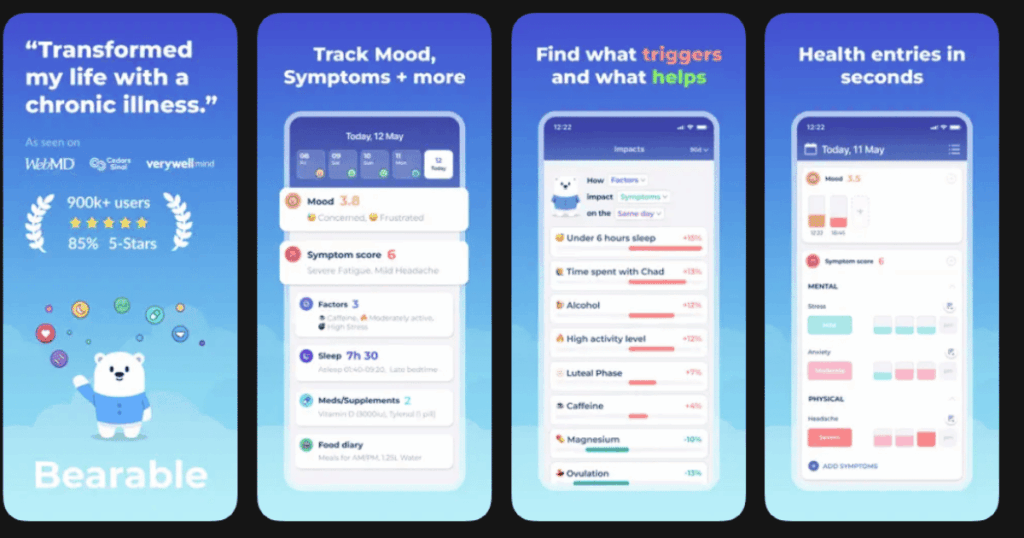
Bearable helps you track how different shifts affect your mental and physical wellbeing. For healthcare workers whose schedules, stress levels, and sleep change daily, this detailed tracking is invaluable.
By logging data, users can explore how daily habits, treatments, and lifestyle choices impact their health. Built with input from real users, Bearable supports more explicit conversations with healthcare providers.
Key Features:
- Track physical and emotional wellbeing including journal entries, sleep quality, and energy levels
- Identify trends and potential triggers to understand what influences your mental health
- Detailed reports you can share with your doctor or therapist
What I like: I love how Bearable connects the dots between my shifts, sleep, and mood. It helped me realize that my anxiety spikes after certain types of shifts. Understanding these patterns helps make informed decisions to support emotional stability and reduce burnout. The customization options let me track exactly what matters to me.
What I don’t like: The app requires consistent logging to be useful, which takes effort. Some features can feel complicated to set up at first.
Pricing: Free plan with core features. Premium subscription at $34.99 per year.
Platforms: iOS and Android
#9. Talkspace – Best for Comprehensive Therapy with Medication
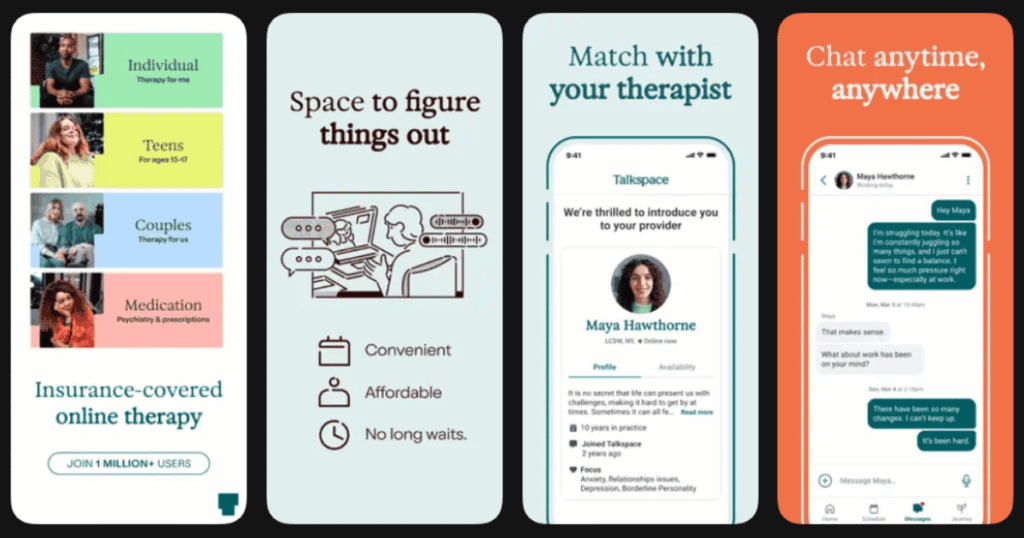
Talkspace differentiates itself by offering access to psychiatrists and prescribers, allowing for a more comprehensive approach to care. If you need medication support alongside therapy, this platform is a strong choice.
Talkspace focuses more on working with insurance plans and offers a standalone text therapy option that no other major platform provides. You can have a therapist available pretty much around the clock with guaranteed response times.
Key Features:
- Online psychiatric evaluations and medication management services
- Standalone text messaging subscription with guaranteed response times
- Live workshops and webinars on various mental health topics
What I like: Talkspace accepts most major insurance plans and Medicare Part B, with most insured members having a $0 copay. Having psychiatry and therapy in one place is incredibly convenient. The text therapy option is perfect for busy healthcare workers who cannot always make scheduled video calls.
What I don’t like: The process can take time to see effects if you are looking for immediate results. Out of pocket costs without insurance are higher than some competitors.
Pricing: Messaging only therapy starts at $69 per week. Plans with video sessions run $99 to $109 per week.
Platforms: iOS, Android, Web
Do Mental Health Apps Really Help Healthcare Workers?
Yes, research strongly supports that mental health apps can benefit healthcare workers. A large study with over 2,000 NHS staff found that Headspace led to greater reductions in stress compared to a control group. Another study showed that mindfulness apps helped reduce fear and improve compassion satisfaction among healthcare workers during the pandemic.
These apps work best as a supplement to professional care, not a replacement. They are especially useful for daily stress management, improving sleep quality, and building coping skills. For serious mental health conditions, connecting with a licensed therapist through platforms like BetterHelp or Talkspace is recommended.
The key is finding an app that fits your schedule and preferences. Some people prefer guided meditations while others want AI chat support at 3 AM. The best app is one you will actually use consistently.
Can I Use These Apps During Work Breaks?
Absolutely! Many of these apps are designed specifically for quick sessions during busy days. Mindfulness has clinically proven benefits for reducing anxiety and managing stress. Even 5 to 10 minutes can make a difference in how you feel.
Life7 offers SOS sessions for immediate anxiety relief. Headspace has quick breathing exercises and the 60 second Breathe Bubble feature. Calm provides short meditation sessions for time pressed moments. These tools can be used anywhere, even during a commute or between shifts.
Many healthcare workers find that taking a few mindful moments before entering a difficult patient room helps them stay calm and focused. Others use sleep content right before rest to maximize their limited downtime.
Are Free Versions of These Apps Worth Using?
Free versions can definitely provide value, though premium features often offer a more complete experience. Most apps on this list offer free trials or basic free plans so you can test them before committing.
Life7 offers a 7 day free trial to explore its full library. Headspace, Calm, and Wysa all have free tiers with limited but useful content. Sanvello and Bearable provide core tracking and some exercises at no cost. Free versions work well for people who want occasional support without regular commitment.
If you find yourself using an app daily and hitting limits, upgrading to premium is usually worth the investment. Your mental health is as important as your physical health, and these tools cost far less than traditional therapy sessions.