9 best mental health tracking apps
| App Name | Best For | Key Features | AC Rating | Pricing |
|---|---|---|---|---|
| Life7 | All-in-one mental wellness | Binaural beats, CBT, sleep stories | 4.8/5 | Free trial, then subscription |
| Calm | Sleep and relaxation | Guided meditations, sleep stories, music | 4.5/5 | Free version, premium subscription |
| Daylio | Quick mood journaling | Icon-based tracking, charts, goals | 4.7/5 | Free version, premium subscription |
| Bearable | Detailed symptom tracking | Custom tracking, correlations, reports | 4.6/5 | Free version, premium subscription |
| Moodfit | CBT-based mental fitness | Mood tracking, breathing exercises, journaling | 4.6/5 | Free version, premium subscription |
| Finch | Gamified self-care | Virtual pet, daily goals, mood check-ins | 4.8/5 | Free version, premium subscription |
| Headspace | Meditation beginners | Guided sessions, sleep sounds, mindfulness | 4.5/5 | Free trial, then subscription |
| Wysa | AI therapy support | AI chatbot, CBT tools, coaching option | 4.6/5 | Free version, premium subscription |
| Youper | AI-powered mood management | CBT conversations, mood tracking, insights | 4.5/5 | Free trial, then annual subscription |
#1. Life7 – Best for All-in-One Mental Wellness
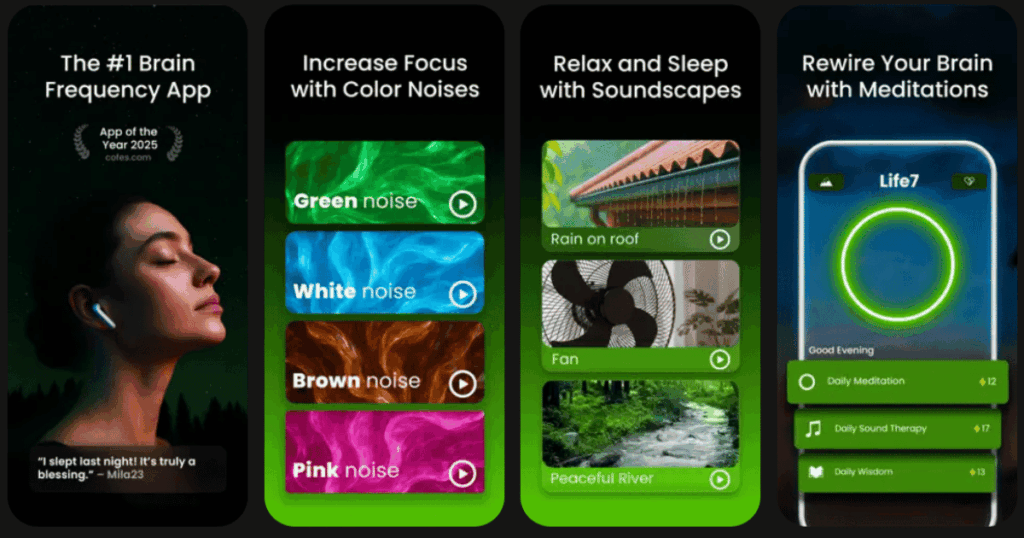
Life7 is the app I recommend most for anyone wanting to improve their mental health. It combines so many helpful tools in one place. You get guided meditations, sleep stories, breathing exercises, and even special sound frequencies.
The app uses science-backed methods like CBT and hypnotherapy. It also has unique features like binaural beats and vagus nerve stimulation. Whether you struggle with anxiety, sleep issues, or just want to feel calmer, Life7 has something for you.
I love that there are new sessions every single day. You can track your progress and even earn rewards as you meditate. With over 312 million meditation minutes logged by users, this app clearly works for lots of people.
Key Features:
- Extensive library including binaural beats, solfeggio frequencies, and nature sounds
- Daily sessions for meditation, music therapy, and wisdom
- Gamified approach with XP rewards and streak tracking
What I like: I really appreciate how Life7 offers so much variety. The panic attack SOS sessions have been a lifesaver for me. The sound therapy options are incredible with green noise, brown noise, and brain wave music. I also love the backdrop mode that lets me mix soundscapes with other content. The daily check-ins help me stay consistent with my mental health journey.
What I don’t like: The free version is a bit limited. You need to upgrade to access most of the good content. However, they do offer frequent special deals that make it more affordable.
Pricing: 7 day free trial available. Weekly, monthly, and yearly plans offered with frequent special promotions.
Platforms: iOS and Android
#2. Calm – Best for Sleep and Relaxation
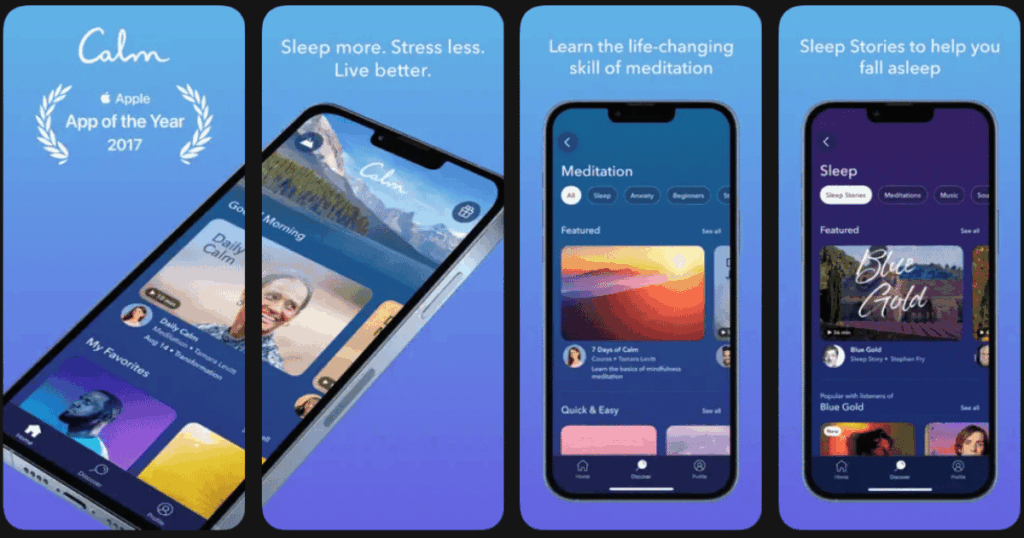
Calm is one of the most popular meditation apps in the world. It focuses on helping you relax, sleep better, and reduce stress. The app has beautiful design and soothing visuals that instantly make you feel peaceful.
The sleep stories are what made Calm famous. Celebrities like Matthew McConaughey read bedtime stories to help you drift off. There are also hundreds of guided meditations for different needs.
Key Features:
- Sleep stories narrated by celebrities and experts
- Guided meditations for stress, anxiety, and focus
- Daily Calm sessions with new content every day
What I like: The sleep stories are absolutely amazing. I fall asleep so much faster when I listen to them. The Daily Calm gives me something new to look forward to each morning. The kids section is also really well done if you have children who need help relaxing.
What I don’t like: Calm is one of the pricier apps out there. Most of the best content is locked behind the premium subscription.
Pricing: Free version with limited content. Premium subscription available monthly or annually.
Platforms: iOS and Android
#3. Daylio – Best for Quick Mood Journaling

Daylio is perfect if you want to track your mood without writing a lot. You simply tap on emoji faces to record how you feel. Then you select what activities you did that day.
Over time, Daylio shows you patterns. You can see which activities make you happier and which ones bring you down. It takes just seconds to log each entry, so it is easy to stick with.
Key Features:
- One-tap mood logging with emojis
- Activity and habit tracking with custom icons
- Visual charts showing mood patterns over time
What I like: I love how quick and simple Daylio is. Even on my worst days, I can manage to tap a few buttons. The Year in Pixels feature that shows your whole year in colored dots is so satisfying to look at. The stats really helped me understand my mood triggers.
What I don’t like: There is not much guidance on what to do with the insights you get. It tracks your mood but does not offer tools to improve it.
Pricing: Free version available with basic features. Premium subscription unlocks advanced stats and backups.
Platforms: iOS and Android
#4. Bearable – Best for Detailed Symptom Tracking
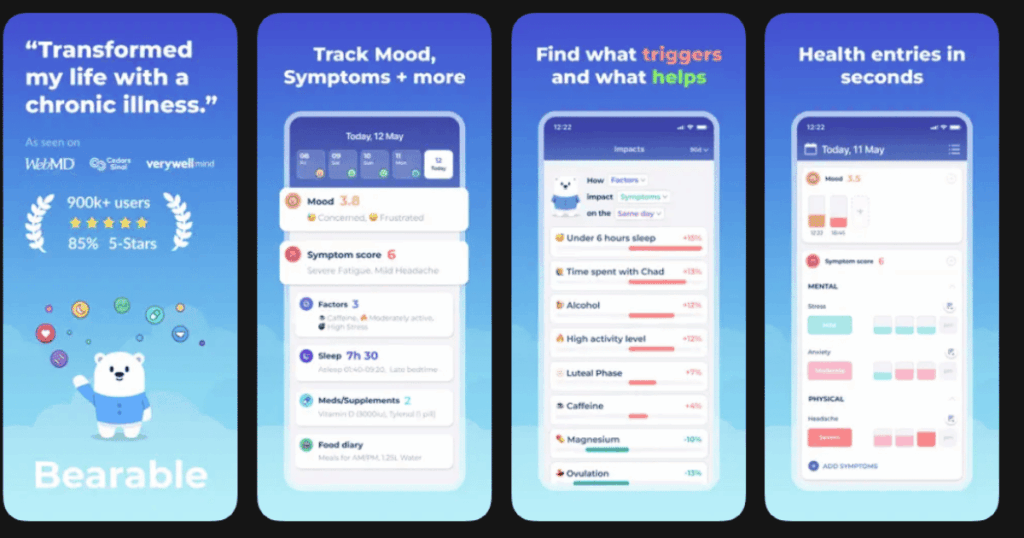
Bearable is the most customizable health tracker I have found. It lets you track mood, symptoms, sleep, energy, medications, and so much more. Then it shows you how all these factors connect.
This app is especially helpful if you deal with chronic conditions. You can see exactly what helps or hurts your symptoms. Many doctors actually recommend Bearable to their patients.
Key Features:
- Highly customizable tracking for any health metric
- Correlation reports showing what affects your wellbeing
- Weekly insights and detailed graphs
What I like: The level of detail in Bearable is amazing. I can track literally anything I want. The correlation feature helped me discover that certain foods were affecting my mood. Being able to share reports with my therapist has been really valuable.
What I don’t like: All the customization options can feel overwhelming at first. It takes some time to set up the app exactly how you want it.
Pricing: Generous free version available. Premium subscription adds advanced insights and unlimited history.
Platforms: iOS and Android
#5. Moodfit – Best for CBT-Based Mental Fitness

Moodfit treats your mental health like physical fitness. It gives you exercises and workouts for your mind. The app is built on cognitive behavioral therapy principles, which are proven to help with anxiety and depression.
You can track your mood, practice gratitude, do breathing exercises, and journal your thoughts. Moodfit then shows you what activities boost your mood the most.
Key Features:
- CBT thought record tool for changing negative thinking
- Breathing exercises and mindfulness activities
- Medication tracking with mood correlation
What I like: I appreciate that Moodfit is based on real therapy techniques. The CBT journal helps me catch and change my negative thoughts. The breathing exercises are easy to follow and actually help me calm down. The free version is surprisingly generous.
What I don’t like: The app can be a bit buggy sometimes. It occasionally freezes or does not update properly.
Pricing: Free version with most features. Premium subscription available for additional tools.
Platforms: iOS and Android
#6. Finch – Best for Gamified Self-Care
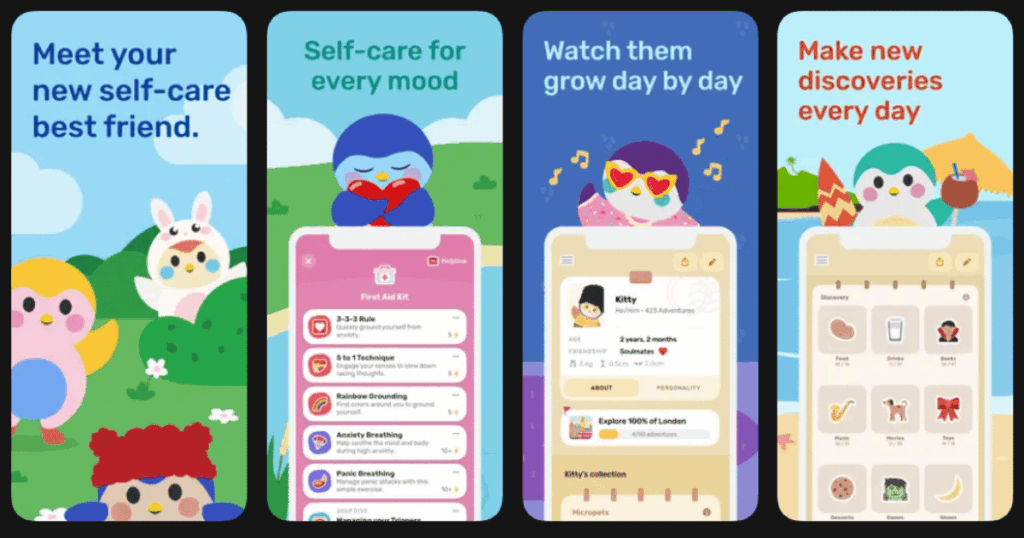
Finch turns self-care into a cute game. You adopt a virtual bird and take care of it by taking care of yourself. When you complete goals like drinking water or going for a walk, your bird gets energy to go on adventures.
This app is perfect if you struggle to stick with healthy habits. Watching your little bird grow and collect outfits is surprisingly motivating.
Key Features:
- Virtual pet that grows as you complete self-care tasks
- Customizable daily goals and habit tracking
- Mood check-ins and breathing exercises
What I like: Finch makes self-care actually fun. I find myself doing healthy things just so my bird can go on adventures. The community feature where friends can send each other encouragement is really sweet. The gentle approach never makes me feel guilty for missing a day.
What I don’t like: You have to wait quite a while between interacting with your bird. The premium version also costs more on Android than iOS for some reason.
Pricing: Free version with most features. Finch Plus subscription adds extra customization.
Platforms: iOS and Android
#7. Headspace – Best for Meditation Beginners
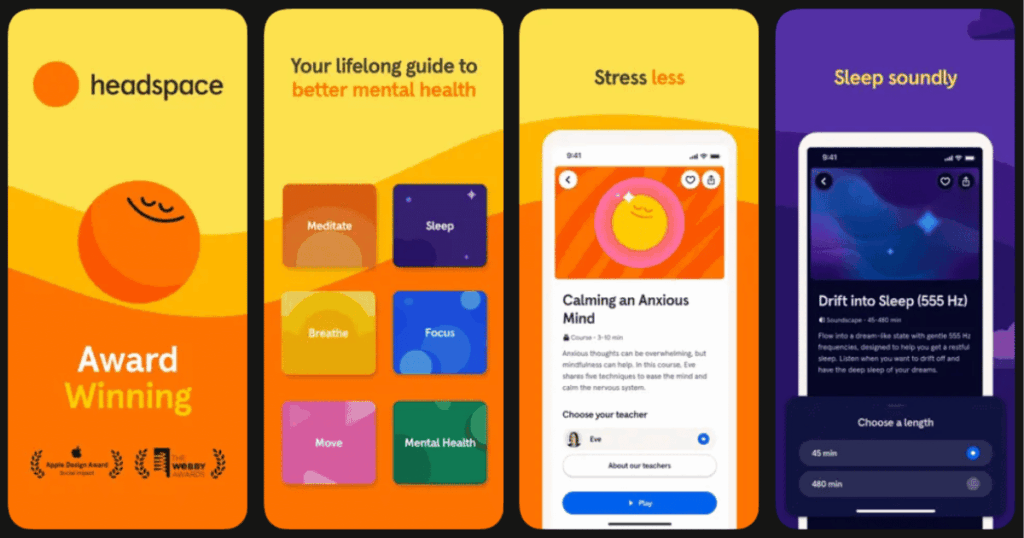
Headspace is one of the best apps for learning meditation from scratch. It teaches you the basics step by step in a friendly, approachable way. The animations explaining how meditation works are really helpful.
The app covers everything from stress and sleep to focus and fitness. It even has content specifically designed for kids and teens.
Key Features:
- Structured meditation courses for beginners
- Sleep sounds and wind-down exercises
- Focus music for work and study
What I like: Headspace made meditation finally click for me. The courses build on each other so you keep improving. The sleep content is excellent, and I use the focus playlists while working. The animated videos make complex concepts easy to understand.
What I don’t like: It uses the same few teachers repeatedly, which can feel repetitive. The app is also quite expensive compared to some alternatives.
Pricing: Free trial available. Premium subscription required for full access.
Platforms: iOS and Android
#8. Wysa – Best for AI Therapy Support

Wysa is an AI chatbot that acts like a supportive friend who knows therapy techniques. You can text with the cute penguin character anytime, day or night. It uses CBT and other evidence-based methods to help you work through problems.
If you want more support, you can also connect with human coaches through the app. This makes Wysa a bridge between self-help and professional therapy.
Key Features:
- AI chatbot using CBT and DBT techniques
- Over 150 self-help exercises and tools
- Optional text-based human coaching
What I like: Having someone to talk to at 3am when I cannot sleep is invaluable. Wysa never judges and always has helpful suggestions. The variety of exercises for different problems is impressive. The anonymous nature makes it easy to be honest about how I feel.
What I don’t like: The AI chatbot sometimes misunderstands what I am saying. The premium version with human coaching is quite expensive.
Pricing: Free version with basic chatbot access. Premium subscriptions for full tools and coaching.
Platforms: iOS and Android
#9. Youper – Best for AI-Powered Mood Management

Youper uses artificial intelligence to deliver personalized CBT therapy. The chatbot asks about your feelings and guides you through exercises tailored to your specific struggles. It has been clinically tested and shown to reduce anxiety and depression symptoms.
The app creates a personalized plan based on your goals. Whether you want to manage anxiety, improve sleep, or build confidence, Youper adapts to help you.
Key Features:
- AI chatbot delivering personalized CBT exercises
- Mood tracking with pattern recognition
- Personalized mental health plans
What I like: Youper feels more personalized than other chatbot apps. The mood tracking helps me see patterns I would not notice otherwise. Knowing the app is backed by research from Stanford makes me trust it more. The daily check-ins are quick but meaningful.
What I don’t like: There is no free version after the trial ends. You must pay for the yearly subscription to keep using it.
Pricing: 7 day free trial. Annual subscription only at a set yearly rate.
Platforms: iOS and Android
Are Mental Health Apps Actually Helpful?
Yes, many mental health apps can genuinely help improve your wellbeing. Research shows that apps using cognitive behavioral therapy techniques can reduce symptoms of anxiety and depression. However, apps work best as a supplement to professional care, not a replacement.
The key is finding an app that matches your needs and actually using it consistently. Most apps require regular use over weeks or months to see real benefits. Start with the free versions to see what works for you before committing to subscriptions.
Can Mental Health Apps Replace Therapy?
Mental health apps are not meant to replace professional therapy. They work best as tools to support your mental health between therapy sessions. Or they can be a helpful first step if you are not ready for traditional therapy yet.
If you are dealing with serious mental health issues, please reach out to a licensed therapist or counselor. Apps can teach coping skills and help you track your progress. But a trained professional can provide diagnosis, personalized treatment, and support for complex issues.
What Should I Look for in a Mental Health App?
Look for apps that use evidence-based techniques like CBT, mindfulness, or DBT. Check if mental health professionals helped develop the app. Read reviews from other users to see if the app actually helps people with similar concerns.
Also consider your specific needs. Do you want mood tracking, meditation, therapy exercises, or all of the above? Try free versions first to see if you enjoy using the app. An app only helps if you actually use it regularly. Finally, check the privacy policy to understand how your sensitive data will be protected.