9 Best Daily Mental Health Apps For Your Phone
| App Name | Best For | Key Features | AC Rating | Pricing |
|---|---|---|---|---|
| Life7 | All-in-one mental wellness | Binaural beats, CBT, sleep stories, 8D audio | 4.8/5 | Free trial, then subscription |
| Headspace | Beginners learning meditation | Guided courses, sleepcasts, AI companion | 4.5/5 | Free trial, then subscription |
| Calm | Sleep improvement and relaxation | Sleep stories, celebrity narrations, Daily Calm | 4.4/5 | Free trial, then subscription |
| Insight Timer | Free meditation library access | 200,000+ free meditations, live events, community | 4.5/5 | Free with optional premium |
| Finch | Gamified habit building | Virtual pet, mood tracking, breathing exercises | 4.6/5 | Free with optional premium |
| Daylio | Mood tracking without writing | Visual mood journal, habit tracking, statistics | 4.3/5 | Free with optional premium |
| Moodfit | CBT based mood improvement | Journaling, CBT tools, personalized insights | 4.2/5 | Free with optional premium |
| Wysa | AI mental health support | AI chatbot, CBT exercises, 24/7 availability | 4.3/5 | Free with optional premium |
| Happify | Science based stress relief | Games, activities, positive psychology tracks | 4.1/5 | Free with optional premium |
#1. Life7 – Best for All-in-one Mental Wellness
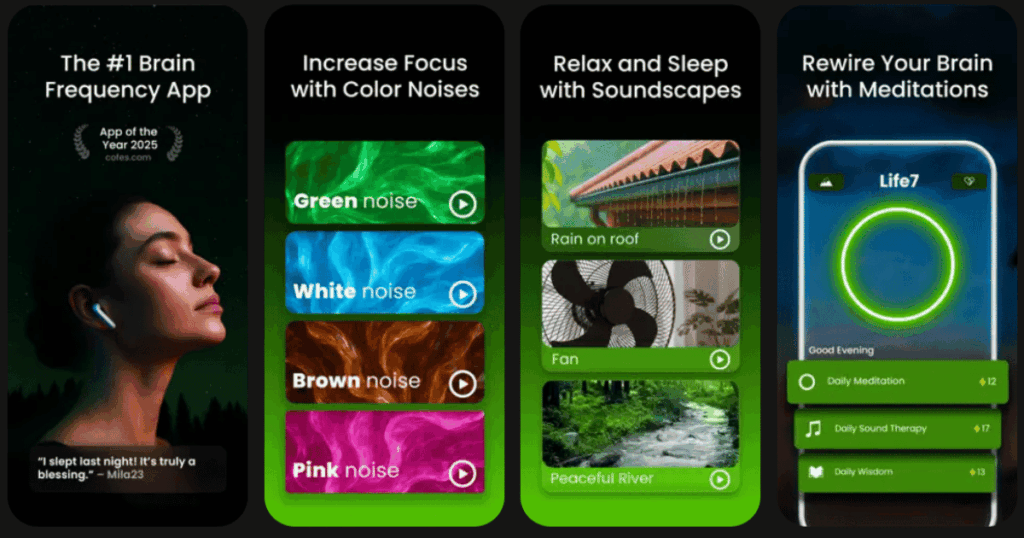
Life7 stands out as the most complete mental wellness app I have found. It combines meditation, sleep support, and mental health tools all in one place. The app offers an impressive library of features including binaural beats, CBT exercises, and calming soundscapes.
What makes Life7 special is its variety. You get delta, theta, alpha, beta, and gamma wave music. There are also 432 Hz and 528 Hz solfeggio frequencies for deep relaxation. The app includes bedtime stories for both adults and children too.
Life7 has earned over 1200 editorial mentions and users have logged more than 312 million meditation minutes.
Key Features:
- SOS sessions for panic attacks and anxiety relief with quick breathing exercises
- Daily check-ins with new meditation, music therapy, and wisdom sessions every day
- Gamified approach where you earn XP and unlock premium soundscapes
What I like: I really enjoy how Life7 offers something for everyone. Whether I need quick stress relief or a deep sleep meditation, it has me covered. The binaural beats and isochronic tones actually help me focus during work. The vagus nerve stimulation exercises have become part of my morning routine. Plus, the progress dashboard keeps me motivated to maintain my streak.
What I don’t like: The free content is somewhat limited. You need a subscription to access most of the good stuff. This might frustrate users who want to try everything before committing.
Pricing: 7 day free trial available. Weekly, monthly, and yearly plans offered. Frequent special offers pop up throughout the year.
Platforms: iOS and Android
#2. Headspace – Best for Beginners Learning Meditation
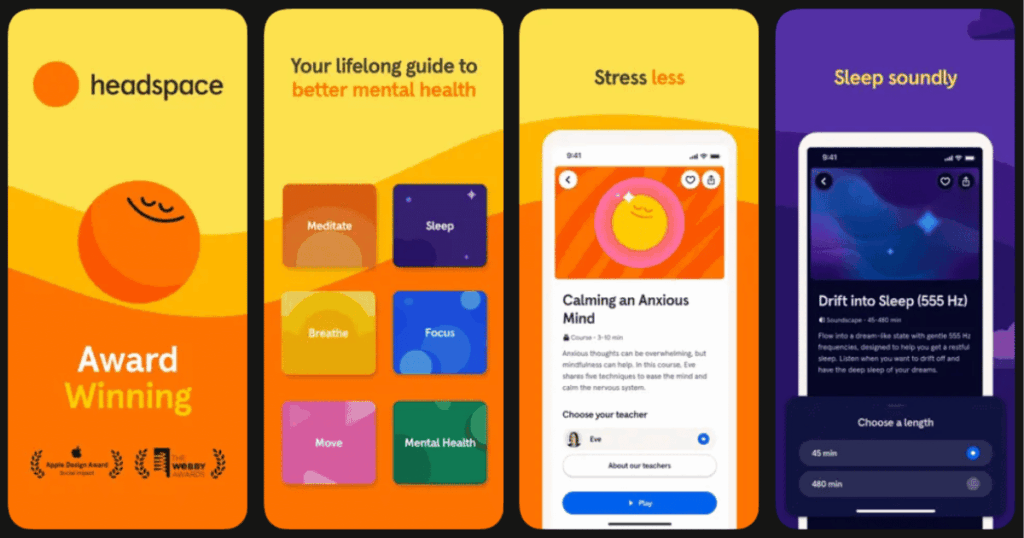
Headspace has been teaching people meditation basics since 2010. The app uses a friendly, cartoon style design that makes meditation feel approachable. Their structured courses walk you through mindfulness step by step.
The app features over 500 guided meditations led by experienced teachers. Andy Puddicombe, the cofounder, guides many sessions himself. New users especially love how Headspace explains the “why” behind each exercise.
Key Features:
- Ebb AI companion provides personalized recommendations based on your mood
- Sleepcasts are audio experiences designed to help you drift off naturally
- Focus music and movement exercises combine physical and mental wellness
What I like: Headspace makes meditation feel less intimidating. The animations are charming and the explanations are crystal clear. I appreciate how the app tracks my progress and celebrates small wins. The community stories feature also inspires me to keep going when motivation dips.
What I don’t like: Everything sits behind a paywall. Unlike some competitors, there is almost no free content after your trial ends. This can feel frustrating if you are on a tight budget.
Pricing: Free trial available. Monthly and annual subscription options. Student and family plans offered at reduced rates.
Platforms: iOS and Android
#3. Calm – Best for Sleep Improvement and Relaxation
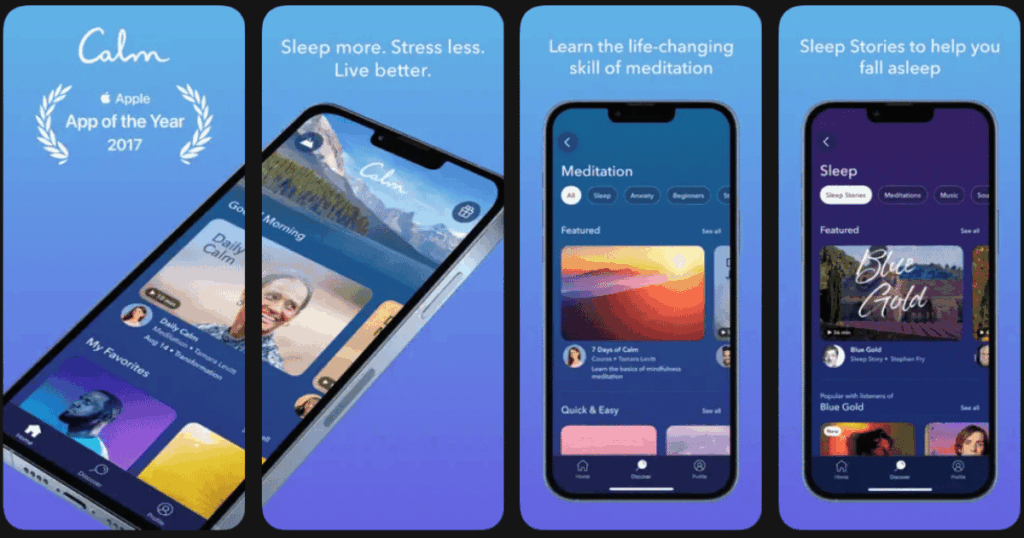
Calm has earned its reputation as the “world’s happiest app” through beautiful design and quality content. The app focuses heavily on sleep support and stress reduction. Celebrity narrated Sleep Stories have become wildly popular.
Over 500 Sleep Stories feature voices from famous actors and storytellers. The Daily Calm offers a fresh mindfulness theme each morning. Nature scenes and soothing sounds create a peaceful atmosphere throughout.
Key Features:
- Sleep Stories with celebrity narrations including Matthew McConaughey and others
- Breathe Bubble and Panic SOS tools provide quick stress relief in 60 seconds
- Calm Body section includes stretching and movement for physical wellness
What I like: The production quality on Calm is outstanding. The Sleep Stories genuinely help me wind down after stressful days. I love how the Daily Calm gives me a new perspective each morning. The Masterclasses from experts provide deeper learning on important topics.
What I don’t like: The subscription price sits higher than some alternatives. Also, if you want variety in meditation teaching styles, Calm can feel limited compared to apps with larger teacher networks.
Pricing: 7 day free trial. Monthly, annual, and lifetime subscription options available.
Platforms: iOS and Android
#4. Insight Timer – Best for Free Meditation Library Access
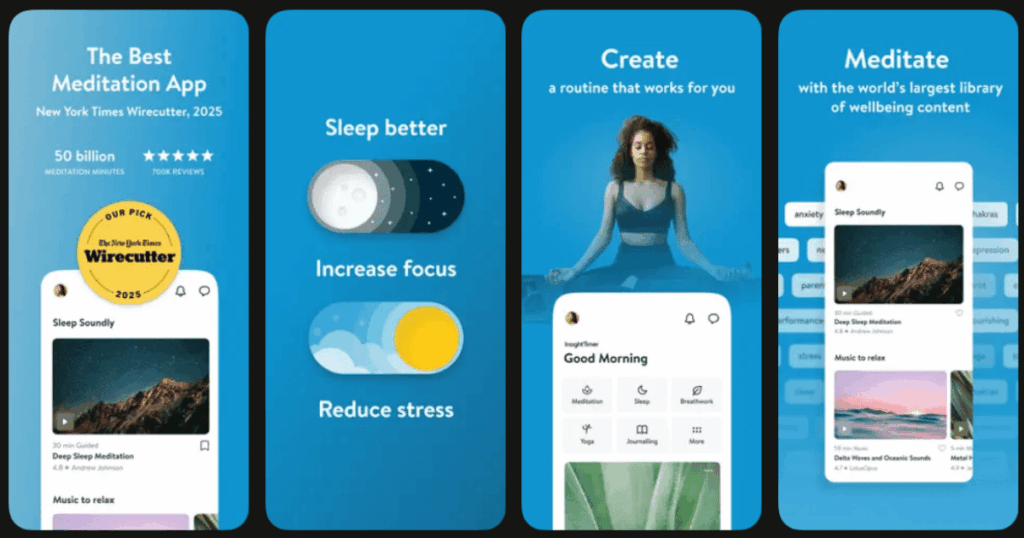
Insight Timer offers the largest free meditation library available anywhere. Over 200,000 guided meditations from 18,000 teachers await you. The app started as a simple timer but grew into something massive.
The community aspect sets Insight Timer apart. You can join groups, attend live events, and connect with other meditators worldwide. New meditations get added daily, so content stays fresh.
Key Features:
- Over 200,000 free guided meditations covering every style imaginable
- Live meditation and yoga events happen every hour of the day
- Customizable meditation timer for self guided practice
What I like: The free content alone could keep me busy for years. I love discovering new teachers and meditation styles without paying anything. The community groups help me feel connected to others on the same journey. Live events add an exciting interactive element.
What I don’t like: The sheer volume of content can feel overwhelming. Finding exactly what you need takes time. The app interface feels cluttered compared to simpler alternatives. Some users report occasional technical glitches too.
Pricing: Completely free to use. Premium subscription available for advanced features and courses.
Platforms: iOS and Android
#5. Finch – Best for Gamified Habit Building
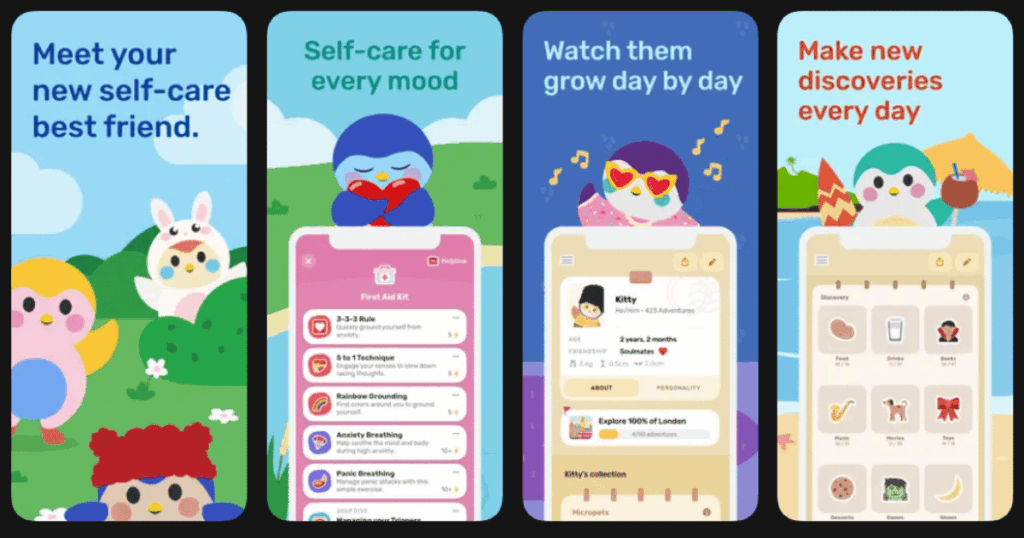
Finch takes a unique approach to self care. You raise a virtual pet bird by completing wellness tasks. This gamified system makes building healthy habits actually fun.
The app works especially well for people who struggle with traditional wellness apps. Completing goals earns your Finch energy for adventures. Your bird grows and evolves as you take better care of yourself.
Key Features:
- Virtual pet that thrives when you complete self care activities
- Tree Town lets you connect with friends and send supportive messages
- Breathing exercises and grounding techniques for immediate anxiety relief
What I like: Finch turned self care into something I actually look forward to. Watching my bird grow motivates me more than any checklist ever did. The ability to connect with friends adds accountability without pressure. The mood tracking revealed patterns I never noticed before.
What I don’t like: You need to wait hours between interactions with your bird, which can frustrate eager users. Some features remain locked behind the premium version. The gamification approach will not appeal to everyone either.
Pricing: Free to download with generous free features. Premium subscription unlocks additional content.
Platforms: iOS and Android
#6. Daylio – Best for Mood Tracking Without Writing

Daylio makes mood journaling incredibly simple. You select your mood with a tap and add activities. No typing required. Over time, patterns emerge that help you understand your emotional life.
The app generates helpful charts and statistics. You can see how activities affect your mood. Goal setting features help you build better habits too.
Key Features:
- One tap mood logging with visual icons instead of writing
- Automatic pattern detection shows what impacts your emotional state
- Private, secure diary that you can export or share as needed
What I like: I finally stuck with mood tracking thanks to Daylio. The no typing approach removes friction completely. Seeing my mood patterns visualized opened my eyes to triggers I never recognized. The streak system keeps me logging consistently.
What I don’t like: Advanced analytics require the premium version. The simplicity that makes Daylio great can also feel limiting if you want deeper reflection tools. No guided meditation or relaxation content included.
Pricing: Free version available with core features. Premium subscription unlocks statistics and customization.
Platforms: iOS and Android
#7. Moodfit – Best for CBT Based Mood Improvement

Moodfit earned recognition as “Best Overall Mental Health App” from multiple reviewers. The app combines mood tracking with cognitive behavioral therapy tools. It helps you identify and change unhelpful thinking patterns.
Journaling, breathing exercises, and mindfulness all work together here. Reports help you spot trends over time. The CBT introduction makes therapy concepts accessible to beginners.
Key Features:
- Cognitive behavioral therapy exercises guide you through reframing thoughts
- Customizable mood and habit tracking with detailed reports
- Breathing and mindfulness exercises for daily practice
What I like: Moodfit bridges the gap between a simple tracker and actual therapy tools. The CBT exercises taught me techniques my therapist also uses. I can share my mood reports directly with my healthcare provider. The evidence based approach feels trustworthy.
What I don’t like: The interface feels more clinical than fun. Users seeking a lighter, more playful experience might find Moodfit too serious. Some of the best features require premium access.
Pricing: Free with basic features. Premium subscription available for advanced tools and unlimited tracking.
Platforms: iOS and Android
#8. Wysa – Best for AI Mental Health Support

Wysa offers an AI chatbot that provides 24/7 mental health support. The friendly penguin character uses CBT and other evidence based techniques. You can talk about anything without judgment.
The AI adapts to your responses and offers personalized exercises. Breathing techniques, meditation, and sleep support round out the experience. Optional human coach access adds another layer of care.
Key Features:
- AI chatbot available anytime for supportive conversations
- Evidence based CBT and mindfulness exercises tailored to you
- Optional access to human coaches for deeper support
What I like: Having someone to “talk” to at 3am makes a real difference. The AI feels surprisingly understanding and never judges. Wysa taught me coping skills I use daily now. The exercises genuinely help during anxious moments.
What I don’t like: AI cannot replace human connection for serious issues. Some conversations feel repetitive after extended use. The premium human coaching adds significant cost.
Pricing: Free AI chatbot with core features. Premium subscription for advanced content and human coaching.
Platforms: iOS and Android
#9. Happify – Best for Science Based Stress Relief

Happify approaches mental wellness through games and activities. Positive psychology, CBT, and mindfulness combine in an engaging format. The app helps you overcome worry and build resilience.
Tracks focus on specific goals like conquering negative thoughts or reducing stress. Quizzes and interactive exercises keep things interesting. Science backs every feature.
Key Features:
- Science based games and activities drawn from positive psychology research
- Customizable tracks targeting specific wellness goals
- Community features let you see others on similar journeys
What I like: Happify made working on my mental health feel like play. The games distracted me from overthinking while actually helping. I appreciated learning the science behind each activity. The tracks gave me clear direction when I felt lost.
What I don’t like: The app can feel less serious than alternatives for people in real distress. Some activities feel simple or repetitive over time. Full access requires premium subscription.
Pricing: Free features available. Premium subscription unlocks all tracks and activities.
Platforms: iOS and Android
What is the Best Free Mental Health App?
Insight Timer offers the most generous free experience. You get access to over 200,000 meditations without paying anything. The free version includes live events, community groups, and unlimited listening.
Finch also provides excellent free content. You can raise your bird and complete many self care activities without upgrading. The core habit building features work great on the free tier.
Life7 offers a free trial that lets you explore everything before committing. This helps you understand the full value before making a decision.
Are Mental Health Apps Really Effective?
Research supports the effectiveness of mental health apps. Studies show that apps using CBT and mindfulness techniques can reduce symptoms of anxiety and depression. People who combine app use with traditional therapy often see enhanced results.
Apps work best for mild to moderate symptoms. They help you build daily habits and learn coping skills. However, apps should not replace professional treatment for serious mental health conditions.
Consistency matters more than which app you choose. Using any quality app regularly will likely bring benefits over time.
How Do I Choose the Right Mental Health App?
Start by identifying your main goal. Do you want better sleep? Try Calm or Life7. Need to build daily habits? Finch works great. Want free content? Choose Insight Timer.
Consider your personality too. Gamified apps like Finch suit playful people. Structured courses from Headspace help beginners. AI support from Wysa works for those who want conversation.
Most apps offer free trials or free versions. Try a few before committing to a subscription. The best app is the one you will actually use every day.