9 Best Apps For Existential Crisis
| App Name | Best For | Key Features | AC Rating | Pricing |
|---|---|---|---|---|
| Life7 | Complete mental wellness transformation | Binaural beats, CBT, sleep stories, SOS sessions | 4.8/5 | Free trial, then subscription plans |
| Headspace | Beginners learning mindfulness | Guided meditations, sleep content, focus exercises | 4.6/5 | Free limited version, premium subscription |
| Calm | Better sleep and relaxation | Sleep stories, nature sounds, breathing exercises | 4.5/5 | Free limited version, premium subscription |
| Woebot | Daily CBT conversations | AI chatbot, mood tracking, gratitude journal | 4.4/5 | Free with access code |
| Insight Timer | Free meditation variety | 200,000+ meditations, community features, timer | 4.5/5 | Free, optional premium |
| Stoic | Philosophical self reflection | Daily journaling, stoicism quotes, breathing exercises | 4.3/5 | Free, premium subscription |
| Youper | AI powered emotional support | CBT chatbot, mood tracking, personalized plans | 4.2/5 | Free trial, annual subscription |
| 7 Cups | Human connection and support | Volunteer listeners, community forums, chat support | 3.8/5 | Free basic, paid therapy option |
| Happify | Building positive thinking habits | Science based games, activities, progress tracking | 4.1/5 | Free limited, premium subscription |
#1. Life7 – Best for Complete Mental Wellness Transformation
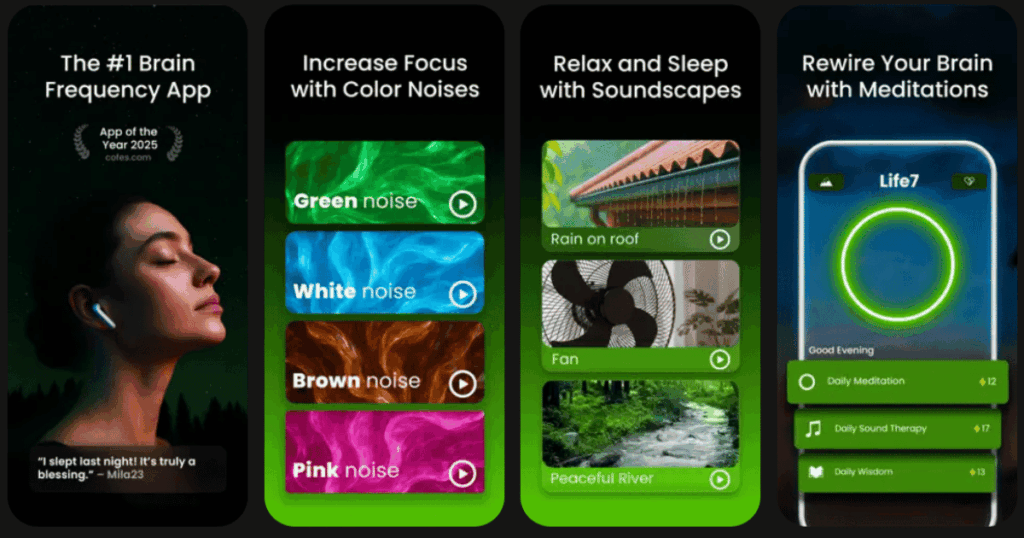
When you feel lost and question life’s meaning, you need more than a simple app. Life7 stands out as a complete mental wellness solution. It combines science backed tools with soothing audio experiences to help you through dark times.
The app offers over 1200 editorial mentions and has logged more than 312 million meditation minutes. That tells me people are finding real help here.
What makes it special is how it tackles existential dread from multiple angles. You get CBT sessions, hypnotherapy, and vagus nerve stimulation. Plus there are SOS sessions specifically for panic attacks and anxiety spirals.
Key Features:
- Binaural beats, isochronic tones, and solfeggio frequencies for deep mental relaxation
- SOS panic sessions and breathing exercises to calm your nervous system fast
- Daily check ins with meditation, music therapy, and wisdom sessions
What I like: I really appreciate how Life7 gives you so many different ways to feel better. Whether you want to listen to sleep stories, do a quick breathing exercise, or dive deep into hypnotherapy, it has you covered. The gamified approach with XP points keeps me coming back. And the mood tracker helps me see patterns in how I feel. The mix of white, brown, pink, and green noise options is fantastic for when my thoughts get too loud.
What I don’t like: The free version is a bit limited in what you can access. You really need to subscribe to get the full experience. But the 7 day free trial lets you test everything first.
Pricing: 7 day free trial available. They offer weekly, monthly, and yearly subscription plans with frequent special offers.
Platforms: iOS and Android
#2. Headspace – Best for Beginners Learning Mindfulness
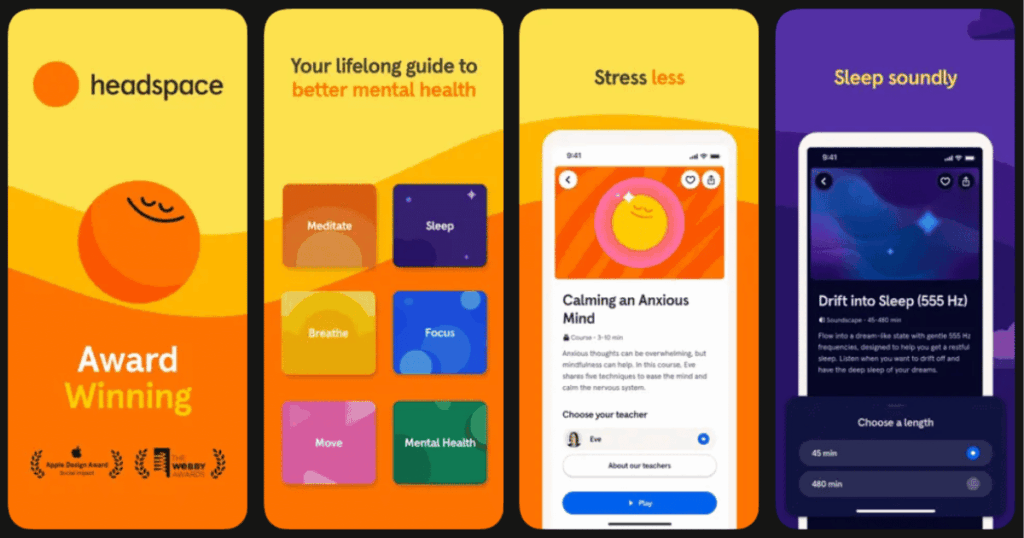
Headspace has become one of the most recognized names in meditation apps. It offers a gentle introduction to mindfulness that feels easy and not overwhelming.
The app uses a simple approach with structured courses. Each lesson builds on the last one. This makes it perfect if you have never meditated before and feel confused about where to start.
Research supports its effectiveness too. Studies show it can reduce anxiety and improve focus within just a few weeks of regular use.
Key Features:
- Structured meditation courses that teach you step by step
- Sleep content including sleepcasts, soundscapes, and bedtime exercises
- Move mode with mindful movement exercises for physical and mental health
What I like: The guided sessions are incredibly well made. The voice is calm without being annoying. I love how they explain why each technique works. The animations and design make opening the app feel peaceful right away. The daily meditation feature keeps me consistent.
What I don’t like: Most of the good content sits behind a paywall. The free version gives you a taste but leaves you wanting more. Also, most sessions are led by one voice which might not appeal to everyone.
Pricing: Limited free version available. Premium subscription required for full library access with a free trial period.
Platforms: iOS and Android
#3. Calm – Best for Better Sleep and Relaxation
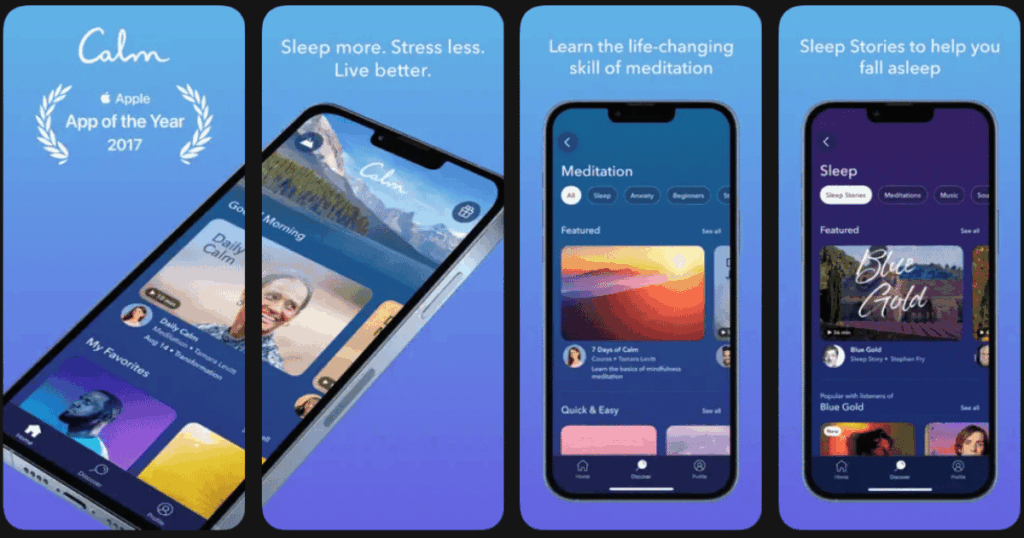
Calm focuses heavily on sleep and relaxation. If your existential thoughts keep you up at night, this app might be your answer.
The sleep stories feature has become legendary. Famous voices like Harry Styles narrate soothing tales designed to help you drift off. It sounds simple but it works surprisingly well.
Beyond sleep, Calm offers meditation programs and breathing exercises. The nature scenes and sounds create a peaceful atmosphere the moment you open it.
Key Features:
- Celebrity narrated sleep stories that gently guide you into dreamland
- Daily calm sessions with new meditations released each day
- Breathing exercises and nature soundscapes for immediate stress relief
What I like: The production quality is top notch. Everything looks beautiful and sounds amazing. Sleep stories have become my nightly ritual. Even on my worst nights full of anxious thoughts, they help quiet my mind. The masterclass content from experts adds real value too.
What I don’t like: The subscription price feels steep compared to some competitors. Customer service can be frustrating if you have billing issues. The app sometimes feels more focused on relaxation than actually addressing deeper mental health concerns.
Pricing: Limited free version. Premium subscription required for most content.
Platforms: iOS and Android
#4. Woebot – Best for Daily CBT Conversations

Woebot takes a unique approach to mental health support. It uses an AI chatbot to walk you through cognitive behavioral therapy techniques. Talking to a robot might sound strange but it actually feels helpful.
Stanford researchers developed the app. Clinical studies show it reduces depression and anxiety symptoms. The friendly cartoon robot makes therapy concepts feel less intimidating.
What I appreciate most is how it teaches you to challenge negative thoughts. When existential dread hits, those skills come in handy.
Key Features:
- AI chatbot that guides you through evidence based CBT techniques
- Daily check ins that track your mood and emotional patterns
- Gratitude journal and mindfulness exercises built right in
What I like: Woebot never judges you. It responds with understanding and immediately offers practical tools. The short conversations fit easily into a busy day. I learned to catch my catastrophic thinking patterns. The app explains why each technique works which helps me trust the process. It is completely free to use.
What I don’t like: Sometimes the responses feel scripted and miss what you actually mean. You need an access code from a provider or employer to use it now. It cannot replace real human therapy for serious issues.
Pricing: Free with access code from provider, employer, or Woebot Health partner.
Platforms: iOS and Android
#5. Insight Timer – Best for Free Meditation Variety
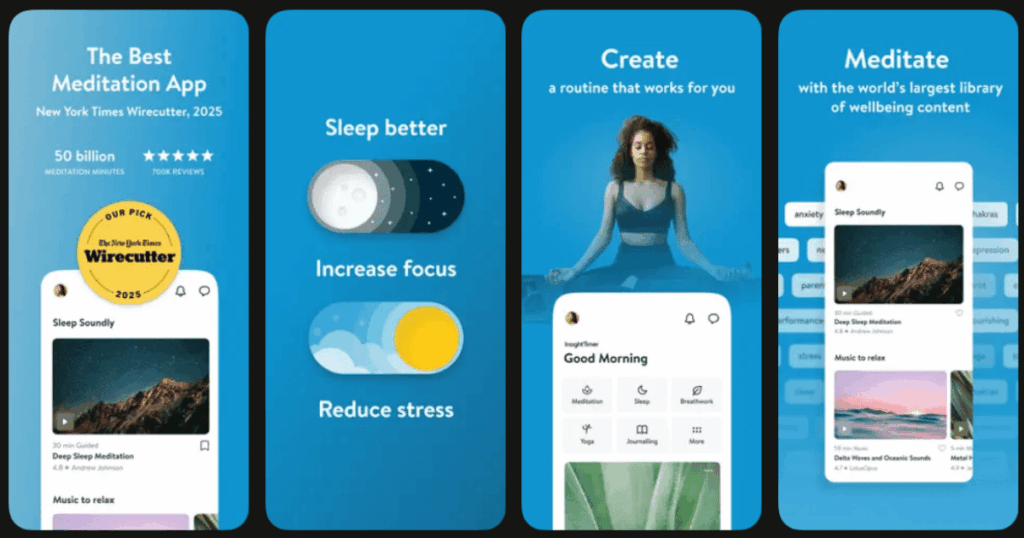
If you want thousands of free meditations without paying a dime, Insight Timer delivers. It hosts over 200,000 guided meditations from teachers around the world.
The app started as a simple meditation timer. Now it has grown into a huge platform with courses, live events, and a global community. You can meditate alongside thousands of others in real time.
The variety is incredible. Buddhist, secular, sleep focused, anxiety relief, you name it. You will find something that resonates with your specific needs.
Key Features:
- Over 200,000 free guided meditations from 17,000+ teachers worldwide
- Customizable meditation timer with various bell sounds and ambient tracks
- Live events and community groups for connection and support
What I like: The free content is genuinely amazing. I have found teachers whose voices and styles click perfectly with me. The community aspect makes meditation feel less lonely. Stats tracking motivates me to keep my streak going. The variety means I never get bored.
What I don’t like: With so much content, finding what you need can feel overwhelming at first. Some users report app glitches with the timer function. The social features might distract people who just want to meditate quietly.
Pricing: Mostly free. Premium subscription adds offline listening and advanced features.
Platforms: iOS and Android
#6. Stoic – Best for Philosophical Self Reflection
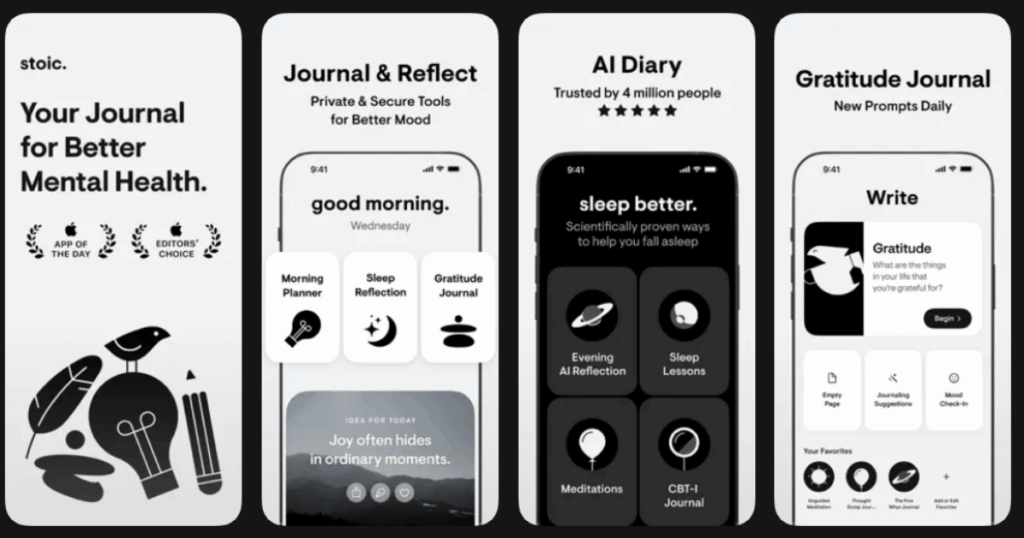
When you question life’s meaning, ancient wisdom can help. The Stoic app brings philosophy into your daily routine through journaling and reflection.
It draws from stoicism, Buddhism, Taoism, and other philosophical traditions. Each day you get quotes and prompts that make you think deeper about your life.
The elegant black and white design creates a calm space for reflection. Morning and evening routines help bookend your day with intention.
Key Features:
- Daily quotes and prompts from stoic philosophers to guide your thinking
- Morning and evening reflection routines for consistent self improvement
- Meditation, breathing exercises, and mood tracking tools
What I like: This app changed how I approach my anxious thoughts. Stoicism teaches you to focus only on what you can control. That shift in perspective has been powerful for my existential worries. The journaling prompts push me to write honestly. Reading wisdom from Marcus Aurelius somehow makes my problems feel smaller.
What I don’t like: Philosophy is not for everyone. Some people might find the quotes too abstract or disconnected from modern life. The full experience requires a subscription. The app works best on Apple devices with limited web access.
Pricing: Free version available. Premium subscription unlocks full features.
Platforms: iOS, macOS, Apple Watch, and Web
#7. Youper – Best for AI Powered Emotional Support

Youper combines artificial intelligence with proven therapy techniques. The chatbot feels surprisingly natural and genuinely helpful during tough moments.
Over 3 million users trust this app. Stanford research validated its ability to reduce anxiety and depression symptoms. The conversations guide you through evidence based exercises.
What sets Youper apart is how it personalizes the experience. It learns what works for you and adapts over time.
Key Features:
- AI chatbot using CBT, ACT, DBT, and mindfulness techniques for comprehensive support
- Mood tracking and daily check ins that reveal emotional patterns
- Clinically validated assessments for anxiety, depression, and other conditions
What I like: The conversations feel warm and supportive without being fake. I can open the app at 2am during an anxiety spiral and get real help. The way it challenges my negative thoughts mirrors what a therapist would do. Seeing my mood data over time helps me understand myself better.
What I don’t like: The subscription pushes hard during onboarding which feels pushy for a mental health app. Only an annual plan is available which means big upfront commitment. It definitely cannot replace professional help for serious conditions.
Pricing: 7 day free trial. Annual subscription required for full access.
Platforms: iOS and Android
#8. 7 Cups – Best for Human Connection and Support
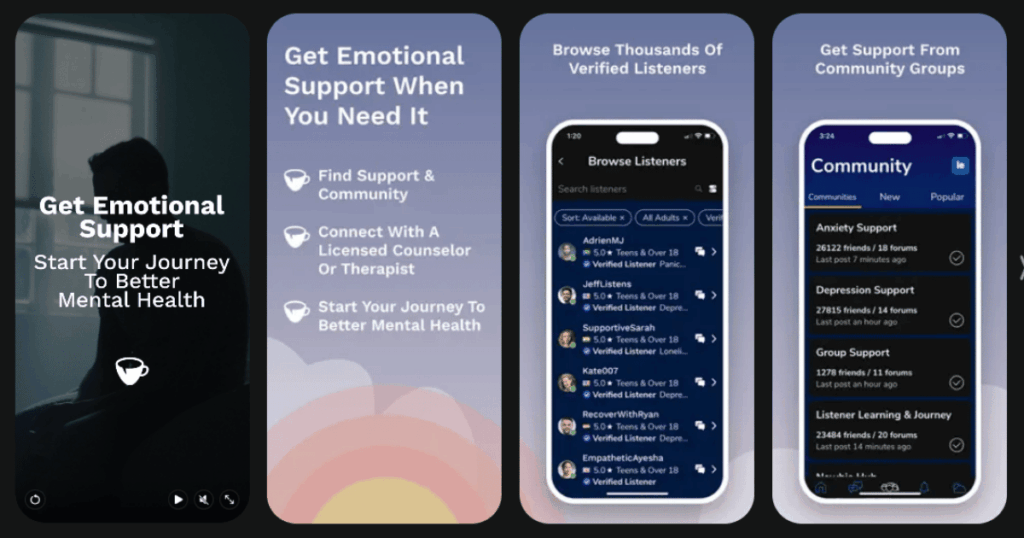
Sometimes you just need another human to listen. 7 Cups connects you with trained volunteer listeners who provide free emotional support.
The platform hosts over 450,000 listeners across 189 countries. You can chat anonymously about whatever is bothering you. Community forums let you connect with others facing similar struggles.
This app addresses the loneliness that often comes with existential crisis. Knowing someone is there to listen makes a real difference.
Key Features:
- Anonymous chat with trained volunteer listeners available 24/7
- Community forums and group support for various mental health topics
- Optional paid therapy with licensed professionals
What I like: Having access to free support whenever I need it feels like a safety net. The anonymity removes the fear of judgment. Some listeners truly care and provide thoughtful responses. The community forums remind me I am not alone in my struggles.
What I don’t like: Listener quality varies widely. Some are excellent while others seem distracted or unhelpful. The app can feel cluttered and confusing to navigate. Serious mental health issues need professional care, not volunteer listeners.
Pricing: Free for listener chats and community. Paid therapy subscription available.
Platforms: iOS and Android
#9. Happify – Best for Building Positive Thinking Habits

Happify takes a gamified approach to mental wellness. Science based activities and games help you develop happier thought patterns over time.
Experts in positive psychology, mindfulness, and CBT created the content. Research shows 86% of regular users feel better about their lives within 2 months.
The app organizes activities into tracks focused on specific goals. You might choose conquering negative thoughts or coping better with stress.
Key Features:
- Science backed games and activities that train your brain for positivity
- Personalized tracks created by psychology experts for targeted improvement
- Progress tracking and community features to keep you motivated
What I like: The game format makes working on mental health feel less like a chore. Negative Knockout became my favorite way to process bad thoughts. The Happify Daily articles teach me something new every day. Tracking my progress shows me how far I have come. It feels more active than just passive meditation.
What I don’t like: The games can feel simplistic or childish at times. Understanding how they actually help requires some faith in the science. The premium price is high for what feels like a casual app. People with serious mental health needs should seek additional support.
Pricing: Free limited version. Premium subscription unlocks all tracks and features.
Platforms: iOS and Android
Can Apps Really Help With Existential Crisis?
Apps cannot cure an existential crisis. But they can provide valuable tools and support during difficult times. Research shows that apps using CBT and mindfulness techniques do reduce symptoms of anxiety and depression.
The key is finding the right fit for your needs. Some people benefit from meditation while others prefer journaling or talking to someone. Try a few different options to see what resonates with you.
Remember that apps work best as one part of your mental health toolkit. If you struggle with severe symptoms, please reach out to a mental health professional. Apps like Life7 can support your journey but human connection and professional guidance remain essential.
Are Mental Health Apps Safe to Use?
Most reputable mental health apps prioritize user privacy and safety. Look for apps that clearly explain their data practices and use encryption.
Be cautious about sharing sensitive information through apps without verified security measures. Read privacy policies before creating accounts. Apps backed by clinical research tend to be more trustworthy.
If an app ever makes you feel worse instead of better, stop using it. Your mental health matters more than any app subscription.
What Should I Look for in a Mental Health App?
Start by identifying what you need most. Do you want meditation guidance? CBT exercises? Human support? Different apps excel in different areas.
Check if the app has clinical research backing its methods. Apps developed with input from mental health professionals tend to be more effective.
Consider the cost carefully. Many apps offer free trials so you can test before committing. Some like Insight Timer and 7 Cups provide substantial free content.
Finally, pay attention to how the app makes you feel. The best app for you is one you will actually use consistently.