9 Best Apps For Seasonal Affective Disorder
| App Name | Best For | Key Features | AC Rating | Pricing |
|---|---|---|---|---|
| Life7 | All-in-one mental wellness and SAD relief | Binaural beats, CBT tools, sleep stories, breathing exercises | 4.8/5 | Free trial, then weekly/monthly/yearly plans |
| Headspace | Guided meditation and mood improvement | Expert-led meditations, CBT courses, sleep content | 4.6/5 | Free trial, then monthly/yearly subscription |
| Calm | Sleep improvement and relaxation | 500+ sleep stories, soundscapes, daily meditations | 4.5/5 | Free trial, then monthly/yearly subscription |
| Daylio | Mood tracking and pattern recognition | One-tap mood logging, activity tracking, visual stats | 4.7/5 | Free version available, premium upgrade optional |
| Happify | Positive psychology and CBT games | Science-based games, gratitude exercises, learning tracks | 4.4/5 | Free version available, premium subscription optional |
| Woebot | AI-powered CBT support | 24/7 chatbot, mood tracking, guided exercises | 4.5/5 | Free with access code from provider |
| Sanvello | Comprehensive anxiety and depression tools | Guided journeys, peer support community, therapist connection | 4.3/5 | Free version available, premium subscription optional |
| SAD Light Box | Light therapy simulation | Blue light therapy, dawn simulator, SAD assessment quiz | 4.2/5 | One-time purchase |
| BetterHelp | Professional therapy access | Licensed therapists, video/text sessions, unlimited messaging | 4.4/5 | Weekly subscription, financial aid available |
#1. Life7 – Best for All-in-One Mental Wellness and SAD Relief
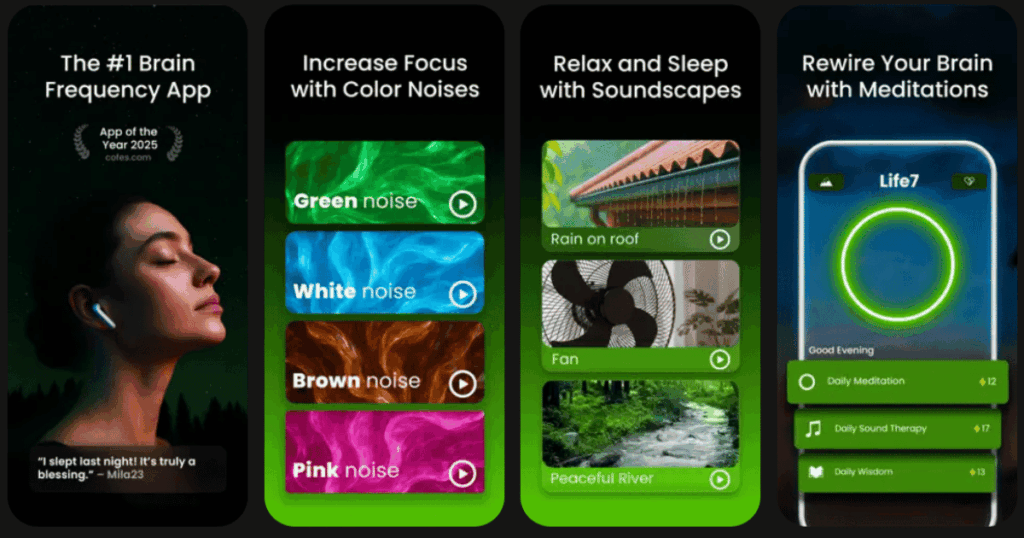
Life7 is my top pick for managing Seasonal Affective Disorder. This app packs everything you need into one place. It offers guided meditations, sleep stories, breathing exercises, and CBT tools.
What makes Life7 special is its variety of sound therapies. You get green noise, white noise, brown noise, and pink noise. There are also delta, theta, alpha, beta, and gamma wave music options. The 432 Hz and 528 Hz frequencies help calm your nervous system.
The app includes SOS sessions for panic attacks. It has hypnotherapy for deep emotional healing. You can also find transcendental meditation and vagus nerve stimulation features. Daily sessions keep you engaged with new content every day.
Key Features:
- Binaural beats, isochronic tones, and Solfeggio frequencies for deep relaxation
- Cognitive behavioral therapy (CBT) tools and hypnotherapy sessions
- Sleep stories for adults and children plus REM sleep music
What I like: Life7 feels like having a complete wellness toolkit in your pocket. The backdrop mode lets you mix soundscapes with meditations, which is genius. I love the gamified approach where you earn XP for completing sessions. The daily check-ins, daily meditation, and daily music therapy keep me coming back. With over 1200+ editorial mentions and 312M+ meditation minutes logged by users, it clearly works for many people.
What I don’t like: The free content is a bit limited. You really need a subscription to get the full experience. But the 7 day free trial lets you test everything before committing.
Pricing: 7 day free trial available. Frequent special offers pop up. Weekly, monthly, and yearly plans to fit any budget.
Platforms: iOS and Android
#2. Headspace – Best for Guided Meditation and Mood Improvement
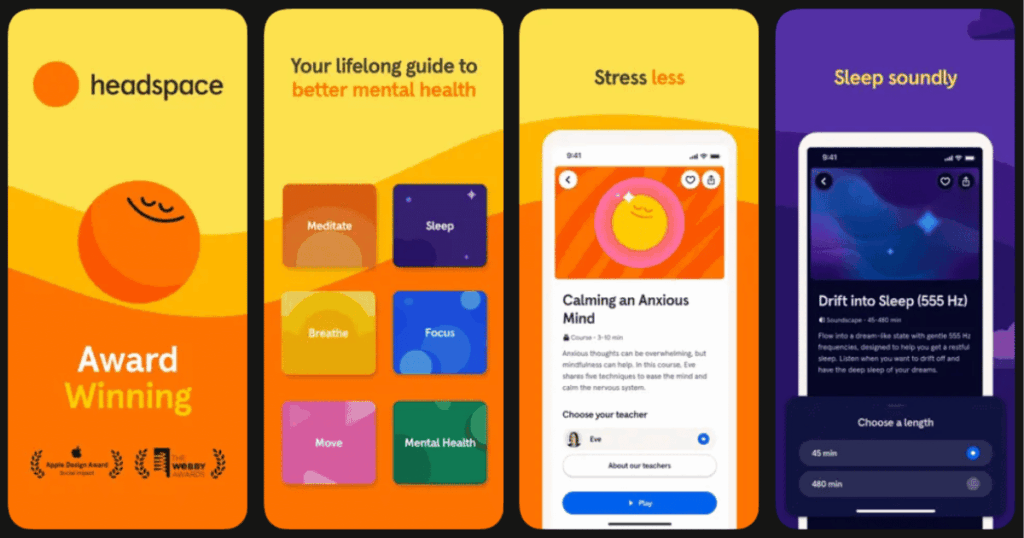
Headspace has been helping people manage stress and anxiety for years. The app uses friendly animations and a cheerful design. It makes meditation feel approachable even for complete beginners.
Studies show that Headspace improved depression in 75% of users who tried it. The app offers specialized courses for anxiety, stress, and focus. You can choose sessions that fit your schedule.
Headspace also has licensed therapists available through the app. This extra support can be helpful during darker winter months. The sleep content includes wind downs and fan-favorite sleepcasts.
Key Features:
- 1000+ expert-led meditations with CBT-based exercises
- Sleep content including sleepcasts and relaxation techniques
- Mental health coaching and therapy options available
What I like: The structure is perfect for beginners. Andy’s voice in the original meditations is incredibly soothing. I appreciate how the app teaches you WHY certain techniques work. The progress tracking keeps me motivated. College students showed reduced anxiety and depression after just two weeks of use in clinical trials.
What I don’t like: The subscription cost can feel steep for some users. The free content is quite limited compared to what you unlock with premium. Some people find the animations a bit childish.
Pricing: 14 day free trial. Monthly and yearly plans available. Student and family discounts offered.
Platforms: iOS and Android
#3. Calm – Best for Sleep Improvement and Relaxation
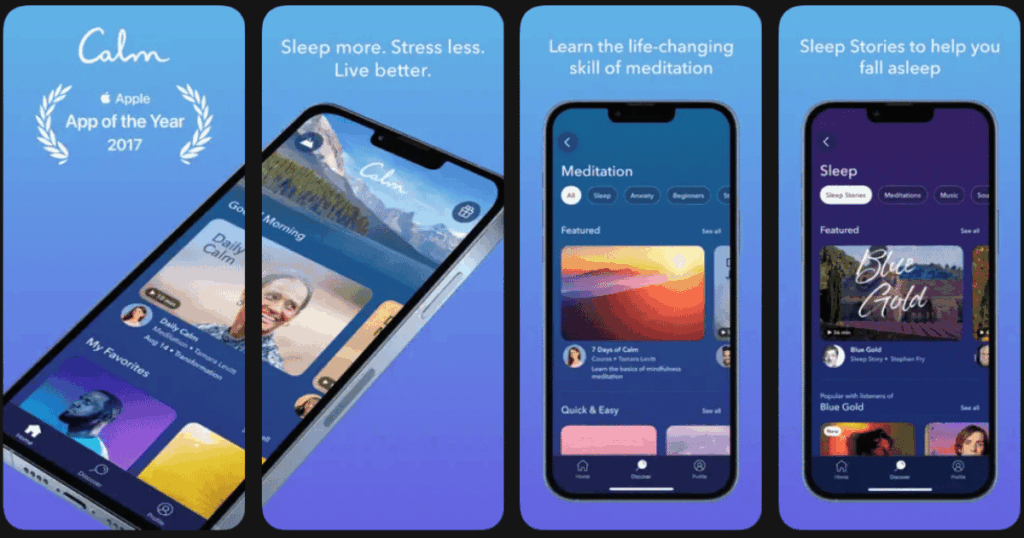
Calm is famous for its Sleep Stories. These bedtime stories for adults help you drift off peacefully. Celebrities like Cillian Murphy and Jerome Flynn narrate some of the most popular ones.
The app has over 500 Sleep Stories in its library. New ones get added every week. This keeps the content fresh and interesting.
Calm also offers the Daily Calm. This is a 10 minute meditation that changes every day. It covers topics like anxiety, gratitude, and depression. The soundscapes include rainstorms, ocean waves, and different noise frequencies.
Key Features:
- 500+ sleep stories narrated by celebrities and experts
- Multiple noise types including white, brown, and green noise
- Masterclasses taught by world-renowned experts on happiness and wellness
What I like: The serene design instantly makes me feel more relaxed. Research shows Calm reduced depression and anxiety in cancer patients. The variety of content means I never get bored. I especially love the “Scenes” feature with soothing sounds and images. The 7 Days of Calm program is perfect for anyone just starting out.
What I don’t like: Most of the good content requires a paid subscription. The interface can feel overwhelming with so many options. Some users wish there was a cheaper tier available.
Pricing: 7 day free trial. Monthly subscription around $16.99. Yearly subscription around $79.99.
Platforms: iOS and Android
#4. Daylio – Best for Mood Tracking and Pattern Recognition

Daylio makes tracking your mood super simple. You just tap a smiley face and select activities. No typing required unless you want to add notes.
The app creates beautiful charts showing your mood patterns. You can see how activities like exercise or sleep affect how you feel. This is incredibly valuable for SAD since you can spot seasonal trends.
The “Year in Pixels” feature shows your entire year as colored dots. Each dot represents a day and its mood. This visual makes patterns crystal clear.
Key Features:
- One-tap mood tracking with customizable emoji icons
- Activity correlation stats showing what improves or worsens your mood
- Secure data storage with PIN lock and fingerprint protection
What I like: Daylio is the easiest mood tracker I have ever used. Even on my worst days, I can manage to tap a face. One user with bipolar disorder used it for years and found it life-changing. The correlation stats helped me realize that outdoor walks dramatically improve my winter mood. Sharing reports with my therapist made our sessions more productive.
What I don’t like: There is no website version, only the mobile app. The free version has limited export options. Some icons can feel cluttered on smaller screens.
Pricing: Free version with basic features. Premium around $4.99 monthly or $35.99 yearly. No subscription required for lifetime purchase.
Platforms: iOS and Android
#5. Happify – Best for Positive Psychology and CBT Games

Happify turns mental wellness into a game. You complete activities and earn rewards. This makes building happiness habits actually fun.
The app uses techniques from positive psychology, mindfulness, and CBT. Scientists and experts designed all the content. Research shows 86% of regular users feel better about their lives in 2 months.
You can choose from over 65 learning tracks. Topics include conquering negative thoughts, coping with stress, and building confidence. The games help you practice skills without feeling like homework.
Key Features:
- Science-based games and activities developed by psychology experts
- 65+ learning tracks covering various mental health topics
- Community forums for connecting with others on similar journeys
What I like: The gamification keeps me engaged when depression makes everything feel like a chore. Clinical trials showed Happify reduced depression and anxiety symptoms significantly. I love the gratitude exercises and negative thought challenges. The AI coach Anna provides helpful guidance. The character strength report helped me understand myself better.
What I don’t like: Some games feel more entertaining than therapeutic. The paid version is needed to access most content. The app could use more diversity in its examples and imagery.
Pricing: Free version with limited tracks. Premium around $14.99 monthly or $139.99 yearly. Lifetime option available.
Platforms: iOS and Android
#6. Woebot – Best for AI-Powered CBT Support

Woebot is a friendly chatbot that uses cognitive behavioral therapy. It checks in with you every day. The conversations feel surprisingly natural and supportive.
The app helps you challenge negative thoughts and manage stress. It tracks your mood over time and shows patterns. You can access exercises like “challenge negativity” whenever you need them.
Clinical research shows Woebot significantly reduces depression symptoms. College students who used it for two weeks showed real improvement. The chatbot is available 24/7, which is perfect for those dark early mornings.
Key Features:
- AI-powered chatbot using CBT, IPT, and DBT techniques
- Daily check-ins with mood tracking and progress reflection
- Guided exercises for stress, anxiety, and negative thinking
What I like: Having support available at 3 AM when SAD keeps me awake is incredible. Woebot taught me skills I wish I had learned as a child. The conversations feel personal and non-judgmental. Studies show it works for postpartum depression too. The GIFs and emojis make heavy topics feel lighter.
What I don’t like: You need an access code from a provider, employer, or partner organization. The chats can sometimes feel lengthy when you just want quick help. It cannot replace human therapy for serious issues.
Pricing: Free with access code from qualifying provider or employer.
Platforms: iOS and Android
#7. Sanvello – Best for Comprehensive Anxiety and Depression Tools

Sanvello offers a complete toolkit for managing anxiety and depression. Psychologists designed the guided journeys. The app tracks your progress with clinically validated assessments.
You start by answering questions about your stress, anxiety, and depression. This creates a baseline score. Weekly check-ins show your improvement over time.
The community feature lets you connect with others facing similar challenges. You can share stories and support each other. This social connection is especially valuable during isolating winter months.
Key Features:
- Guided journeys with CBT-based audio lessons and activities
- Peer support community for sharing and connecting
- Clinically validated assessments tracking stress, anxiety, and depression
What I like: The combination of self-help tools and community support works really well together. Research showed 60% of users felt better in just 30 days. I appreciate that some insurance plans cover premium access. The thought journals helped me identify my negative patterns. The meditations can be downloaded for offline use.
What I don’t like: Sanvello was recently acquired by AbleTo. Access may be changing. The difference between free and premium features can be confusing at signup. Diversity in content could be improved.
Pricing: Free version available. Premium around $8.99 monthly or $53.99 yearly. Check insurance coverage.
Platforms: iOS and Android
#8. SAD Light Box – Best for Light Therapy Simulation
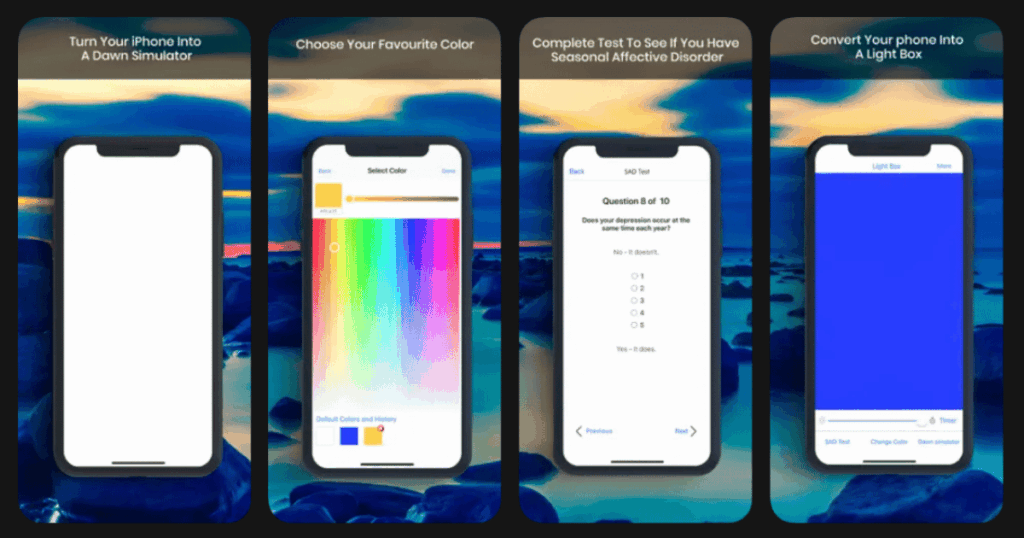
SAD Light Box turns your phone or tablet into a light therapy device. It uses blue light therapy backed by research. This can help when you cannot get natural sunlight.
The app includes a short quiz to help determine if you have SAD. It also has a dawn simulator feature. You set an alarm and the light gradually brightens like a sunrise.
While not as powerful as medical-grade light boxes, it offers a convenient alternative. You can customize the color and intensity of the light. Regular morning sessions for at least two weeks show the best results.
Key Features:
- Blue light therapy backed by research from the US National Library of Medicine
- Dawn simulator with alarm function for gradual wake-ups
- SAD assessment quiz to help identify symptoms
What I like: It is so much cheaper than buying a traditional light box. I can use it anywhere since my phone is always with me. The research behind low-intensity blue light therapy is solid. The simplicity makes it easy to commit to daily sessions. Having a portable option for travel during winter is fantastic.
What I don’t like: It does not generate the 10,000 lux intensity of medical-grade light boxes. Results require consistent use for at least two weeks. Screen time before bed can disrupt sleep if not timed correctly.
Pricing: One-time purchase around $4.99.
Platforms: iOS only
#9. BetterHelp – Best for Professional Therapy Access

BetterHelp connects you with licensed therapists remotely. You can communicate through video, phone, or text. This flexibility makes it easier to get help during the dark winter months.
The platform matches you with a therapist based on your needs. If it is not a good fit, you can switch therapists easily. Sessions cover depression, anxiety, seasonal mood changes, and more.
Having a professional to talk to during SAD can make a huge difference. The unlimited messaging means support is always available. Financial assistance programs help make it more affordable.
Key Features:
- Access to thousands of licensed therapists across all 50 states
- Multiple communication formats including video, text, and phone
- Flexible scheduling to fit busy lifestyles
What I like: Getting therapy without leaving my cozy home in winter is a game changer. Research shows online CBT is just as effective as in-person therapy. The matching process found me a therapist who really understood SAD. The homework assignments sent through chat help between sessions. I appreciate the financial aid option for those who need it.
What I don’t like: It can be expensive without insurance coverage. Video quality can vary depending on internet connection. It is not suitable for people in immediate crisis situations.
Pricing: Weekly subscription starting around $60-90 per week. Financial aid available for qualifying individuals.
Platforms: iOS and Android
Can Apps Really Help With Seasonal Affective Disorder?
Apps can definitely help manage SAD symptoms. They are not a replacement for professional treatment. But they offer valuable support between therapy sessions or when other help is unavailable.
Research supports the use of CBT-based apps for depression and anxiety. Meditation apps like Headspace and Calm have clinical studies backing their effectiveness. Mood tracking helps you notice patterns and triggers.
The best approach combines multiple strategies. Use apps alongside light therapy, exercise, and social connection. Talk to your doctor if symptoms are severe. Apps work best as part of a broader wellness plan.
What Features Should I Look For in a SAD App?
Look for apps with evidence-based techniques. CBT, mindfulness, and positive psychology have strong research support. Avoid apps that make unrealistic promises about curing depression.
Mood tracking is essential for understanding your seasonal patterns. Visual charts and statistics help you see progress. Reminders keep you consistent even when motivation is low.
Sleep support matters because SAD often disrupts sleep. Apps with sleep stories, soundscapes, or meditation can help. Consider apps that offer community support to combat winter isolation.
When Should I See a Doctor Instead of Using Apps?
See a doctor if your symptoms are severe or getting worse. Signs include thoughts of self-harm, inability to function at work, or extreme hopelessness. Apps are not designed for mental health emergencies.
If you have tried apps for several weeks without improvement, professional help is needed. SAD can sometimes indicate other conditions requiring medical treatment. Medication or light therapy prescribed by a doctor may be necessary.
Apps work best for mild to moderate symptoms. They supplement professional care rather than replace it. Many therapists actually recommend apps to their patients as homework between sessions. Always prioritize your safety and reach out for help when needed.