9 Best BPD Apps For Your Phone
| App Name | Best For | Key Features | AC Rating | Pricing |
|---|---|---|---|---|
| Life7 | All-in-one mental wellness | CBT tools, breathing exercises, SOS sessions, mood tracking | 4.8/5 | Free trial, then subscription |
| DBT Diary Card & Skills Coach | Comprehensive DBT practice | Diary cards, skills coaching, therapist sharing | 4.5/5 | One-time purchase |
| Bearable | BPD symptom tracking | Custom trackers, correlation insights, doctor reports | 4.6/5 | Free with premium option |
| Calm Harm | Managing self-harm urges | DBT activities, breathing exercises, progress tracking | 4.7/5 | Completely free |
| Daylio | Mood journaling | Icon-based tracking, statistics, habit building | 4.8/5 | Free with premium option |
| Woebot | AI-powered CBT support | Chat-based therapy, mood tracking, daily check-ins | 4.4/5 | Free with access code |
| BPD Tracker | Dedicated BPD monitoring | Symptom tracking, PDF reports, custom symptoms | 4.5/5 | Free with premium option |
| DBT Coach | Visual DBT learning | Video lessons, animations, community support | 4.3/5 | Subscription-based |
| MindShift CBT | Anxiety management | CBT strategies, symptom tracking, coping tools | 4.4/5 | Free |
#1. Life7 – Best for All-in-One Mental Wellness
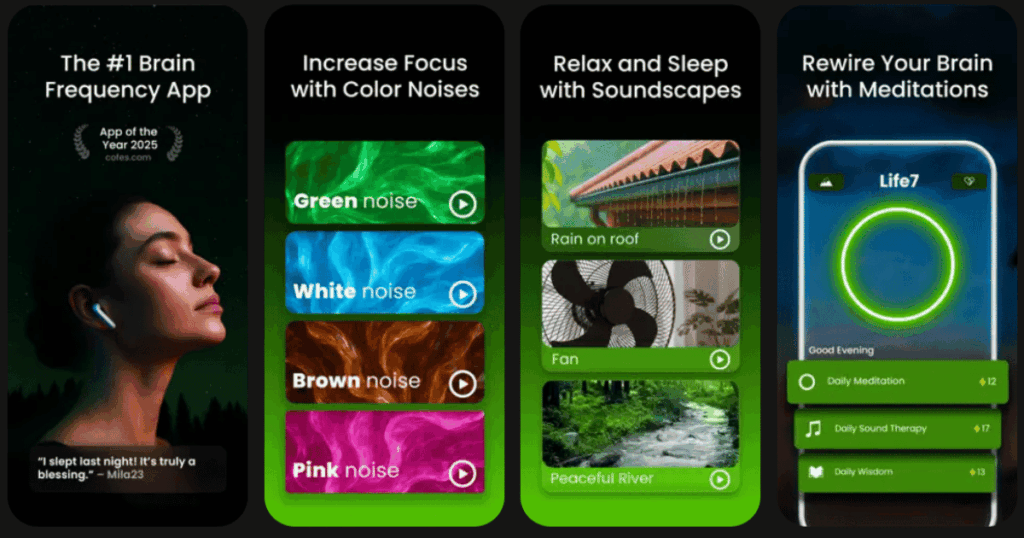
Life7 is a complete mental wellness app that goes beyond basic meditation. It combines CBT tools, breathing exercises, and calming sounds all in one place. For anyone dealing with BPD, this app offers multiple ways to calm your mind and manage intense emotions.
The app features SOS sessions for panic attacks and anxiety. It also includes hypnotherapy, vagus nerve stimulation, and guided meditations for every skill level. You can track your mood, build daily meditation streaks, and earn rewards as you progress.
Key Features:
- SOS sessions for panic attacks and instant anxiety relief
- CBT tools and breathing exercises to calm your nervous system
- Daily check-ins with meditation, music therapy, and wisdom sessions
What I like: I really enjoy how Life7 puts everything together in one place. The variety is amazing. You get binaural beats, sleep stories, ASMR, and even 8D audio. The gamified approach keeps me coming back every day. Being able to mix soundscapes with other content using backdrop mode is super helpful. The app truly feels like having a wellness center in your pocket.
What I don’t like: The free content is a bit limited. You really need the subscription to unlock the best features. This might be a barrier for some people just starting out.
Pricing: 7-day free trial available. Weekly, monthly, and yearly plans offered with frequent special offers.
Platforms: iOS and Android
#2. DBT Diary Card & Skills Coach – Best for Comprehensive DBT Practice

This app was created by a psychologist trained by Dr. Marsha Linehan herself. That means you’re getting real DBT skills, not a watered-down version. It follows the traditional DBT program exactly and helps you track behaviors daily.
The app works as a reference manual, behavior tracker, and skills coach. You can email your diary cards directly to your therapist. This saves you from carrying papers around and helps you stay consistent.
Key Features:
- Complete DBT skills library with easy-to-read descriptions
- Customizable diary cards for tracking emotions and behaviors
- Coaching section that guides you through distress tolerance techniques
What I like: The flexibility is what stands out most. I can tailor the app to track exactly what I need to work on. The coaching feature is like having a virtual therapist available when I need quick guidance. Being able to send reports directly to my therapist saves time and keeps me accountable.
What I don’t like: The interface looks a bit dated compared to newer apps. Some users report issues with email features not working properly on certain devices.
Pricing: One-time purchase required for full features.
Platforms: iOS only
#3. Bearable – Best for BPD Symptom Tracking
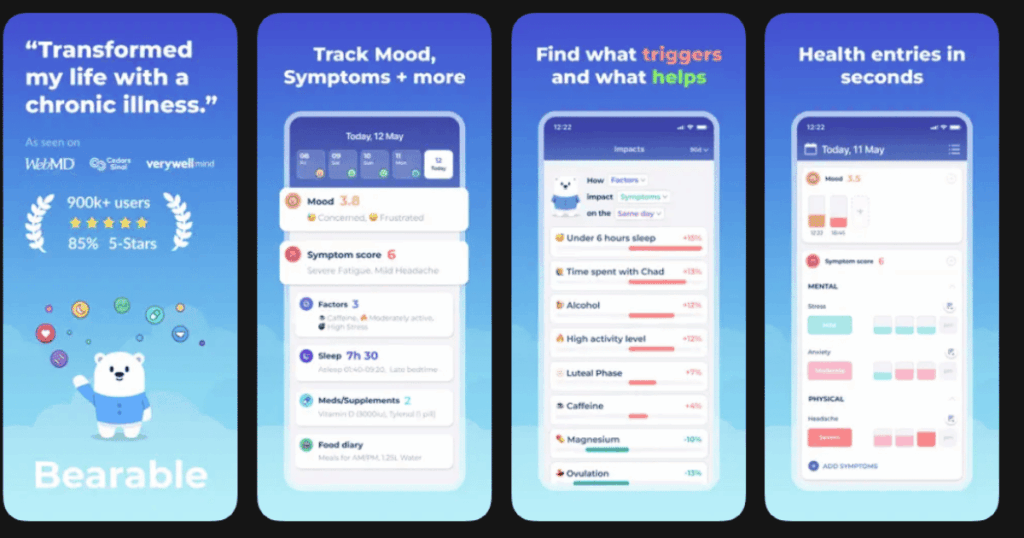
Bearable is a powerful symptom tracker that helps you understand your BPD patterns. It lets you track unlimited custom symptoms, treatments, and self-care habits. The app shows how different factors relate to changes in your mood and symptoms.
Many users say Bearable helped them get their BPD diagnosis. The detailed tracking makes it easier to share concrete information with mental health professionals.
Key Features:
- Unlimited custom symptoms, triggers, and treatment tracking
- Correlation insights showing what affects your mood
- Printable PDF reports for therapy appointments
What I like: The level of detail you can track is incredible. You can monitor emotions throughout the day, not just once. The correlation feature helped me discover triggers I never noticed before. Being able to show my therapist exactly how I’ve been feeling with charts makes sessions more productive.
What I don’t like: The app can feel overwhelming at first with so many tracking options. It takes some time to set up properly and figure out what works best for you.
Pricing: Free version available with core features. Premium subscription unlocks advanced insights.
Platforms: iOS and Android
#4. Calm Harm – Best for Managing Self-Harm Urges

Calm Harm was developed by a clinical psychologist and uses DBT principles. It helps you resist the urge to self-harm by riding the wave until the feeling passes. Over 2 million people have used this app to find healthier ways to cope.
The app offers activities in categories like Comfort, Distract, Express Yourself, and Release. Each activity is timed for 5 or 15 minutes to help you through difficult moments.
Key Features:
- Timed activities based on DBT techniques
- Breathing exercises for emotional regulation
- Progress tracking and journaling features
What I like: The app is completely free with no hidden costs. It works offline, which is important during crisis moments. The activities actually help distract me from harmful urges. I also appreciate that it was built to NHS standards and feels clinically solid.
What I don’t like: The app targets teenagers primarily, so some content may feel too young for adult users. The activity selection could be more extensive.
Pricing: Completely free with no in-app purchases.
Platforms: iOS and Android
#5. Daylio – Best for Mood Journaling

Daylio is perfect if you struggle with traditional journaling. You don’t need to write anything. Just tap an emoji for your mood and select activities you did that day. The app then shows patterns between what you do and how you feel.
The statistics feature helps you identify what makes you feel better or worse. Many people with mood disorders use this app to prepare for therapy sessions.
Key Features:
- Icon-based mood and activity tracking with zero writing required
- Year in Pixels view showing your entire mood history
- Goal setting and habit tracking with streak rewards
What I like: The simplicity is what keeps me using it daily. Even on my worst days, I can manage two quick taps. Seeing the correlation between my activities and mood has been eye-opening. The customization options let me track exactly what matters for my BPD symptoms.
What I don’t like: The free version has ads on Android that can be annoying. Some advanced statistics require the premium subscription.
Pricing: Free version available. Premium costs around a monthly or yearly subscription fee.
Platforms: iOS and Android
#6. Woebot – Best for AI-Powered CBT Support

Woebot is an AI chatbot that guides you through CBT techniques. It checks in with you daily and teaches coping skills through friendly conversation. The app has been backed by multiple clinical studies showing real results for depression and anxiety.
The chatbot uses concepts from CBT, DBT, and Interpersonal Therapy. It creates tailored exercises based on what you’re going through.
Key Features:
- Daily AI-powered check-ins with mood tracking
- CBT tools like cognitive challenging and behavioral activation
- Gratitude journaling and mindfulness practice
What I like: Having a judgment-free space to talk through my feelings at any hour is amazing. The app remembers my patterns and gets better at helping me over time. The CBT lessons are explained simply with real examples. It genuinely feels like talking to a supportive friend.
What I don’t like: You currently need an access code from a provider or employer to use the app. The responses are pre-written, so conversations can feel limited sometimes.
Pricing: Free for individual users with valid access code.
Platforms: iOS and Android
#7. BPD Tracker – Best for Dedicated BPD Monitoring
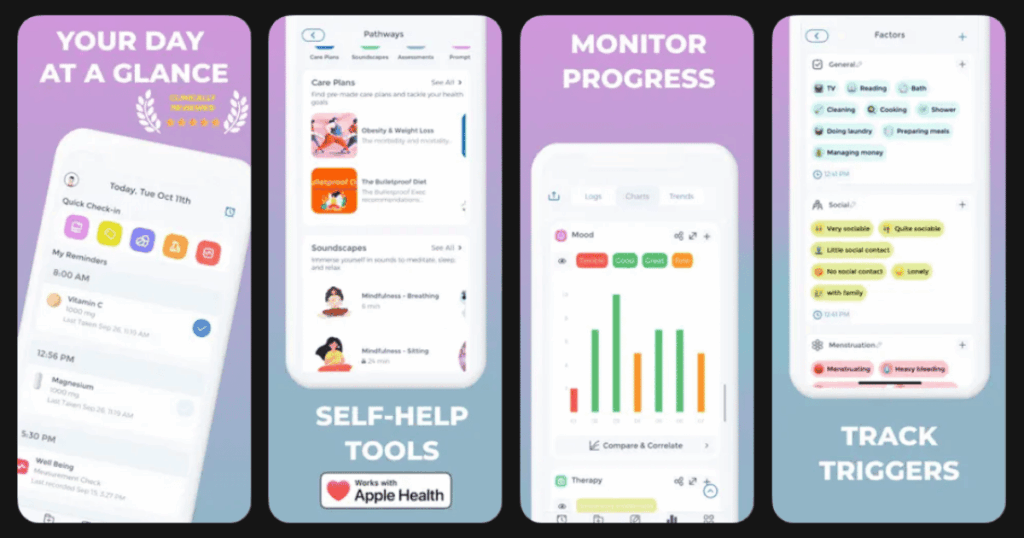
This app was made specifically for borderline personality disorder. It tracks all the main BPD symptoms like mood swings, emotional dysregulation, and relationship struggles. Daily check-ins help you discover patterns and triggers.
Users love that they can generate PDF reports to share with their doctors. The app helped many people show their therapists exactly what they experience.
Key Features:
- Daily tracking for all core BPD symptoms
- Custom symptom and treatment tracking
- PDF report generation for healthcare providers
What I like: Finally an app designed just for BPD! It includes all the symptoms I actually deal with. The weekly charts help me see my patterns clearly. I feel more prepared for therapy because I have data to back up how I’ve been feeling.
What I don’t like: Some premium features require payment. The app focuses mainly on tracking without offering many coping tools.
Pricing: Most features available for free. Premium subscription unlocks additional options.
Platforms: iOS and Android
#8. DBT Coach – Best for Visual DBT Learning
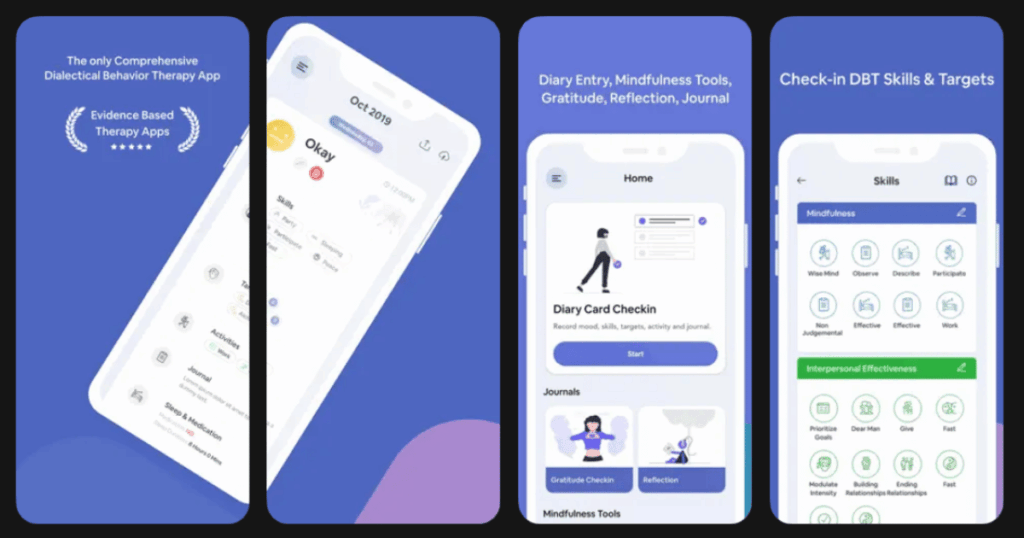
DBT Coach uses videos and animations to teach DBT skills. This makes learning easier if you’re a visual learner. The app features over 100 video lessons and 200 animations covering all DBT modules.
You can track your progress, complete exercises, and connect with a community of others practicing DBT skills.
Key Features:
- Video lessons and animations for all DBT skills
- Interactive diary cards for skills and target behaviors
- Community forums and peer support groups
What I like: The videos make DBT concepts click in a way reading never did. I can watch the same lesson multiple times until I understand it. The community feature helps me feel less alone in my journey. Having exercises to practice makes the skills stick better.
What I don’t like: The subscription cost is quite high compared to other apps. The free version is very limited, making it hard to fully evaluate before committing.
Pricing: Subscription required for full access with monthly and multi-month options.
Platforms: iOS and Android
#9. MindShift CBT – Best for Anxiety Management
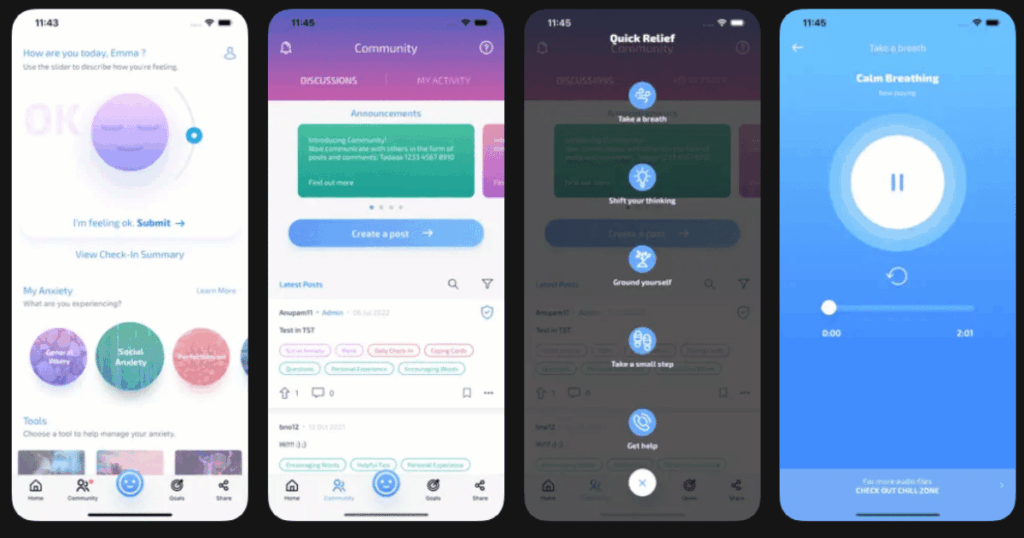
MindShift helps you manage anxiety using CBT strategies. While not specifically for BPD, anxiety often goes hand in hand with borderline personality disorder. The app teaches you to recognize negative thought patterns and challenge them.
The symptom tracker helps you monitor progress over time. The app includes educational content that helps you understand your anxiety better.
Key Features:
- CBT-based coping strategies for anxiety
- Symptom tracker for monitoring progress
- Educational content about anxiety management
What I like: The app is completely free, which is rare for quality mental health apps. The coping strategies are practical and easy to use in the moment. I appreciate that it helps me understand why I feel anxious, not just how to manage it.
What I don’t like: The design feels basic compared to more polished apps. It focuses only on anxiety, so you’ll need other tools for full BPD support.
Pricing: Completely free.
Platforms: iOS and Android
What Is the Best App for Managing BPD?
The best app for managing BPD depends on what you need most. If you want an all-in-one solution with meditation, CBT tools, and calming sounds, Life7 stands out as the top choice. It combines many therapeutic approaches in one place.
For those actively in DBT therapy, the DBT Diary Card & Skills Coach is incredibly helpful. It follows the exact DBT protocol and lets you share progress with your therapist.
If symptom tracking is your priority, Bearable offers the most detailed options. Remember that apps work best alongside professional treatment, not as a replacement.
Can Apps Really Help with Borderline Personality Disorder?
Yes, apps can be valuable tools for managing BPD symptoms. They help you track patterns, practice coping skills, and stay consistent between therapy sessions. Research shows that app-based DBT tools can improve skill retention and emotional awareness.
However, apps should complement professional treatment, not replace it. BPD typically requires therapy with a trained mental health professional. Apps are most effective when used as part of a larger treatment plan.
The best results come from using apps daily, being honest in your tracking, and sharing insights with your treatment team.
Are There Any Free Apps for BPD?
Several excellent BPD apps are completely free. Calm Harm costs nothing and offers DBT-based activities for managing self-harm urges. MindShift CBT is also entirely free and helps with anxiety symptoms.
Bearable and Daylio both have generous free versions that cover basic tracking needs. The BPD Tracker app also offers core features without payment.
Many premium apps like Life7 offer free trials so you can test features before committing. This lets you find what works best for your needs without spending money upfront.