9 Best Apps For Mindful Eating
| App Name | Best For | Key Features | AC Rating | Pricing |
|---|---|---|---|---|
| Life7 | All-in-one mental wellness and mindfulness | Breathing exercises, CBT tools, guided meditations, binaural beats | 4.5/5 | Free trial, weekly/monthly/yearly plans |
| Eat Right Now | Breaking emotional eating patterns | Daily video lessons, guided meditations, community support | 4.4/5 | Subscription-based |
| Ate (AteMate) | Photo-based mindful food journaling | Photo meal logging, AI insights, intuitive eating focus | 4.3/5 | Free trial, subscription plans |
| Noom | Psychology-based eating behavior change | Color-coded food system, personal coaching, daily lessons | 4.2/5 | Free trial, subscription plans |
| Headspace | Meditation-focused mindful eating | 30-day mindful eating course, guided meditations, sleep tools | 4.4/5 | Free trial, subscription plans |
| Calm | Relaxation and mindful eating meditations | Mindful eating series, masterclasses, calming sounds | 4.5/5 | Free content, premium subscription |
| Way | Intuitive eating without diet culture | Body Feels, Emotional Eats, Mindful Shifts pathways | 4.2/5 | Free trial, subscription plans |
| Am I Hungry? | Overcoming yo-yo dieting and emotional eating | Mindful eating cycle guide, hunger-fullness scale, step-by-step coaching | 4.1/5 | One-time purchase |
| Eating Buddy | Tracking hunger cues and eating triggers | Hunger ratings, trigger identification, therapist sharing | 4.0/5 | Free basic, premium upgrade |
#1. Life7 – Best for All-in-One Mental Wellness and Mindfulness
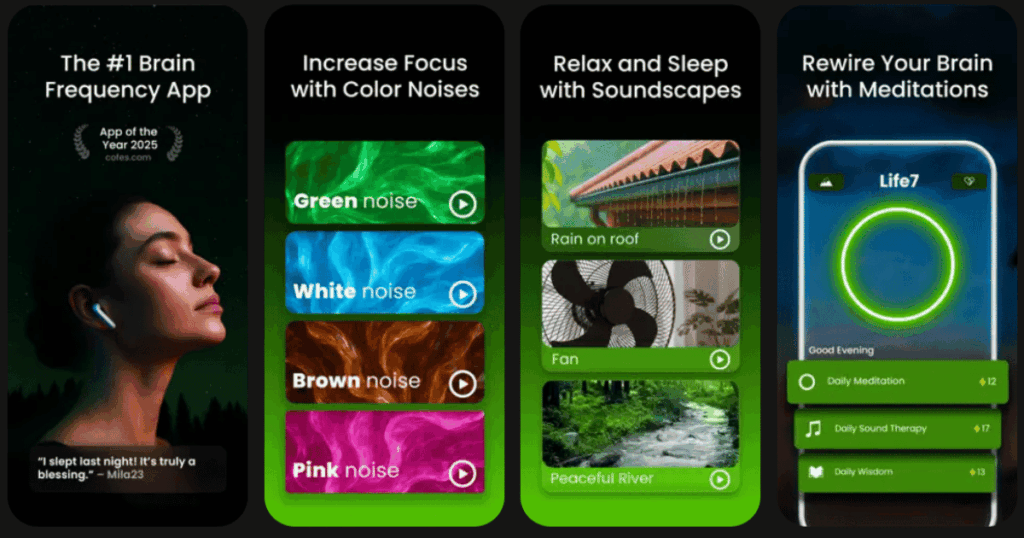
Life7 is my top recommendation for mindful eating because it tackles the complete picture of mental wellness. This app goes way beyond simple food tracking. It addresses the root causes of mindless eating like stress, anxiety, and poor sleep.
The app offers breathing exercises to calm your nervous system before meals. You can use their SOS sessions when anxiety triggers cravings. The CBT tools help you understand why you reach for food when you are not hungry.
With over 1200 editorial mentions and 312 million meditation minutes logged by users, Life7 has proven results. New daily sessions keep things fresh so you never get bored.
Key Features:
- Breathing exercises and vagus nerve stimulation to calm your body before eating
- Cognitive behavioral therapy tools to identify emotional eating triggers
- Daily meditations, affirmations, and hypnotherapy sessions for mindset shifts
What I like: I love how Life7 connects everything together. When I feel stressed, I can do a quick SOS session. Before meals, I use the breathing exercises. At night, their sleep stories help me rest better so I do not wake up craving junk food. The gamified approach with XP points and streaks keeps me motivated. The variety of sounds including green noise, binaural beats, and solfeggio frequencies is amazing for creating a calm eating environment.
What I don’t like: The free content is a bit limited. You really need the premium subscription to get the full benefits. However, they offer frequent special offers that make it more affordable.
Pricing: 7-day free trial available. Weekly, monthly, and yearly subscription plans.
Platforms: iOS and Android
#2. Eat Right Now – Best for Breaking Emotional Eating Patterns
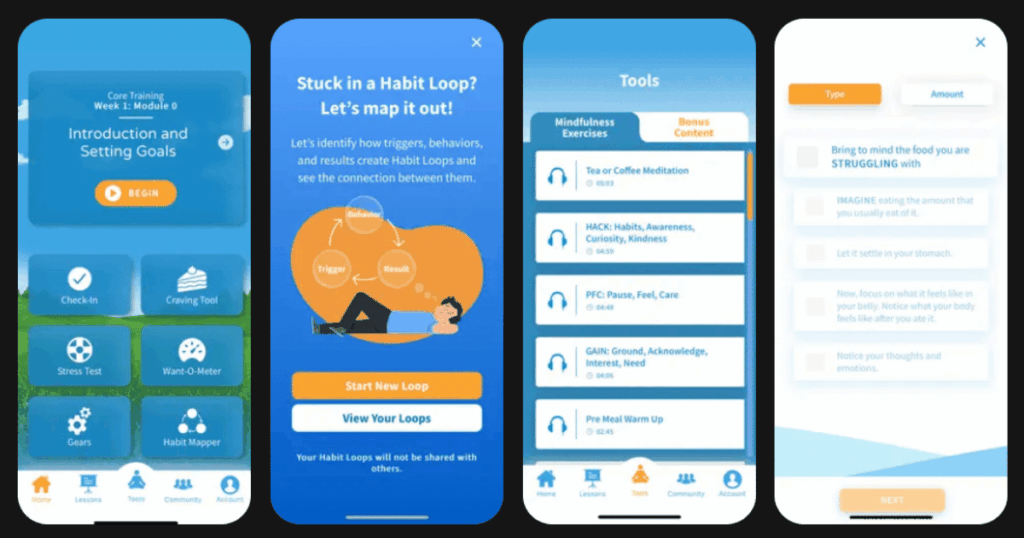
Eat Right Now was created by neuroscientist Dr. Judson Brewer. It focuses on rewiring your brain to reduce cravings and stress eating. Clinical trials show it can reduce craving-related eating by 40 percent.
This app uses a structured program with daily video lessons. You learn to identify your emotional triggers. Then you practice mindfulness exercises to respond differently when cravings hit.
The community support feature connects you with others on the same journey. Live calls happen multiple times per week with habit change experts.
Key Features:
- Evidence-based program backed by over 10 years of research
- Daily video lessons combined with guided mindfulness exercises
- Active community forums and live group coaching calls
What I like: The science-based approach really sets this app apart. The daily lessons are short but powerful. I learned so much about how my brain works and why I reach for food when stressed. The stress test feature helped me understand my personal triggers. Having live calls with real experts makes it feel like a true coaching experience.
What I don’t like: The app requires a time commitment to work through the full program. It is not something you can just pick up casually. The subscription cost is on the higher end compared to other apps.
Pricing: Subscription-based with various plan options available.
Platforms: iOS and Android
#3. Ate (AteMate) – Best for Photo-Based Mindful Food Journaling
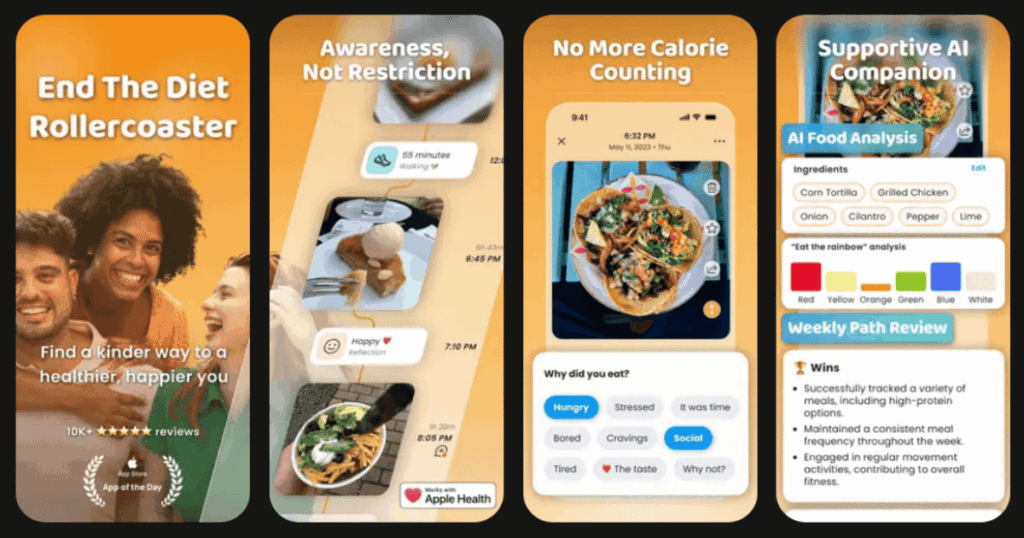
Ate takes a completely different approach to food tracking. Instead of counting calories, you simply take photos of your meals. The app then helps you reflect on why you ate and how the food made you feel.
This visual method is fast and easy. You can log a meal in just 3 taps. The AI-powered insights analyze your photos and help you spot patterns over time.
Ate focuses on intuitive eating principles. There is no judgment about good or bad foods. It is all about building awareness and making choices that work for your body.
Key Features:
- Photo-based meal logging with AI analysis and tagging
- Reflection prompts about hunger levels, emotions, and satisfaction
- Holistic tracking that connects food, exercise, and sleep on one timeline
What I like: The no-calorie-counting approach feels so freeing. I used to stress about tracking every gram of food. With Ate, I just snap a photo and answer a few simple questions. Looking back at my photo timeline shows me clear patterns. The app helped me notice I always snack at 3pm because of boredom, not hunger.
What I don’t like: Some useful features like adding friends and tracking beverages require a paid subscription. The Android version can be slightly buggy compared to the iOS version.
Pricing: 7-day free trial. Monthly and yearly subscription plans available.
Platforms: iOS and Android
#4. Noom – Best for Psychology-Based Eating Behavior Change
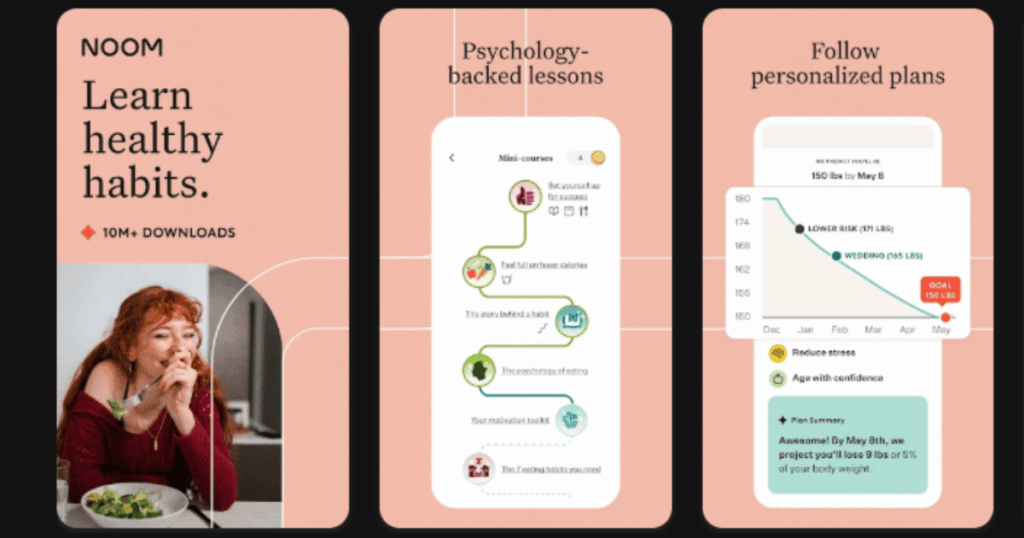
Noom uses behavioral psychology to help you understand your eating habits. The app teaches you about the connection between your emotions, thoughts, and food choices.
Instead of labeling foods as good or bad, Noom uses a color system. Green, yellow, and orange categories help you understand caloric density. You can still eat anything you want.
Daily bite-sized lessons teach you mindful eating skills. Personal coaches provide one-on-one support when you need extra help.
Key Features:
- Color-coded food classification system for easy meal planning
- Daily psychology lessons about habits and behavior change
- Personal coaching and community support groups
What I like: The daily lessons are short enough to fit into a busy schedule. I learned so much about why I eat the way I do. The satiety scale feature taught me to recognize when I am actually full versus just eating out of habit. Having a real coach to message when I struggle keeps me accountable.
What I don’t like: The app relies heavily on food logging which can feel tedious over time. Some users find the daily check-ins overwhelming. The psychology-based approach might not work for everyone.
Pricing: Free trial available. Subscription plans for ongoing access to features and coaching.
Platforms: iOS and Android
#5. Headspace – Best for Meditation-Focused Mindful Eating
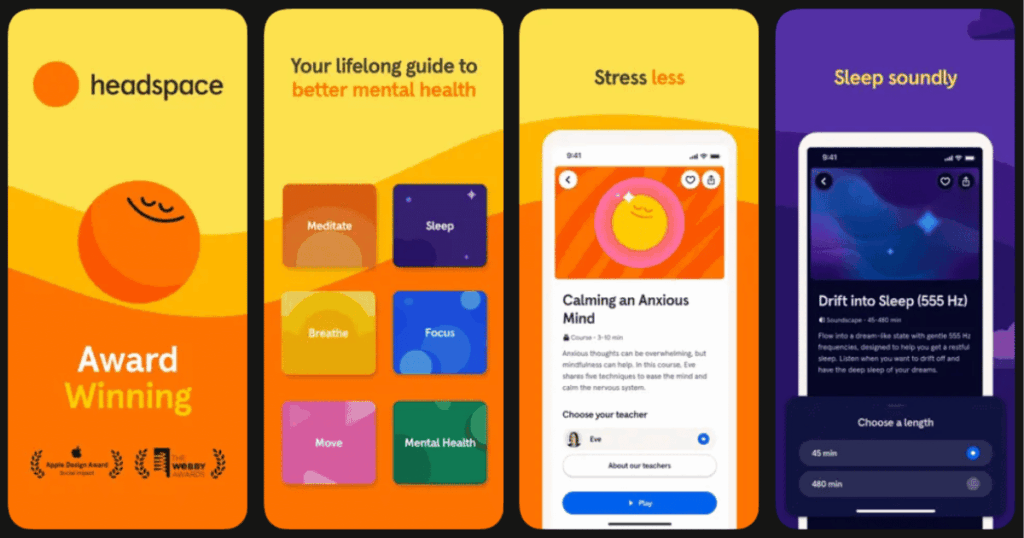
Headspace is famous for meditation. But did you know it has an entire 30-day mindful eating course? This program teaches you to pay attention while eating using traditional mindfulness techniques.
The course covers everything from shopping mindfully to savoring each bite. You learn to engage all five senses during meals. Short guided meditations can be done right at the dinner table.
The app also has a “Coping with Cravings” pack for when urges strike.
Key Features:
- 30-day structured mindful eating course with daily sessions
- Guided eating meditations to use during actual meals
- Additional content for cravings, stress eating, and emotional regulation
What I like: The quality of Headspace meditations is top-notch. Andy Puddicombe’s voice is so calming. The mindful eating course helped me truly taste my food for the first time in years. I now eat slower and feel satisfied with smaller portions. The app is beautifully designed and easy to navigate.
What I don’t like: The mindful eating content is just one part of a larger app. You pay for the whole subscription even if you only want the eating-focused content. Some people prefer an app dedicated solely to mindful eating.
Pricing: 14-day free trial. Monthly and annual subscription options.
Platforms: iOS and Android
#6. Calm – Best for Relaxation and Mindful Eating Meditations
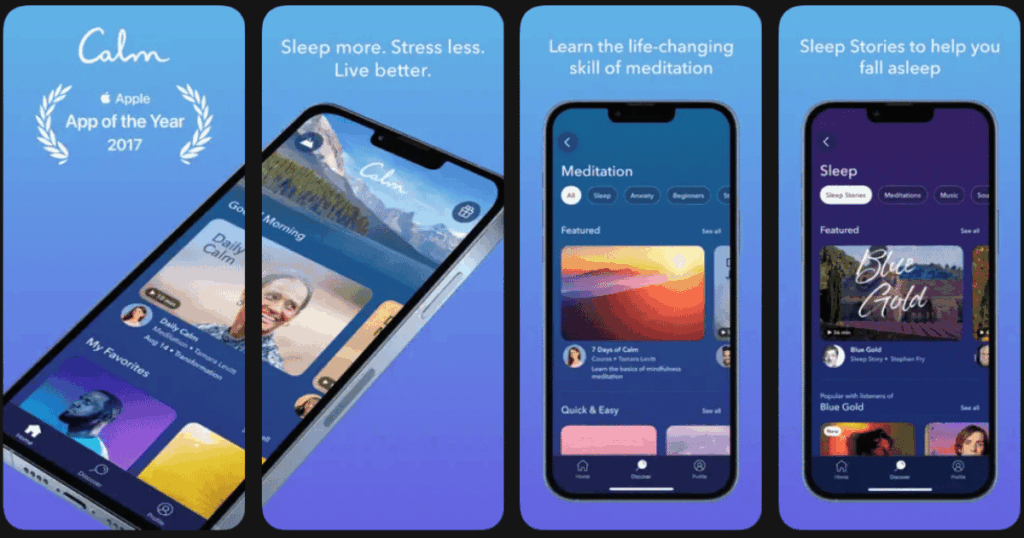
Calm offers a Mindful Eating Series led by meditation instructor Tamara Levitt. There is also a Masterclass taught by Dr. Michelle May, a well-known mindful eating expert.
The app excels at creating a relaxed state before meals. Reducing stress is key to avoiding emotional eating. Calm’s extensive library of sounds and sleep content supports overall wellness.
The Daily Calm meditation can easily become part of your pre-meal routine.
Key Features:
- Mindful Eating collection with guided meditations and gratitude practices
- Masterclass content from renowned mindful eating experts
- Calming sounds and sleep stories to reduce stress-related eating
What I like: Calm creates such a peaceful experience. I started doing a short breathing exercise before dinner each night. This simple practice helped me stop eating on autopilot. The variety of instructors keeps things interesting. The nature sounds are perfect background for a mindful meal.
What I don’t like: The mindful eating content is not as extensive as dedicated eating apps. You need to search for it among the larger meditation library. The subscription price is premium compared to some alternatives.
Pricing: Some free content available. Annual subscription for full access.
Platforms: iOS and Android
#7. Way – Best for Intuitive Eating Without Diet Culture
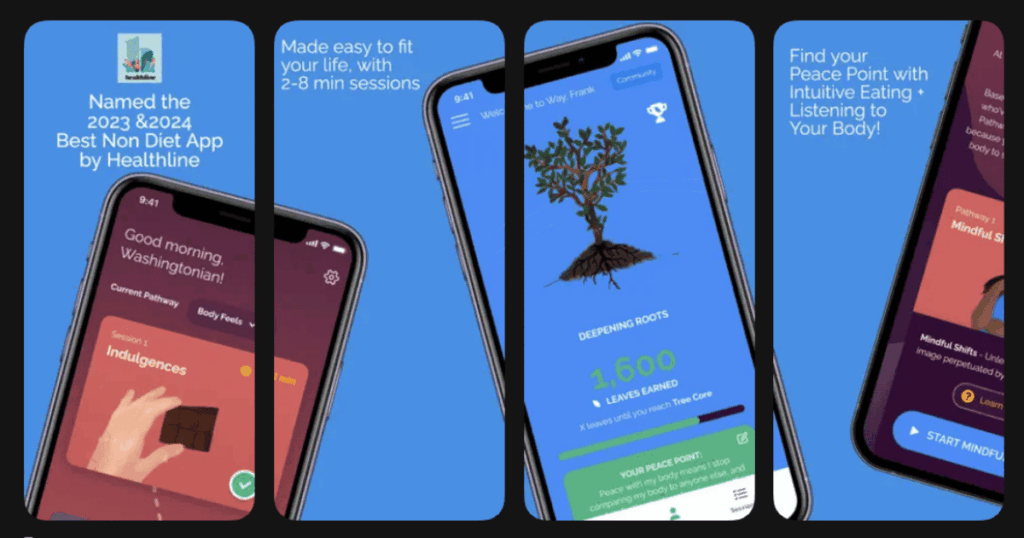
Way was named Best Non-Diet App by Healthline for 2023, 2024, and 2025. The app rejects restrictive dieting in favor of listening to your body.
Way has three main pathways. Body Feels teaches you to listen to physical cues. Emotional Eats helps you understand your feelings around food. Mindful Shifts works on unlearning harmful body image beliefs.
The sessions are short at just 2-8 minutes each. Perfect for busy schedules.
Key Features:
- Three specialized pathways covering body awareness, emotions, and mindset
- Grounded in intuitive eating and cognitive behavioral therapy principles
- Choose-your-own-adventure style learning that adapts to your needs
What I like: Way truly feels different from diet apps. The Magic Wand Question at the start helped me visualize what peace with food would look like. I appreciate that emotional eating is not treated as something bad to stop. Instead, you learn to understand and work with your emotions. The sessions feel like therapy without the cost.
What I don’t like: The app is newer so it does not have as much content as established competitors. Some users want more structure than the flexible pathway approach provides.
Pricing: Free trial available. Subscription plans for full access.
Platforms: iOS and Android
#8. Am I Hungry? – Best for Overcoming Yo-Yo Dieting and Emotional Eating
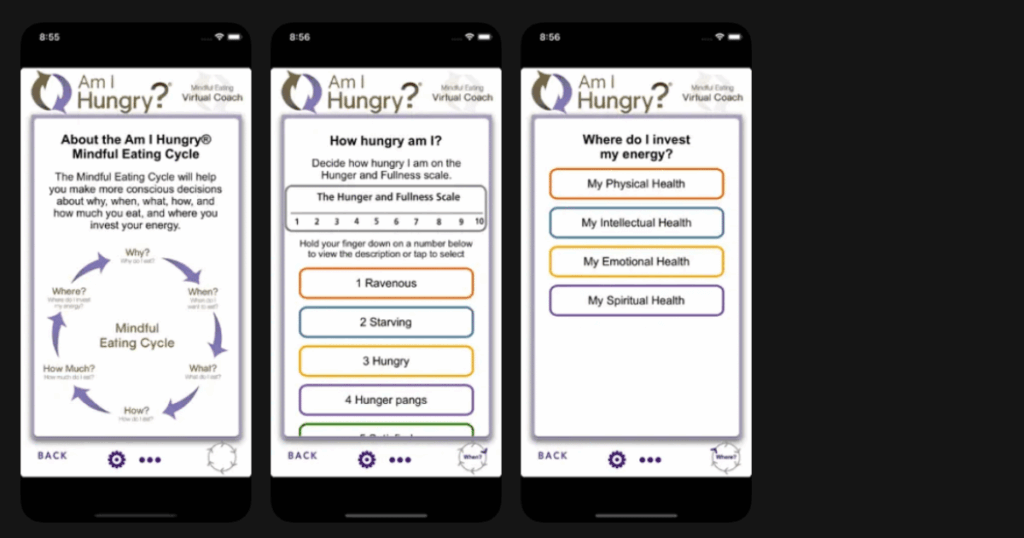
Am I Hungry? was created by Dr. Michelle May. The app guides you through her Mindful Eating Cycle. When you feel like eating, you tap “I want to eat” and answer guided questions.
This approach helps you figure out if you are truly hungry. If not, it offers strategies for other ways to meet your needs. A 10-point hunger-fullness scale builds awareness of your body signals.
The app works great alongside Dr. May’s books and programs.
Key Features:
- Step-by-step guided process for every eating decision
- 10-point hunger and fullness rating scale for body awareness
- Strategies and tools for when you want to eat but are not physically hungry
What I like: This app feels like having a personal food therapist in my pocket. The simple “I want to eat” button makes me pause before grabbing food. Going through the questions reveals whether I am hungry, bored, stressed, or something else. It is simple but incredibly effective for breaking automatic eating patterns.
What I don’t like: The interface feels a bit dated compared to newer apps. It is more of a single tool than a comprehensive program. Works best when combined with the Am I Hungry? books or workshops.
Pricing: One-time purchase price. No subscription required.
Platforms: iOS
#9. Eating Buddy – Best for Tracking Hunger Cues and Eating Triggers
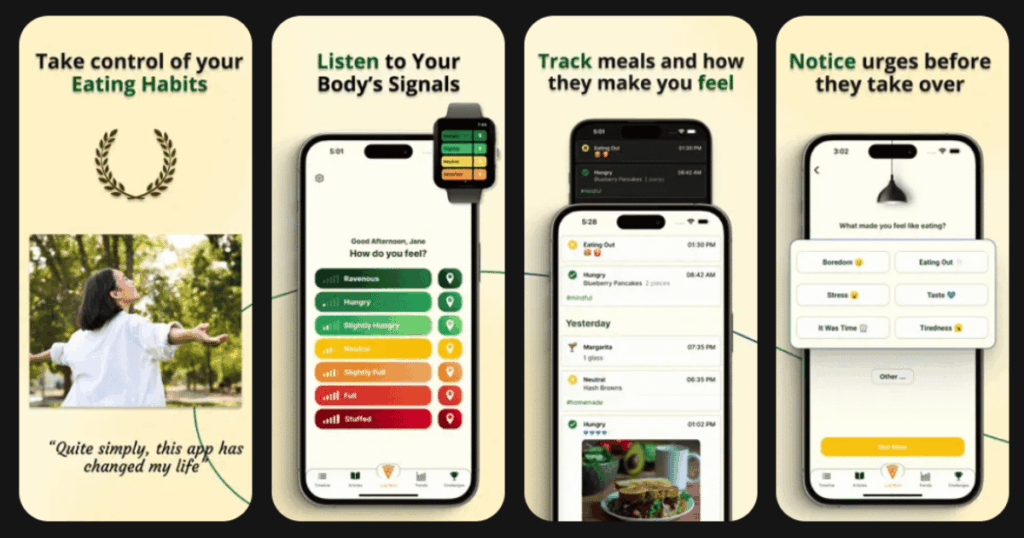
Eating Buddy helps you become more aware of your body’s signals. You can log what you eat with or without calories. The focus is on understanding your hunger, fullness, and satisfaction levels.
The app helps identify high-risk times, foods, and emotional states. Once you see your triggers clearly, they become easier to manage.
A unique feature lets you share data with your therapist or health coach.
Key Features:
- Hunger and fullness tracking throughout the day, even when not eating
- Trigger identification showing your high-risk times and emotional states
- Easy data sharing with healthcare providers for professional support
What I like: I appreciate that this app is non-judgmental. It does not force calorie tracking but allows it if you want. The daily questions at the end of each day help me plan for tomorrow. Seeing my progress over the month as colored dots on a calendar is motivating. The option to share with my therapist made our sessions more productive.
What I don’t like: The design is more basic than flashy apps like Calm or Headspace. Some features require the premium upgrade. The food database is limited since the focus is on mindfulness rather than detailed nutrition tracking.
Pricing: Free basic version. Premium upgrade available for challenges and advanced features.
Platforms: iOS and Android
What is the Best App for Mindful Eating?
The best app for mindful eating depends on your specific needs. If you want a complete mental wellness solution, Life7 is my top choice. It addresses stress, anxiety, sleep, and emotional triggers that lead to mindless eating.
For breaking deep-rooted emotional eating patterns, Eat Right Now offers the most research-backed approach. If you hate calorie counting, Ate’s photo journaling method is refreshing and easy.
Consider what causes your mindless eating. Stress-related eaters benefit from meditation apps like Life7, Headspace, or Calm. Those struggling with body image may prefer Way’s anti-diet approach. People who need accountability might like Noom’s coaching model.
Most apps offer free trials. Try a few to see which style clicks with you.
Do Mindful Eating Apps Actually Work?
Yes, mindful eating apps can work when used consistently. Research shows that practicing mindfulness while eating leads to reduced binge eating, better food choices, and improved satisfaction with meals.
Apps like Eat Right Now have clinical trials proving their effectiveness. Studies show users reduced craving-related eating by 40 percent after completing the program.
The key is regular practice. Mindful eating is a skill that gets stronger over time. Apps provide structure, reminders, and guidance that make building this habit easier than going it alone.
Results vary by person. Some see changes in days while others need weeks. The most important factor is choosing an app you enjoy enough to use regularly.
How Do I Start Mindful Eating as a Beginner?
Starting mindful eating is simpler than most people think. Begin by removing distractions during one meal per day. Put away your phone and turn off the TV. Focus only on your food.
Before eating, take three deep breaths. This activates your calm nervous system. Then notice the colors, smells, and textures of your food. Take small bites and chew slowly.
An app like Life7 can guide you through breathing exercises before meals. The short meditations help you transition from busy mode to eating mode. Beginners especially benefit from guided sessions until mindful eating becomes automatic.
Start small. Even practicing for just five minutes during lunch can make a difference. As it becomes more natural, you can extend mindfulness to other meals and snacks throughout the day.