9 Best Meditation Apps With No Ads
| App Name | Best For | Key Features | AC Rating | Pricing |
|---|---|---|---|---|
| Life7 | Complete mental wellness | Binaural beats, sleep stories, CBT therapy | 4.9/5 | Free trial, then subscription |
| Insight Timer | Free meditation library | 200K+ free meditations, timer, community | 4.7/5 | Free with optional premium |
| Smiling Mind | Kids and families | Age-based programs, school curriculum | 4.6/5 | Completely free |
| Plum Village | Buddhist mindfulness | Thich Nhat Hanh teachings, bell reminders | 4.5/5 | Completely free |
| Medito | Budget-conscious users | Guided sessions, sleep sounds, courses | 4.5/5 | Completely free forever |
| UCLA Mindful | Evidence-based practice | Research-backed meditations, weekly podcasts | 4.4/5 | Completely free |
| Healthy Minds Program | Science-driven training | Neuroscience-based, progress tracking | 4.4/5 | Completely free |
| Oak | Simple minimalist design | Breathing exercises, unguided meditation | 4.3/5 | Free with optional tips |
| Transcendental Meditation | Mantra meditation | Personalized mantras, structured program | 4.2/5 | One-time purchase |
#1. Life7 – Best for Complete Mental Wellness
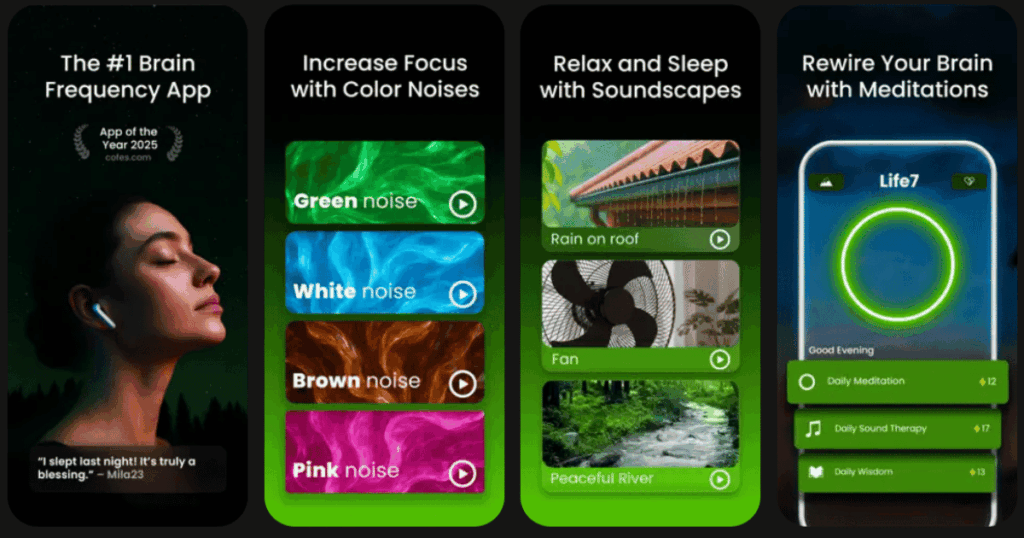
Life7 is my top pick for ad-free meditation. This app does so much more than basic meditation. It combines sound therapy, sleep tools, breathing exercises, and even cognitive behavioral therapy in one place.
The app has over 312 million meditation minutes logged by users. That tells me people really love it. You get binaural beats, nature sounds, and different sound frequencies like 432 Hz and 528 Hz.
New content drops every single day. You will never run out of things to try. The gamified approach makes building a meditation habit actually fun.
Key Features:
- Binaural beats, isochronic tones, and solfeggio frequencies for deep relaxation
- Sleep stories for adults and kids plus 8D sleep audio
- CBT, hypnotherapy, and vagus nerve stimulation sessions
What I like: I really enjoy how Life7 covers every angle of mental wellness. The Backdrop Mode lets me mix soundscapes with guided meditations. That is something I have not seen in other apps. The SOS sessions for anxiety are a lifesaver during stressful moments. Daily check-ins help me stay consistent. The streak system and XP rewards make me want to come back every day.
What I don’t like: The free version is pretty limited. You will want to upgrade to access most of the good stuff. I wish there were more free sessions to try before committing.
Pricing: 7 day free trial available. Weekly, monthly, and yearly plans offered. They run special deals often.
Platforms: iOS and Android
#2. Insight Timer – Best for Free Meditation Library

Insight Timer has the biggest free meditation library I have ever seen. We are talking over 200,000 guided meditations. All without ads interrupting your practice.
Teachers from around the world share content here. You can find everything from 5 minute sessions to hour long deep dives. The community aspect is cool too. You can see how many people are meditating with you in real time.
The app also has a simple meditation timer with bells. Perfect if you prefer silent practice.
Key Features:
- Over 200,000 free guided meditations from 10,000+ teachers
- Customizable meditation timer with ambient sounds
- Live events and community discussion groups
What I like: The sheer amount of free content blows my mind. I have used this app for years and still find new stuff. The variety of teachers means you can find a voice and style that clicks for you. Live meditation events make you feel connected to others on this journey.
What I don’t like: Finding good content takes work. With so many options, quality varies a lot. The app can feel cluttered and overwhelming at first.
Pricing: Most content is free. Premium tier available for courses and advanced features.
Platforms: iOS and Android
#3. Smiling Mind – Best for Kids and Families
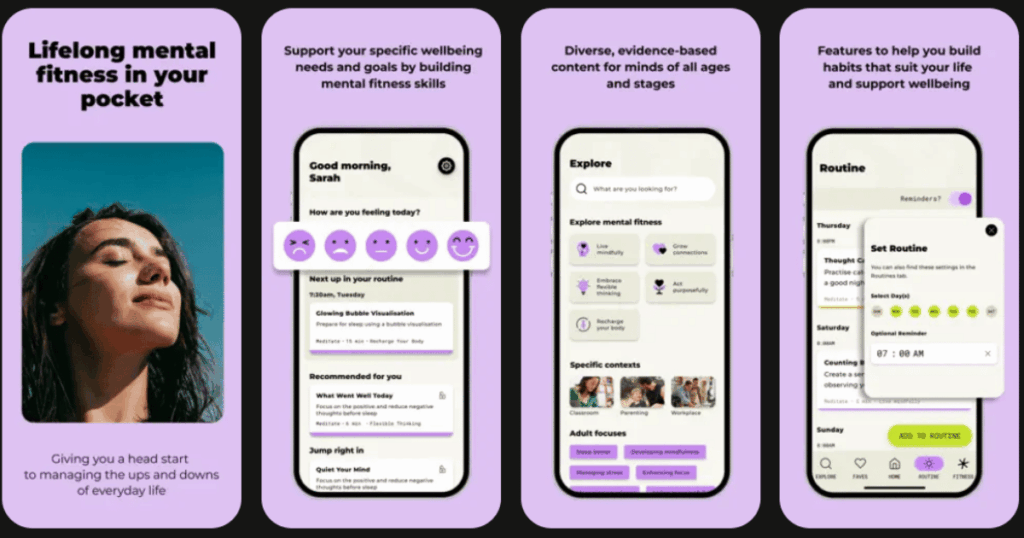
Smiling Mind comes from Australia and was built by psychologists. It is 100% free and has zero ads. The app focuses on different age groups. Kids as young as 3 can use it.
Schools actually use this app in their curriculum. That tells you how trusted it is. Programs are designed for specific life stages and situations.
Parents can meditate alongside their children. Family programs help everyone build mindfulness together.
Key Features:
- Age-specific programs from toddlers to adults
- Classroom and educator resources included
- Sleep and stress management modules
What I like: I appreciate that this app is built by a nonprofit. Their only goal is helping people, not making money. The programs feel thoughtful and well-researched. Introducing my kids to meditation through this app has been easy and natural.
What I don’t like: The content library is smaller than some competitors. Adults might want more variety after finishing the main programs.
Pricing: Completely free with no premium tier.
Platforms: iOS and Android
#4. Plum Village – Best for Buddhist Mindfulness
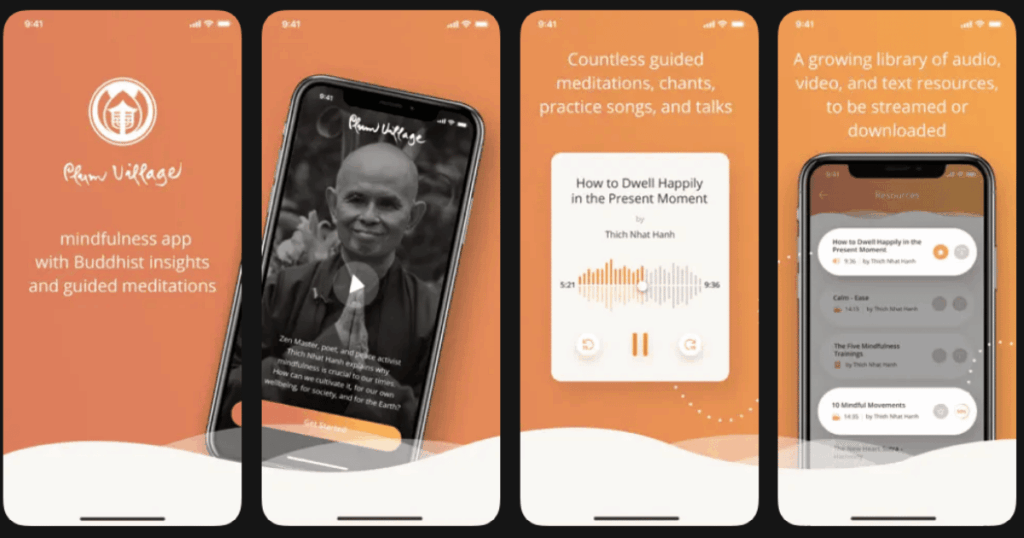
Plum Village brings the teachings of Thich Nhat Hanh to your phone. He was one of the most beloved meditation teachers in the world. This app shares his gentle approach to mindfulness.
The app is completely free and ad-free. It comes from an actual monastery community. You get authentic Buddhist practices without any commercial stuff.
Bell reminders throughout the day help you pause and breathe. Simple but powerful.
Key Features:
- Guided meditations from Thich Nhat Hanh and monastics
- Mindfulness bell reminders throughout your day
- Dharma talks and teachings on Buddhist principles
What I like: The authenticity here is unmatched. These are real monks and nuns sharing real practices. The pebble meditation for kids is adorable. I love how the app encourages mindfulness in daily activities, not just formal sitting.
What I don’t like: If you are not interested in Buddhist teachings, this might not fit. The app focuses on one tradition, so variety is limited.
Pricing: Completely free.
Platforms: iOS and Android
#5. Medito – Best for Budget-Conscious Users

Medito promises to be free forever. A nonprofit foundation runs it. They believe meditation should be available to everyone, no matter their budget.
The app has guided meditations, sleep sounds, and courses. Everything is ad-free. No sneaky premium upsells either.
New content gets added regularly by volunteer teachers. The community keeps growing.
Key Features:
- Completely free guided meditations and courses
- Sleep sounds and stories for better rest
- Beginner-friendly introduction to meditation
What I like: Medito proves you do not need to spend money to meditate well. The app is clean and simple. No distractions. The daily meditation feature helps build a routine. I respect their mission to make meditation accessible.
What I don’t like: The content library is growing but still modest. Power users might run through everything faster than new stuff arrives.
Pricing: Free forever. They accept donations but never require payment.
Platforms: iOS and Android
#6. UCLA Mindful – Best for Evidence-Based Practice

UCLA Mindful comes from the Mindful Awareness Research Center at UCLA. These are researchers who study meditation scientifically. The app reflects that serious approach.
All meditations are backed by research. You know the techniques actually work. The app also has a weekly podcast with experts.
Basic meditations are available in multiple languages. Great for non-English speakers.
Key Features:
- Research-backed meditations from UCLA experts
- Weekly mindfulness podcast included
- Meditations available in multiple languages
What I like: I trust this app because real scientists created it. The meditations feel grounded and practical. No woo-woo stuff here. The body scan meditation is particularly good for stress relief.
What I don’t like: The app feels basic compared to flashier options. Limited variety in meditation styles and lengths.
Pricing: Completely free.
Platforms: iOS and Android
#7. Healthy Minds Program – Best for Science-Driven Training
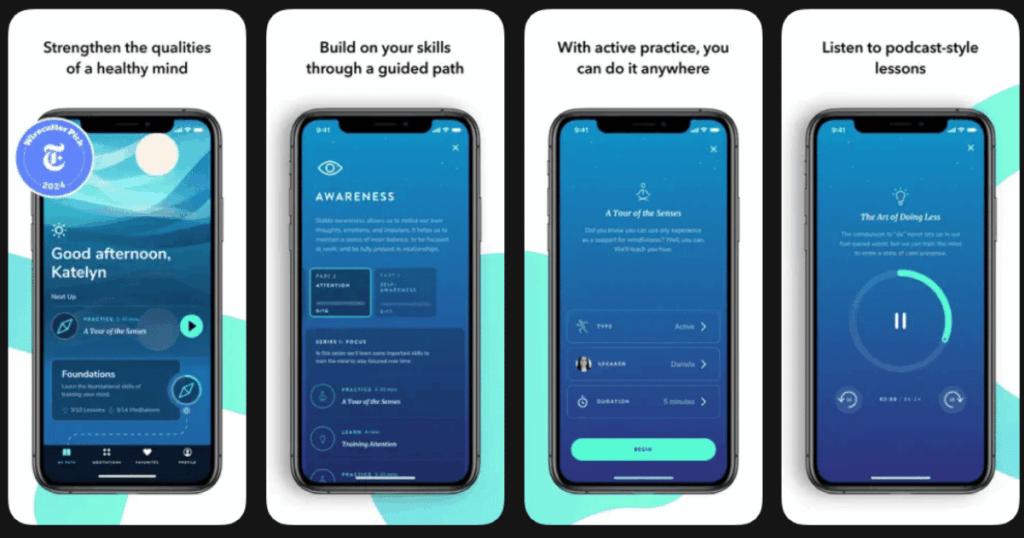
The Healthy Minds Program was created by neuroscientist Dr. Richard Davidson. His research on meditation and the brain is world-famous. This app teaches his methods.
The program has four pillars: awareness, connection, insight, and purpose. You work through each one systematically. Progress tracking shows how you improve over time.
Active meditations let you practice while walking or doing chores.
Key Features:
- Neuroscience-based meditation training program
- Active meditations for practice during daily activities
- Progress tracking across four skill areas
What I like: This app feels like a real course, not just random meditations. I learned why certain techniques work, not just how to do them. The active meditations fit into busy days perfectly.
What I don’t like: The structured approach might feel rigid to some people. Less freedom to explore compared to library-style apps.
Pricing: Completely free.
Platforms: iOS and Android
#8. Oak – Best for Simple Minimalist Design

Oak keeps things clean and simple. No clutter. No overwhelming choices. Just meditation, breathing, and sleep.
The app was created by Kevin Rose, a tech entrepreneur who loves meditation. His vision was an app that gets out of your way.
Unguided meditation options are perfect for experienced practitioners. The breathing exercises are beautifully animated.
Key Features:
- Minimalist interface with zero distractions
- Box breathing and other breathing techniques
- Unguided meditation timer with customizable bells
What I like: Oak is refreshing in its simplicity. I open the app and start meditating in seconds. The breathing animations are calming just to watch. Stats tracking is subtle but motivating.
What I don’t like: Very limited guided content. Beginners might want more hand-holding than Oak provides.
Pricing: Free. You can leave optional tips for the creator.
Platforms: iOS and Android
#9. Transcendental Meditation – Best for Mantra Meditation

Transcendental Meditation app teaches a specific mantra-based technique. It is similar to NSR Meditation.
You get a personalized mantra and clear instructions. The program walks you through everything step by step. No guessing involved.
This is a structured 8 week course, not a meditation library.
Key Features:
- Personalized mantra selection for your practice
- Structured 8 week learning program
- Lifetime access after one purchase
What I like: Mantra meditation changed my practice completely. This app makes it accessible without expensive in-person courses. The technique is powerful for deep relaxation. One payment means no subscription stress.
What I don’t like: This app only teaches one technique. If mantra meditation is not your thing, look elsewhere. The interface feels dated.
Pricing: One-time purchase for lifetime access.
Platforms: iOS and Android
Are Free Meditation Apps as Good as Paid Ones?
Free meditation apps can absolutely deliver great results. Apps like Smiling Mind and Medito offer high quality content without charging a penny. Many were created by nonprofits or universities with a mission to help people.
That said, paid apps often have more variety and polish. They update more frequently with fresh content. Premium features like sleep tracking or personalized recommendations require funding to develop.
The best choice depends on your needs. Beginners can start free and see what sticks. Serious practitioners might appreciate the depth that paid apps provide. Life7 offers a free trial so you can test premium features before deciding.
Can Meditation Apps Really Help With Sleep?
Yes, many people find meditation apps helpful for sleep. The combination of calming voices, relaxing sounds, and breathing exercises prepares your body for rest.
Apps with sleep stories work especially well. They give your mind something gentle to focus on instead of racing thoughts. Sound frequencies like delta waves are designed specifically to promote deep sleep.
Consistency matters most. Using your app every night builds a sleep routine. Your brain starts associating the sounds with bedtime. Over time, falling asleep gets easier.
Life7 has particularly strong sleep features including 8D audio and bedtime visualizations.
How Long Should I Meditate Each Day Using an App?
Start with just 5 minutes daily. Seriously. That is enough for beginners. Trying to do too much too soon leads to burnout.
Once 5 minutes feels easy, bump up to 10. Then 15. Most research shows benefits start around 10 to 20 minutes per day. But any meditation is better than none.
Many apps have sessions of different lengths. Pick what fits your schedule. A short morning meditation beats skipping because you do not have time for a long one.
The key is consistency over duration. Five minutes every day beats one hour once a week. Let your app help you build the habit first. Length can grow naturally from there.