9 Best Apathy Relief Apps For Your Phone
| App Name | Best For | Key Features | AC Rating | Pricing |
|---|---|---|---|---|
| Life7 | All-in-one mental wellness | Binaural beats, sleep stories, CBT, breathing exercises | 4.8/5 | Free trial, subscription plans |
| Headspace | Beginners learning meditation | Guided courses, sleep tools, daily meditations | 4.6/5 | Monthly and annual plans |
| Calm | Sleep and relaxation | Sleep Stories, celebrity narrators, breathing exercises | 4.5/5 | Monthly and annual plans |
| Daylio | Mood tracking without writing | Visual mood logging, habit tracking, statistics | 4.7/5 | Free with premium upgrade |
| Happify | Gamified positive psychology | Science-based games, CBT activities, AI coach | 4.3/5 | Free with premium upgrade |
| Finch | Gamified self-care routines | Virtual pet, goal tracking, mood check-ins | 4.6/5 | Free with premium upgrade |
| Woebot | AI-powered CBT support | 24/7 chatbot, mood tracking, CBT exercises | 4.4/5 | Access code required |
| Sanvello | Comprehensive anxiety relief | Guided journeys, community support, therapy access | 4.5/5 | Free with premium upgrade |
| Insight Timer | Free meditation library | 200,000+ meditations, customizable timer, live events | 4.6/5 | Free with premium upgrade |
#1. Life7 – Best for All-in-One Mental Wellness
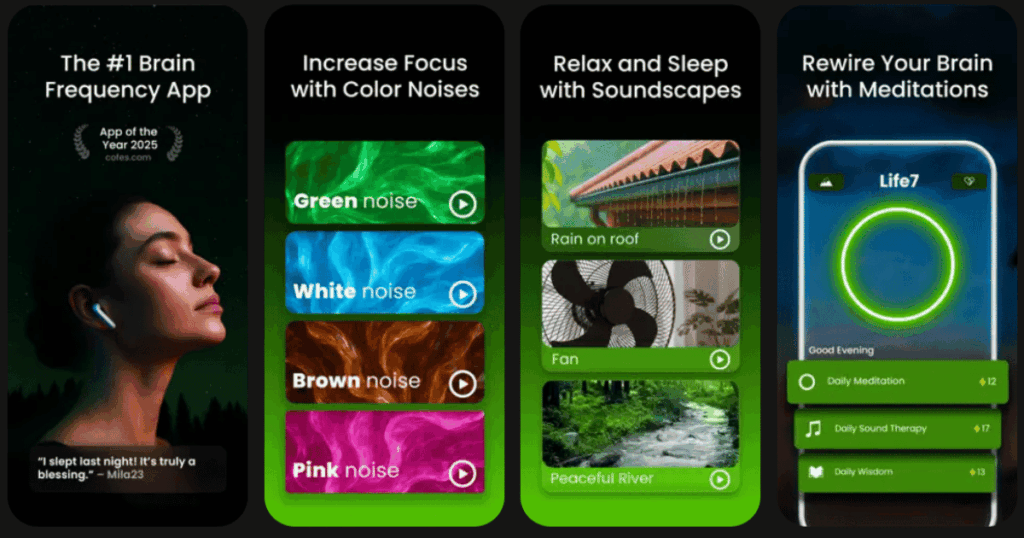
When apathy hits, you need more than just one tool. You need a complete toolkit. That’s exactly what Life7 offers. This app brings together meditation, sound therapy, breathing exercises, and so much more in one place.
I love that Life7 doesn’t take a one-size-fits-all approach. Whether you need calming binaural beats or an SOS session for anxiety, the app has you covered. With over 312 million meditation minutes logged and 1200+ editorial mentions, it’s clearly helping a lot of people.
The app uses science-backed approaches like CBT, vagus nerve stimulation, and hypnotherapy. Plus, the daily sessions keep you engaged and motivated to show up for yourself.
Key Features:
- Multiple sound therapy options including green noise, white noise, binaural beats, and solfeggio frequencies
- SOS sessions for panic attacks and anxiety relief with breathing exercises
- Daily meditation, music therapy, and wisdom sessions to build consistent habits
What I like: The variety here is incredible. On days when I feel completely unmotivated, I can start with just a two-minute breathing exercise. The gamified approach with XP and streaks actually makes me want to come back. The backdrop mode is genius too. You can mix soundscapes with sleep stories or meditations. It feels like having a personal wellness studio in your pocket.
What I don’t like: The free content is somewhat limited. You’ll need to subscribe to unlock the full library. This might be frustrating if you want to explore everything before committing.
Pricing: 7-day free trial available. Weekly, monthly, and yearly subscription plans offered. Frequent special offers available.
Platforms: iOS and Android
#2. Headspace – Best for Beginners Learning Meditation
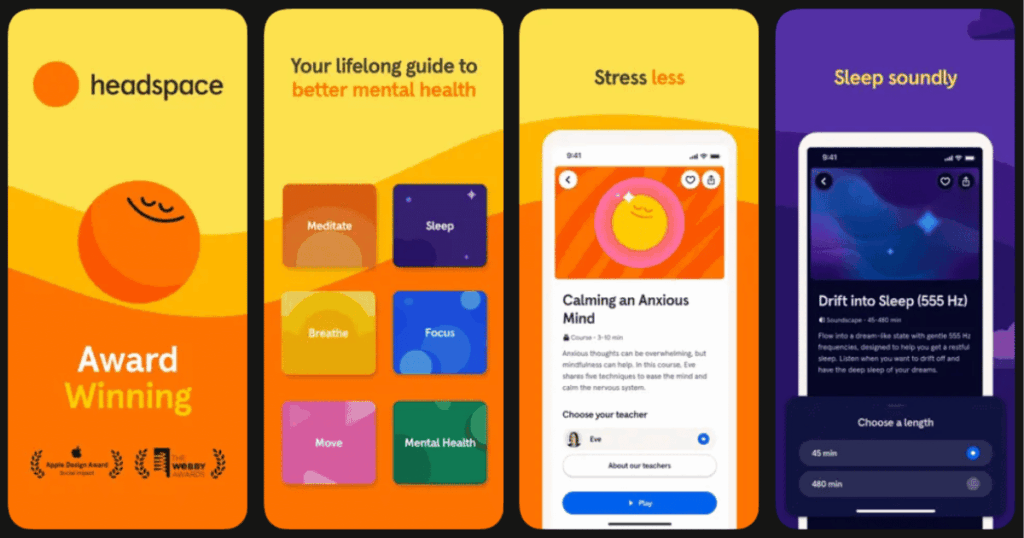
If you’ve never meditated before and feel lost, Headspace is your friend. The app was co-founded by a former Buddhist monk who knows how to explain meditation in simple terms. The structured courses make it easy to build a practice from scratch.
The animations are cute and calming. They help explain what meditation actually is without all the complicated jargon. For someone dealing with apathy, starting small with a three-minute session feels doable.
Key Features:
- Progressive meditation courses that teach fundamentals step by step
- Sleepcasts and wind-down tools designed to help you rest better
- Focus music playlists and movement exercises for daily mental health support
What I like: Everything feels organized and approachable. The Wake Up feature gives you a daily dose of inspiration through short videos. I appreciate how the app doesn’t overwhelm you with choices. It guides you through a clear path, which is perfect when motivation is low.
What I don’t like: Almost everything requires a subscription. The free content is very limited compared to some other apps. Also, most meditations are led by the same few teachers, which can feel repetitive over time.
Pricing: Monthly and annual subscription plans available. Student and family plans offered at discounted rates.
Platforms: iOS and Android
#3. Calm – Best for Sleep and Relaxation
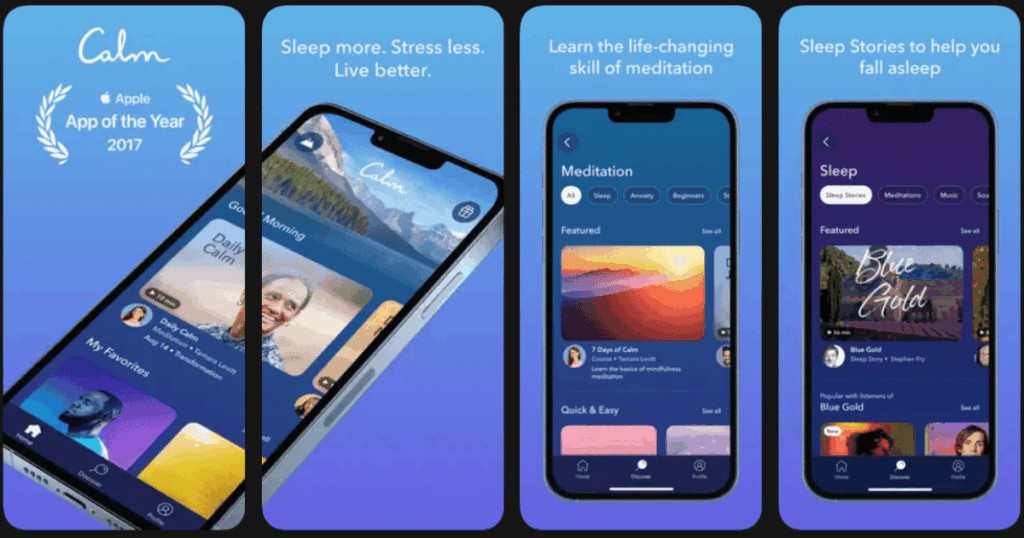
Can’t sleep? Calm might be exactly what you need. This app has built its reputation on Sleep Stories, which are basically bedtime stories for adults. Celebrity narrators like Matthew McConaughey and Harry Styles read soothing tales to help you drift off.
When apathy makes even sleep feel hard, having someone gently guide you into rest can be a lifesaver. The app also offers breathing exercises and daily meditations called the Daily Calm.
Key Features:
- Over 500 Sleep Stories narrated by celebrities and professional storytellers
- Panic SOS and breathing exercises for immediate stress relief
- Extensive soundscape library with nature sounds and calming music
What I like: The production quality is top-notch. Everything sounds beautiful and professionally made. The 7 Days of Calm program is a great starting point if you’re new. The app feels like a warm hug when you’re having a tough day.
What I don’t like: The interface can feel overwhelming with so many options. Some users find it hard to know where to start. The premium price is also on the higher side compared to competitors.
Pricing: Monthly and annual subscription options available. Lifetime membership option exists.
Platforms: iOS and Android
#4. Daylio – Best for Mood Tracking Without Writing

Writing in a journal sounds great in theory. But when you’re dealing with apathy, even picking up a pen feels like too much. Daylio solves this problem by letting you track your mood with just a few taps.
You pick an emoji for your mood and select icons for what you did that day. No writing required unless you want to add notes. Over time, you’ll see patterns that help you understand what makes you feel better or worse.
Key Features:
- One-tap mood tracking with customizable moods and emoji options
- Activity and habit tracking with beautiful icon selection
- Detailed statistics showing mood patterns over weeks, months, and years
What I like: The Year in Pixels feature is amazing. Every dot represents a day colored by your mood. Seeing the whole year at once helps you spot trends you’d never notice otherwise. The app is so quick to use that I actually stick with it daily.
What I don’t like: There’s no built-in guidance on what to do with the patterns you discover. You’re left to figure that out yourself. Some people might want more educational content about managing moods.
Pricing: Free version available with basic features. Premium unlocks advanced statistics and removes ads.
Platforms: iOS and Android
#5. Happify – Best for Gamified Positive Psychology

What if improving your mental health felt like playing a game? That’s what Happify offers. The app uses science-backed activities, games, and quizzes to help you build happiness skills. It’s based on CBT, positive psychology, and mindfulness.
You follow “tracks” designed by psychologists to help with specific goals like conquering negative thoughts or coping with stress. Each track includes games and activities that feel more like play than work.
Key Features:
- Science-based games and activities designed to boost mood and resilience
- Personalized tracks for specific goals like stress reduction and confidence building
- AI coach named Anna who guides you through activities
What I like: The approach feels fun rather than clinical. Research shows that users who engage regularly actually see improvements in their well-being within six weeks. The community feature lets you connect with others on similar journeys, which helps fight the isolation that often comes with apathy.
What I don’t like: The best content sits behind a paywall. Some tracks look free but have paid activities hidden inside. The games can sometimes feel disconnected from real therapeutic benefit.
Pricing: Free version available with limited tracks. Premium subscription unlocks full access to all content.
Platforms: iOS and Android
#6. Finch – Best for Gamified Self-Care Routines
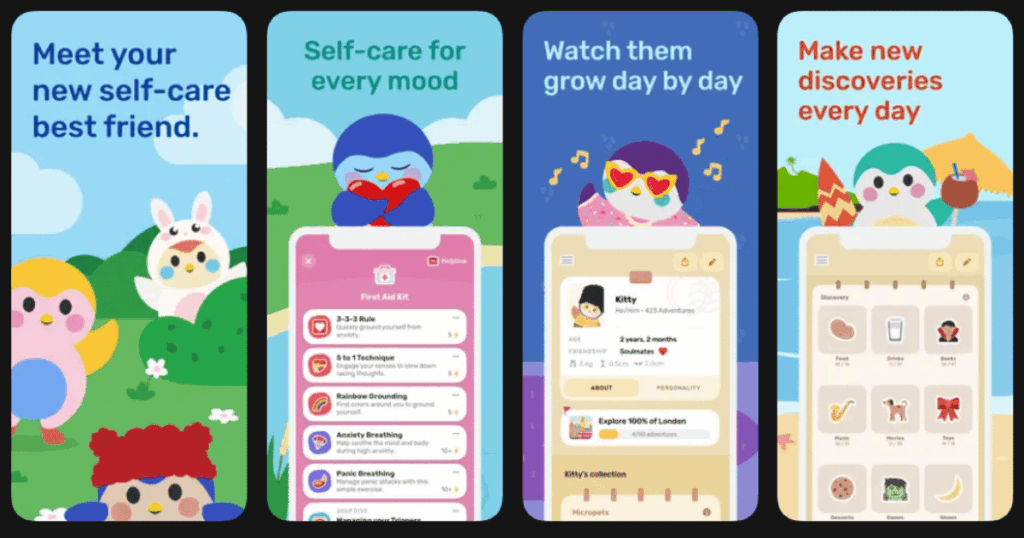
Meet your new self-care best friend. In Finch, you adopt a virtual bird and take care of it by taking care of yourself. Complete daily tasks like drinking water or stretching, and your bird grows and thrives.
This sounds silly, but it works. When you can’t find motivation to do things for yourself, doing them for a cute digital pet creates that little push you need.
Key Features:
- Virtual pet that grows based on your self-care activities
- Customizable goal setting with daily check-ins and mood tracking
- Themed self-care journeys like Building Focus and Practicing Gratitude
What I like: The app meets you where you are. You choose your own goals, whether that’s just getting out of bed or doing a full morning routine. The evening reflection with your bird feels like chatting with a supportive friend. Plus, there’s no judgment if you skip a day.
What I don’t like: The gamification won’t appeal to everyone. Some people find the virtual pet concept too childish. The free version is generous, but some features require premium.
Pricing: Free version available with extensive features. Premium subscription adds extra content.
Platforms: iOS and Android
#7. Woebot – Best for AI-Powered CBT Support

Woebot is like having a therapist in your pocket who’s available 24/7. This AI chatbot uses CBT principles to help you work through difficult thoughts and feelings. It checks in daily and remembers your progress.
The conversations feel surprisingly natural. Woebot uses humor, gifs, and a friendly personality to make therapy techniques feel approachable rather than intimidating.
Key Features:
- AI chatbot trained in CBT, DBT, and interpersonal therapy techniques
- Daily check-ins with mood tracking and progress reflection
- Toolbox of coping strategies you can access anytime
What I like: Research shows Woebot actually reduces depression symptoms. The bot remembers past conversations and builds on them, which makes it feel personal. It’s great for learning therapy skills between actual therapy sessions or when professional help isn’t accessible.
What I don’t like: You currently need an access code from a provider or employer to use the app. The conversations can sometimes feel scripted, and the bot has limits when it comes to truly understanding complex emotional situations.
Pricing: Requires access code from healthcare provider, employer, or partner organization.
Platforms: iOS and Android
#8. Sanvello – Best for Comprehensive Anxiety Relief

Sanvello brings together self-care tools, peer support, coaching, and even therapy in one app. It’s designed specifically for people dealing with stress, anxiety, and depression. The approach is grounded in CBT and mindfulness.
The app gives you a baseline score when you start, then tracks your progress over time. You can see exactly how your anxiety and depression levels change as you use the tools.
Key Features:
- Guided Journeys that teach CBT skills through audio lessons and activities
- Community forums and chat groups for peer support
- Optional access to professional coaching and therapy through the app
What I like: The peer support community feels genuine and supportive. You can connect with people dealing with similar challenges. The guided journeys are well-designed and actually teach you useful skills. The app also offers therapy access, making it a true one-stop shop.
What I don’t like: The subscription pushes can feel aggressive. Free users see frequent prompts to upgrade. Some of the content feels dated compared to newer apps.
Pricing: Free version available with basic features. Premium subscription unlocks full content library.
Platforms: iOS and Android
#9. Insight Timer – Best for Free Meditation Library
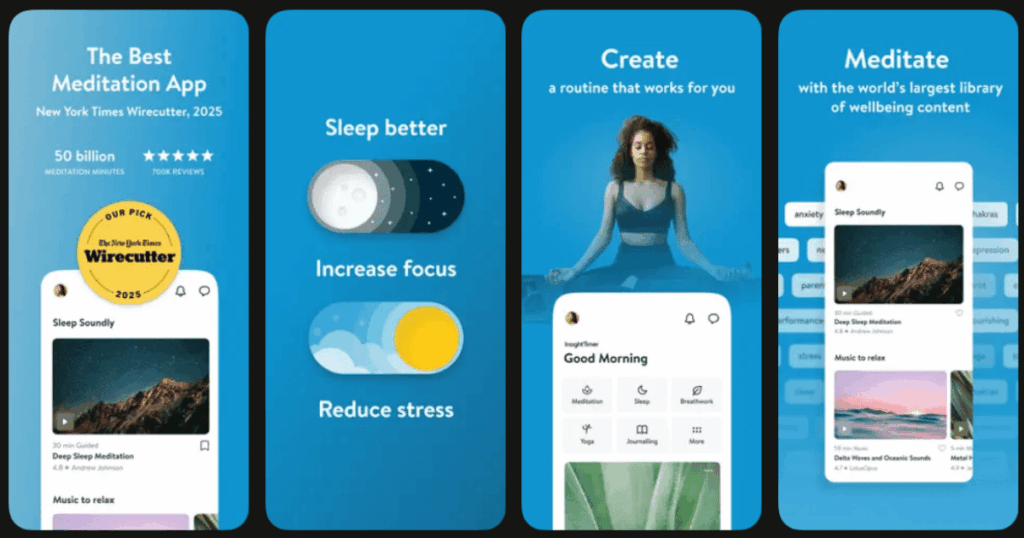
If you want variety without paying, Insight Timer is your answer. The app offers over 200,000 free guided meditations from thousands of teachers around the world. No other app comes close to this library size.
You’ll find everything from quick five-minute sessions to deep hour-long practices. Topics cover anxiety, sleep, self-love, focus, and much more.
Key Features:
- Over 200,000 free guided meditations from 17,000+ teachers worldwide
- Customizable meditation timer with bells, ambient sounds, and intervals
- Live events, courses, workshops, and community discussion groups
What I like: The free content is genuinely massive. You could meditate every day for years without running out of new things to try. The community aspect is nice too. You can see how many people are meditating alongside you right now, which creates a sense of connection.
What I don’t like: Having so many choices can feel overwhelming when you don’t know where to start. The social features can distract from the simplicity of meditation. Some users prefer a more curated, guided experience.
Pricing: Free with extensive content library. Premium subscription adds offline listening and advanced features.
Platforms: iOS and Android
How Can I Use Apps to Help With Apathy?
Apps can be powerful tools when apathy makes everything feel hard. Start with something small and manageable. Don’t try to do a 30-minute meditation on your first day. Instead, pick a breathing exercise that takes two minutes.
The key is consistency over intensity. Apps like Daylio and Finch help you build streaks and habits. Even tiny actions count. Logging your mood takes seconds but creates momentum.
Use the tracking features to notice patterns. You might discover that certain activities consistently boost your energy. Or you might see that specific situations trigger your apathy. This awareness helps you make better choices.
Are Mental Health Apps a Replacement for Therapy?
No, apps cannot replace professional therapy. They’re best used as supplements to professional care or as tools for mild symptoms. If your apathy is severe or lasting a long time, please talk to a doctor or therapist.
That said, apps can fill important gaps. They’re available at 3 AM when your therapist’s office is closed. They’re there on weekends and holidays. They cost less than therapy sessions. And they help you practice skills between appointments.
Think of mental health apps like going to the gym for your mind. A personal trainer (therapist) designs your program. But you still need to do daily exercise (app practice) on your own.
Which App Should I Try First?
If you’re not sure where to start, I recommend trying Life7 first. It offers the most comprehensive toolkit for fighting apathy. You get meditation, sound therapy, breathing exercises, CBT tools, and more in one place.
The 7-day free trial lets you explore without commitment. You can test different features and see what resonates with your needs. The daily sessions create structure, which is especially helpful when apathy makes planning feel impossible.
Of course, everyone is different. If you prefer something simpler, start with Daylio for mood tracking or Finch for gamified self-care. The best app is the one you’ll actually use consistently.