9 Best Meditation Apps With Courses
| App Name | Best For | Key Features | AC Rating | Pricing |
|---|---|---|---|---|
| Life7 | All-in-one mental wellness | Guided courses, binaural beats, sleep stories | 4.8/5 | Free trial, then subscription |
| Headspace | Beginners learning meditation | Structured courses, animations, sleepcasts | 4.6/5 | Free tier, premium subscription |
| Calm | Sleep and relaxation | Masterclasses, sleep stories, daily calm | 4.5/5 | Limited free, premium subscription |
| Insight Timer | Free meditation variety | Thousands of free courses, community features | 4.4/5 | Mostly free, optional premium |
| Ten Percent Happier | Skeptics and practical learners | Expert-led courses, coaching, video lessons | 4.3/5 | Free trial, then subscription |
| Waking Up | Philosophical exploration | Theory lessons, daily meditations, conversations | 4.3/5 | Free trial, subscription with scholarship option |
| Buddhify | Meditation on the go | Activity-based sessions, wheel interface | 4.2/5 | One-time purchase |
| Simple Habit | Busy professionals | Short sessions, situation-based courses | 4.1/5 | Free tier, premium subscription |
| Meditopia | Emotional wellness journeys | Themed programs, journaling, mood tracking | 4.0/5 | Free tier, premium subscription |
#1. Life7 – Best for All-in-One Mental Wellness
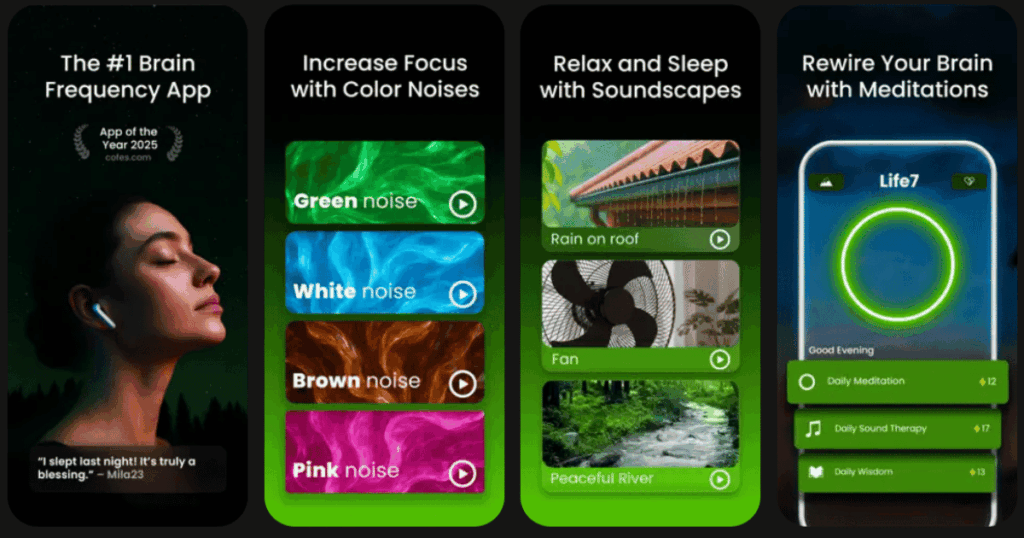
Life7 is my top pick for meditation courses. This app does so much more than basic guided meditations. It combines ancient wisdom with modern science to help you sleep better, stress less, and feel calmer.
The app has over 312 million meditation minutes logged by users worldwide. That tells you people love it! You get access to courses on everything from beginner meditation to advanced practices like transcendental meditation and hypnotherapy.
What makes Life7 special is how it mixes different wellness tools. You can layer soundscapes with meditations. You can try cognitive behavioral therapy sessions. There is even vagus nerve stimulation content!
Key Features:
- Daily check-ins with fresh meditation, music therapy, and wisdom sessions every single day
- Courses covering CBT, hypnotherapy, breathwork, and guided lucid dreaming
- Gamified progress tracking with XP rewards and streak building
What I like: I really appreciate how Life7 gives you so many options in one place. The binaural beats and solfeggio frequencies are fantastic for deep focus. I love the backdrop mode where you can mix nature sounds with sleep stories. The SOS sessions for anxiety are a lifesaver when panic hits. Plus, the daily content keeps things fresh so I never get bored.
What I don’t like: The free version is pretty limited. You really need the subscription to access the good stuff. I wish there was more free content to explore before committing.
Pricing: 7 day free trial available. They offer weekly, monthly, and yearly plans. Look out for special offers that pop up regularly.
Platforms: iOS and Android
#2. Headspace – Best for Beginners Learning Meditation
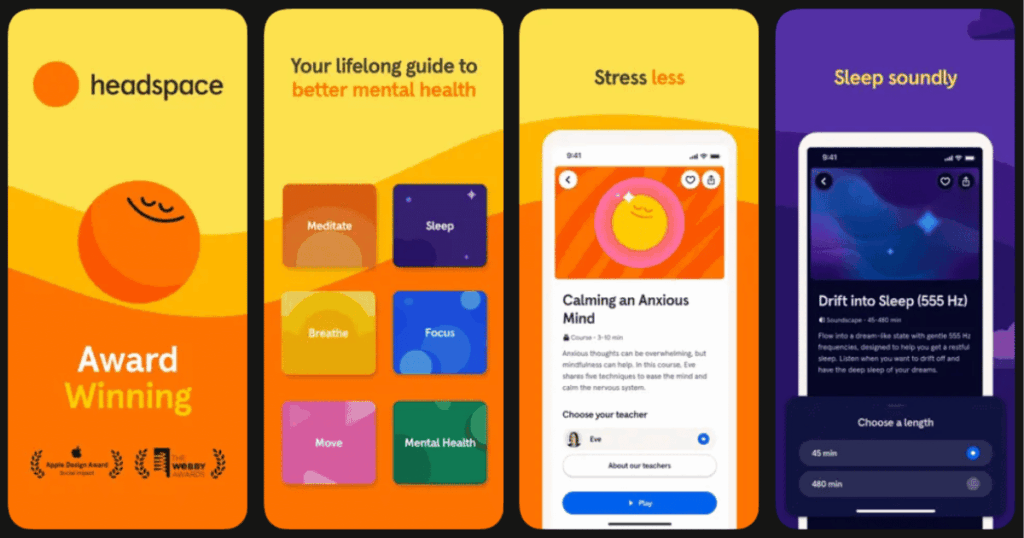
Headspace is probably the most famous meditation app out there. It was created by Andy Puddicombe, a former Buddhist monk. The app teaches meditation through fun animations and a clear course structure.
The basics course is perfect if you have never meditated before. It walks you through everything step by step. Each session builds on the last one. You learn proper technique without feeling overwhelmed.
Headspace also has courses for specific goals like managing stress, improving focus, and sleeping better. The content feels professional and well-produced.
Key Features:
- Foundations course that teaches meditation basics in bite-sized lessons
- Focus music and movement exercises beyond just sitting meditation
- Sleepcasts that help you drift off with relaxing audio journeys
What I like: The animations really help explain tricky concepts. Andy’s voice is super calming and easy to follow. I appreciate how the app tracks your progress through each course. The interface is clean and never confusing. It feels like having a friendly teacher guide you.
What I don’t like: The subscription price is on the higher end. Some of the content feels repetitive after a while. I wish there was more variety in the instructor voices.
Pricing: Limited free content available. Premium subscription required for full course access.
Platforms: iOS and Android
#3. Calm – Best for Sleep and Relaxation
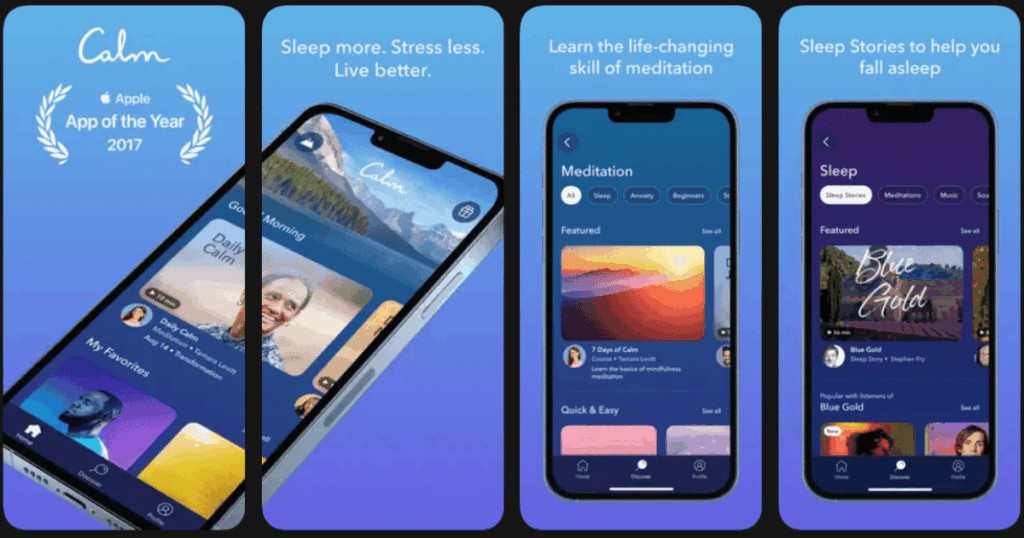
Calm has won multiple app awards for good reason. It focuses heavily on sleep and relaxation. The app is famous for its sleep stories narrated by celebrities like Matthew McConaughey and Harry Styles.
But Calm is more than just bedtime content. It has solid meditation courses too. The 7 Days of Calm program is a great starting point. There are also courses on anxiety, stress, and self-improvement.
The Daily Calm gives you a fresh 10 minute meditation every day. This helps build a consistent practice without much effort.
Key Features:
- Celebrity-narrated sleep stories that make bedtime something to look forward to
- Masterclass series with experts on topics like mindful eating and gratitude
- Breathe bubble tool for quick breathing exercises anywhere
What I like: The production quality is amazing. Everything sounds beautiful and polished. I love falling asleep to the sleep stories. The nature scenes and sounds are incredibly relaxing. The Daily Calm keeps me coming back every morning.
What I don’t like: Most of the best content sits behind the paywall. The app can feel more focused on sleep than actual meditation courses. Navigation gets confusing with so much content.
Pricing: Some free content available. Premium subscription unlocks full library.
Platforms: iOS and Android
#4. Insight Timer – Best for Free Meditation Variety
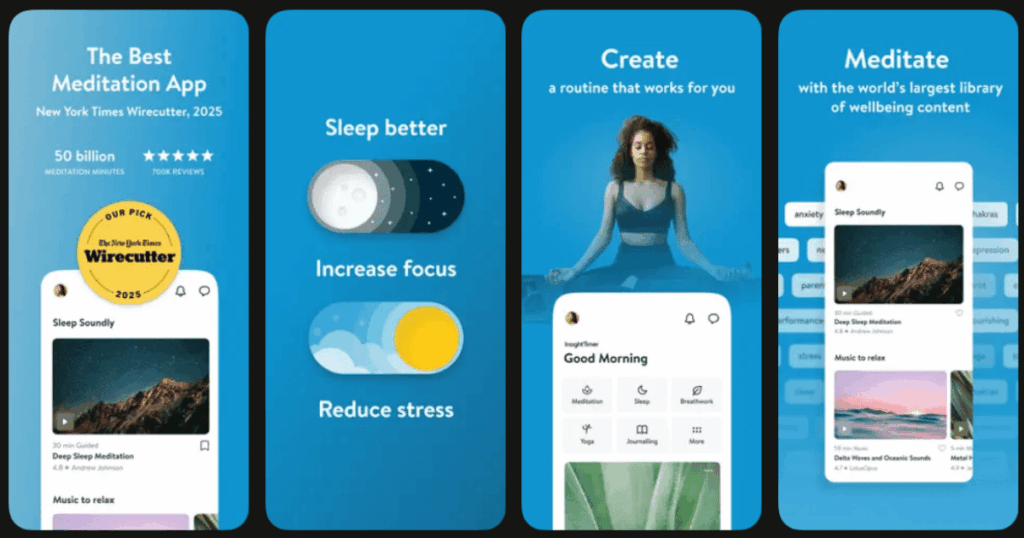
Insight Timer is the world’s largest free meditation library. It has over 100,000 guided meditations from thousands of teachers. If you want variety without spending money, this is your app.
The course section has grown a lot recently. You can find structured programs on mindfulness, compassion, yoga nidra, and much more. Many courses are completely free.
The community features are unique. You can see who else is meditating around the world in real time. There are also live events and group meditations.
Key Features:
- Massive free library with content from teachers across all traditions
- Course section with multi-day structured learning programs
- Timer feature for self-guided meditation with customizable bells
What I like: The sheer amount of free content is incredible. I have discovered so many amazing teachers here. The community aspect makes meditation feel less lonely. I love joining live sessions with people worldwide. The timer is perfect for when I want silence.
What I don’t like: Finding quality content takes effort because there is so much. The app can feel cluttered and overwhelming. Some courses are hit or miss in terms of quality.
Pricing: Most content is free. Optional premium membership for extra features.
Platforms: iOS and Android
#5. Ten Percent Happier – Best for Skeptics and Practical Learners
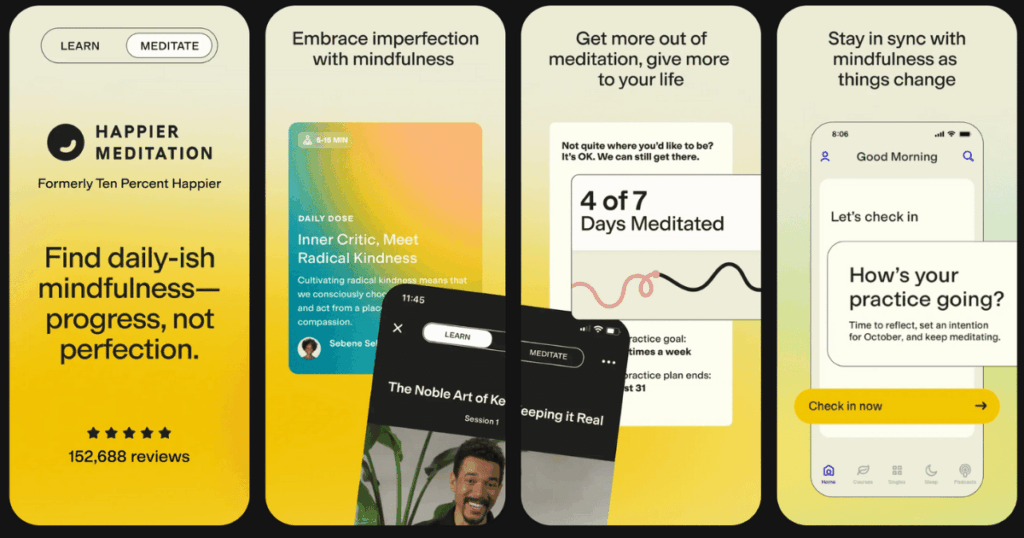
Ten Percent Happier was created by Dan Harris, a news anchor who had a panic attack on live TV. He wrote a book about how meditation helped him. Now his app takes that practical, no-nonsense approach.
This app is perfect if you think meditation is too woo-woo. The courses are taught by world-class teachers but presented in a down-to-earth way. There are video lessons alongside audio meditations.
The coaching feature lets you ask questions and get personalized guidance. This makes learning feel more personal and supported.
Key Features:
- Video courses that combine teaching with guided practice sessions
- One-on-one coaching available to answer your meditation questions
- Courses designed for specific challenges like stress, sleep, and relationships
What I like: I appreciate the skeptic-friendly approach. Nothing feels preachy or overly spiritual. The teachers are genuinely experts in their fields. Video content helps me understand concepts better than audio alone. The coaching feature is a nice bonus.
What I don’t like: The subscription is pricey compared to other apps. The content library is smaller than competitors. The app design feels a bit dated.
Pricing: Free trial period. Subscription required for full access.
Platforms: iOS and Android
#6. Waking Up – Best for Philosophical Exploration

Waking Up is created by Sam Harris, a neuroscientist and philosopher. This app goes deeper into the theory behind meditation. It is not just about relaxing. It explores consciousness and the nature of mind.
The introductory course takes 28 days. It builds a strong foundation in mindfulness. But then you can explore more advanced territory that other apps do not touch.
There are also conversations with experts on philosophy, psychology, and spirituality. This makes the app feel like a complete education.
Key Features:
- Theory lessons that explain the why behind meditation practices
- Daily meditations that build on each other progressively
- Conversation series with philosophers, scientists, and spiritual teachers
What I like: This app makes me think differently about meditation. Sam explains complex ideas in simple ways. The daily sessions are the perfect length. I love learning the philosophy behind the practice. It feels more meaningful than just following instructions.
What I don’t like: The intellectual approach is not for everyone. Some find Sam’s style too serious. The app lacks variety in lighter content like sleep stories.
Pricing: Free trial available. Subscription model with scholarships for those who cannot afford it.
Platforms: iOS and Android
#7. Buddhify – Best for Meditation on the Go
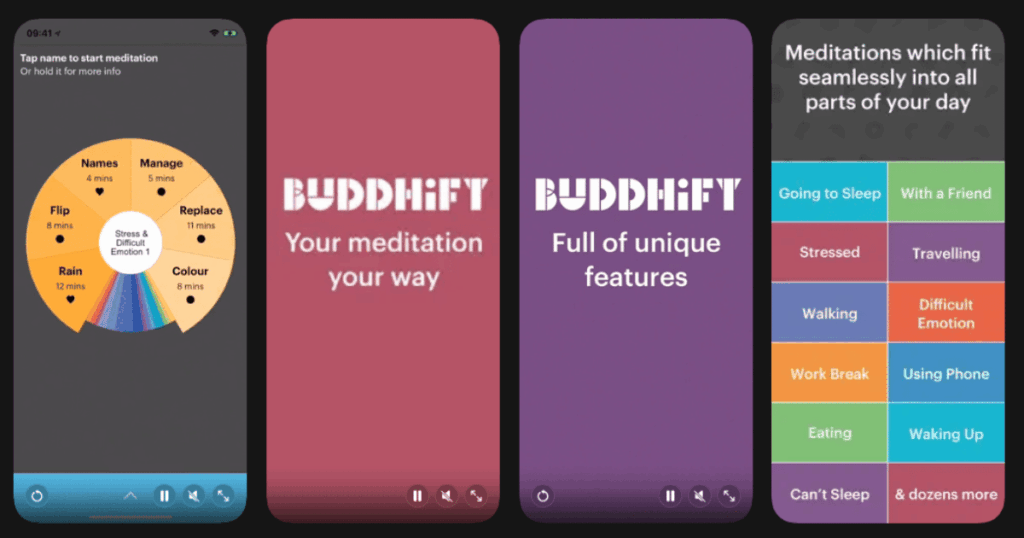
Buddhify takes a different approach. Instead of asking when you meditate, it asks what you are doing. Then it gives you a meditation that fits that moment.
Walking to work? There is a meditation for that. Cannot sleep? There is one for that too. Feeling stressed at your desk? Covered.
The colorful wheel interface makes finding the right session easy. This activity-based design works great for busy people who cannot set aside dedicated time.
Key Features:
- Activity-based categories like traveling, work breaks, and going to sleep
- Colorful wheel interface that makes navigation fun and intuitive
- Solo meditation timer with ambient sounds for self-guided practice
What I like: The concept is genius for real life. I can meditate during my commute or lunch break. The sessions are the right length for each activity. The one-time purchase model is refreshing. No subscription guilt here!
What I don’t like: The course structure is not as strong as other apps. Content updates come slowly. Some categories have limited options.
Pricing: One-time purchase with no subscription needed.
Platforms: iOS and Android
#8. Simple Habit – Best for Busy Professionals

Simple Habit is designed for people with packed schedules. Most sessions are just 5 minutes long. You can fit meditation into the busiest day.
The app organizes content by life situations. There are meditations for before meetings, after arguments, and during tough commutes. It meets you where you are.
The courses are taught by various teachers including therapists and mindfulness experts. The variety keeps things interesting.
Key Features:
- Five-minute sessions designed for the busiest schedules
- Situation-based categories like work stress and relationship challenges
- On-the-go series for commuting and traveling
What I like: Five minutes feels doable even on crazy days. I love the specific situational meditations. Before a big presentation, I do the pre-meeting one. It actually helps! The teacher variety means I always find someone whose voice I like.
What I don’t like: Short sessions might not satisfy experienced meditators. The free content is very limited. Some teachers are better than others.
Pricing: Basic free tier available. Premium subscription for full access.
Platforms: iOS and Android
#9. Meditopia – Best for Emotional Wellness Journeys
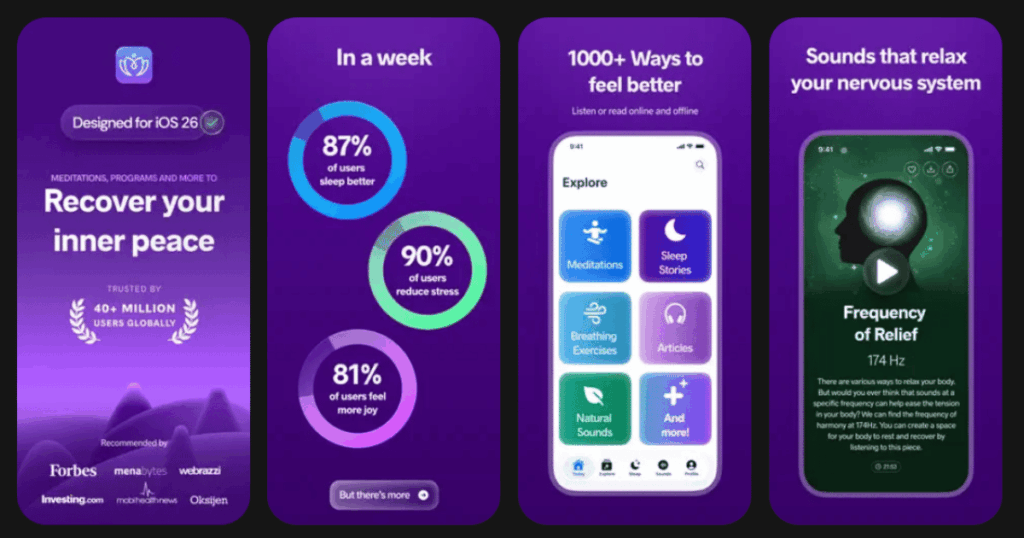
Meditopia focuses on emotional health. The courses tackle specific feelings like anger, grief, loneliness, and self-doubt. It feels more therapeutic than some other apps.
The app combines meditation with journaling and mood tracking. This holistic approach helps you understand your emotional patterns over time.
Available in many languages, Meditopia has a global community. The content feels culturally diverse and inclusive.
Key Features:
- Themed emotional programs that guide you through processing specific feelings
- Integrated journaling prompts to reflect on your meditation experience
- Mood tracking to spot patterns in your emotional wellbeing
What I like: The emotional focus feels really supportive. When I am going through something specific, I can find a whole program for it. The journaling adds another helpful layer. Tracking my mood alongside meditation shows me real progress.
What I don’t like: The interface can feel cluttered with features. Some programs feel too long and drawn out. The voice narration style might not suit everyone.
Pricing: Free tier with limited content. Premium subscription for full program access.
Platforms: iOS and Android
What Should I Look for in a Meditation App With Courses?
The best meditation app depends on your personal needs and goals. First, think about your experience level. Beginners should look for structured foundational courses that teach proper technique. Apps like Headspace and Life7 excel at this.
Consider what areas you want to improve. Sleep issues? Look for apps with sleep-focused content. Anxiety? Find apps with stress and calming programs. Life7 covers all these bases in one place.
Also think about your schedule. If you only have 5 minutes, Simple Habit works great. If you want deeper practice, Waking Up offers more substantial content.
Finally, check if the teaching style matches your personality. Some apps are more spiritual while others are practical and science-based.
Are Meditation App Courses as Good as In-Person Classes?
Meditation apps have some real advantages over in-person classes. They are available anytime and anywhere. You can practice at midnight in your pajamas if you want. They also cost much less than regular classes with a teacher.
However, in-person instruction offers personalized feedback that apps cannot match. A teacher can correct your posture or answer specific questions in the moment.
For most people, apps are a fantastic starting point. Many experienced meditators use apps daily too. Apps like Life7 bridge the gap by offering diverse techniques and tracking features. You can always add in-person classes later as your practice deepens.
How Long Does It Take to See Benefits From Meditation Courses?
Research shows benefits can start surprisingly fast. Some studies found reduced stress after just one session. But lasting changes usually take consistent practice over weeks.
Most meditation courses run for 7 to 30 days. Completing a full course builds the habit and teaches foundational skills. I noticed real changes after about two weeks of daily practice.
The key is consistency over intensity. Ten minutes every day beats one hour once a week. Apps like Life7 help with this through daily content, streak tracking, and gentle reminders. Give yourself at least a month of regular practice before judging whether meditation works for you.