9 Best Self-Acceptance Apps For Your Phone
| App Name | Best For | Key Features | AC Rating | Pricing |
|---|---|---|---|---|
| Life7 | Complete mental wellness journey | CBT tools, binaural beats, breathing exercises, affirmations | 4.8/5 | Free trial, then subscription |
| Calm | Guided meditation and relaxation | Sleep stories, meditation programs, self-esteem courses | 4.7/5 | Free version, premium subscription |
| Headspace | Beginners learning mindfulness | Structured courses, daily meditations, stress management | 4.6/5 | Free trial, monthly/yearly plans |
| Insight Timer | Free meditation library access | 200,000+ free meditations, self-love content, community | 4.5/5 | Free, optional premium |
| ThinkUp | Personalized affirmations | Record your own voice, 300+ affirmations, music backgrounds | 4.4/5 | Free version, premium available |
| Happify | Science-based happiness building | CBT games, positive psychology tracks, mood boosting | 4.3/5 | Free tracks, premium subscription |
| Shine | Inclusive self-care for BIPOC | 800+ meditations, daily affirmations, community support | 4.4/5 | Free version, premium subscription |
| #SelfLove | CBT-based confidence training | Swipe exercises, thought reframing, daily practice | 4.2/5 | Free with in-app purchases |
| SELF: My True Value | Self-esteem building through chapters | Breathing exercises, self-care activities, journaling | 4.1/5 | Free chapters, premium unlock |
#1. Life7 – Best for Complete Mental Wellness Journey
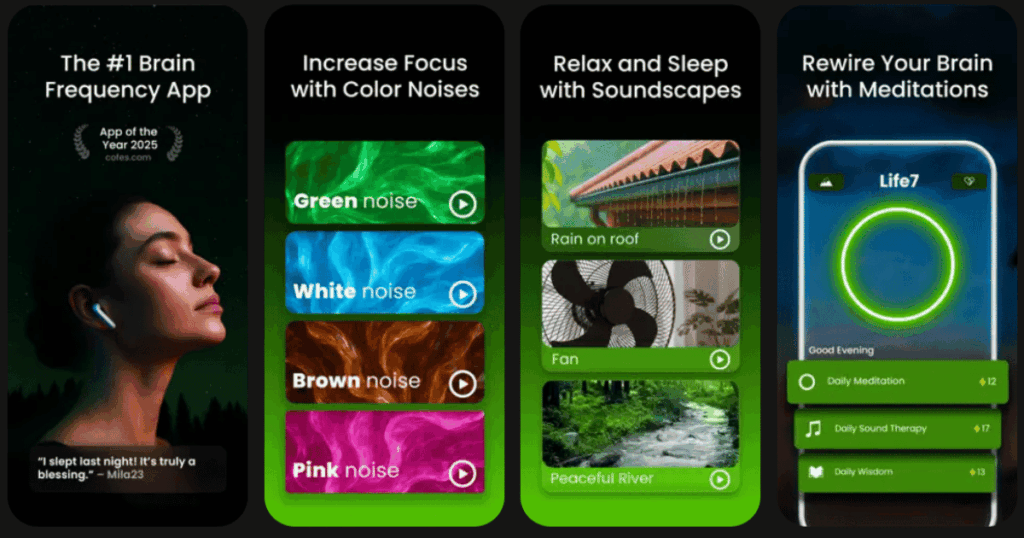
Life7 is an all-in-one mental wellness app that helps you sleep better, reduce anxiety, and practice mindfulness. I found it to be one of the most complete options on the market today. The app offers guided meditations, sleep stories, breathing exercises, and even cognitive behavioral therapy tools.
What makes Life7 stand out is its massive library of sound therapy options. You can choose from green noise, white noise, brown noise, and pink noise. The app also features delta, theta, alpha, beta, and gamma wave music. There are also binaural beats, isochronic tones, and healing frequencies like 432 Hz and 528 Hz.
Key Features:
- Daily check-ins, meditations, music therapy, and wisdom sessions to build consistent habits
- SOS sessions for calming anxiety and panic attacks quickly when you need help
- Gamified approach where you earn XP and unlock premium content by completing sessions
What I like: The Backdrop Mode feature is really cool. It lets you mix soundscapes with other audio like meditations or sleep stories. I also love the mood tracking and thought journaling tools. The hypnotherapy and vagus nerve stimulation sessions offer deep emotional healing. New content is added daily, so there is always something fresh to explore.
What I don’t like: The free content is a bit limited. You will probably need to subscribe to get the full experience. But they do offer a 7 day free trial to test everything out first.
Pricing: 7 day free trial available. Weekly, monthly, and yearly subscription plans. Frequent special offers.
Platforms: iOS and Android
#2. Calm – Best for Guided Meditation and Relaxation
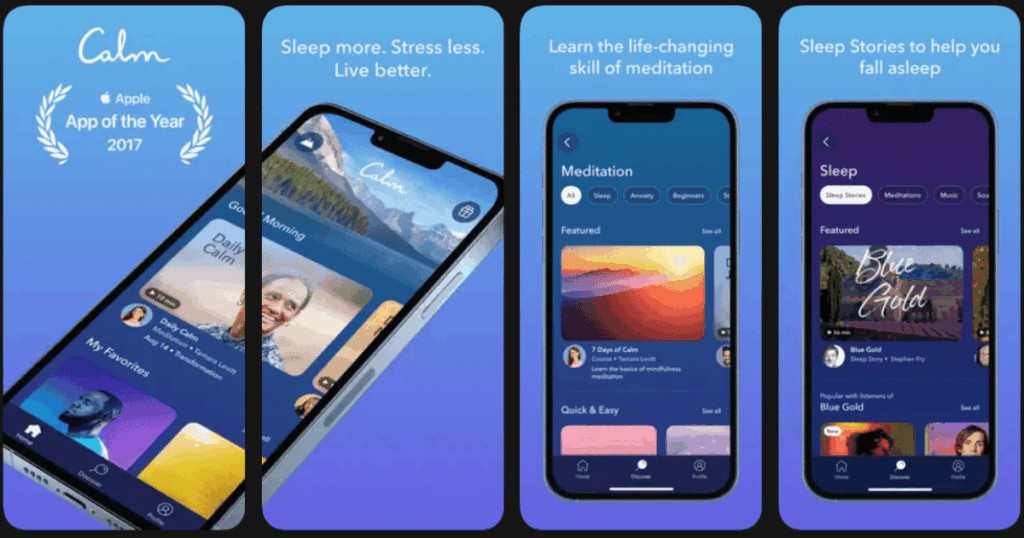
Calm has become one of the most downloaded meditation apps with over 100 million users. The app focuses on helping you relax and sleep better through guided meditations. It teaches the foundations of mindfulness in an easy to understand way.
The app offers programs on many topics including self-esteem, happiness, and breaking bad habits. A 2019 study found that Calm effectively reduced stress and improved self-compassion in college students. Celebrity narrators voice many of the sleep stories, which makes bedtime more enjoyable.
Key Features:
- 7 Days of Self-Esteem program with Tamara Levitt to build self-acceptance and inner strength
- Sleep Stories narrated by celebrities to help you fall asleep naturally
- Daily Calm meditation sessions that take just 10 minutes each morning
What I like: The app has a beautiful interface that makes you feel relaxed the moment you open it. The variety of content is impressive. I appreciate how it combines meditation with sleep support. The science team behind Calm ensures everything is backed by research.
What I don’t like: The premium subscription is on the pricier side compared to other apps. The free version has very limited content, which can feel frustrating.
Pricing: Free version available with limited content. Premium subscription required for full access.
Platforms: iOS and Android
#3. Headspace – Best for Beginners Learning Mindfulness
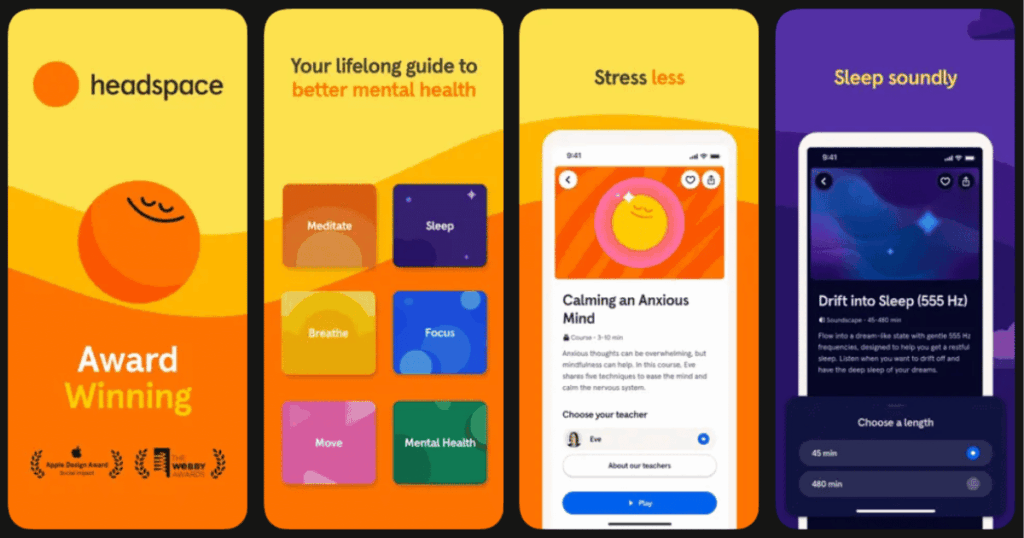
Headspace makes meditation feel less intimidating for newcomers. The app breaks down mindfulness into bite-sized lessons with clear explanations. It teaches you life-changing skills of meditation in just a few minutes a day.
The app offers over 1,000 guided meditations led by experienced teachers. Research shows that 30 days of using Headspace led to a 32% reduction in stress. The structured approach helps you build a consistent practice that sticks.
Key Features:
- 10 day beginner course that teaches meditation basics step by step
- Stress and anxiety packs with visualization and body scanning techniques
- Mental health coaching and therapy options for deeper support
What I like: The friendly design makes it easy to stick with your practice. I love how the app tracks your progress and celebrates milestones. The sleep content, including sleepcasts and wind downs, really helps quiet a racing mind at night.
What I don’t like: Most content requires a paid subscription. Some users find the app feels a bit childish or too “Sesame Street” in style for their taste.
Pricing: Free 14 day trial. Monthly and annual subscription plans available. Student and family discounts offered.
Platforms: iOS and Android
#4. Insight Timer – Best for Free Meditation Library Access
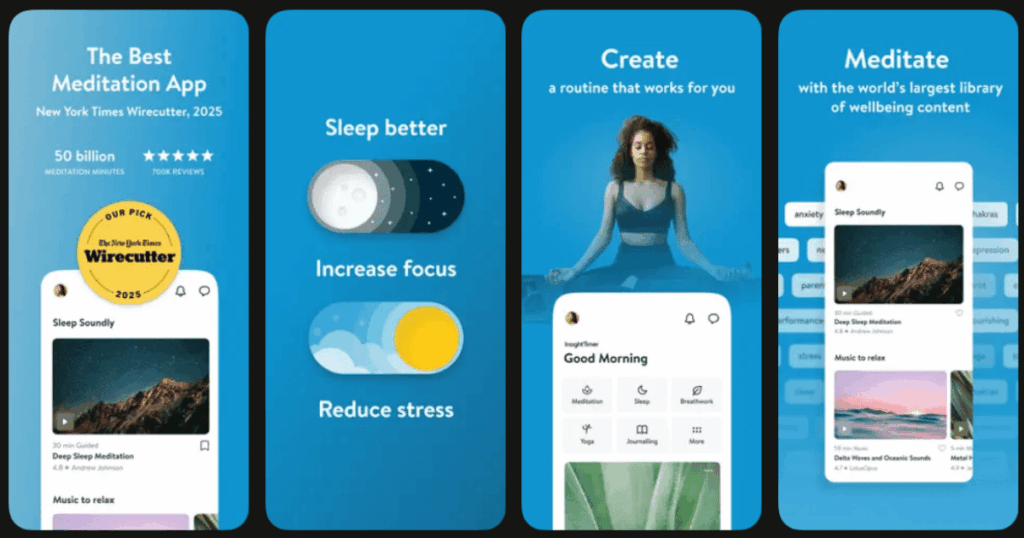
Insight Timer offers the largest free collection of guided meditations compared to any app on the market. With over 200,000 free tracks and 80+ new additions daily, you will never run out of options. The app covers topics like self-love, self-compassion, and building confidence.
The community aspect sets this app apart. You can connect with millions of meditators worldwide and join discussion groups. Live events and workshops let you learn alongside others in real time.
Key Features:
- Thousands of free guided meditations on self-love, stress relief, and personal growth
- Customizable meditation timer with ambient sounds and interval bells
- Community features including groups, live events, and one-on-one mentoring
What I like: The fact that most content is completely free is amazing. The variety of teachers and styles means you can find exactly what resonates with you. The app feels like joining a supportive community rather than just using a tool.
What I don’t like: The huge library can feel overwhelming at first. Some users report that the timer function occasionally has technical issues. The interface has many social features that not everyone wants.
Pricing: Free with optional premium subscription for advanced courses and features.
Platforms: iOS and Android
#5. ThinkUp – Best for Personalized Affirmations
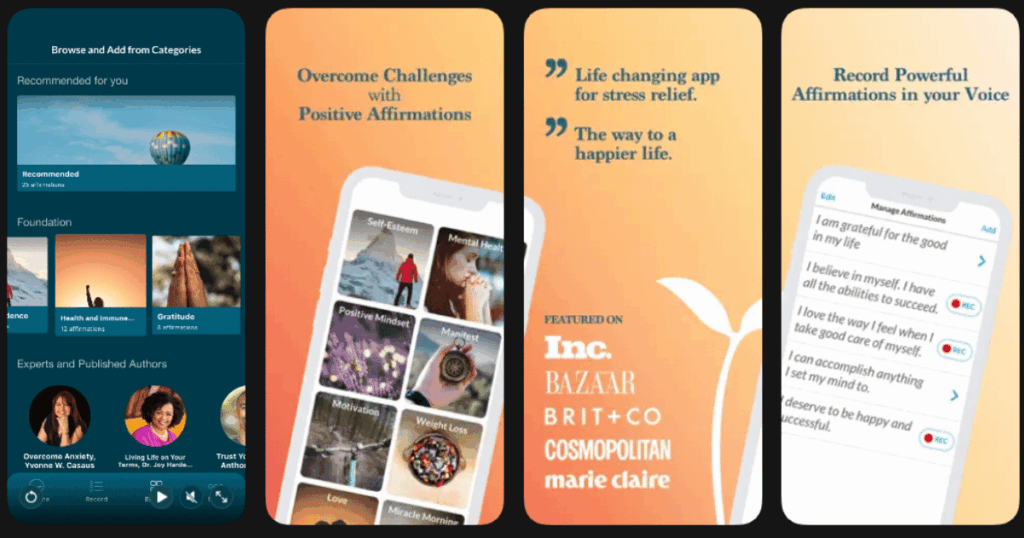
ThinkUp takes a unique approach to building self-esteem. The app lets you record positive affirmations in your own voice. This makes the messages 10 times more effective because your brain trusts your own voice most.
The library includes over 300 expert-approved affirmations covering more than 10 life goals. Categories include motivation, self-esteem, overcoming depression, and dealing with anxiety. You can also create your own custom affirmations.
Key Features:
- Record affirmations in your own voice with inspiring background music
- 300+ affirmations curated by self-care experts and personal development coaches
- Morning alarm feature that wakes you up with your personalized affirmations
What I like: Hearing affirmations in my own voice really does feel different and more powerful. The app connects to Apple Health to track your mindful minutes. Adding personal images to affirmation cards creates a truly custom experience.
What I don’t like: The free version only allows 3 recorded affirmations with one background song. Some users find the app interface could be more user-friendly. Getting affirmations to play at specific times can be confusing.
Pricing: Free version available. Premium plans monthly, yearly, or lifetime access.
Platforms: iOS and Android
#6. Happify – Best for Science-Based Happiness Building

Happify uses cognitive behavioral therapy (CBT) and positive psychology to help you overcome negative thoughts. The app turns mental wellness into an engaging experience with games, quizzes, and activities. Leading scientists and experts developed all the techniques.
Studies show that 86% of regular Happify users report feeling better about their lives in just 2 months. The app builds six key skills: Savor, Thank, Aspire, Give, Empathize, and Revive. This framework helps you develop lasting happiness habits.
Key Features:
- Educational “Tracks” on topics like conquering negative thoughts and building self-confidence
- Interactive games and activities based on CBT principles
- Community forums to connect with others on similar journeys
What I like: The gamified approach makes mental wellness feel fun instead of like homework. I appreciate that the app explains the science behind each activity. The variety of tracks means there is something for everyone’s specific needs.
What I don’t like: Some games feel more like entertainment than real mental health tools. The best features require a premium subscription. Android users may experience more glitches than iPhone users.
Pricing: Free version with limited tracks. Premium subscription required for full access.
Platforms: iOS and Android
#7. Shine – Best for Inclusive Self-Care for BIPOC

Shine was created by two women of color who did not see themselves represented in mainstream wellness. The app features over 800 original meditations voiced mostly by Black women. Content specifically addresses experiences like racial trauma and representation burnout.
The app offers playlists tailored for Asian and Pacific Islander, Latinx, Black, and LGBTQ+ members. Daily notifications encourage self-care check-ins and gratitude practice. Named Apple’s Best of 2020, Shine bridges the gap in accessible mental health care.
Key Features:
- 800+ meditations with 90% voiced by Black women addressing diverse experiences
- Daily Shine podcast-meets-meditation for stress and anxiety relief
- Weekly self-care courses and monthly virtual workshops with mental wellness experts
What I like: The app feels like a warm community that truly understands diverse experiences. The daily check-ins help build consistent self-care habits. I love that 80% of their staff is BIPOC, reflecting genuine commitment to inclusivity.
What I don’t like: The app is currently only available in English. Some users report the AI chat function can be inconsistent in helpfulness.
Pricing: Free version available. Premium subscription unlocks full content library.
Platforms: iOS and Android
#8. #SelfLove – Best for CBT-Based Confidence Training
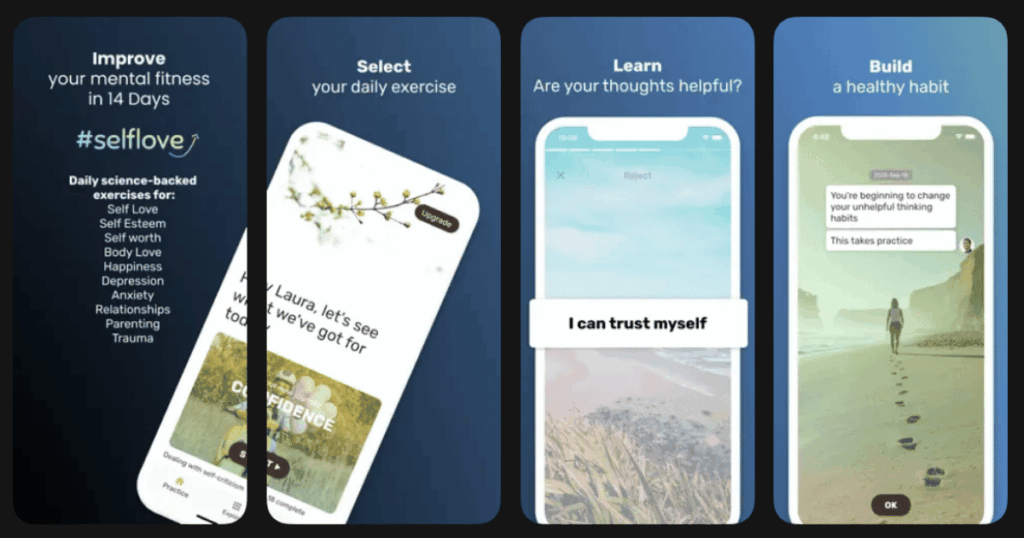
This app comes from collaboration between a game developer and clinical psychologist. It uses research-backed methods based on Cognitive Behavioral Therapy to boost self-esteem. Published studies show the app is effective for body image, obsessions, and even depression.
The basic exercise is simple but powerful. You swipe away negative thoughts and accept positive ones. Within 14 days, users build mental resilience that lasts for an additional 30 days. The app takes just 3 minutes daily to complete.
Key Features:
- Swipe-based exercises that train your brain to embrace positive self-talk
- Multiple areas of self-esteem covered with resonant affirmations
- Research-backed approach with published studies proving effectiveness
What I like: The simple swipe action makes you really read and connect with each affirmation. The app covers so many different areas of self-esteem. I appreciate that therapists use it as a complementing tool for their clients.
What I don’t like: The game-like format may not appeal to everyone seeking serious mental health support. Some features require in-app purchases to unlock.
Pricing: Free to download with in-app purchases available.
Platforms: iOS and Android
#9. SELF: My True Value – Best for Self-Esteem Building Through Chapters
SELF offers a chapter-based journey to help you boost self-esteem and self-confidence. The app includes breathing exercises, self-care activities, and positive affirmations. Users describe it as one of the simplest and most convenient self-care apps available.
The seven chapters guide you through a healing journey of self-growth. Each chapter includes reflections and self-care exercises designed for busy lifestyles. The app focuses on achieving overall wellness through personality development.
Key Features:
- Chapter-based structure that guides you through a complete self-improvement journey
- Breathing exercises and positive affirmations for mental health improvement
- Thought-provoking reflections to build healthy habits
What I like: The structured approach makes progress feel clear and achievable. Customer service responds quickly and genuinely cares about user experience. The app does not overwhelm you with too many options at once.
What I don’t like: There are only seven chapters right now, which limits long-term use. Some free exercises feel basic compared to the paid content. The app requires a subscription to continue beyond initial chapters.
Pricing: Some chapters free. Subscription required to unlock all content.
Platforms: iOS and Android
Do Self-Acceptance Apps Really Work?
Yes, many self-acceptance apps can genuinely help improve your mental wellness when used consistently. Research supports the effectiveness of techniques these apps use. Studies on apps like Calm, Headspace, and Happify show real improvements in stress, anxiety, and overall well-being.
The key is regular use over time. Just like physical exercise, mental wellness requires consistent practice. Most apps recommend at least 10 minutes daily for best results. Apps using evidence-based approaches like CBT and positive psychology tend to show the strongest outcomes.
However, these apps work best as part of a broader self-care routine. They are not meant to replace professional therapy for serious mental health conditions. Think of them as valuable tools in your wellness toolkit that support daily mental health maintenance.
How Much Time Should I Spend on Self-Acceptance Apps Daily?
Most experts recommend starting with just 5 to 10 minutes per day. This makes building a daily habit feel manageable rather than overwhelming. Many apps like Headspace and Calm offer quick sessions designed exactly for busy schedules.
As you get more comfortable, you can gradually increase your practice time. Some users find 15 to 20 minutes more beneficial for deeper work. The most important thing is consistency rather than length of each session.
Life7 and similar apps offer daily check-ins that take only a few minutes. These brief touchpoints can make a big difference in your mood and mindset throughout the day. The best amount of time is whatever you can realistically maintain as a regular habit.
Can I Use Multiple Self-Acceptance Apps Together?
Absolutely! Many people find value in using different apps for different purposes. For example, you might use Life7 for comprehensive mental wellness and sound therapy. Then add ThinkUp specifically for personalized affirmations.
Using multiple apps lets you access the best features from each one. Insight Timer offers free content while Happify provides structured CBT programs. Combining them gives you more variety without breaking the bank.
Just be careful not to overwhelm yourself with too many options. Start with one or two apps and add more only when the first ones become routine. Quality of practice matters more than quantity of apps on your phone.