9 Best Self-Healing Apps For Your Phone
| App Name | Best For | Key Features | AC Rating | Pricing |
|---|---|---|---|---|
| Life7 | Complete Mental Wellness | Binaural beats, sleep stories, CBT tools, breathing exercises | 4.8/5 | Free trial, then weekly/monthly/yearly plans |
| Calm | Sleep and Relaxation | 500+ sleep stories, guided meditations, masterclasses | 4.5/5 | Free trial, then monthly or yearly subscription |
| Headspace | Beginner Meditation | 500+ guided meditations, sleepcasts, focus music | 4.4/5 | Free trial, then monthly or yearly subscription |
| Insight Timer | Free Meditation Library | 100,000+ free meditations, community features, live events | 4.6/5 | Free with optional premium upgrade |
| Finch | Gamified Self Care | Virtual pet, habit tracking, mood journaling, breathing exercises | 4.5/5 | Free with optional Finch Plus |
| BetterHelp | Online Therapy | 30,000+ therapists, video/phone/text sessions, group webinars | 4.3/5 | Weekly subscription, billed monthly |
| Waking Up | Deep Mindfulness Practice | 28-day intro course, philosophy lessons, nondual meditation | 4.7/5 | Free trial, then yearly subscription |
| Happify | Positive Psychology Games | CBT-based activities, mood tracking, AI coach | 4.2/5 | Free with premium upgrade available |
| Self Healing | Spiritual Wellness | AUM chanting, crystal healing, chakra meditation | 4.0/5 | Free with in-app purchases |
#1. Life7 – Best for Complete Mental Wellness
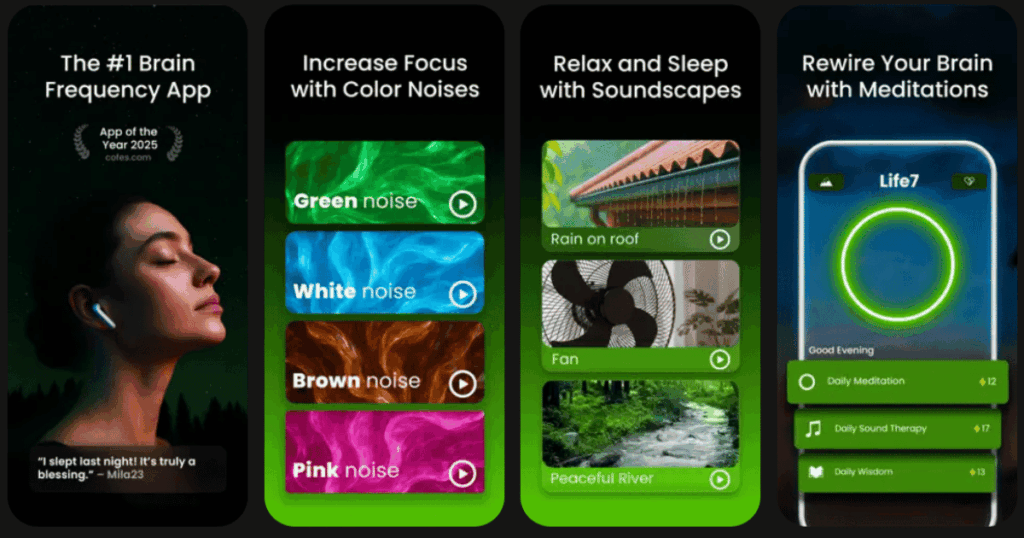
Life7 is my top pick for self-healing apps. This all-in-one mental wellness platform offers everything you need to transform your mental health journey. With over 1200+ editorial mentions and 312 million meditation minutes logged by users, Life7 has proven its worth in the wellness space.
The app stands out with its unique combination of sound therapy and traditional mindfulness. You get access to binaural beats, solfeggio frequencies, and brainwave music designed to shift your mental state. Whether you need to calm anxiety, improve sleep, or boost focus, Life7 has specific audio tools for each goal.
Key Features:
- Green, white, brown, and pink noise plus binaural beats with specific brainwave frequencies
- Sleep stories for adults and children, REM sleep music, and 8D audio experiences
- CBT tools, hypnotherapy sessions, vagus nerve stimulation, and SOS panic relief
What I like: Life7 truly covers all bases. I love how it combines ancient wisdom with modern science. The backdrop mode lets you mix soundscapes with other audio like meditations or sleep stories. The daily sessions keep things fresh with new content every day. The gamified approach with XP rewards makes building a meditation habit actually fun. Plus, the mood tracker helps me understand my patterns over time.
What I don’t like: The free content is somewhat limited. You really need a subscription to unlock the full power of this app. New users might feel overwhelmed by all the options at first.
Pricing: 7 day free trial available. Weekly, monthly, and yearly plans offered with frequent special discounts.
Platforms: iOS and Android
#2. Calm – Best for Sleep and Relaxation
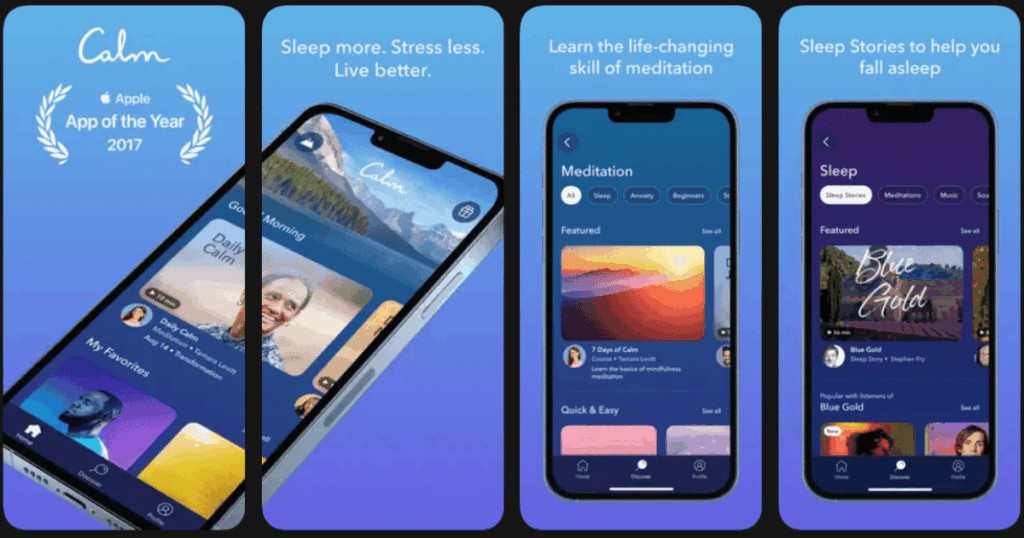
Calm has earned its reputation as one of the most popular meditation apps worldwide. It focuses heavily on helping users sleep better and manage stress through beautiful content.
The app welcomes you with the simple prompt to take a deep breath. This sets the tone for everything Calm offers. The interface is gorgeous with calming nature scenes and sounds. For people who struggle with sleep, Calm’s massive library of 500+ sleep stories is a game changer.
Key Features:
- Over 500 sleep stories narrated by celebrities like Matthew McConaughey and Harry Styles
- Daily calm meditations, breathing exercises, and masterclasses from experts
- Kids content including Peppa Pig and Winnie the Pooh themed sleep stories
What I like: The sleep stories are genuinely magical. I never thought adult bedtime stories would work for me, but they do. The celebrity narrators add a special touch. The Calm kids section has also been a lifesaver for parents trying to help children wind down at night.
What I don’t like: The premium content requires a subscription that’s pricier than some competitors. The free version feels quite limited after you explore the trial content. Some users find the interface a bit overwhelming with all the celebrity content.
Pricing: 7 day free trial, then monthly or yearly subscription. Lifetime membership also available.
Platforms: iOS and Android
#3. Headspace – Best for Beginner Meditation
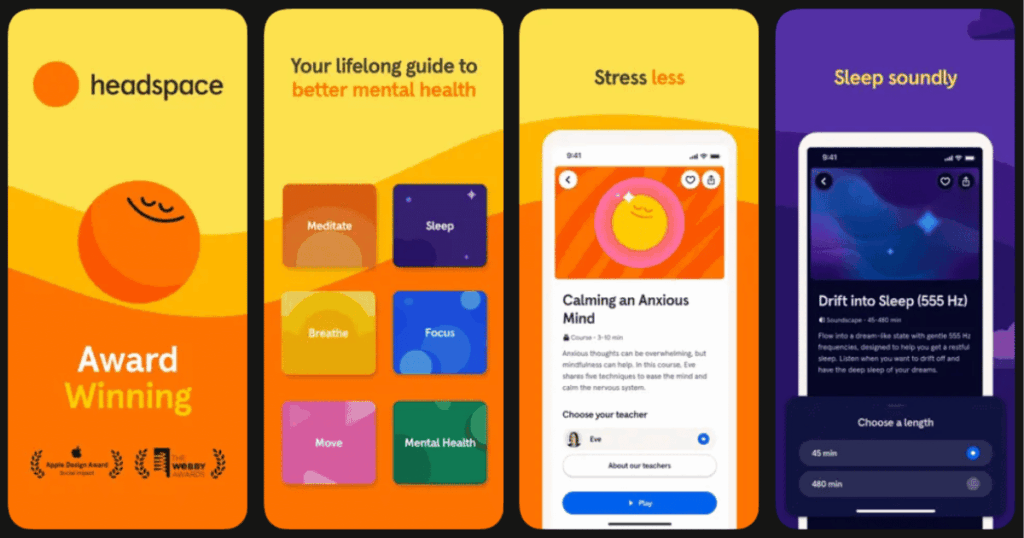
Headspace makes meditation simple and approachable for people who have never meditated before. The app uses friendly animations and clear guidance to teach mindfulness basics.
Founded by a former Buddhist monk, Headspace brings ancient practices into the modern world. The app structure walks you through meditation step by step. This makes it perfect for anyone who finds meditation intimidating or confusing.
Key Features:
- 500+ guided meditations with sessions as short as 3 minutes
- Sleepcasts and focus music with binaural beats for concentration
- AI companion called Ebb plus mental health coaching options
What I like: The 10 day beginner course is brilliant. It breaks down meditation into bite-sized lessons that actually make sense. I appreciate how Headspace has stuck to the same core teaching approach over the years. The focus music helps me concentrate during work. The animations explaining mindfulness concepts are creative and helpful.
What I don’t like: The same handful of meditation teachers can feel repetitive after months of use. The app feels very structured which some advanced meditators find limiting. The free version offers almost nothing.
Pricing: 14 day free trial, then monthly or yearly subscription. Student plans available.
Platforms: iOS and Android
#4. Insight Timer – Best for Free Meditation Library
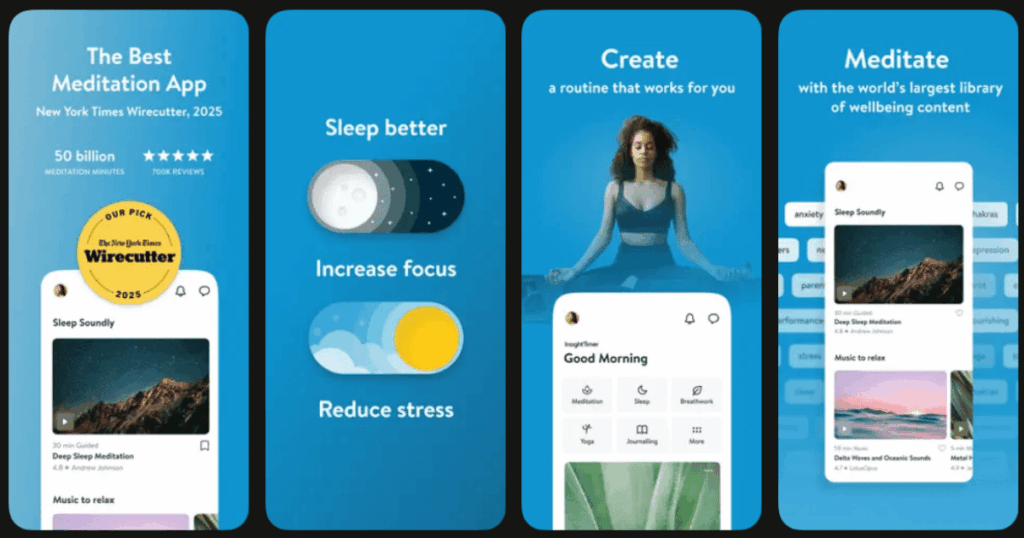
Insight Timer offers the largest free meditation library on the planet. With over 100,000 free guided meditations from 10,000+ teachers, you will never run out of content.
The app started as a simple meditation timer but evolved into a full platform. Teachers from Stanford, Harvard, and other top institutions contribute content. The community aspect sets it apart from other apps.
Key Features:
- 100,000+ free guided meditations covering every style from Vipassana to Zen
- Live events, yoga classes, and group meditation sessions
- Customizable meditation timer with ambient sounds
What I like: The free content is incredibly generous. I can explore meditation styles from around the world without paying anything. The community groups help me connect with other meditators. The variety of teachers means I always find voices that resonate with me. Live events create a sense of shared practice.
What I don’t like: The massive library can feel overwhelming for beginners who don’t know where to start. Quality varies since anyone can become a teacher on the platform. The free version doesn’t allow rewinding or offline listening which gets frustrating.
Pricing: Free with optional Member Plus subscription for advanced features.
Platforms: iOS and Android
#5. Finch – Best for Gamified Self Care
Finch takes a completely different approach to self healing. You adopt a cute virtual bird and care for it by completing self care tasks. It sounds silly, but it works brilliantly.
The app turns healthy habits into a game. When you drink water, journal, or take a deep breath, your little Finch grows and goes on adventures. This gentle motivation helps people who struggle with traditional wellness apps.
Key Features:
- Virtual pet that grows as you complete self care goals and healthy habits
- Mood tracking with insights, guided breathing exercises, and journal prompts
- Friend connections to send supportive messages called “vibes”
What I like: Finch finally made self care stick for me. Something about caring for my little bird motivates me more than any other app has. The daily check-ins feel quick rather than burdensome. Watching my Finch’s personality develop over time is genuinely delightful. The accessibility features like wheelchair options for the bird show real thoughtfulness.
What I don’t like: The gamified approach means the app adds new cosmetic items constantly which some find distracting from the self care focus. The premium pricing differs between iOS and Android which feels unfair.
Pricing: Free with optional Finch Plus subscription.
Platforms: iOS and Android
#6. BetterHelp – Best for Online Therapy

BetterHelp connects you with real licensed therapists for professional mental health support. This goes beyond self help apps into actual therapy.
With over 30,000 licensed therapists on the platform, BetterHelp makes finding professional help easier than ever. You can message your therapist anytime and schedule weekly video, phone, or chat sessions. This flexibility helps therapy fit into busy lives.
Key Features:
- Access to 30,000+ licensed therapists matched to your specific needs
- Unlimited messaging plus scheduled video, phone, or live chat sessions
- Group webinars, journaling tools, and educational worksheets
What I like: Having a real therapist available through my phone changed everything. The matching process found me someone who truly understood my challenges. Being able to message between sessions helps me process things in real time. Switching therapists is easy and guilt free if the first match isn’t right.
What I don’t like: This is significantly more expensive than self help apps since you’re paying for actual therapy. Insurance usually doesn’t cover it. Therapists cannot diagnose conditions or prescribe medication through the platform.
Pricing: Weekly subscription ranging from $70-100, billed every 4 weeks.
Platforms: iOS and Android
#7. Waking Up – Best for Deep Mindfulness Practice

Waking Up takes a philosophical approach to meditation. Created by neuroscientist Sam Harris, this app aims to fundamentally change how you experience consciousness.
Unlike apps focused on relaxation, Waking Up teaches you to examine the nature of your own mind. The content blends ancient contemplative wisdom with modern scientific understanding. This appeals to skeptics who want meditation without spiritual fluff.
Key Features:
- 28 day introductory course that pairs daily meditation with theory lessons
- Teachers from multiple traditions including Zen, Dzogchen, and Stoic philosophy
- Lessons on consciousness, ethics, sleep, and productivity from leading experts
What I like: Waking Up finally helped me understand what meditation is really about. Sam Harris explains concepts clearly without mystical language. The theory lessons between meditations give context that deepens the practice. Guest teachers bring diverse perspectives that keep things interesting.
What I don’t like: The app moves fast for complete beginners. By day 14, it discusses concepts like “relaxing the sense of self” which can confuse newcomers. The intellectual approach isn’t for everyone who just wants to relax.
Pricing: Free trial, then yearly subscription. Free access available for those who can’t afford it.
Platforms: iOS and Android
#8. Happify – Best for Positive Psychology Games

Happify gamifies mental wellness through activities and games based on positive psychology research. It takes the science of happiness and makes it interactive.
The app uses CBT principles, mindfulness, and positive psychology to help you build lasting mental strength. Rather than passive meditation, Happify gives you active exercises to practice. Research shows 86% of regular users feel better about their lives within 2 months.
Key Features:
- Evidence-based games and activities designed by psychology experts
- Learning tracks for specific goals like conquering negative thoughts or building confidence
- AI coach named Anna plus community features and progress tracking
What I like: The games make mental wellness feel less like homework. I find myself actually looking forward to the activities. The science explanations help me understand why certain exercises work. The variety of tracks means I can focus on whatever I need most right now.
What I don’t like: Some games feel too simple or childish for adults. The connection between playing games and improving mental health isn’t always clear. You need the premium version to access most meaningful content.
Pricing: Free with in-app purchases. Premium from $14.99 monthly to $449.95 lifetime.
Platforms: iOS and Android
#9. Self Healing – Best for Spiritual Wellness

Self Healing takes a holistic approach that includes meditation alongside spiritual healing practices. It combines Eastern traditions with modern wellness concepts.
The app covers unique topics like crystal healing, pyramid energy, and chakra balancing. For people interested in exploring spiritual wellness beyond traditional meditation, this offers interesting content.
Key Features:
- AUM chanting sessions and traditional meditation practices
- Crystal healing, chakra balancing, and indoor plant therapy content
- Prayer sessions from multiple spiritual traditions
What I like: Self Healing introduced me to wellness practices I never knew existed. The content goes deeper into spiritual traditions than most mainstream apps. The combination of physical, mental, and spiritual approaches feels truly holistic.
What I don’t like: The app feels less polished than major competitors. Some content lacks scientific backing and leans heavily on spiritual beliefs. Updates come less frequently than other apps.
Pricing: Free with in-app purchases.
Platforms: iOS and Android
What is a Self-Healing App?
A self-healing app is a mobile application designed to help you improve your mental and emotional wellbeing. These apps provide tools for meditation, stress management, mood tracking, and personal growth. They put wellness resources in your pocket.
Most self-healing apps combine several approaches. You might find guided meditations, breathing exercises, journaling prompts, and educational content in one app. The goal is to help you develop healthy coping skills and build mental resilience over time.
These apps can support your healing journey whether you’re dealing with anxiety, sleep problems, or just everyday stress. However, they work best as a complement to professional care rather than a replacement for therapy when needed.
How Do I Choose the Right Self-Healing App?
Start by identifying your main wellness goal. Do you want to sleep better? Reduce anxiety? Build better habits? Different apps specialize in different areas. Life7 covers everything while Calm focuses more on sleep.
Consider how you like to learn. Some people prefer structured courses like Headspace offers. Others want freedom to explore like Insight Timer provides. Gamified apps like Finch work well for people who need extra motivation.
Try free versions or trials before committing. Most premium apps offer 7 to 14 day trials. Use this time to see if the app fits your lifestyle and preferences. The best app is one you’ll actually use consistently.
Are Self-Healing Apps Effective?
Research supports the effectiveness of meditation and mindfulness apps. Studies show regular use can reduce stress, improve sleep, and decrease anxiety symptoms. Many apps on this list have specific research backing their approach.
However, results depend on consistent use. Opening an app once won’t change your life. Building a daily practice over weeks and months creates lasting benefits. Most users report noticeable improvements within 2 to 4 weeks of regular use.
Self-healing apps work best for mild to moderate stress and wellness goals. For serious mental health conditions like major depression or PTSD, professional therapy remains important. Apps can complement professional treatment but shouldn’t replace it when you need real clinical support.