9 Best Stress Relief Apps For Your Phone
| App Name | Best For | Key Features | AC Rating | Pricing |
|---|---|---|---|---|
| Life7 | Complete mental wellness toolkit | Binaural beats, CBT tools, sleep stories, breathing exercises | 4.8/5 | Free trial, then weekly/monthly/yearly plans |
| Calm | Sleep and relaxation | Sleep stories, breathing bubble, guided meditations | 4.6/5 | Free basic, premium subscription available |
| Headspace | Beginners learning meditation | Structured courses, AI companion Ebb, sleep sounds | 4.5/5 | Free trial, then monthly/yearly subscription |
| Insight Timer | Free meditation library access | 230K+ free tracks, live events, community features | 4.7/5 | Free with optional premium upgrade |
| Wysa | AI therapy and CBT support | AI chat therapy, human coaching, sleep tools | 4.4/5 | Free basic, premium and coaching plans |
| Sanvello | Stress management with CBT | Mood tracking, guided journeys, multimedia learning | 4.3/5 | Free basic, premium subscription |
| Breathe2Relax | Quick breathing exercises | Diaphragmatic breathing, Apple Watch integration | 4.2/5 | Free |
| Happify | Mood improvement through activities | Science based games, positive psychology activities | 4.1/5 | Free basic, premium subscription |
| Simple Habit | Busy schedules and short sessions | 5 minute meditations, commute and work break sessions | 4.3/5 | Free trial, then subscription |
#1. Life7 – Best for Complete Mental Wellness Toolkit
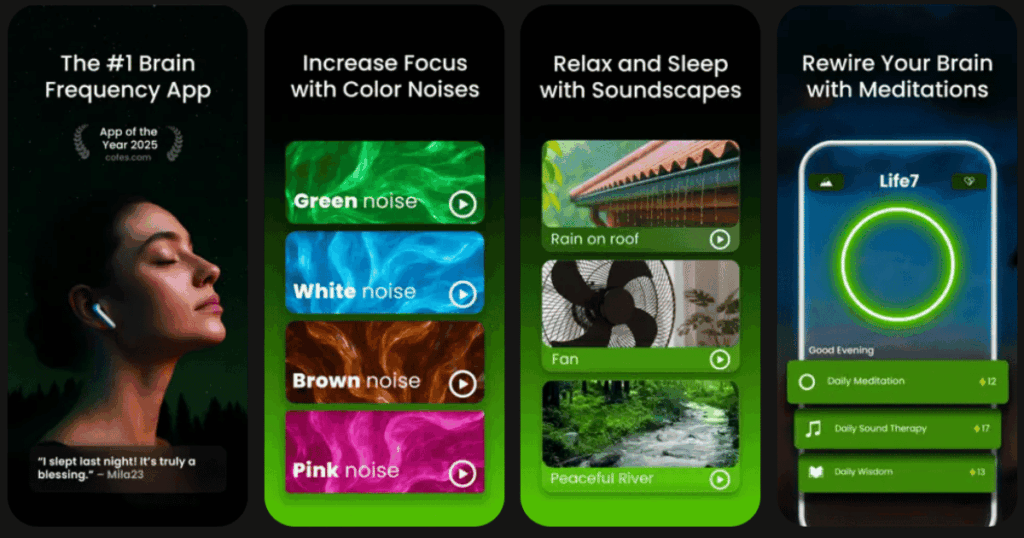
Life7 is my top pick for stress relief. This app packs everything you need to calm your mind into one place. It offers over 312 million meditation minutes tracked by users worldwide. The app has earned more than 1,200 editorial mentions for its powerful features.
What makes Life7 special is its science backed approach. You get binaural beats in delta, theta, alpha, beta, and gamma waves. The app includes healing frequencies like 432 Hz and 528 Hz. Plus, there are solfeggio frequencies that many people swear by for deep relaxation.
Key Features:
- SOS sessions for panic attacks and anxiety emergencies
- Hypnotherapy and CBT tools for deep emotional work
- Daily new sessions including meditation, music therapy, and wisdom
What I like: I really enjoy how Life7 combines so many different approaches to stress relief. The backdrop mode lets me mix soundscapes with sleep stories or meditations. This creates a truly custom experience. The gamified approach keeps me coming back because I want to earn XP and build my streak. The vagus nerve stimulation sessions have become my go to when I feel overwhelmed.
What I don’t like: The free content is somewhat limited. You really need to subscribe to unlock the full library of features. This might be a turnoff if you want to try everything before committing.
Pricing: 7 day free trial available. Then choose from weekly, monthly, or yearly plans. They often run special offers.
Platforms: iOS and Android
#2. Calm – Best for Sleep and Relaxation
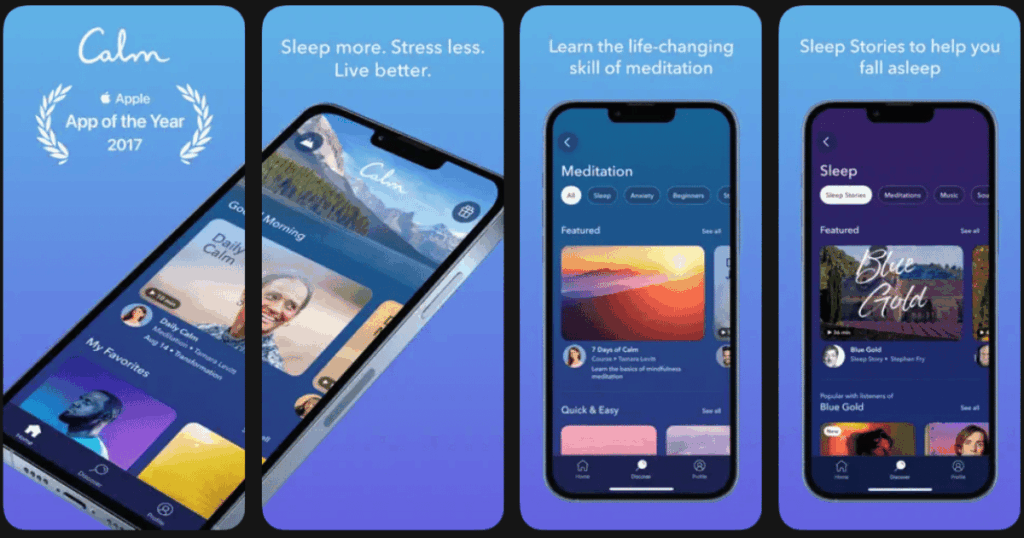
Calm has become one of the most popular meditation apps in the world. It has earned over 2 million five star reviews. The app focuses heavily on helping you sleep better and reduce stress throughout your day.
The sleep stories feature is what really sets Calm apart. Famous voices like Matthew McConaughey and Stephen Fry read bedtime tales for adults. These stories are designed to help you drift off peacefully.
Key Features:
- 60 second Breathe Bubble for quick stress relief
- Hundreds of sleep stories narrated by celebrities
- Daily calm meditation sessions
What I like: The Breathe Bubble is a lifesaver when I need instant calm. Just one minute of guided breathing can shift my whole mood. I also love the variety of background sounds. Being able to customize how loud they play during meditation makes a big difference.
What I don’t like: The app can feel overwhelming with so many options. There is not much guidance on where to start. The premium price is also higher than many competitors.
Pricing: Free basic version available. Premium subscription required for full access.
Platforms: iOS and Android
#3. Headspace – Best for Beginners Learning Meditation
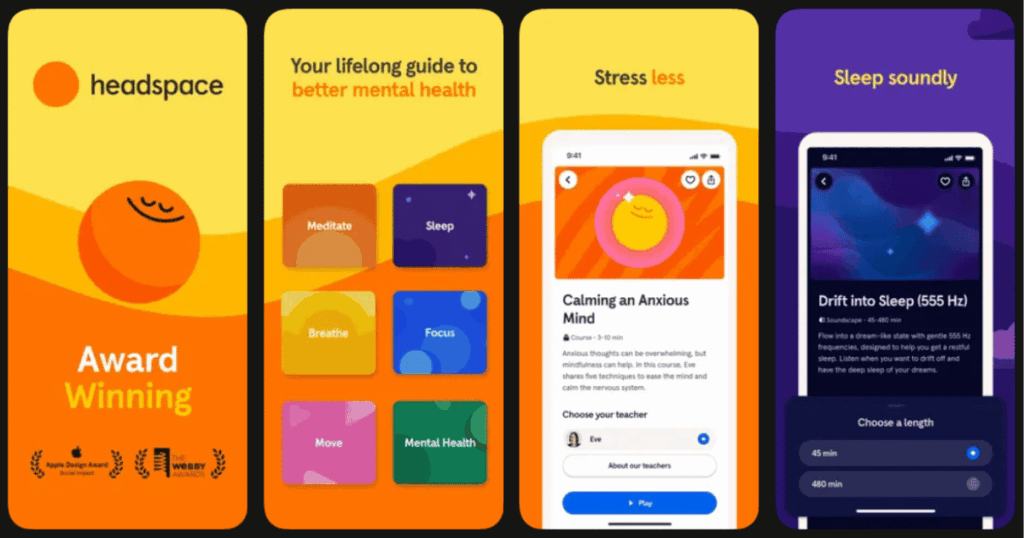
Headspace makes meditation simple and fun. The app uses playful animations to teach mindfulness concepts. Andy Puddicombe, a former monk, co founded the app to make meditation accessible to everyone.
Research shows Headspace can reduce stress by 14% in just 10 days of use. The app offers structured courses that build your skills over time. This makes it perfect for people who have never meditated before.
Key Features:
- AI companion Ebb for personalized mindfulness guidance
- Beginner courses with 30 sessions each
- Sleep sounds and wind down exercises
What I like: The short guided sessions are perfect for my busy schedule. The instructor talks throughout, which helps when my mind wanders. I appreciate how the app explains techniques like visualization through fun video animations.
What I don’t like: You need a subscription to access most content. The free version is quite limited. Some users might find the animations a bit childish.
Pricing: Free trial available. Monthly or yearly subscription for full access.
Platforms: iOS and Android
#4. Insight Timer – Best for Free Meditation Library Access
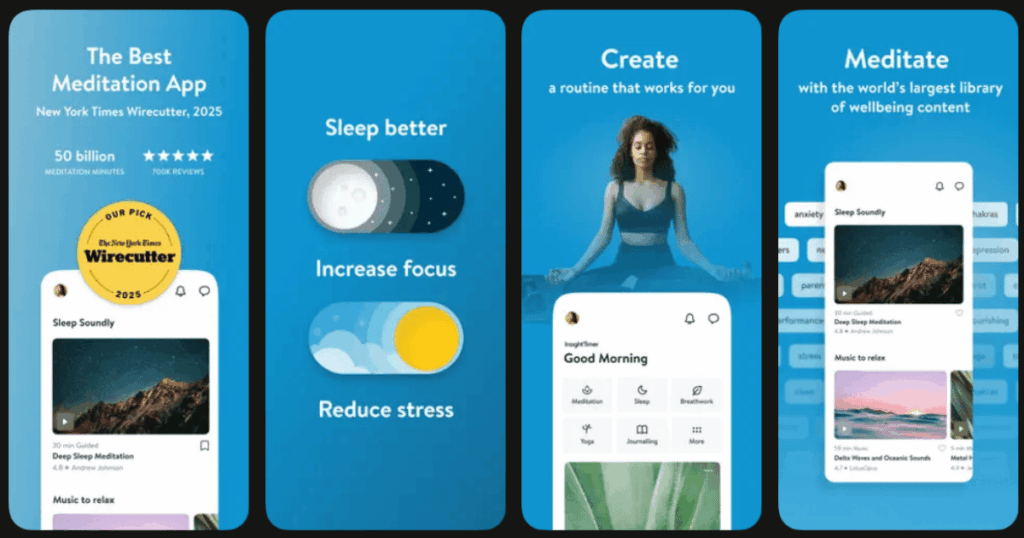
Insight Timer is a meditation powerhouse with over 230,000 free guided tracks. More than 17,000 teachers from different traditions share content on the platform. This makes it the largest free library of meditation content available.
The community aspect is really special. You can see how many people around the world are meditating with you. This creates a sense of connection during your practice.
Key Features:
- Massive free library with no subscription needed
- Live events and yoga sessions
- Customizable meditation timers with bell sounds
What I like: The amount of free content is incredible. I could meditate for months without paying a penny. I love following my favorite teachers and getting updates when they post new sessions. The TED talks from mindfulness experts add great value.
What I don’t like: The huge library can be hard to navigate. Quality varies because anyone can upload content. Finding the best meditations takes some trial and error.
Pricing: Extensive free library. Optional Member Plus subscription for courses and extra features.
Platforms: iOS and Android
#5. Wysa – Best for AI Therapy and CBT Support
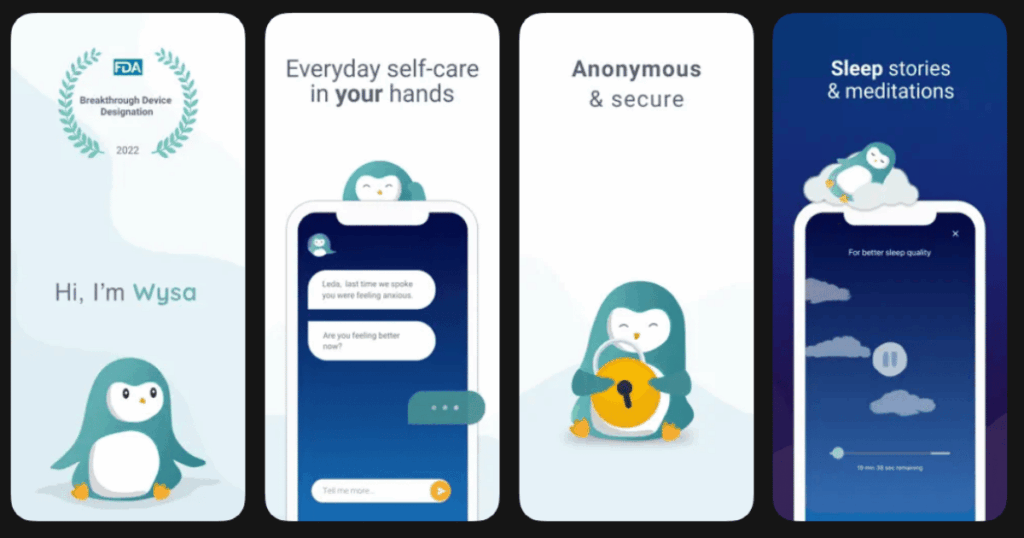
Wysa combines artificial intelligence with proven therapy techniques. The app has delivered over 2 million CBT sessions to date. It uses 120 natural language AI models to understand what you need.
The hybrid approach sets Wysa apart. You get AI support anytime plus access to human coaches. This makes mental health care more accessible for people who cannot afford traditional therapy.
Key Features:
- AI chat therapy available 24/7
- CBT tools and sleep support
- Option to connect with human coaches
What I like: Having an AI to talk to at 3 AM when I cannot sleep is amazing. The app understands context and gives helpful responses. I also appreciate that human coaching is available when I need deeper support.
What I don’t like: The AI cannot replace real therapy for serious issues. Some conversations can feel repetitive. Human coaching adds extra cost to the subscription.
Pricing: Free basic version. Annual self care plan and coaching sessions available.
Platforms: iOS and Android
#6. Sanvello – Best for Stress Management with CBT
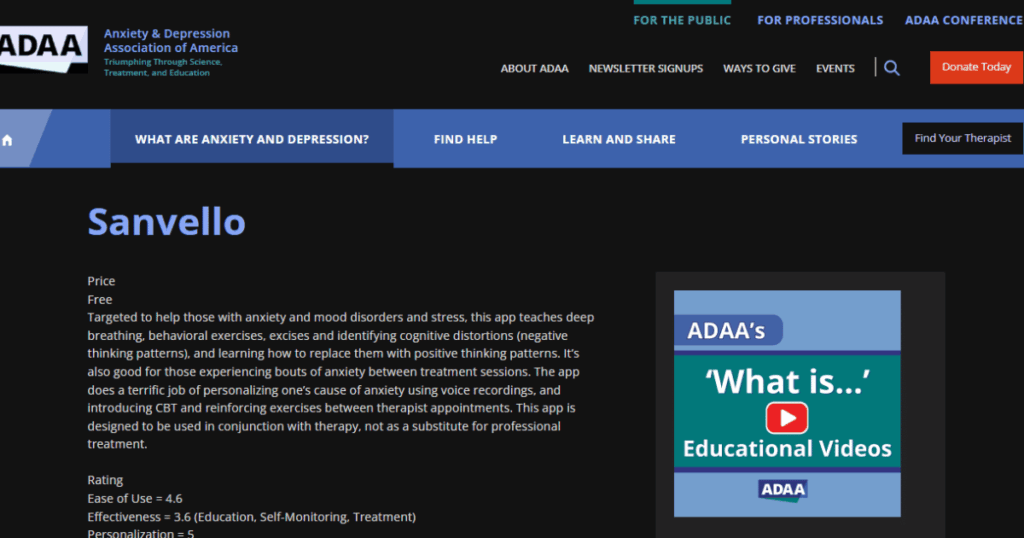
Sanvello earned praise as one of the best stress relief apps available. The app combines meditation, CBT tools, and mood tracking in one package. You can set personal goals like reducing anxiety or building confidence.
What makes Sanvello unique is its multimedia approach. Learning happens through text, videos, and audio. This makes the content much easier to understand and remember.
Key Features:
- Cognitive behavioral therapy tools
- Mood tracking and guided journeys
- Multimedia education content
What I like: The connected experience impressed me. Everything works together to support my mental health goals. The mix of videos and audio for learning keeps things fresh. I feel like I am actually building skills, not just relaxing.
What I don’t like: The interface can feel clinical at times. Some features seem hidden and hard to find. The app works best with daily use, which requires commitment.
Pricing: Basic version free. Premium subscription unlocks all features.
Platforms: iOS and Android
#7. Breathe2Relax – Best for Quick Breathing Exercises
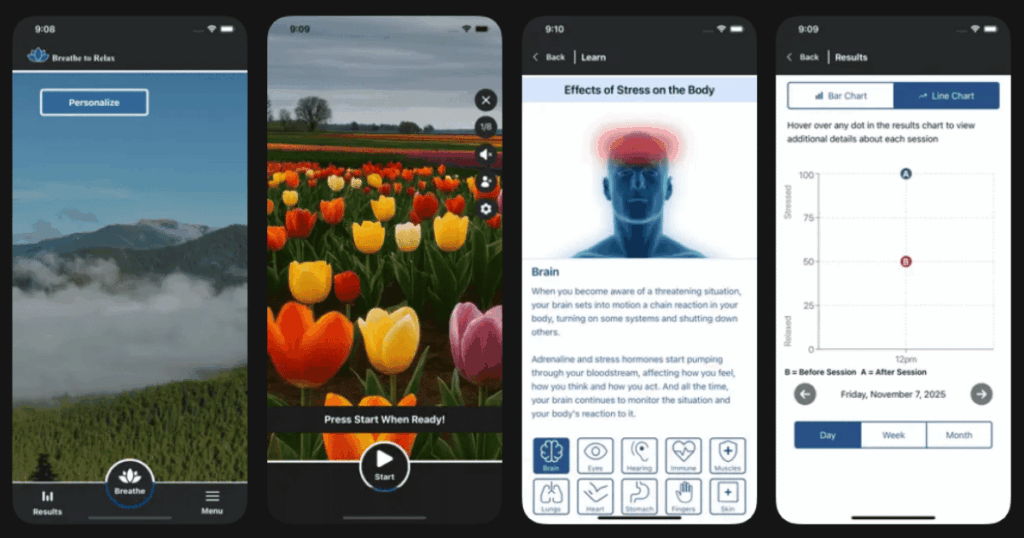
Breathe2Relax focuses on one thing and does it well. The app teaches diaphragmatic breathing, which is proven to reduce stress. It is completely free with no premium tier to worry about.
The Apple Watch integration tracks your heart rate during exercises. This gives you real data on how breathing affects your body. The app also educates you on how stress impacts your health.
Key Features:
- Diaphragmatic breathing training
- Apple Watch heart rate monitoring
- Educational content about stress
What I like: The simplicity is refreshing. I open the app and start breathing. No menus to navigate or subscriptions to consider. Seeing my heart rate drop during exercises motivates me to keep practicing.
What I don’t like: The app only offers breathing exercises. No meditation, sleep stories, or other features. The design feels dated compared to newer apps.
Pricing: Completely free
Platforms: iOS and Android
#8. Happify – Best for Mood Improvement Through Activities
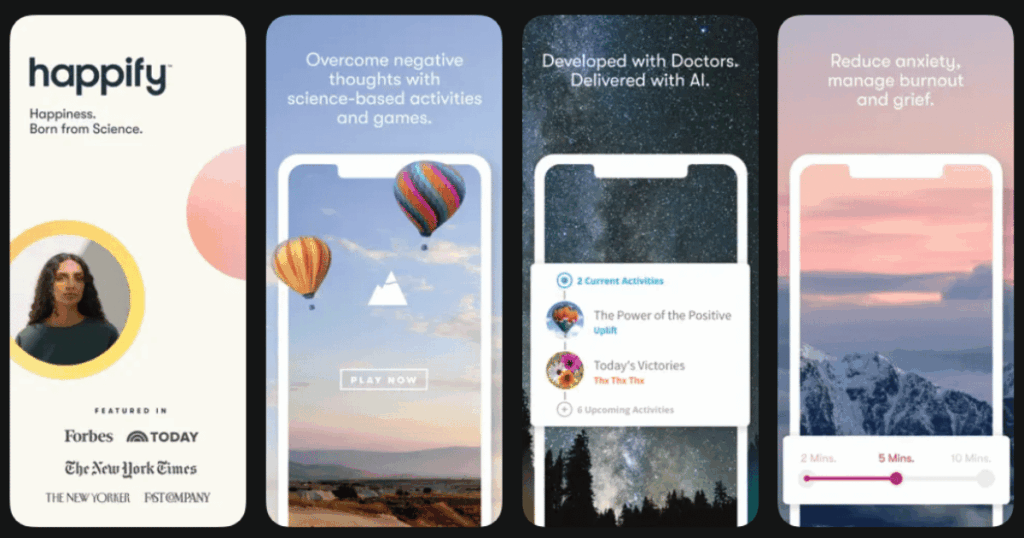
Happify takes a different approach to stress relief. Instead of meditation, it uses science based games and activities. These are designed by mental health professionals to boost your mood.
The app draws from cognitive behavioral therapy and positive psychology. Activities help you recognize and reframe negative thoughts. Think of it as training your brain to be happier.
Key Features:
- Science backed games and activities
- Positive psychology exercises
- Personalized tracks based on your goals
What I like: The game format makes mental health work feel less like a chore. I actually look forward to completing activities. The science behind each exercise is explained clearly. I understand why I am doing things, not just following instructions.
What I don’t like: Some activities can feel repetitive over time. The game approach might not appeal to everyone. Premium features require a subscription.
Pricing: Free basic version. Premium subscription for full access.
Platforms: iOS and Android
#9. Simple Habit – Best for Busy Schedules and Short Sessions
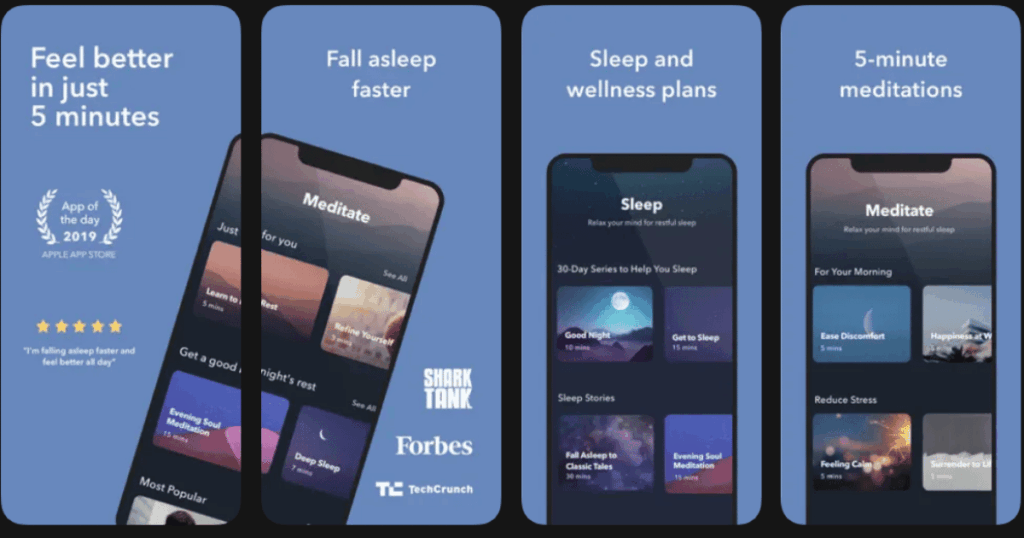
Simple Habit was designed for people who think they do not have time to meditate. Sessions are just 5 minutes long. The app offers meditations for specific situations like commutes, work breaks, and bedtime.
AI technology selects the best meditations based on your current needs. This personalization helps you get the most from each short session.
Key Features:
- 5 minute meditation sessions
- Situation specific content for commutes and breaks
- AI selected recommendations
What I like: Five minutes is genuinely doable even on my busiest days. I love having meditations designed for my commute. The AI suggestions usually match what I need. This app removed my excuse that I do not have time.
What I don’t like: Longer sessions are limited. If you want deep meditation practice, look elsewhere. Some features require premium access.
Pricing: Free trial available. Subscription for full library access.
Platforms: iOS and Android
Do Stress Relief Apps Actually Work?
Yes, many stress relief apps have real science behind them. Studies show that meditation apps like Headspace can reduce stress by 14% in 10 days. Apps using CBT techniques help users recognize and change negative thought patterns.
The key is consistent use. Apps work best when you use them daily or at least several times per week. Even 5 minutes a day can make a difference over time.
However, apps are not a replacement for professional help. If you have serious anxiety or depression, please talk to a doctor or therapist. Apps work great as supplements to professional care or for general stress management.
Are Free Meditation Apps Worth Using?
Absolutely! Free apps like Insight Timer offer massive libraries of quality content. Breathe2Relax is completely free and very effective for breathing exercises. Many premium apps also offer solid free versions.
That said, paid subscriptions often unlock better features. These include personalized recommendations, offline access, and structured courses. If you use an app daily, a subscription might be worth the investment.
Start with free options to find what works for you. Then consider upgrading if you want more features. Many apps offer free trials of their premium tiers.
How Do I Choose the Right Stress Relief App?
Think about what type of support you need most. If you want guided meditation, try Headspace or Calm. If you prefer AI chat support, check out Wysa. For an all in one solution, Life7 covers the most ground.
Consider your schedule too. Simple Habit is perfect for busy people. If you have more time, apps with longer courses like Headspace work well. Your budget also matters. Insight Timer offers incredible free content.
Try a few apps before committing. Most offer free trials or free basic versions. The best app is the one you will actually use consistently.