9 Best Cortisol Regulation Apps For Your Phone
| App Name | Best For | Key Features | AC Rating | Pricing |
|---|---|---|---|---|
| Life7 | All-in-one cortisol and stress management | Binaural beats, vagus nerve stimulation, SOS panic sessions | 4.8/5 | Free trial, subscription plans |
| Calm | Sleep and relaxation | Sleep stories, breathing exercises, masterclasses | 4.7/5 | Free trial, subscription plans |
| Headspace | Building mindfulness habits | 500+ guided meditations, CBT exercises, sleep tools | 4.6/5 | Free trial, subscription plans |
| Insight Timer | Free meditation library | 100,000+ meditations, community features, timer | 4.7/5 | Free, optional premium |
| Breathe2Relax | Diaphragmatic breathing | Guided breathing, heart rate tracking, stress education | 4.4/5 | Free |
| Happify | Science-based mood boosting | Positive psychology games, CBT activities, resilience building | 4.5/5 | Free version, subscription plans |
| Sanvello | CBT-based stress relief | Mood tracking, therapy tools, peer support | 4.6/5 | Free version, subscription plans |
| Woebot | AI-powered emotional support | 24/7 chatbot, CBT techniques, mood tracking | 4.5/5 | Free |
| Breethe | Personalized stress relief | Custom toolkit, hypnotherapy, situational meditations | 4.5/5 | Free version, subscription plans |
#1. Life7 – Best for All-in-One Cortisol and Stress Management
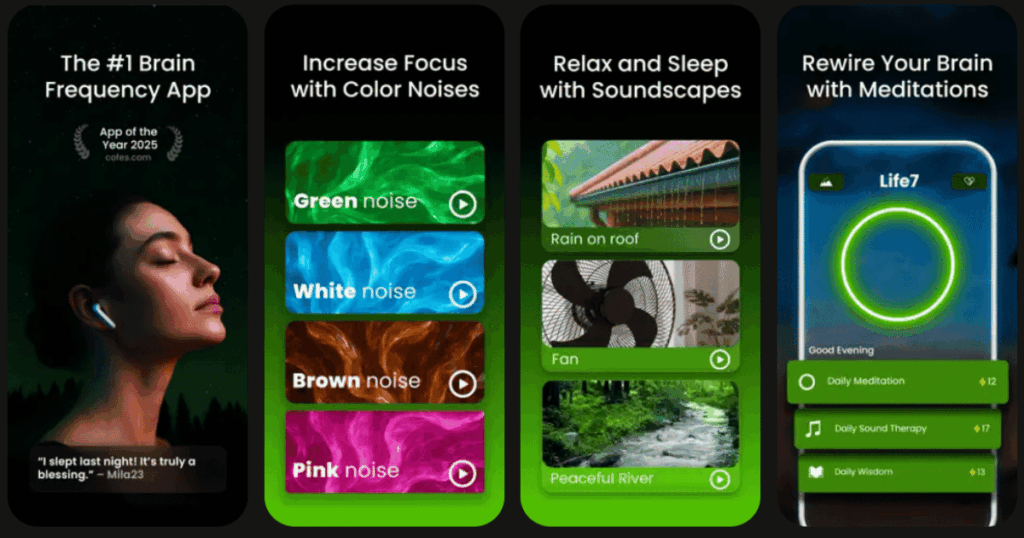
Life7 stands out as the most complete solution for managing cortisol levels naturally. This app combines ancient wisdom with modern science. It offers everything from binaural beats to vagus nerve stimulation.
The app features specialized audio frequencies like 432 Hz and 528 Hz Solfeggio tones. These sounds are designed to calm your nervous system and reduce stress hormones. Life7 also includes SOS sessions for panic attacks and instant anxiety relief.
What makes Life7 unique is its variety. You get sleep stories, guided meditations, breathing exercises, and CBT tools all in one place. The daily check-ins help you track your progress over time.
Key Features:
- Delta, theta, alpha, and gamma wave music plus pure binaural beats for deep relaxation
- Vagus nerve stimulation and nervous system reset programs
- SOS panic attack sessions with quick grounding exercises
What I like: Life7 really impressed me with its depth and variety. The binaural beats and frequency-based music actually helped me wind down faster than other apps. I love the gamified approach where you earn XP for completing sessions. It keeps me motivated to practice daily. The 8D sleep audio is something I haven’t found anywhere else, and it genuinely helps me fall asleep quicker.
What I don’t like: The free version is quite limited compared to the full library. You’ll need a subscription to access most of the premium soundscapes and advanced features. This might frustrate users who want to try more before committing.
Pricing: 7-day free trial available. Weekly, monthly, and yearly subscription plans offered with frequent special offers.
Platforms: iOS and Android
#2. Calm – Best for Sleep and Relaxation
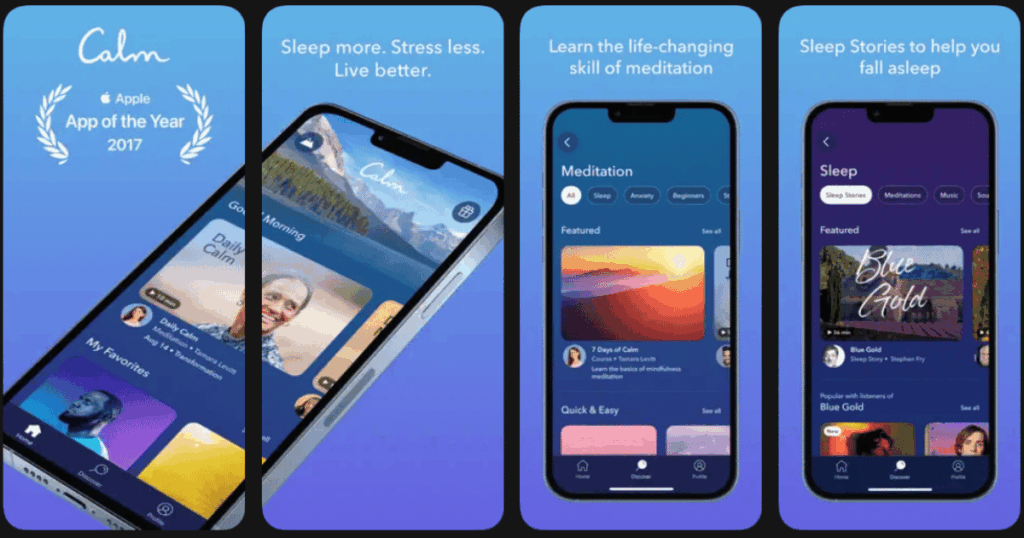
Calm has become one of the most trusted names in mental wellness. With over 500 sleep stories narrated by famous voices, it helps millions fall asleep faster. The app is designed to help you manage stress, sleep better, and live a happier, healthier life.
The Breathe Bubble feature gives you instant stress relief in just 60 seconds. This is perfect for those moments when cortisol spikes unexpectedly. Calm also offers daily masterclasses on emotional resilience and mindfulness.
Research shows that regular use can help reduce cortisol levels. The app’s soothing sounds and guided sessions work together to calm your nervous system.
Key Features:
- 500+ sleep stories with celebrity narration for better rest
- 60-second Breathe Bubble for instant stress relief
- Daily Calm masterclasses on mindfulness and emotional wellness
What I like: Calm cuts through stress, anxiety, and irregular sleep schedules to bring deep sleep. The variety of sleep stories keeps things fresh every night. I especially appreciate how the app organizes content by specific needs like stress, anxiety, or focus. The interface is beautiful and calming itself.
What I don’t like: The full experience requires a premium subscription, which can feel pricey for some users. The free content is quite limited, so you’ll need to pay to get the most benefit.
Pricing: Free trial available. Annual and monthly subscription options.
Platforms: iOS and Android
#3. Headspace – Best for Building Mindfulness Habits
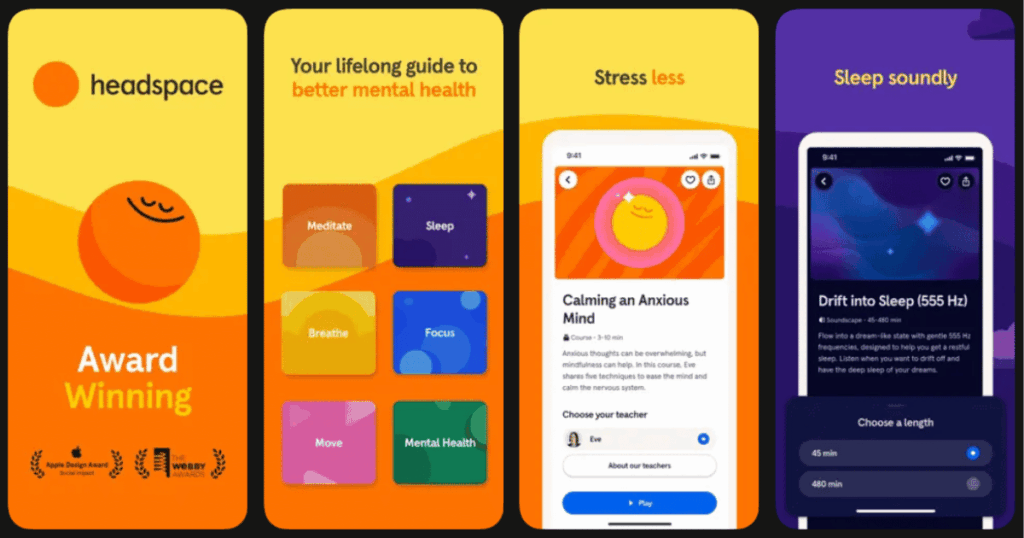
Headspace was founded by a former Buddhist monk with a mission to improve mental health. Through evidence-based meditation and mindfulness tools, Headspace helps you create life-changing habits.
The app offers over 1,000 expert-led exercises. These range from quick 3-minute sessions to longer programs for anxiety and sleep. Headspace is proven to increase happiness and reduce stress in just 10 days.
What sets Headspace apart is its animated guides and friendly approach. They make meditation feel accessible, even for complete beginners.
Key Features:
- Over 500 guided meditations with animated visual guides
- CBT-based exercises for managing negative thought patterns
- Sleep meditations, sounds, and sleepcasts for better rest
What I like: The app’s meditations are voiced by founder Andy Puddicombe, starting with simple breathing and body scan practices. I found the beginner courses really helpful for building a consistent habit. The animations make complex concepts easy to understand. Research shows it actually reduces cortisol and stress responses.
What I don’t like: Some users find the subscription cost high compared to free alternatives. The app requires ongoing payment to access most content beyond the basics.
Pricing: Free trial available. Monthly and annual subscriptions with student discounts.
Platforms: iOS and Android
#4. Insight Timer – Best for Free Meditation Library
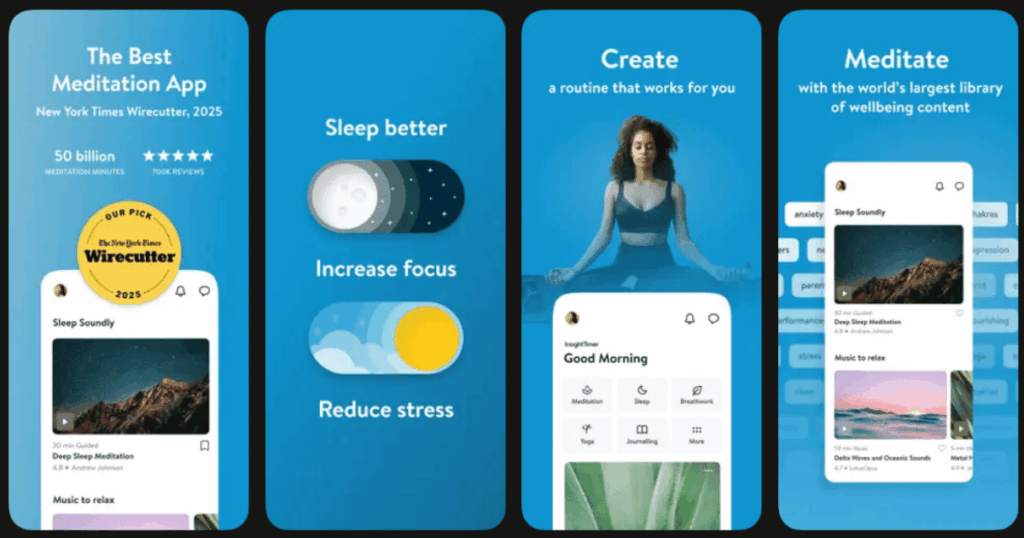
Insight Timer is the number one free meditation app with guided meditations led by the world’s top meditation and mindfulness experts. With over 100,000 meditations, you’ll never run out of options.
More time is spent meditating on Insight Timer than all other meditation apps. The app includes content from neuroscientists, psychologists, and teachers from Stanford, Harvard, and Oxford.
The community features let you connect with other meditators worldwide. You can join live sessions and discussion groups for extra support.
Key Features:
- Over 100,000 free guided meditations covering all topics
- Built-in timer with customizable bells and ambient sounds
- Global community features and live meditation sessions
What I like: The app features thousands of guided meditations across a range of styles including Buddhist mindfulness, Kundalini yoga, and walking meditation. I love that most content is completely free. The variety of teachers and styles means you can always find something that fits your mood.
What I don’t like: The huge library can feel overwhelming at first. It takes time to find your favorite teachers and styles among so many options. The interface isn’t as polished as some paid alternatives.
Pricing: Free with optional premium features.
Platforms: iOS and Android
#5. Breathe2Relax – Best for Diaphragmatic Breathing
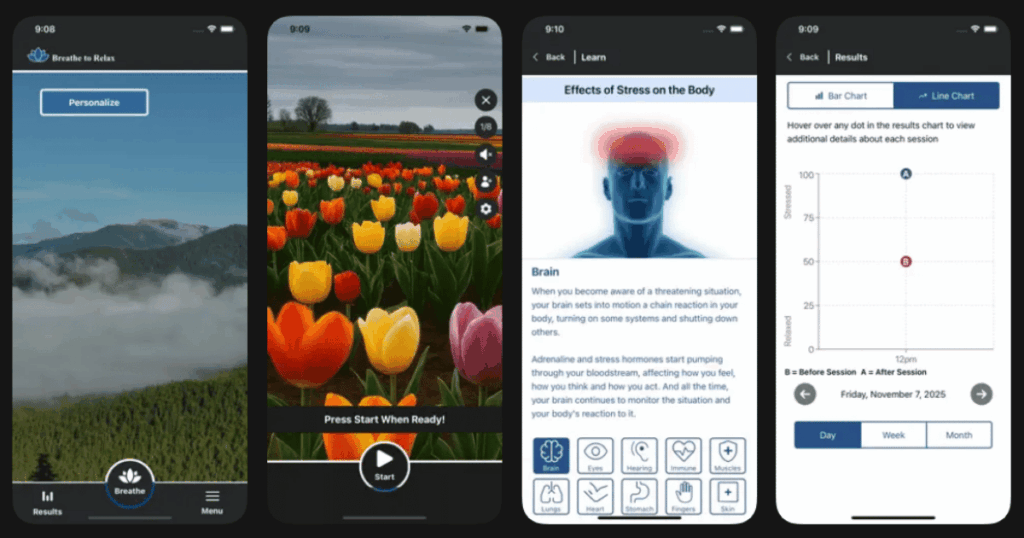
Breathe2Relax is a portable stress management tool developed by the National Center for Telehealth & Technology. It focuses specifically on breathing exercises to lower cortisol.
Breathing exercises have been documented to decrease the body’s fight-or-flight stress response. This app teaches you proper diaphragmatic breathing technique step by step.
The app works with Apple Watch and HealthKit to measure your heart rate during exercises. This helps you see real progress in your relaxation response.
Key Features:
- Guided diaphragmatic breathing with adjustable pace
- Heart rate tracking through Apple Watch integration
- Educational content on stress effects and breathing science
What I like: The app can be personalized to a pace that the user finds relaxing and includes video demos, reading materials, and charts to map personal progress. It’s completely free and backed by solid research. The simplicity makes it easy to use anywhere, anytime.
What I don’t like: The app is quite basic compared to others on this list. It only focuses on breathing exercises without meditation or other features. Some users report occasional video playback issues.
Pricing: Completely free.
Platforms: iOS and Android
#6. Happify – Best for Science-Based Mood Boosting
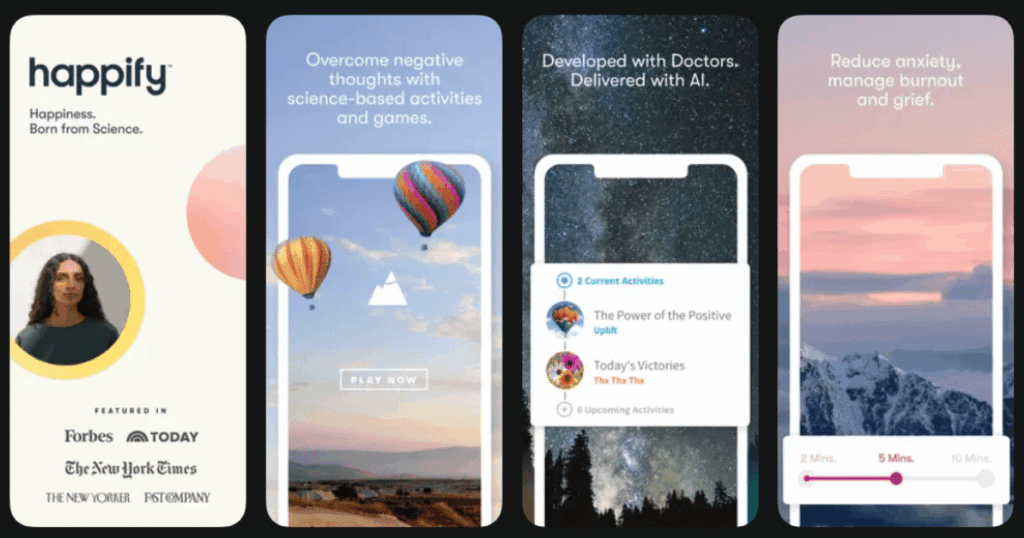
Happify empowers users to cultivate greater happiness, resilience, and life satisfaction by combining elements of positive psychology and cognitive behavioral therapy.
The app uses games and activities that feel fun while building mental strength. This gamified approach makes stress management more engaging than traditional methods.
Happify offers science-based activities and games designed to reduce stress, overcome negative thoughts, and build resilience.
Key Features:
- Science-backed games and activities for emotional wellness
- Personalized tracks based on your assessment results
- Daily tips and inspiration for mood boosting
What I like: Each activity is made to be completed in just 5-15 minutes, making it easy for people to stay consistent without getting overwhelmed. The games make mental health work feel less like a chore. I appreciate how the app tracks your happiness score over time.
What I don’t like: Happify’s games and content, while engaging, may seem overly simple or lack depth for those seeking more intensive mental health support. The premium subscription is needed for advanced features.
Pricing: Free version available. Monthly and annual subscriptions.
Platforms: iOS and Android
#7. Sanvello – Best for CBT-Based Stress Relief
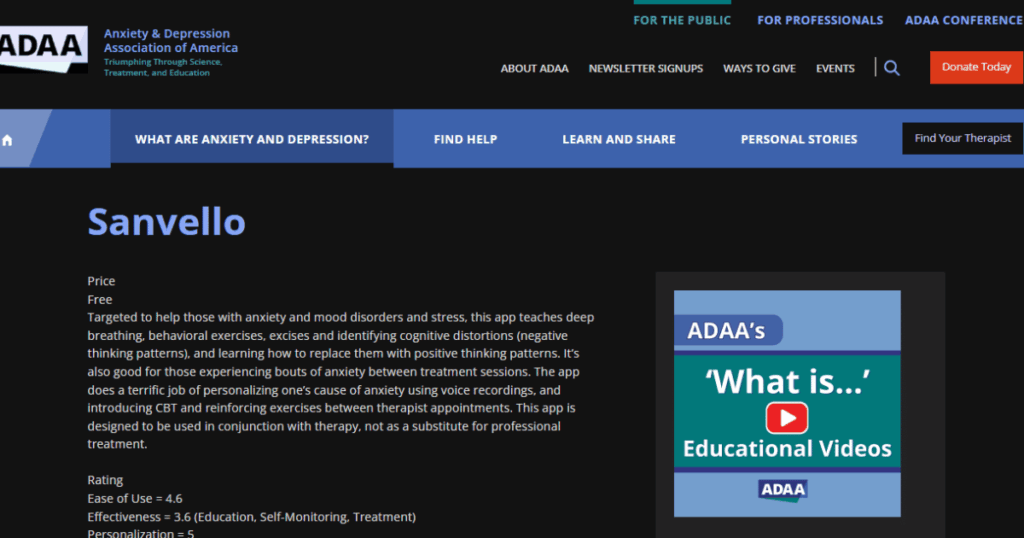
Sanvello stands out as a premier app for stress and anxiety management, providing users with evidence-based tools and techniques.
The app offers guided meditations, breathing exercises, and personalized goal-setting activities designed to reduce anxiety symptoms. It combines self-help tools with optional professional support.
Sanvello has partnered with AbleTo to provide on-demand virtual coaching and therapy services.
Key Features:
- CBT-based exercises for changing thought patterns
- Mood tracking and progress assessments
- Access to coaching and therapy through insurance
What I like: The app offers a range of coping techniques including mindfulness meditation, mood tracking, and cognitive behavioral therapy tools. It also features community support where users can connect with others facing similar challenges. The comprehensive approach addresses stress from multiple angles.
What I don’t like: Sanvello’s home screen can feel cluttered and overwhelming at first, and some users find the navigation unintuitive. Therapy features require specific insurance plans.
Pricing: Free version with limited features. Premium self-care plans available.
Platforms: iOS and Android
#8. Woebot – Best for AI-Powered Emotional Support
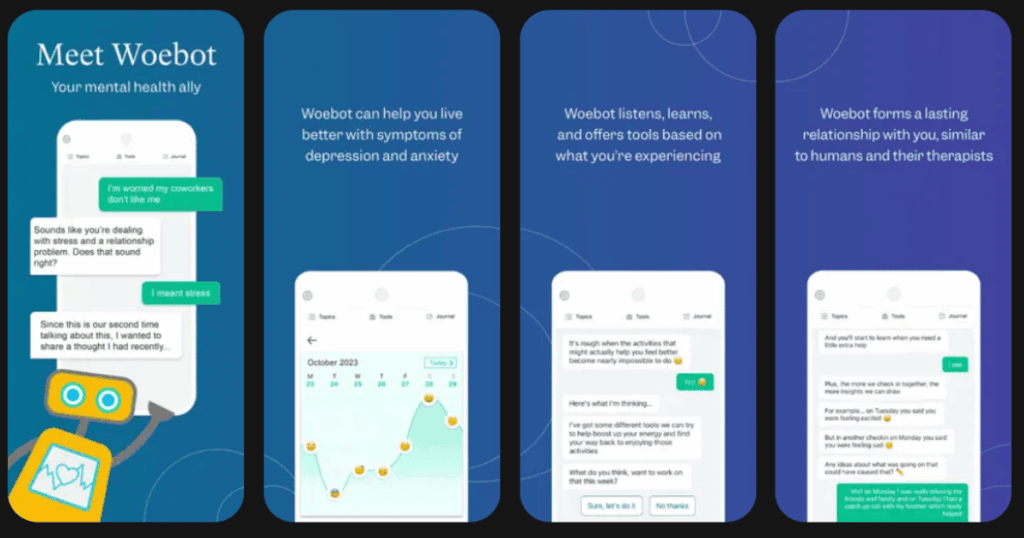
Woebot is an AI-powered mental health chatbot that provides users with conversational support based on Cognitive Behavioral Therapy principles.
The chatbot is available 24/7, making it perfect for moments when you need immediate support. It helps you identify negative thought patterns through natural conversations.
Over 1.5 million people have benefited from Woebot’s compassionate support and evidence-based tools.
Key Features:
- AI chatbot for real-time emotional support anytime
- CBT-based conversation techniques
- Daily check-ins and mood tracking
What I like: Users say that the conversations are very natural and human. The instant availability is a huge plus. You can chat whenever cortisol spikes hit, even at 3 AM. The CBT techniques help you recognize and challenge stressful thoughts.
What I don’t like: Woebot lacks human empathy and cannot offer truly personalized therapy. Its effectiveness is restricted to mild conditions. It should complement, not replace, professional help.
Pricing: Free to use.
Platforms: iOS and Android
#9. Breethe – Best for Personalized Stress Relief
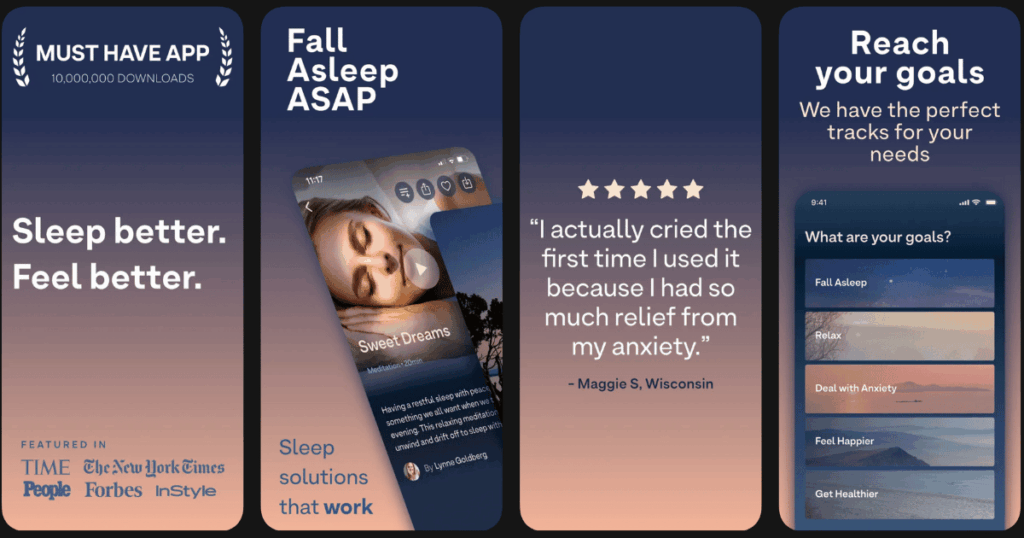
Breethe figures out why you feel anxious and recommends personalized support you need, like relatable meditations, soothing sound therapy, breathing exercises, and relaxing hypnotherapy.
The app stands out with its situational approach. It offers meditations for specific real-life situations that actually cause stress.
Breethe is all about real help for real life with guided meditations for very specific and relatable everyday situations.
Key Features:
- Personalized My Life Kit toolkit based on your needs
- Situational meditations for everyday stress triggers
- Hypnotherapy sessions for deep relaxation
What I like: With its interactive My Life Kit feature, Breethe is the most personalized meditation and mental wellness app available. I love the relatable approach to real situations. The hypnotherapy sessions are surprisingly effective for calming my nervous system.
What I don’t like: The subscription cost is higher than some competitors. The free version gives you a taste but requires payment for most useful features.
Pricing: Free version available. Monthly and yearly subscriptions.
Platforms: iOS and Android
What Are The Best Apps To Lower Cortisol Naturally?
The best apps to lower cortisol naturally combine breathing exercises, meditation, and sound therapy. Life7 offers the most complete package with binaural beats and vagus nerve stimulation. These techniques directly target the nervous system to reduce stress hormones.
Calm and Headspace also work well for natural cortisol reduction. Their guided meditations help activate your parasympathetic nervous system. Research shows mindfulness meditation rewires neural pathways, making you more resilient to daily pressures.
Breathe2Relax focuses specifically on diaphragmatic breathing. This technique is scientifically proven to lower the fight-or-flight response that raises cortisol.
Do Meditation Apps Really Help With Stress?
Yes, research confirms that meditation apps genuinely help reduce stress and cortisol levels. Integrating these apps can reduce perceived stress by up to 30%, according to studies on digital mindfulness tools.
A study found that participants who used meditation apps felt more positive emotions and less burdened by external demands and pressure. The key is consistent daily practice, even if just for a few minutes.
Apps make meditation accessible for busy people. You can practice anywhere, anytime. Studies suggest the benefits of mindfulness aren’t just from improved attention, but from the gentle, nurturing attitude we cultivate toward ourselves.
How Often Should I Use A Cortisol Regulation App?
For best results, use your cortisol regulation app daily. Even short 5-10 minute sessions make a difference. Consistency matters more than session length.
Morning sessions help set a calm tone for the day. Evening practice prepares your body for restful sleep. Many apps like Life7 offer daily check-ins to build this habit.
Start small if you’re new to meditation. Begin with just 3-5 minutes and gradually increase. Most apps track your progress and send reminders to keep you accountable. Over time, you’ll notice lower stress levels and better sleep quality.