9 Best Coping Skills Apps For Your Phone
| App Name | Best For | Key Features | AC Rating | Pricing |
|---|---|---|---|---|
| Life7 | All-in-one mental wellness | Binaural beats, CBT tools, SOS panic sessions, sleep stories | 4.8/5 | Free trial, then subscription plans |
| Calm | Sleep improvement and relaxation | Sleep stories, celebrity narrations, daily calm sessions | 4.5/5 | Free version, premium subscription |
| Headspace | Beginners learning meditation | Structured courses, 1000+ guided meditations, sleepcasts | 4.6/5 | Free trial, monthly or annual plans |
| Happify | Building emotional resilience through games | Science-based games, positive psychology tracks, CBT activities | 4.3/5 | Free version, premium subscription |
| Insight Timer | Free meditation library access | 100,000+ free meditations, live events, community groups | 4.5/5 | Mostly free, optional premium |
| Woebot | AI-powered CBT support | Daily check-ins, mood tracking, cognitive reframing tools | 4.4/5 | Free |
| Sanvello | Managing anxiety and depression | CBT journaling, mood tracking, peer support forums | 4.2/5 | Free version, premium options |
| Wysa | Anonymous 24/7 emotional support | AI chatbot, CBT exercises, optional human coaching | 4.4/5 | Free version, premium coaching |
| Daylio | Quick and simple mood tracking | One-tap mood logging, activity tracking, trend analytics | 4.6/5 | Free version, premium features |
#1. Life7 – Best for All-in-One Mental Wellness
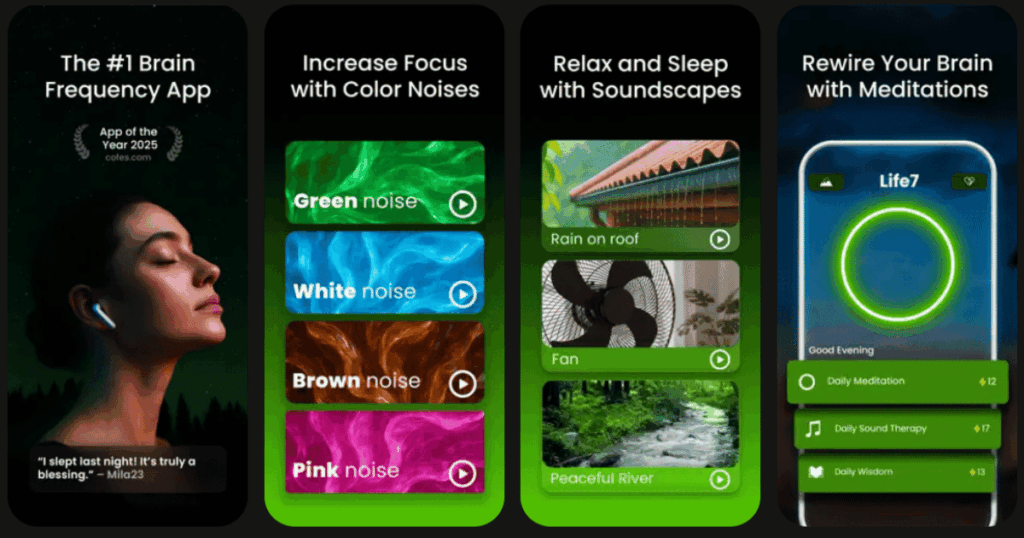
Life7 is my top pick for anyone wanting a complete mental wellness toolkit in one place. This app packs an impressive range of features that cover everything from sleep to stress to deep meditation.
What makes it stand out is the variety. You get binaural beats, solfeggio frequencies, and brain wave music that actually work. There are also SOS sessions for panic attacks, breathing exercises, and even hypnotherapy sessions.
The app helps with anxiety, depression, PTSD, ADHD, and general stress. It also offers CBT tools, transcendental meditation, and vagus nerve stimulation techniques. Whether you want to sleep better or manage a panic attack, Life7 has something ready for you.
Key Features:
- Binaural beats, solfeggio frequencies, and brain wave music including delta, theta, alpha, beta, and gamma waves
- SOS panic attack sessions and breathing exercises for instant anxiety relief
- CBT, hypnotherapy, sleep stories, and daily meditation sessions with progress tracking
What I like: I really appreciate how Life7 combines so many wellness tools into one app. The variety of sound therapy options is impressive. You get green noise, white noise, brown noise, and pink noise. The 8D sleep audio and dream wave hypnosis features are unique. I also love the gamified approach where you earn XP and unlock content. The daily check-ins keep me engaged, and the mood tracker helps me spot patterns in my emotions.
What I don’t like: The free content is somewhat limited compared to the premium features. You really need a subscription to unlock the full power of this app. That said, the 7 day free trial lets you explore everything first.
Pricing: 7 day free trial available. Weekly, monthly, and yearly subscription plans offered with frequent special promotions.
Platforms: iOS and Android
#2. Calm – Best for Sleep Improvement and Relaxation
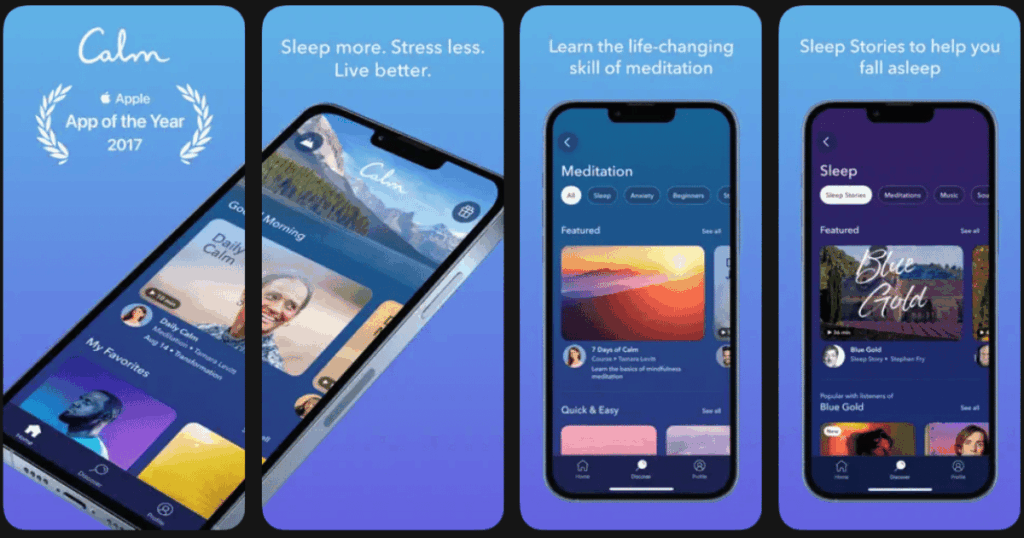
Calm has become one of the most recognized names in the wellness app world. It focuses heavily on helping you relax, unwind, and get better sleep.
The app is beautiful to look at and easy to use. Nature scenes and soothing sounds greet you right away. The content library includes guided meditations, music, and masterclasses from wellness experts.
Sleep Stories are the star feature here. These bedtime stories are narrated by celebrities like Matthew McConaughey and Idris Elba. They help you drift off peacefully every night.
Key Features:
- Sleep Stories narrated by celebrities to help you fall asleep naturally
- Daily Calm sessions that provide a new mindful theme each day
- Breathing exercises, relaxing music, and nature soundscapes
What I like: The Sleep Stories are genuinely helpful for falling asleep. The production quality is excellent across everything. I enjoy how the Daily Calm gives me something fresh each morning. The kids section is also great if you have children who need help winding down.
What I don’t like: The app can feel overwhelming with so many options. Finding a starting point takes some time. Also, many meditations seem designed for people who already know the basics. Complete beginners might feel a bit lost at first.
Pricing: Limited free version available. Premium subscriptions offered monthly, annually, and as a lifetime option. Seven day free trial included.
Platforms: iOS and Android
#3. Headspace – Best for Beginners Learning Meditation
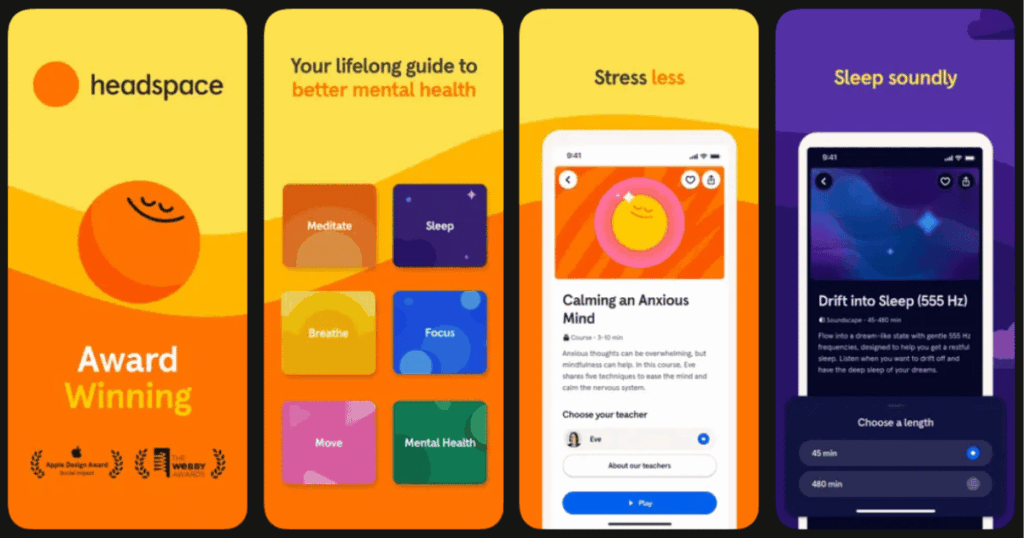
Headspace makes meditation feel approachable and fun. The app uses friendly animations and a structured teaching approach that takes away all the intimidation.
Co-founder Andy Puddicombe guides many sessions with his calm voice. The progressive courses teach you meditation skills step by step. You start with basics and gradually build confidence.
The app covers meditation, sleep, focus, and movement. Each section offers courses designed to build long term habits. The interface is clean and playful without being childish.
Key Features:
- Progressive meditation courses that build skills from beginner to advanced
- Over 1000 guided meditations covering stress, sleep, focus, and more
- Sleepcasts and soundscapes designed to improve rest quality
What I like: I appreciate how Headspace explains the “why” behind each technique. The animations make concepts easy to understand. Ebb, the AI companion, provides personalized recommendations. The app feels like having a friendly meditation teacher in your pocket.
What I don’t like: All content sits behind a paywall after the free trial. The cartoonish style might not appeal to everyone. Some users who prefer a more serious aesthetic may want to look elsewhere.
Pricing: Monthly and annual subscription options available. Seven day or fourteen day free trials offered. Student and family plans also available.
Platforms: iOS and Android
#4. Happify – Best for Building Emotional Resilience Through Games
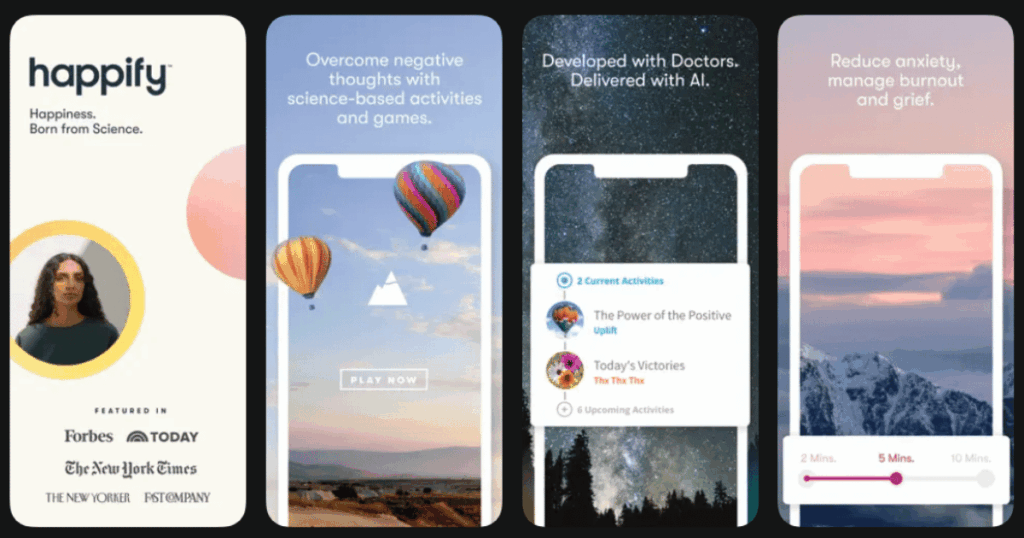
Happify takes a unique approach by turning mental wellness into something playful. Science-based games and activities help you reduce stress and build positive thinking habits.
The app draws from positive psychology and CBT research. Everything is broken into “tracks” that target specific goals. You might choose conquering negative thoughts or building self confidence.
Activities are short and engaging. They feel more like playing than working on yourself. This makes it easier to stick with the app long term.
Key Features:
- Science-based games and activities developed by psychology experts
- Personalized tracks for goals like stress management, confidence building, and mindfulness
- 20-page character strength report offered through partnership with VIA Institute
What I like: The gamified approach keeps things interesting. Activities take only 5-15 minutes, which fits easily into busy days. I like how the app tracks my happiness score over time. The variety of tracks means there is always something new to explore.
What I don’t like: The app may feel too simple for people who already have solid mental health foundations. Some activities feel more entertaining than therapeutic. Premium is required for full access to all tracks.
Pricing: Free version available with limited tracks. Premium subscriptions offered monthly and annually. Lifetime option also available.
Platforms: iOS and Android
#5. Insight Timer – Best for Free Meditation Library Access
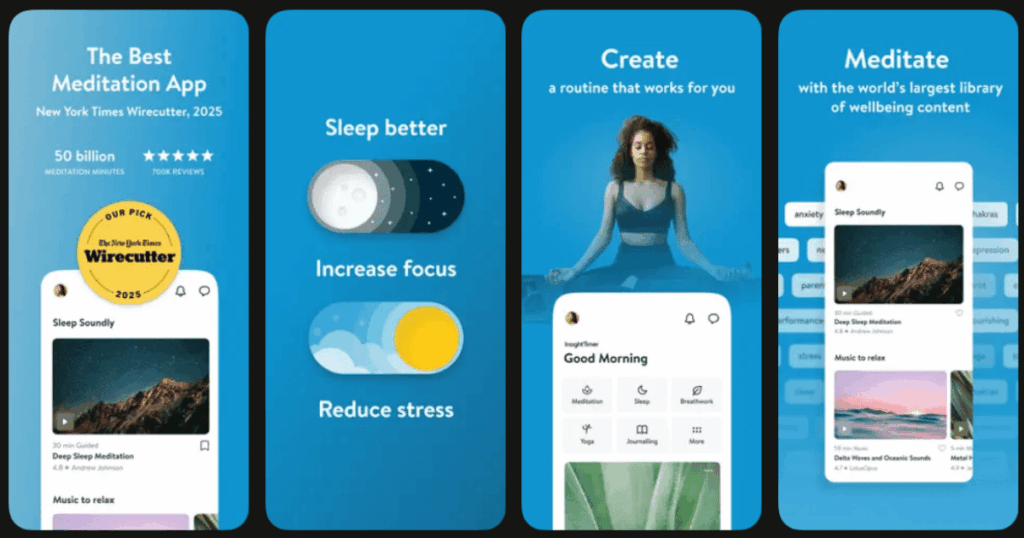
Insight Timer offers one of the largest free meditation libraries anywhere. Over 100,000 guided meditations are available without paying a cent.
The app started as a simple meditation timer. It has grown into a massive community of teachers and practitioners. You can find virtually any meditation style here.
Live events, yoga classes, and discussion groups add social elements. Teachers from around the world contribute new content daily. The variety is truly incredible.
Key Features:
- Over 100,000 free guided meditations from thousands of teachers worldwide
- Customizable meditation timer with interval bells and ambient sounds
- Live events, courses, and community groups for connection and support
What I like: The free content alone makes this app worth downloading. I love discovering new teachers and styles. The community features help me feel connected to other meditators. Stats and milestones keep me motivated to maintain my practice.
What I don’t like: The app can feel disorganized with so much content. Finding exactly what you need takes some searching. Premium features like offline listening and rewinding require a subscription.
Pricing: Mostly free with extensive content. Optional Member Plus subscription available for additional features and courses.
Platforms: iOS and Android
#6. Woebot – Best for AI-Powered CBT Support

Woebot uses artificial intelligence to deliver cognitive behavioral therapy techniques through friendly conversations. The chatbot checks in with you daily and teaches practical coping skills.
Everything Woebot says was written by trained clinicians. The conversations feel supportive and judgment free. You learn to identify negative thought patterns and challenge them.
Research backs up the app’s effectiveness. Studies show significant reductions in depression and anxiety symptoms among users.
Key Features:
- Daily AI conversations that teach CBT skills through friendly dialogue
- Mood tracking with visual graphs to spot emotional patterns over time
- Practical exercises for cognitive reframing, gratitude, and mindfulness
What I like: I appreciate having support available anytime day or night. The conversations feel genuine despite being AI driven. The app teaches real therapy skills in an accessible way. Progress tracking helps me see improvement over time.
What I don’t like: Conversations can feel repetitive after extended use. The preset responses limit how deeply you can explore issues. It works best as a supplement to therapy rather than a replacement.
Pricing: Free to use.
Platforms: iOS and Android
#7. Sanvello – Best for Managing Anxiety and Depression

Sanvello provides targeted support for people dealing with anxiety, depression, and stress. The app combines CBT tools, mindfulness exercises, and peer support in one place.
You start with a self assessment that creates baseline scores. The app tracks your progress over time and personalizes recommendations. Guided journeys teach specific skills for emotional wellbeing.
The community feature connects you with others facing similar challenges. Discussion boards and chat groups provide support when you need it.
Key Features:
- CBT-based tools including thought journals, mood tracking, and guided lessons
- Personalized self assessment with ongoing progress tracking
- Peer support community with discussion boards and chat groups
What I like: The combination of self-help tools and community support works well. I like how the app personalizes content based on my assessment scores. The guided journeys provide structure when I feel overwhelmed. Having peer support available adds an important human element.
What I don’t like: The app interface feels somewhat dated compared to competitors. Some features require premium access or health insurance verification. Active chat groups can be hard to find consistently.
Pricing: Free version available. Premium features accessible through subscription or health insurance coverage for many users.
Platforms: iOS and Android
#8. Wysa – Best for Anonymous 24/7 Emotional Support
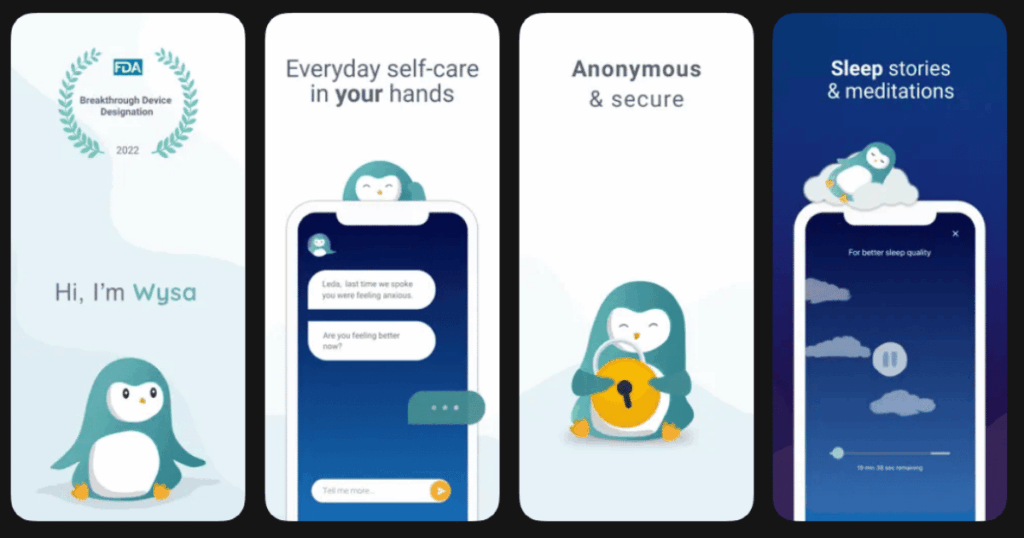
Wysa features a friendly penguin chatbot that offers emotional support around the clock. The AI combines CBT, DBT, and mindfulness techniques to help you through tough moments.
The anonymous nature makes it easy to open up without judgment. You can share anything with Wysa and receive compassionate, helpful responses. Over 150 self-help tools are available.
Optional human coaching adds another layer of support. Licensed professionals can provide personalized guidance when you need more than AI assistance.
Key Features:
- Anonymous AI chatbot available 24/7 for immediate emotional support
- Evidence-based tools drawn from CBT, DBT, and mindfulness practices
- Optional upgrade to connect with licensed human coaches
What I like: The anonymity makes it comfortable to share difficult feelings. Having support available at any hour is genuinely helpful during hard nights. The penguin character feels warm and approachable. Tools are organized well and easy to access quickly.
What I don’t like: Deeper conversations may feel limited by AI capabilities. Human coaching costs extra on top of premium features. The chatbot cannot replace professional therapy for serious mental health conditions.
Pricing: Free version available with AI support. Premium subscription unlocks additional features. Coaching available at extra cost.
Platforms: iOS and Android
#9. Daylio – Best for Quick and Simple Mood Tracking
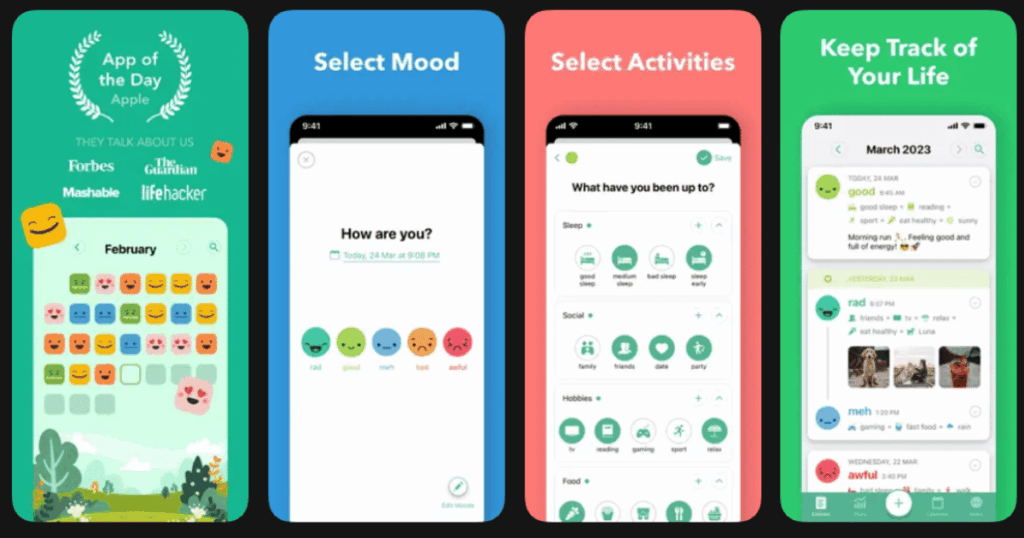
Daylio makes tracking your mood incredibly simple. You log how you feel with just a few taps. No writing required unless you want to add notes.
The app reveals patterns between your activities and emotions. Over time, you start seeing what affects your mood positively or negatively. This awareness alone can be powerful.
Statistics and charts make your emotional journey visible. You can spot trends, track goals, and celebrate streaks of good days.
Key Features:
- One-tap mood logging with customizable mood icons and activities
- Detailed statistics and charts showing mood patterns over time
- Goal tracking and achievement system to encourage consistency
What I like: The simplicity makes it easy to use every single day. I can log my mood in seconds even when busy. The charts help me understand myself better. Seeing streaks and statistics motivates me to keep tracking.
What I don’t like: The app focuses purely on tracking without teaching coping skills. You need other resources to actually work on improving your mood. Some advanced analytics require premium.
Pricing: Free version available with core tracking features. Premium subscription unlocks unlimited moods, advanced statistics, and additional customization.
Platforms: iOS and Android
What Are Coping Skills Apps?
Coping skills apps are mobile applications designed to help you manage stress, anxiety, and difficult emotions. They provide tools and techniques you can use anytime, anywhere.
These apps typically include features like guided meditation, breathing exercises, and mood tracking. Many use evidence-based approaches like cognitive behavioral therapy. They make mental wellness support accessible to everyone with a smartphone.
The best coping skills apps serve as daily companions for emotional health. They teach you techniques that become easier with practice. Over time, you build a toolkit of skills for handling life’s challenges.
How Do I Choose the Right Coping Skills App?
Choosing the right app depends on your specific needs and preferences. Start by identifying what you want help with most. Sleep issues, anxiety management, and general stress relief all have apps specialized for them.
Consider how much time you can commit daily. Some apps work well with just five minutes. Others offer deeper programs requiring more investment. Think about your learning style too. Some people prefer games while others want guided instruction.
Try free trials before committing to subscriptions. Most apps let you explore basic features at no cost. This helps you find which interface and approach feel right for you.
Are Mental Health Apps a Substitute for Therapy?
Mental health apps are valuable tools but not replacements for professional therapy. They work best as supplements to professional care or as first steps toward wellness.
Apps can help with mild symptoms and daily coping. They teach useful skills you can practice between therapy sessions. Many therapists actually recommend apps to support their clients’ progress.
For moderate to severe mental health conditions, professional help remains essential. Apps cannot diagnose problems or provide personalized treatment plans. If you are struggling significantly, please reach out to a mental health professional.