9 Best Circadian Rhythm Apps For Your Phone
| App Name | Best For | Key Features | AC Rating | Pricing |
|---|---|---|---|---|
| Life7 | Complete mental wellness and sleep optimization | Binaural beats, sleep stories, breathing exercises | 4.8/5 | Free trial, then subscription plans |
| Circadian | Syncing daily activities with natural light cycles | Sunrise/sunset reminders, biorhythm calculator, fasting timers | 4.5/5 | Free version, premium subscription |
| RISE | Tracking sleep debt and energy levels | Circadian rhythm prediction, sleep debt tracking, energy schedule | 4.6/5 | Free trial, then yearly subscription |
| Sleep Cycle | Waking up during light sleep phases | Smart alarm, sound analysis, sleep tracking | 4.4/5 | Free version, premium subscription |
| Timeshifter | Beating jet lag with science | Light exposure guidance, personalized plans, melatonin timing | 4.7/5 | Pay per trip or yearly subscription |
| SleepScore | Contactless sleep tracking accuracy | Sonar technology, sleep stage analysis, personalized advice | 4.3/5 | Free version, premium subscription |
| myCircadianClock | Research backed time restricted eating | Food logging, sleep tracking, exercise monitoring | 4.2/5 | Free |
| Lume | Light exposure monitoring | Lux tracking, circadian health scoring, personalized goals | 4.1/5 | Free with optional premium |
| MyCircadian | Location based circadian optimization | Real time sun data, lux meter, vitamin D tracking | 4.3/5 | Free with premium features |
#1. Life7 – Best for Complete Mental Wellness and Sleep Optimization
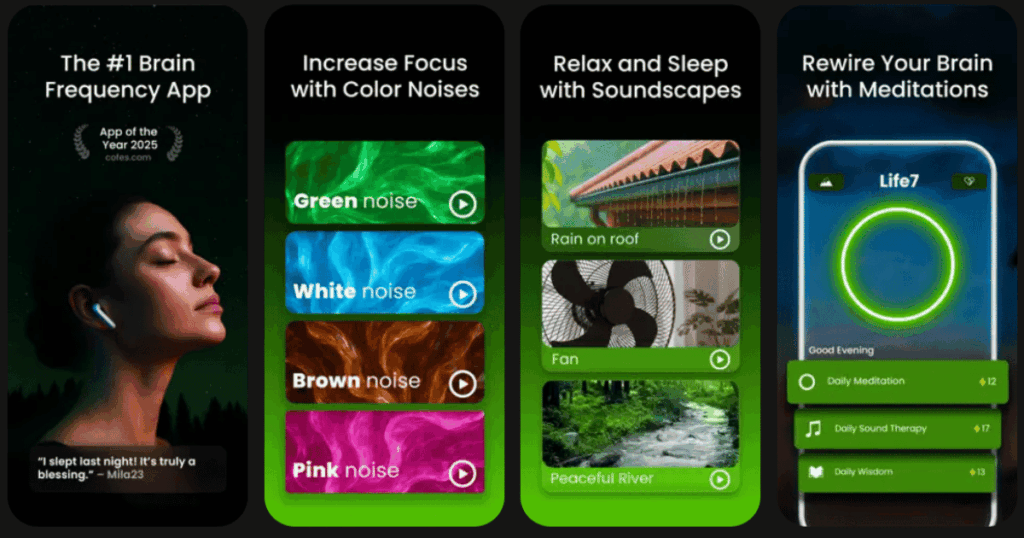
Life7 is my top pick for anyone serious about fixing their circadian rhythm. This app goes beyond basic sleep tracking. It offers a complete toolkit for mental wellness and better rest.
What makes Life7 special is the variety of sound therapies it includes. You get green noise, white noise, brown noise, and pink noise. There are also brainwave frequencies like delta, theta, alpha, beta, and gamma waves. Pure binaural beats and isochronic tones help your brain relax and prepare for sleep.
The app has over 312 million meditation minutes logged by users worldwide. It has been mentioned in over 1200 editorial publications. This shows how trusted and effective it is for real people.
Key Features:
- 432 Hz, 528 Hz, and Solfeggio frequencies for deep relaxation and sleep preparation
- Bedtime stories for adults and children plus guided visualizations for peaceful dreams
- REM sleep music and 8D audio designed to improve your natural sleep cycles
What I like: I love how Life7 combines so many tools in one place. The SOS sessions for anxiety and panic attacks are a lifesaver during stressful times. The daily check ins and meditation sessions help me build a routine. The gamified approach with XP points keeps me motivated to stick with my practice. The vagus nerve stimulation and CBT features feel like having a therapist in my pocket. Plus the backdrop mode lets me mix soundscapes with other audio which is really clever.
What I don’t like: The free content is a bit limited compared to what you get with a subscription. You really need to upgrade to access the best features. But with the 7 day free trial and frequent special offers, it is worth trying out first.
Pricing: 7 day free trial available. Then choose from weekly, monthly, or yearly plans. They often run special promotions.
Platforms: iOS and Android
#2. Circadian – Best for Syncing Daily Activities with Natural Light Cycles
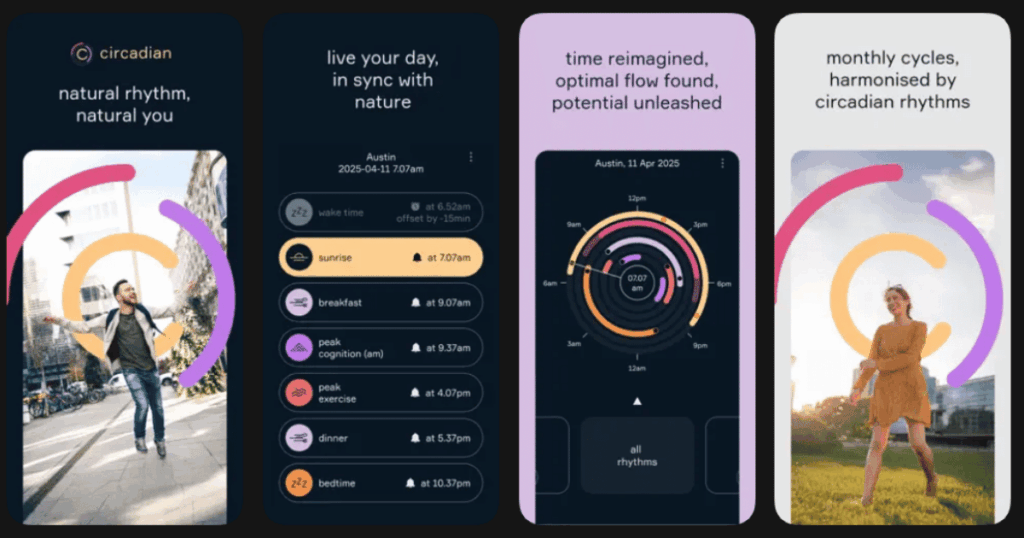
Circadian is built on Nobel Prize winning chronobiology research. This app helps you align your daily activities with your local sunrise and sunset times.
The app calculates your optimal times for sleeping, eating, exercising, and working. It uses your location to track real solar time. This helps your body sync with natural rhythms instead of artificial schedules.
I find the colorful daily diagram super helpful. It breaks down your day into easy to understand sections. You can see exactly when to do each activity for best results.
Key Features:
- Bedtime calculator that adjusts based on seasonal daylight changes
- Eating and fasting reminders synced to natural light patterns
- Over 20 educational articles on circadian science and diurnal living
What I like: The science behind this app is solid. I appreciate how it adjusts my sleep duration based on seasonal changes. The reminders for sunrise walks and sunset wind downs have helped me feel more connected to natural rhythms. The learning library taught me so much about how light affects my hormones and mood.
What I don’t like: Some users report occasional glitches with notifications. The app can be a bit complex at first. It takes a few days to get used to all the features and understand the timing recommendations.
Pricing: Free version with limited features. Monthly and yearly subscription options available. One time lifetime purchase also offered.
Platforms: iOS and Android
#3. RISE – Best for Tracking Sleep Debt and Energy Levels
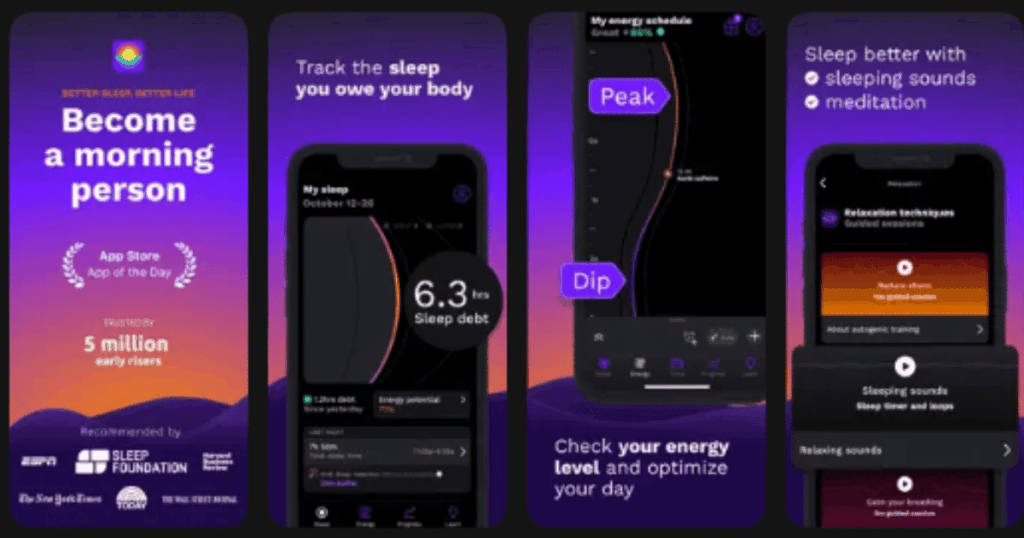
RISE focuses on two key factors that sleep researchers agree matter most. These are sleep debt and your circadian rhythm. The app tracks how much sleep you owe your body and helps you pay it back.
What I really like is how RISE predicts your daily energy schedule. It shows you when you will be groggy, when you will have peak focus, and when to start winding down. This helps you plan your day around your natural energy patterns.
The app pulls historical data from your phone to calculate your personal sleep need. This is the amount of sleep your body actually requires, not just the average recommendation.
Key Features:
- Sleep debt tracking that shows exactly how much rest you need to catch up on
- Energy schedule predictions showing your alertness peaks and dips throughout the day
- Over 20 personalized sleep hygiene reminders timed to your circadian rhythm
What I like: From day one RISE gave me useful information about my sleep patterns. The biological bedtime feature helped me finally understand why I struggled to fall asleep at certain times. The personalized guidance feels genuinely helpful rather than generic. It also syncs with Apple Health, Oura, and Fitbit for more accurate tracking.
What I don’t like: The yearly subscription is pricier than some alternatives. Also the app focuses mainly on sleep debt rather than helping you fall asleep. You may need another app for relaxation sounds or meditations.
Pricing: Free 7 day trial. Then yearly subscription required for full features.
Platforms: iOS and Android
#4. Sleep Cycle – Best for Waking Up During Light Sleep Phases
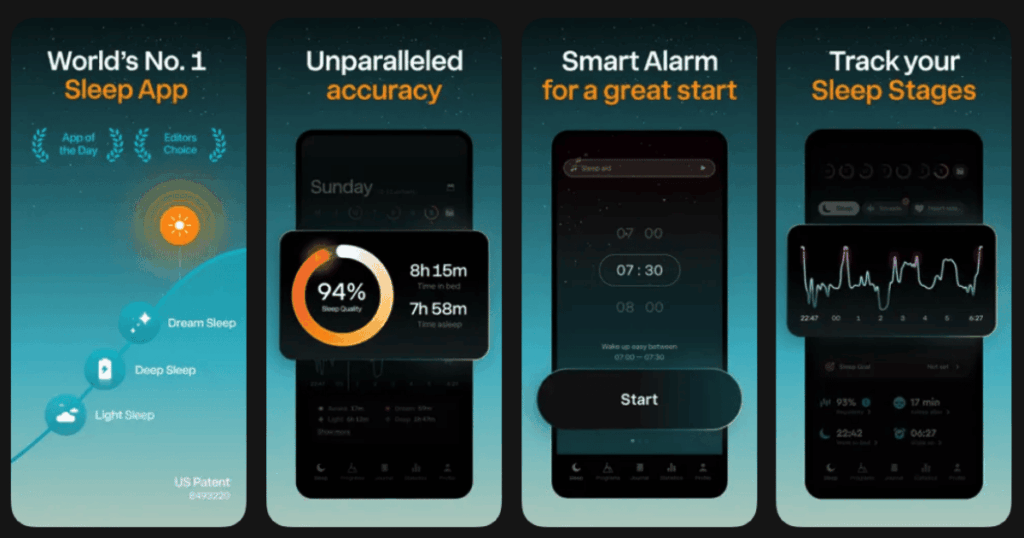
Sleep Cycle has been around for over 15 years. It has tracked more than 3 billion sleep sessions. The app uses sound analysis to monitor your sleep stages without any wearables needed.
The smart alarm is the standout feature here. It wakes you during your lightest sleep phase within a 30 minute window. This helps you wake up feeling refreshed instead of groggy.
The app can detect snoring, sleep talking, and other sounds during the night. This helps you understand what might be disrupting your rest.
Key Features:
- Patented sound technology that tracks sleep stages through movement and breathing
- Smart alarm that gently wakes you during optimal moments in your sleep cycle
- Sleep library with guides, sounds, stories, music, and ASMR content
What I like: The set it and forget it approach works great for me. I just leave my phone on my nightstand and the app does everything. The sleep graphs each morning help me spot patterns. Seeing how my habits affect sleep quality is eye opening. The sound recordings can be funny or concerning depending on what you discover about yourself at night.
What I don’t like: The free version is quite limited now. Many useful features like detailed statistics and sound recordings require premium. Also the app needs time to learn your patterns so do not expect instant results.
Pricing: Free basic version available. Premium subscription offers full features including sounds and detailed analysis.
Platforms: iOS and Android
#5. Timeshifter – Best for Beating Jet Lag with Science
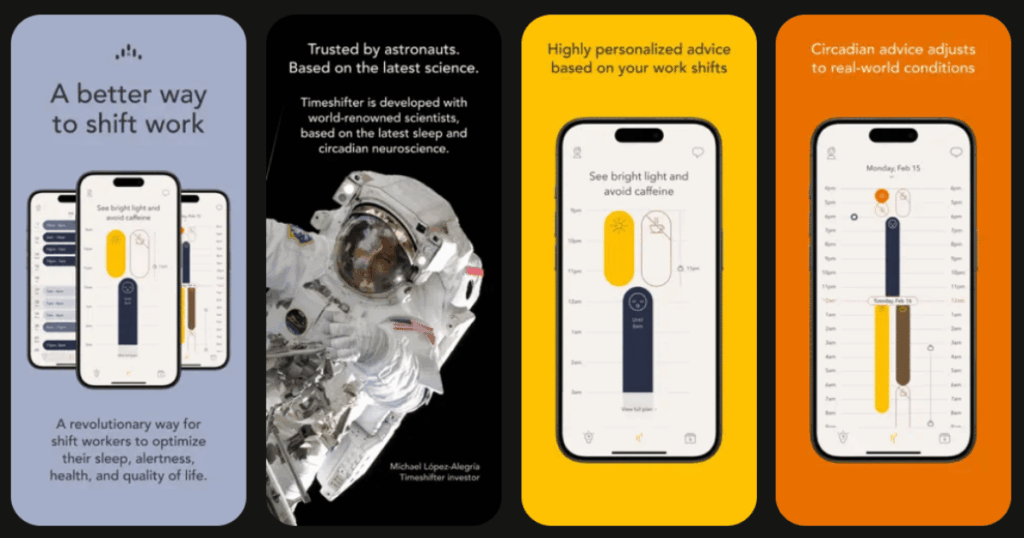
Timeshifter was created with NASA scientists and circadian rhythm experts. It is the most downloaded and highest rated jet lag app worldwide.
The app creates personalized plans based on your sleep pattern, chronotype, itinerary, and preferences. It tells you exactly when to see light, avoid light, take melatonin, sleep, and use caffeine.
This is not guesswork. The science shows you can adapt to new time zones 3 to 4 times faster using proper light timing.
Key Features:
- Personalized jet lag plans for any flight itinerary including multi leg trips
- Guidance on light exposure and avoidance which is the key factor in resetting your clock
- Caffeine and melatonin timing recommendations based on your specific journey
What I like: I was skeptical at first but this app actually works. Following the plan before, during, and after my flight made a huge difference. The explanations of why each step matters helped me understand my body better. Professional athletes and astronauts use this same science which gives me confidence.
What I don’t like: The app cannot account for travel disruptions like delayed flights. If your schedule changes the plan becomes harder to follow. Also the per trip pricing can add up if you travel frequently.
Pricing: Pay per plan model with first trip free. Annual subscription available for frequent travelers.
Platforms: iOS and Android
#6. SleepScore – Best for Contactless Sleep Tracking Accuracy
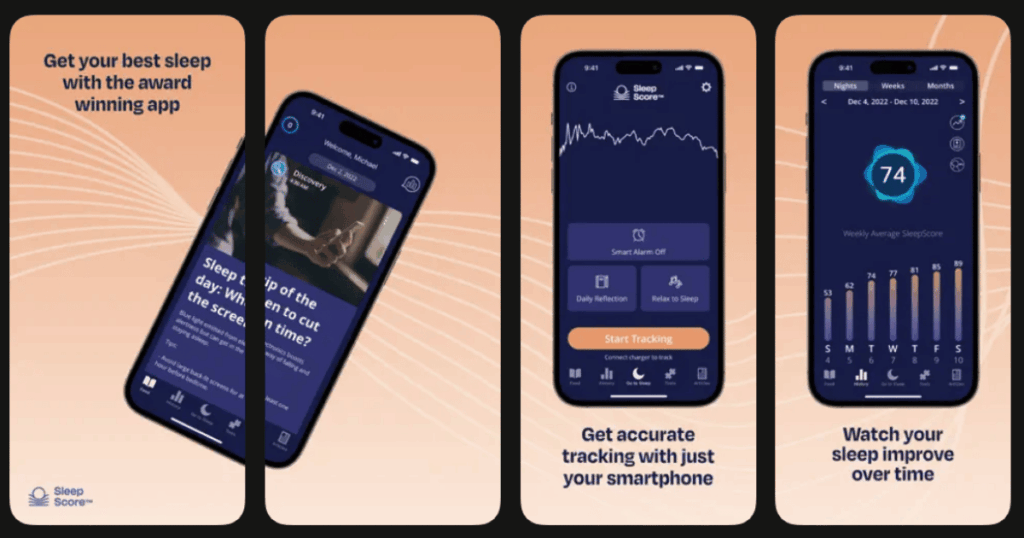
SleepScore uses patented sonar technology to track your sleep from your nightstand. No wearables or devices under your mattress needed.
Your phone’s speaker sends out silent sound waves. The microphone picks up how they bounce off your body. This detects every movement and breath throughout the night.
The technology has been validated in over 12 peer reviewed studies. This makes it one of the most accurate phone based sleep trackers available.
Key Features:
- Detailed breakdown of light, deep, and REM sleep stages plus awakenings
- Smart alarm that wakes you at the ideal time in your sleep cycle
- Comprehensive sleep reports you can download and share with your doctor
What I like: The accuracy is impressive for something that only uses my phone. The weekly challenges helped me build better sleep habits. I like seeing how my sleep compares to others my age. The personalized tips feel relevant to my actual issues rather than generic advice.
What I don’t like: The app can be picky about phone placement. You need to find the right position for accurate tracking. Some Android users report more bugs than iPhone users. The app also does not start tracking automatically.
Pricing: Free to download with basic features. Premium subscription unlocks advanced analysis and full history.
Platforms: iOS and Android
#7. myCircadianClock – Best for Research Backed Time Restricted Eating
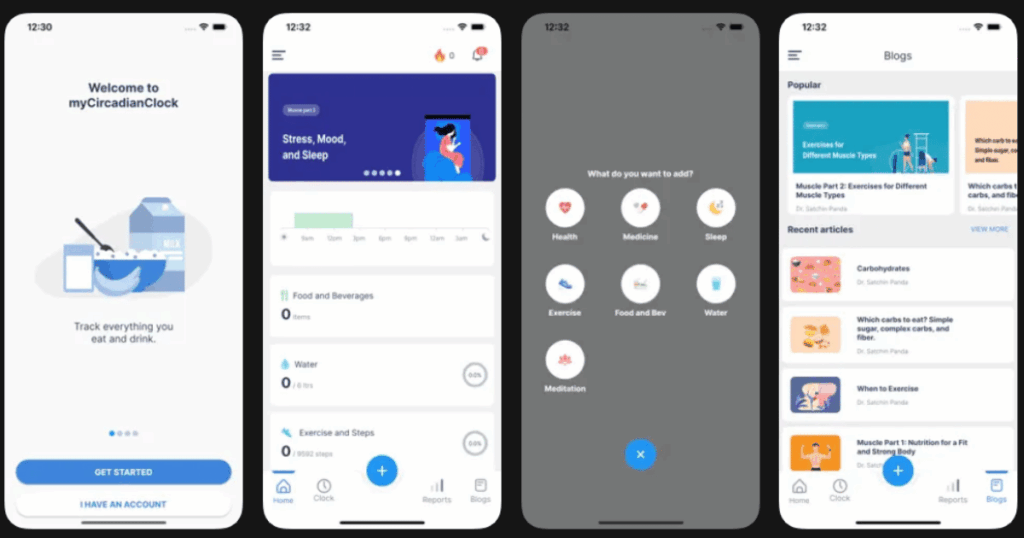
myCircadianClock comes from the Salk Institute, a leading research organization. The app is part of an actual scientific study on how daily habits affect health.
You log everything you eat, drink, and when you take medications. The app tracks your exercise and syncs with Google Fit or Apple Health. It also monitors your sleep patterns.
Based on your data, researchers provide guidance on optimizing your timing. The goal is to align your eating, sleeping, and activity with natural rhythms.
Key Features:
- Food and beverage logging with timestamps to understand eating patterns
- Exercise and step tracking through health app integration
- Sleep time and quality logging to see connections between habits
What I like: Knowing that real scientists use my data for research makes me feel part of something bigger. Users report significant health improvements like lower blood sugar and weight loss. The app helped me see how my eating times were throwing off my whole rhythm. It is completely free which makes it accessible to everyone.
What I don’t like: The interface feels more functional than beautiful. This is a research tool first and lifestyle app second. You also need to manually log everything which takes commitment. There are no relaxation sounds or meditation features.
Pricing: Completely free
Platforms: iOS and Android
#8. Lume – Best for Light Exposure Monitoring
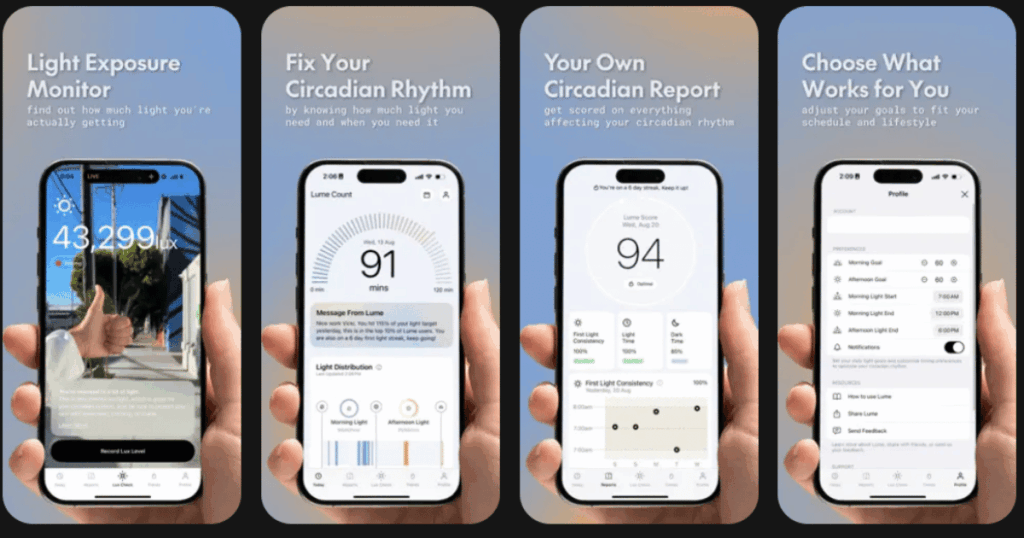
Lume helps you fix your circadian rhythm by tracking how much light you get. The app uses your phone to measure light levels and set personalized goals.
Many sleep problems come from not getting enough bright light during the day. Or getting too much artificial light at night. Lume helps you fix both issues.
The circadian health scoring system shows how well you are doing. Weekly pattern analysis helps you see your progress over time.
Key Features:
- Real time lux tracking that measures the brightness of your environment
- Customizable goals for morning light, afternoon light, and evening darkness
- Night mode recommendations for reducing indoor light before bed
What I like: This app opened my eyes to how little bright light I was actually getting. The recommendations are practical and easy to follow. I love that I can customize the goals to fit my schedule. The science backed approach gives me confidence that the advice is solid.
What I don’t like: The app is relatively new so it may have some bugs to work out. It focuses mainly on light and does not include sleep sounds or other features. You need a newer phone for accurate lux measurements.
Pricing: Free to download with core features. Premium options may be available for advanced tracking.
Platforms: iOS (Android availability may vary)
#9. MyCircadian – Best for Location Based Circadian Optimization
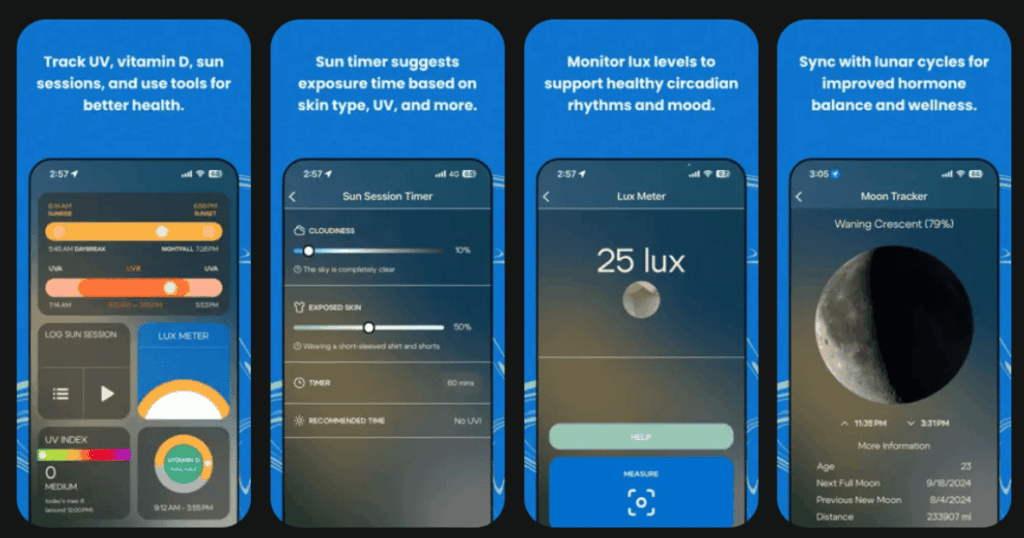
MyCircadian uses your exact location to provide real time feedback based on the sun. The app includes a built in lux meter to check light levels anywhere.
Users love the combination of free educational content and practical tools. The notifications remind you to get sunlight at the right times for your location.
The vitamin D diary feature helps you track UVB exposure during seasons when it is available. This adds a unique health dimension to circadian tracking.
Key Features:
- Location specific solar time data showing exact sunrise, sunset, and UVB windows
- Built in lux meter to measure indoor and outdoor light levels instantly
- Educational content library explaining the science behind circadian health
What I like: The real time location feedback makes this app feel personalized to where I actually live. The lux meter is super handy for checking if my workspace has enough light. The notifications at key solar times help me stay on track without constant app checking. Users report paying more attention to their light environment after using this app.
What I don’t like: Some users mention the app can feel overwhelming with all the information at first. The focus is heavily on light and may not help with other sleep issues. The interface could be more intuitive for new users.
Pricing: Free with some premium features available.
Platforms: Android (iOS availability may vary)
What Is Circadian Rhythm and Why Does It Matter?
Your circadian rhythm is your body’s internal 24 hour clock. It controls when you feel sleepy and when you feel alert. But it does much more than that. It also regulates your hormones, body temperature, metabolism, and immune function.
Light is the most powerful signal for setting your circadian clock. When light enters your eyes in the morning, it tells your brain it is time to wake up. When darkness comes, your brain starts producing melatonin to prepare for sleep.
Modern life often disrupts this natural cycle. We stare at bright screens at night. We spend all day indoors under dim artificial lights. This confuses our internal clock and leads to poor sleep, low energy, and health problems over time.
How Do Circadian Rhythm Apps Help You Sleep Better?
Circadian rhythm apps work by helping you align your daily activities with your natural body clock. They remind you when to get sunlight, when to avoid bright light, and when to go to bed.
Some apps track your sleep patterns to show you where problems exist. Others provide sounds and meditations to help you relax. The best apps combine education with practical tools so you understand why timing matters.
Using these apps consistently can lead to better sleep, more energy during the day, and improved overall health. The key is finding an app that fits your lifestyle and sticking with it long enough to see results.
Can You Really Fix Your Sleep Schedule with an App?
Yes, apps can genuinely help you fix your sleep schedule. However, they work best when you actually follow the recommendations. An app cannot force you to go to bed earlier or get morning sunlight. It can only guide and remind you.
The most effective approach combines an app with good sleep habits. This means keeping a consistent bedtime, limiting screen use at night, and getting bright light in the morning. Apps make this easier by tracking your progress and sending reminders.
For serious sleep disorders, apps are helpful but may not be enough. If you struggle with insomnia or other chronic issues, talk to a doctor. Some apps like SleepScore even let you download reports to share with healthcare providers.