9 Best DBT Apps For Your Phone
| App Name | Best For | Key Features | AC Rating | Pricing |
|---|---|---|---|---|
| Life7 | Complete Mental Wellness | CBT and DBT tools, breathing exercises, SOS sessions, sleep sounds, mood tracking | 4.8/5 | Free trial, subscription plans |
| DBT Coach | Comprehensive DBT Learning | 100+ video lessons, diary card, therapist sharing | 4.6/5 | Subscription based |
| DBT Diary Card & Skills Coach | Traditional DBT Tracking | Skills reference, emotion tracking, PDF export | 4.4/5 | One time purchase |
| DBT Travel Guide | Free DBT Resources | 200+ skills exercises, crisis section, digital diary card | 3.9/5 | Free |
| Calm Harm | Managing Self Harm Urges | DBT based activities, breathing techniques, journaling | 4.5/5 | Free |
| Woebot | AI Powered Support | CBT and DBT techniques, daily check ins, mood tracking | 4.3/5 | Free with access code |
| Wysa | Chatbot Therapy | CBT and DBT exercises, AI conversations, human coaching option | 4.7/5 | Free basic, subscription for premium |
| Youper | AI Emotional Health | CBT, ACT, and DBT tools, mood insights, personalized exercises | 4.6/5 | Free trial, annual subscription |
| DBT Mind | Crisis Support Tools | Audio exercises, crisis hub, mood journal, PDF reports | 4.2/5 | Subscription based |
#1. Life7 – Best for Complete Mental Wellness
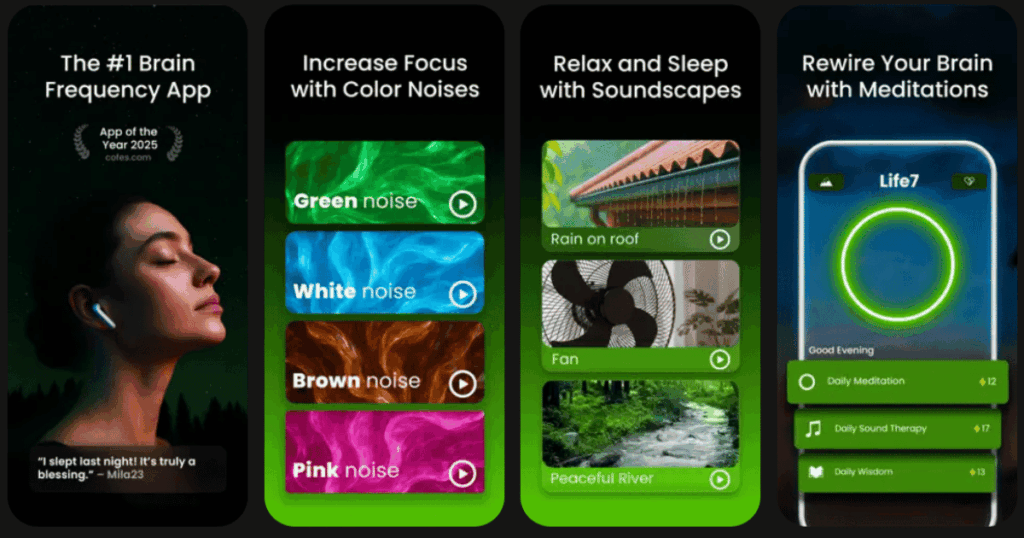
Life7 is the app I recommend most for anyone wanting DBT support. It goes way beyond basic therapy tools. This app gives you everything you need for your mental health journey in one place.
What makes Life7 stand out is how it blends different healing methods together. You get CBT and DBT tools alongside calming sounds and guided meditations. The app has over 312 million meditation minutes logged by users worldwide. That tells me people really love using it!
I think the SOS sessions are super helpful when anxiety hits hard. You also get breathing exercises, affirmations, and even hypnotherapy. The app tracks your mood and lets you see your progress over time.
Key Features:
- SOS sessions for panic attacks and anxiety with CBT and DBT techniques
- Vagus nerve stimulation and nervous system reset tools
- Daily check ins including meditation, music therapy, and wisdom sessions
What I like: I really appreciate how Life7 makes mental wellness feel like a game. You earn XP for completing sessions and unlock new content as you go. The backdrop mode is genius because you can mix soundscapes with meditations or sleep stories. The variety of sounds is incredible too. Green noise, white noise, binaural beats, and solfeggio frequencies are all included. It feels like having a complete wellness center in my pocket.
What I don’t like: The free version is a bit limited. You need to subscribe to get the full experience. This might be frustrating if you want to try everything before committing to a plan.
Pricing: 7 day free trial available. Weekly, monthly, and yearly subscription plans offered. Special offers pop up frequently.
Platforms: iOS and Android
#2. DBT Coach – Best for Comprehensive DBT Learning
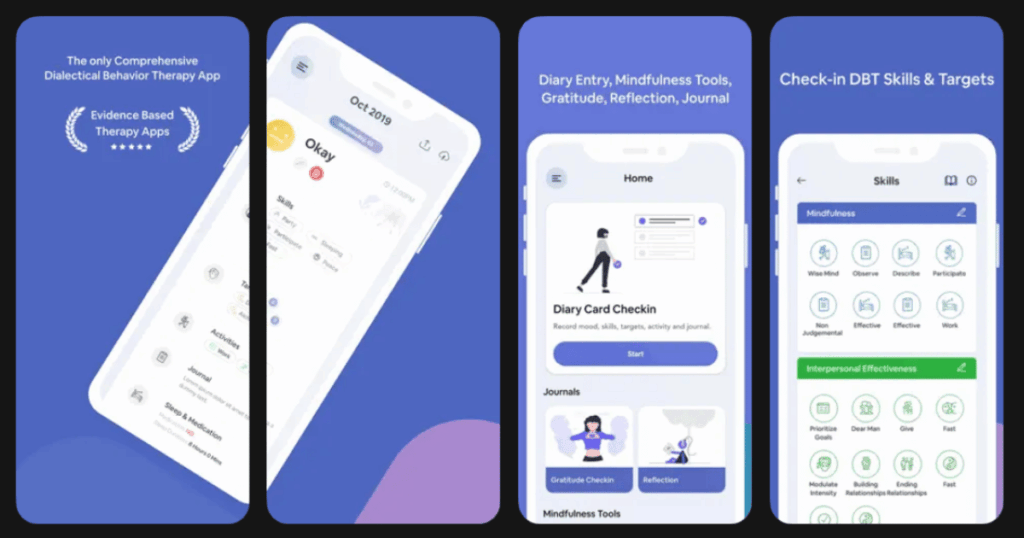
DBT Coach is made specifically for people who want to learn DBT the right way. It has over 100 video lessons and 200 animations that teach you skills step by step. The app is designed for people with borderline personality disorder, anxiety, or depression.
The diary card feature lets you track your skills and behaviors daily. You can share your progress with your therapist directly through the app. This makes it easy to stay connected with your care team.
Key Features:
- Over 100 video lessons with fun animations to help you remember skills
- Built in diary card that syncs with therapist portal
- Community discussion groups and peer support options
What I like: The visual approach makes learning DBT so much easier. The animations really help things stick in my brain. I also love that you can earn awards for completing tasks. The 1000+ meditations from different teachers give you plenty of options. The crisis survival list is a lifesaver during tough moments.
What I don’t like: Some users report issues with registration and login codes not working. The subscription cost can add up over time, and you need to pay to access most features after the trial.
Pricing: 3 day free trial. Monthly or six month subscription options available.
Platforms: iOS and Android
#3. DBT Diary Card & Skills Coach – Best for Traditional DBT Tracking

This app was created by a licensed psychologist who trained directly with Dr. Marsha Linehan. That is the person who invented DBT! The app follows the traditional DBT program exactly.
I love that you can fill in your diary card from anywhere on your phone. No more keeping track of paper forms. You can also send your diary card directly to your DBT coach via email.
Key Features:
- Every DBT skill explained in readable language
- Password protection to keep your entries private
- Graph your data over time and export to PDF
What I like: The customization options are fantastic. You can tailor the app to track exactly what you are working on. The skills reference section has everything from your DBT binder in one place. Being able to journal and track emotions all in one spot saves so much time.
What I don’t like: Some users on newer iPhone models have had display issues with notes going off screen. The interface looks a bit dated compared to newer apps.
Pricing: One time purchase fee.
Platforms: iOS only
#4. DBT Travel Guide – Best for Free DBT Resources
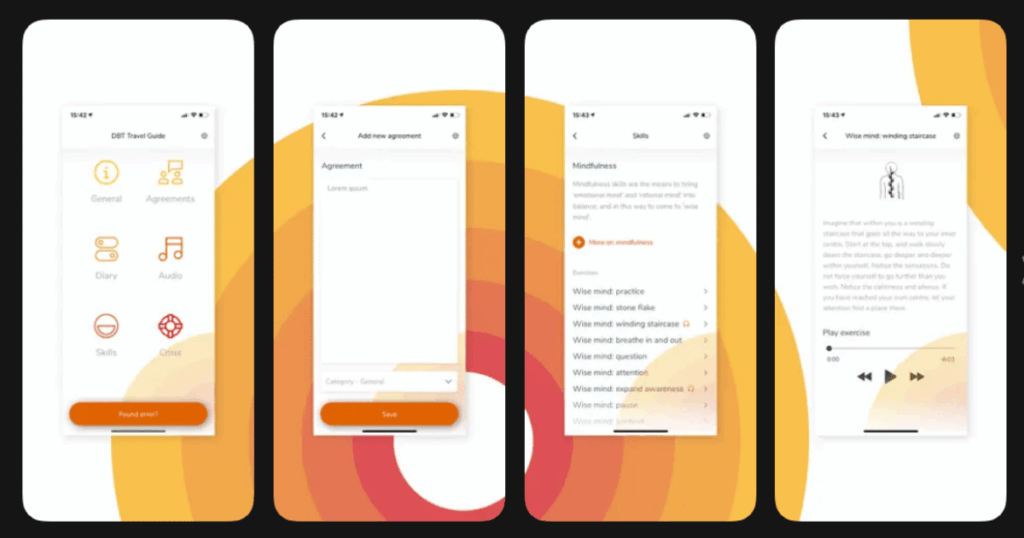
If you want a solid DBT app without spending money, this is your best bet. The DBT Travel Guide has over 200 different skills and mindfulness exercises. Everything is completely free with no paywalls.
The app was made for people following a DBT program or wanting to start one. It gives you crisis support when you need it most. Therapists can even use it with their clients.
Key Features:
- 200+ skills and mindfulness exercises all free
- Crisis section with immediate support options
- Digital diary card you can customize with extra fields
What I like: I appreciate that nothing is hidden behind a subscription. The guided meditations are helpful and the app suggests exercises based on your mood. It is a great reference guide for reviewing skills you learned in therapy.
What I don’t like: The app could be more interactive. Some information feels a bit outdated and the layout is not as intuitive as it used to be. Finding certain features requires digging through settings.
Pricing: Completely free.
Platforms: Android primarily, limited iOS availability
#5. Calm Harm – Best for Managing Self Harm Urges

Calm Harm was created specifically to help people resist urges to hurt themselves. It uses DBT principles to guide you through difficult moments. Over 2 million people have used this app to find healthier coping strategies.
The app has activities sorted into categories like Comfort, Distract, Express Yourself, and Release. Each activity lasts 5 to 15 minutes and can be extended if needed.
Key Features:
- DBT based activities to interrupt self harm urges
- Breathing techniques and grounding exercises
- Journaling feature to track progress and identify triggers
What I like: The privacy features are excellent. Your data stays completely anonymous and secure. The app works offline without wifi which is important during crisis moments. It meets NHS standards for clinical safety which gives me confidence in the content.
What I don’t like: The app is quite focused on one specific issue. If you need help with other aspects of DBT like interpersonal skills or emotion regulation, you will need additional resources.
Pricing: Free.
Platforms: iOS and Android
#6. Woebot – Best for AI Powered Support

Woebot is a friendly chatbot that uses CBT, DBT, and mindfulness techniques. It checks in with you every day and guides you through practical exercises. Over 1.5 million people have talked to Woebot about their struggles.
The app was featured on 60 Minutes and won multiple mental health awards. Everything Woebot says is written by trained conversational designers and clinical experts.
Key Features:
- Daily check ins with AI chatbot using CBT and DBT concepts
- Mood tracking and progress reflection tools
- Gratitude journaling and mindfulness practice
What I like: Woebot feels like chatting with a supportive friend who is always available. The conversations are warm and never judgmental. I appreciate that the app is backed by real research with 18 clinical trials conducted. The structured approach helps build actual skills over time.
What I don’t like: You need an access code from a provider or employer to use the app now. This limits who can actually download and use it freely.
Pricing: Free with access code from provider, employer, or partner organization.
Platforms: iOS and Android
#7. Wysa – Best for Chatbot Therapy

Wysa is an AI penguin that provides 24/7 mental health support. The app uses CBT, DBT, and meditation techniques to help with stress, anxiety, and sleep issues. Over 5 million people from 30 countries trust Wysa.
What makes Wysa special is the option to add human coaching. You can chat with the AI anytime, then book sessions with real therapists for extra support.
Key Features:
- AI chatbot with CBT and DBT techniques plus 40+ coaching tools
- Optional sessions with licensed mental health professionals
- 20+ mindfulness meditation exercises
What I like: The penguin mascot is adorable and makes the app feel less clinical. I love having both AI and human support options in one place. The app addresses so many topics from anger management to sleep problems to relationship conflict. The anonymous nature helps reduce stigma around seeking help.
What I don’t like: The AI conversations can sometimes feel repetitive or miss the point of what you are trying to say. Premium features and human coaching cost extra money.
Pricing: Free basic features. Premium subscription around $75 per year. Human coaching sessions cost additional fees.
Platforms: iOS and Android
#8. Youper – Best for AI Emotional Health

Youper combines CBT, DBT, ACT, and mindfulness in one smart app. A psychiatrist helped create it, and Stanford University research shows it works. The AI chatbot feels like talking to a therapist who really gets you.
The app creates a personalized strategy based on your moods and needs. It challenges your thoughts and points out negative thinking patterns.
Key Features:
- AI chatbot using CBT, DBT, ACT, and mindfulness techniques
- Mood tracking with insights about emotional patterns
- Mental health assessments for anxiety and depression symptoms
What I like: The personalized approach makes every conversation feel tailored to me. I appreciate how the app identifies thinking traps and helps reframe negative thoughts. The journal feature lets you organize your thoughts privately. Having clinically validated assessments built in is really useful.
What I don’t like: The app mentions possible diagnoses which could be confusing without a real professional to consult. Full features require a paid subscription after the trial ends.
Pricing: 7 day free trial. Annual subscription around $70.
Platforms: iOS and Android
#9. DBT Mind – Best for Crisis Support Tools

DBT Mind is a newer app focused on helping you build mental health skills. It has guided audio exercises for grounding and stress relief. The all in one crisis hub is perfect for difficult moments.
You can add your own skills and practices to customize the experience. The mood journal helps you track emotions and notice patterns over time.
Key Features:
- Guided audio practices for grounding and emotional balance
- Crisis hub with thermometer, step by step plans, and emergency skills
- PDF export to share with your therapist
What I like: The calming design makes the app pleasant to use. Having everything crisis related in one hub reduces panic when you need help fast. The AI chat provides instant support when human help is not available. Privacy is prioritized with encrypted data.
What I don’t like: The app can be glitchy with freezing and logging out issues. Some users report trouble adding favorites. Being newer means less user feedback on long term effectiveness.
Pricing: Subscription based.
Platforms: iOS and Android
What is DBT and Why Use an App?
DBT stands for Dialectical Behavior Therapy. It was created to help people manage intense emotions and improve relationships. The therapy teaches four main skill areas. These are mindfulness, distress tolerance, emotion regulation, and interpersonal effectiveness.
Apps make DBT skills more accessible between therapy sessions. You can practice skills anytime without carrying around a workbook. Many apps also track your progress so you can see how far you have come.
Are DBT Apps a Replacement for Therapy?
No, DBT apps are not meant to replace real therapy. They work best as a companion to working with a trained therapist. The apps help you practice skills and track your diary card between sessions.
If you are dealing with serious mental health challenges, please reach out to a professional. These apps are tools to support your journey, not a substitute for proper care.
How Do I Choose the Right DBT App?
Think about what you need most. If you want complete wellness tools, Life7 is my top recommendation. For learning DBT from scratch, DBT Coach has the best educational content. If budget is tight, DBT Travel Guide offers solid free resources.
Try a few apps to see what feels right for you. Most offer free trials so you can test them out. The best app is the one you will actually use consistently!