9 Best Free Mental Health Apps For Your Phone
| App Name | Best For | Key Features | AC Rating | Pricing |
|---|---|---|---|---|
| Life7 | All in one mental wellness | Binaural beats, CBT tools, sleep stories, breathing exercises | 4.8/5 | Free trial, then subscription plans available |
| Calm | Sleep and relaxation | Sleep stories, guided meditations, breathing exercises | 4.7/5 | Limited free version, premium subscription available |
| Headspace | Beginners learning meditation | Progressive courses, mindfulness exercises, sleep content | 4.6/5 | Limited free version, premium subscription available |
| Wysa | AI powered emotional support | CBT chatbot, mood tracking, journaling | 4.5/5 | Limited free version, premium subscription available |
| Finch | Gamified self care habits | Virtual pet, habit tracking, mood journaling | 4.6/5 | Generous free version, premium subscription available |
| Happify | Boosting happiness and positivity | Science based games, activities, mood boosting tracks | 4.4/5 | Limited free version, premium subscription available |
| Bearable | Mood and symptom tracking | Detailed logging, customizable tracking, reports | 4.5/5 | Free version available, premium subscription available |
| What’s Up | CBT and ACT techniques | Thought diary, grounding exercises, coping strategies | 4.3/5 | Completely free |
| MindShift CBT | Managing anxiety | CBT exercises, mindfulness tools, thought journals | 4.4/5 | Completely free |
#1. Life7 – Best for All in One Mental Wellness
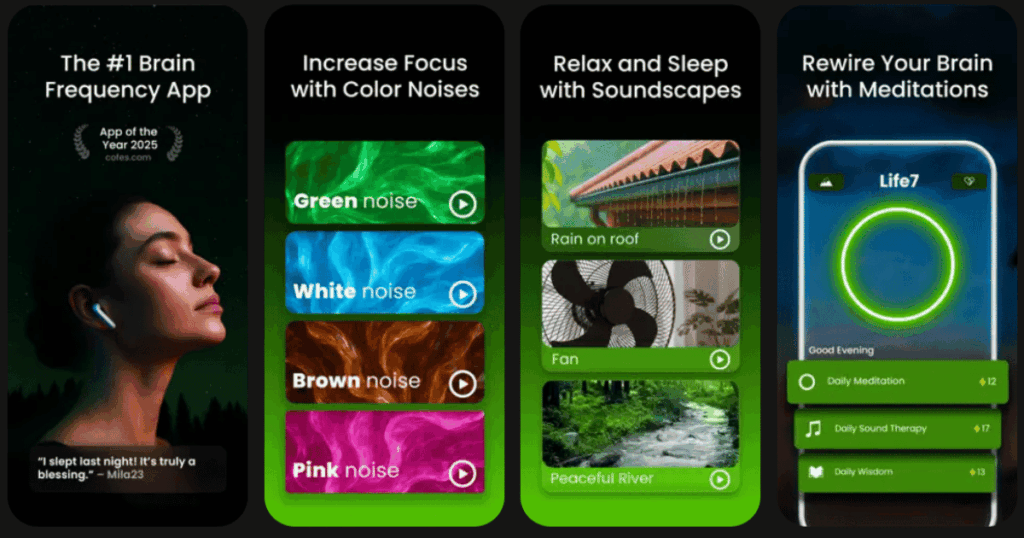
Life7 is a complete mental wellness app that covers everything from meditation to sleep to anxiety relief. I think of it as having a personal wellness coach in my pocket. With over 312 million meditation minutes logged and 1200+ editorial mentions, this app has proven itself.
The app offers an impressive range of tools. You get binaural beats, solfeggio frequencies, and various sound therapies. There are also CBT exercises, hypnotherapy sessions, and breathing techniques. For sleep, you can enjoy bedtime stories for adults and kids.
What makes Life7 special is its daily content. Every day brings new meditation sessions, music therapy, and wisdom content. The gamified approach keeps you motivated with XP points and streaks.
Key Features:
- SOS sessions for panic attacks and anxiety emergencies along with vagus nerve stimulation
- Complete sound library including green, white, brown, and pink noise plus brain wave music
- Daily new content including meditation, music therapy, and wisdom sessions with progress tracking
What I like: I really appreciate how Life7 combines so many different wellness approaches in one place. The brain frequency options are something I have not seen in many other apps. The backdrop mode lets me mix soundscapes with meditations which creates a personalized experience. The daily check ins help me stay consistent and the streak feature keeps me coming back.
What I don’t like: The free content is a bit limited compared to what you get with a subscription. You will want to upgrade pretty quickly to access the full library.
Pricing: 7 day free trial available. Weekly, monthly, and yearly subscription plans offered with frequent special offers.
Platforms: iOS and Android
#2. Calm – Best for Sleep and Relaxation
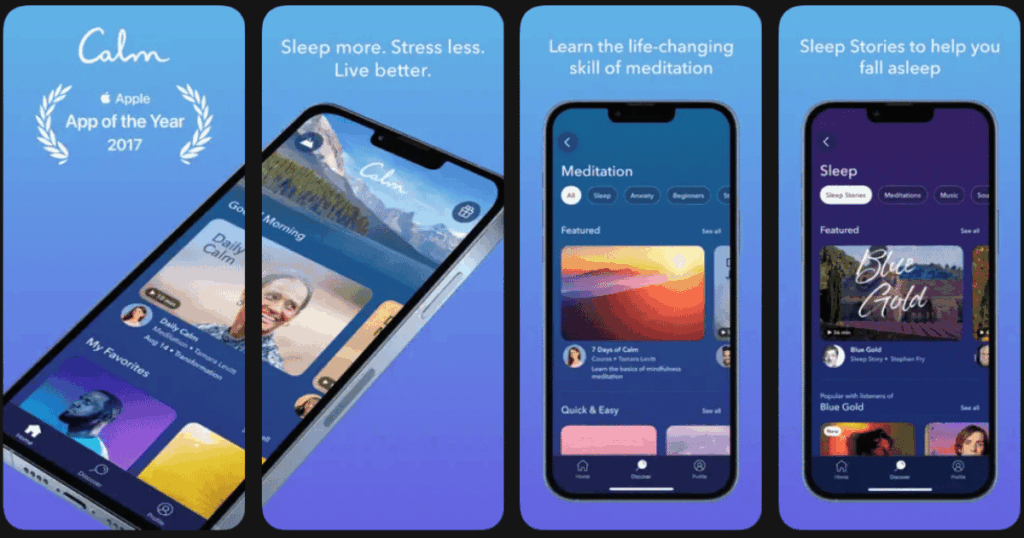
Calm has become one of the most popular meditation apps in the world. It focuses heavily on helping you sleep better and feel more relaxed throughout your day. The app has a beautiful interface that immediately makes you feel peaceful.
The sleep stories feature is what made Calm famous. Celebrities like Matthew McConaughey narrate bedtime tales that help you drift off naturally. The app also offers guided meditations for different situations.
Daily Calm is a 10 minute meditation that gives you a fresh start each morning. The breathing exercises help when you need quick stress relief.
Key Features:
- Over 500 sleep stories with new ones added weekly narrated by well known voices
- Daily Calm sessions and guided meditations for anxiety, stress, and focus
- Panic SOS feature with breathing bubble for immediate stress relief
What I like: The sleep stories are genuinely helpful for falling asleep. I love that new content gets added regularly so it never feels stale. The breathing bubble feature has saved me during some anxious moments. The variety of meditation options means there is something for every mood.
What I don’t like: Most of the best content sits behind the paywall. The free version gives you a taste but you will want premium pretty quickly.
Pricing: Limited free version available. Premium subscription with monthly and annual options. Student and family discounts offered.
Platforms: iOS, Android, and Web
#3. Headspace – Best for Beginners Learning Meditation
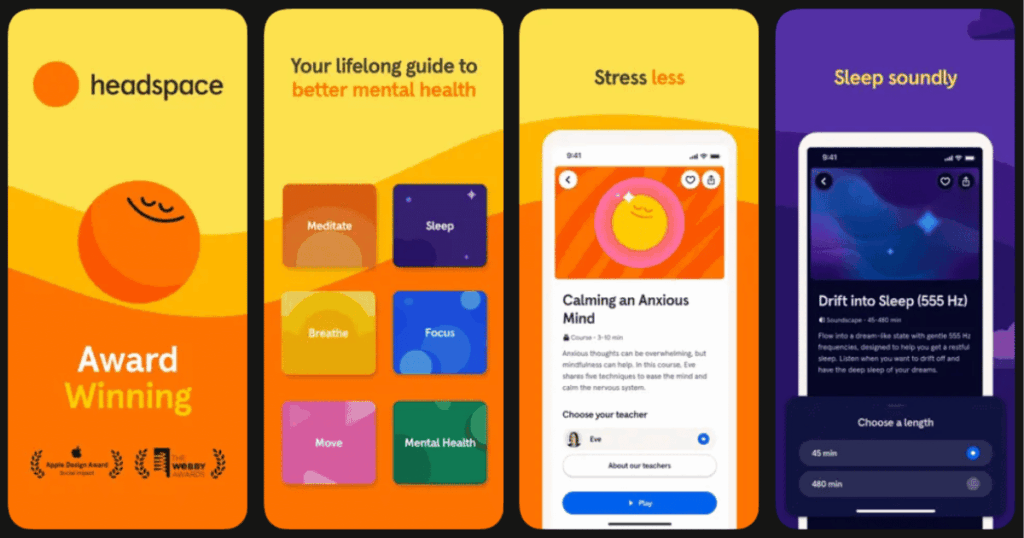
Headspace makes meditation feel approachable and even fun. The app uses cute animations and clear instructions that take the intimidation out of mindfulness practice. It was created by a former Buddhist monk who knows how to explain meditation simply.
The courses build on each other gradually. You start with basics and move to more advanced techniques over time. This progressive approach helps you build real skills.
The app also includes content for kids as young as three years old. This makes it great for families who want to practice mindfulness together.
Key Features:
- Progressive meditation courses that build skills from beginner to advanced levels
- Content library covering stress, anxiety, sleep, focus, and relationships
- Special sections for kids and teens plus mindful movement videos
What I like: The animated videos explaining meditation concepts are brilliant. They help you understand why you are doing each exercise. The Wake Up feature with daily inspiration videos sets a positive tone for my mornings. I appreciate that courses build on each other instead of jumping around randomly.
What I don’t like: Like many apps, the free content is limited. You can try the basics course but most features require a subscription.
Pricing: Limited free version with basic courses. Premium subscription available monthly or annually. Discounts for students and families.
Platforms: iOS, Android, and Web
#4. Wysa – Best for AI Powered Emotional Support

Wysa stands out because it offers 24/7 support through an AI chatbot. The friendly penguin character listens without judgment and guides you through evidence based techniques. When you need to talk at 3 AM, Wysa is there.
The app uses CBT, DBT, and other proven therapeutic approaches. It helps you identify negative thought patterns and teaches coping strategies. You can also connect with human coaches if you need more support.
Privacy is a big focus here. You can stay completely anonymous while using the app.
Key Features:
- AI chatbot available around the clock using CBT and DBT techniques
- Over 150 therapeutic exercises covering anxiety, stress, sleep, and more
- Option to connect with human mental health coaches for deeper support
What I like: Having someone (even an AI) to talk to at any hour is incredibly valuable. The penguin character feels caring without being cheesy. The variety of exercises means you can find what works for your specific struggles. The anonymous option removes barriers to being honest.
What I don’t like: The chatbot sometimes misunderstands what you mean. It can feel a bit limiting when you want a real conversation.
Pricing: Free version with AI chatbot and basic tools. Premium subscription for full exercise library. Coaching sessions available at additional cost.
Platforms: iOS and Android
#5. Finch – Best for Gamified Self Care Habits
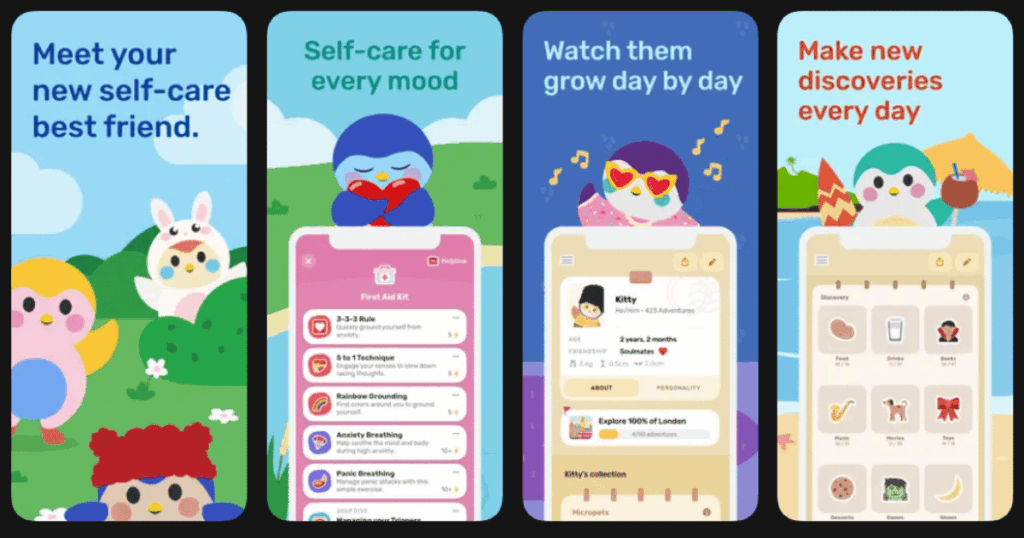
Finch turns self care into a game by giving you a virtual pet bird to raise. When you complete self care tasks like drinking water or stretching, your bird grows and thrives. It sounds silly but it really works.
The app encourages small daily habits rather than overwhelming routines. Your Finch goes on adventures and brings back discoveries based on your progress. You earn coins to buy clothes and accessories for your bird.
The social feature lets you connect with friends. You can send supportive vibes without needing to chat or compete.
Key Features:
- Virtual pet that grows based on your self care habits and daily task completion
- Mood tracking and journaling with insights about your emotional patterns
- Breathing exercises, grounding techniques, and crisis resources when needed
What I like: The gamification actually makes me want to do self care tasks. Watching my bird grow feels rewarding in a simple but meaningful way. The app does not make me feel guilty for missing days. The friend feature creates connection without pressure which is refreshing.
What I don’t like: The onboarding could be clearer about all the features available. Some important tools get buried and are easy to miss.
Pricing: Generous free version with many features. Finch Plus subscription available yearly for additional content.
Platforms: iOS and Android
#6. Happify – Best for Boosting Happiness and Positivity

Happify takes a science based approach to increasing your happiness levels. The app uses techniques from positive psychology, CBT, and mindfulness research. Instead of just meditations, you get games and activities.
The tracks guide you toward specific goals like managing stress or building confidence. An AI coach named Anna helps keep you on track. You can also connect with a community of other users.
The activities feel less like homework and more like fun exercises. This makes it easier to stick with the practice long term.
Key Features:
- Science based games and activities developed with therapists and researchers
- Structured tracks for specific goals like reducing stress and building confidence
- Community features and AI coach to keep you motivated and accountable
What I like: The games make mental health work feel less heavy. I appreciate that real experts designed the activities. The community feature helps you feel less alone. Seeing progress over time through the tracking features is motivating.
What I don’t like: Some of the games feel repetitive after a while. The free version is quite limited in what you can access.
Pricing: Free version with basic access. Happify Plus subscription available monthly or annually.
Platforms: iOS, Android, and Web
#7. Bearable – Best for Mood and Symptom Tracking
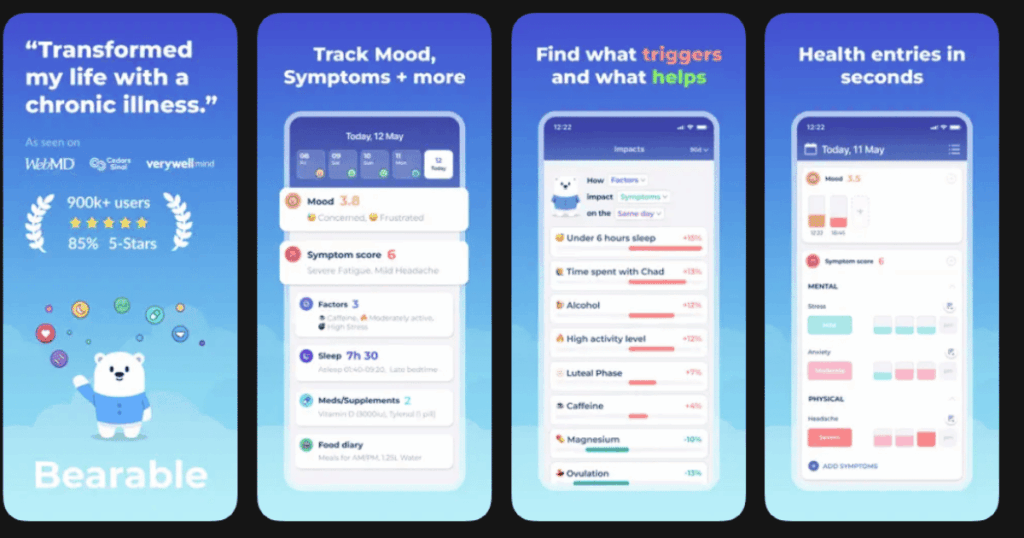
Bearable is perfect if you want to understand what affects your mental health. The app lets you track moods, symptoms, medications, and other factors in detail. Over time, you can spot patterns you might have missed.
The customization options are impressive. You can track whatever matters to you, from sleep quality to caffeine intake. Reports help you share insights with therapists or doctors.
The app takes a data driven approach to mental health. It helps you connect the dots between your habits and how you feel.
Key Features:
- Highly customizable tracking for moods, symptoms, medications, and lifestyle factors
- Detailed reports and visualizations showing patterns and correlations
- Ability to export data and share insights with healthcare providers
What I like: The level of detail you can track is incredible. I discovered connections between my sleep and anxiety that I had never noticed before. The reports make therapy sessions more productive. Being able to customize what you track means the app fits your unique needs.
What I don’t like: All the tracking options can feel overwhelming at first. It takes commitment to log consistently.
Pricing: Free version includes essential tracking features. Premium subscription available annually for advanced analysis.
Platforms: iOS and Android
#8. What’s Up – Best for CBT and ACT Techniques

What’s Up is a completely free app that combines CBT and ACT principles. It helps you cope with depression, anxiety, anger, and stress through proven techniques. No subscription required which makes it accessible to everyone.
The Thinking Patterns section teaches you to identify negative thought habits. The Get Grounded feature provides exercises when you feel overwhelmed. A thought diary helps you track and challenge unhelpful thinking.
The app includes educational content about different mental health topics. You can learn while you practice new skills.
Key Features:
- Completely free access to CBT and ACT based tools and exercises
- Thought diary for tracking and challenging negative thinking patterns
- Grounding exercises and coping strategies for moments of crisis
What I like: Being totally free with no premium upsells is amazing. The content is genuinely helpful and based on real therapeutic techniques. The grounding exercises have helped me during panic moments. The simple design makes it easy to find what you need.
What I don’t like: The interface looks a bit dated compared to newer apps. Some features could use more depth and variety.
Pricing: Completely free
Platforms: iOS and Android
#9. MindShift CBT – Best for Managing Anxiety
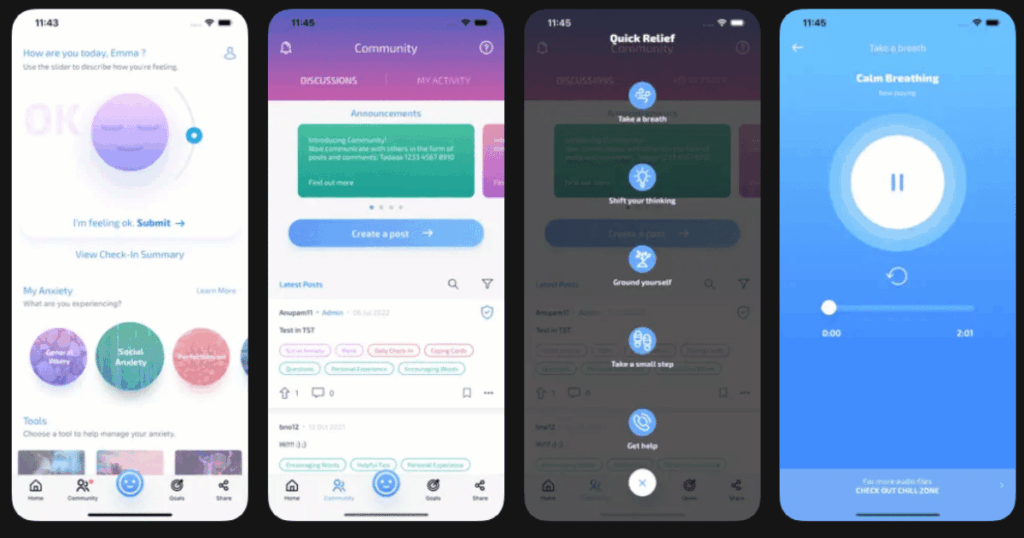
MindShift CBT was developed by Anxiety Canada specifically for anxiety management. It uses evidence based CBT techniques to help you change how you think about fear and worry. The app is completely free.
You can track your anxiety levels and identify triggers over time. Mindfulness exercises help calm your nervous system. The chill zone offers quick tools for anxious moments.
The app includes thought journals to challenge anxious thinking. Community features let you connect with others managing similar struggles.
Key Features:
- Evidence based CBT tools specifically designed for anxiety disorders
- Anxiety tracking to identify patterns, triggers, and progress over time
- Chill zone with quick calming exercises and belief experiments
What I like: Having an app designed specifically for anxiety makes it feel targeted and effective. The free access removes financial barriers to getting help. The belief experiments help you test whether your anxious thoughts are accurate. The tracking shows real progress over time.
What I don’t like: The focus on anxiety means it might not help with other mental health concerns. The design could be more engaging.
Pricing: Completely free
Platforms: iOS and Android
Do Mental Health Apps Actually Work?
Research shows mental health apps can be genuinely helpful. Studies have found that apps using CBT, ACT, and meditation techniques can reduce symptoms of depression, anxiety, and stress. They work best as a supplement to professional care rather than a replacement.
Apps provide accessible support between therapy sessions. They help you practice skills and track your progress. For mild to moderate symptoms, they can make a real difference in daily life.
The key is finding an app that matches your needs and actually using it consistently.
Are Free Mental Health Apps Safe to Use?
Most reputable mental health apps take privacy seriously. However, not all apps follow the same standards. Before downloading any app, check its privacy policy to understand how your data gets used.
Look for apps that offer anonymous use options if privacy concerns you. Avoid apps that require excessive personal information upfront. Reading reviews can help you identify any red flags.
Remember that free apps often make money through data or advertising. Understanding this trade off helps you make informed choices.
Which Mental Health App Should I Choose?
Start by identifying your main goal. Do you want better sleep, less anxiety, or help building healthy habits? Different apps excel at different things.
Consider how you prefer to engage. Some people love gamification while others want straightforward tools. Try a few free versions before committing to any subscription.
For comprehensive wellness support covering meditation, sleep, anxiety, and more, Life7 offers the most complete package. It brings together tools that would otherwise require multiple apps.