9 Best Gamified Mental Health Apps For Your Phone
| App Name | Best For | Key Features | AC Rating | Pricing |
|---|---|---|---|---|
| Life7 | All in one mental wellness | Gamified XP system, binaural beats, CBT tools, sleep stories | 4.8/5 | Free trial, then subscription plans |
| SuperBetter | Building resilience through quests | Quests and power ups, ally system, scientific backing | 4.5/5 | Free with premium option |
| Finch | Gamified self care with virtual pet | Virtual pet care, habit tracking, mood check ins | 4.7/5 | Free with premium option |
| Happify | Science based positive psychology | CBT games and activities, progress tracks, happiness stats | 4.3/5 | Free with premium subscription |
| Woebot | AI powered CBT support | AI chatbot therapy, mood tracking, daily check ins | 4.4/5 | Free with premium features |
| Daylio | Customizable mood tracking | One tap mood logging, achievement badges, visual stats | 4.6/5 | Free with premium option |
| Wysa | AI driven emotional support | AI penguin coach, CBT techniques, anonymous support | 4.5/5 | Free with premium subscription |
| Betwixt | Story driven mental health gaming | Text based adventure, self discovery journey, interactive fiction | 4.4/5 | Free with premium content |
| Headspace | Meditation with gamified progress | Streak tracking, animated lessons, progress milestones | 4.6/5 | Free trial, then subscription |
#1. Life7 – Best for All in One Mental Wellness
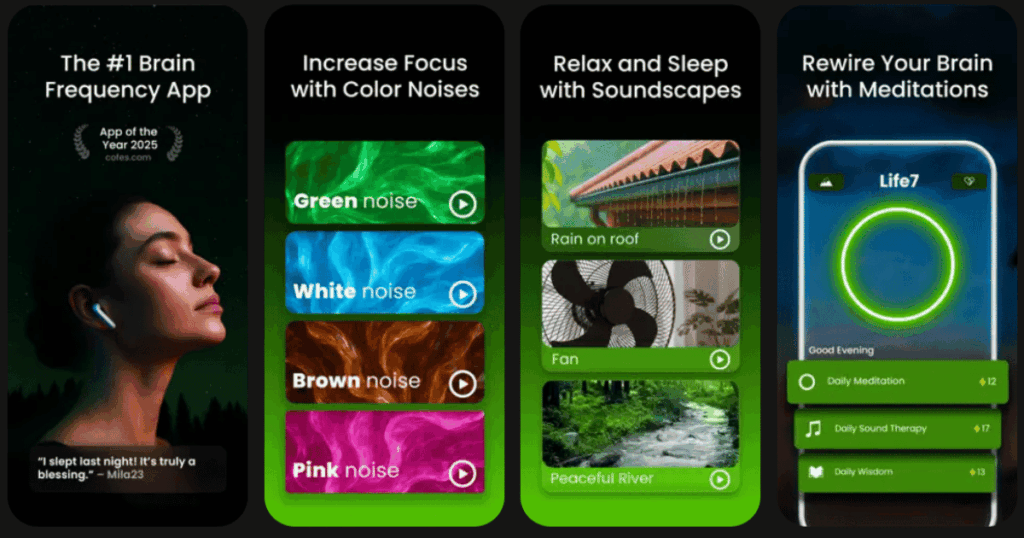
Life7 stands out as the ultimate gamified mental health app that combines everything you need in one place. This app takes your wellness journey seriously while making it fun and engaging.
The app offers an impressive library of over 312 million meditation minutes served to users worldwide. It has received over 1,200 editorial mentions from major publications. You get access to binaural beats, solfeggio frequencies, and brain wave music designed to shift your mental state.
What makes Life7 special is its gamified approach to wellness. You earn XP points and unlock premium soundscapes as you complete mindfulness sessions. This reward system keeps you motivated to build healthy habits every single day.
Key Features:
- Gamified XP system that rewards daily meditation and mindfulness sessions to unlock premium content
- Complete sound therapy library including green noise, white noise, brown noise, pink noise, delta waves, theta waves, and 432 Hz frequencies
- Comprehensive mental health toolkit with CBT, hypnotherapy, vagus nerve stimulation, SOS panic sessions, and transcendental meditation
What I like: I love how Life7 combines serious mental health tools with a fun gaming element. The daily check ins for meditation, music therapy, and wisdom keep me coming back. The SOS sessions for anxiety and panic attacks are lifesavers during tough moments. The backdrop mode lets me mix soundscapes with sleep stories, which is genius for falling asleep.
What I don’t like: The free content is somewhat limited. You really need the subscription to unlock the full experience. But the 7 day free trial helps you decide if it’s worth it.
Pricing: 7 day free trial available. Offers weekly, monthly, and yearly subscription plans with frequent special offers.
Platforms: iOS and Android
#2. SuperBetter – Best for Building Resilience Through Quests

SuperBetter transforms your mental health journey into an epic adventure. Created by game designer Jane McGonigal, this app uses game mechanics to help you tackle real life challenges.
The app has helped over 1 million people build resilience. Clinical studies from the University of Pennsylvania show it actually works. Users saw significant reductions in depression and anxiety symptoms after just 30 days.
You become the hero of your own story. Bad guys represent your negative thoughts or habits. Power ups are mood boosters you collect along the way.
Key Features:
- Quest based challenges that break down mental health goals into achievable daily tasks
- Power up system for quick mood boosters and resilience building activities
- Ally recruitment feature to invite friends and family for social support on your journey
What I like: The game framework makes tackling depression and anxiety feel less scary. I appreciate how everything is backed by real science. The ability to customize my quests and power ups means the app fits my specific needs perfectly.
What I don’t like: The app requires internet connection to work properly. Some users find the gaming metaphor takes getting used to. The interface could use a more modern refresh.
Pricing: Free basic version available. Hero account with full features at an annual subscription rate.
Platforms: iOS and Android
#3. Finch – Best for Gamified Self Care with Virtual Pet
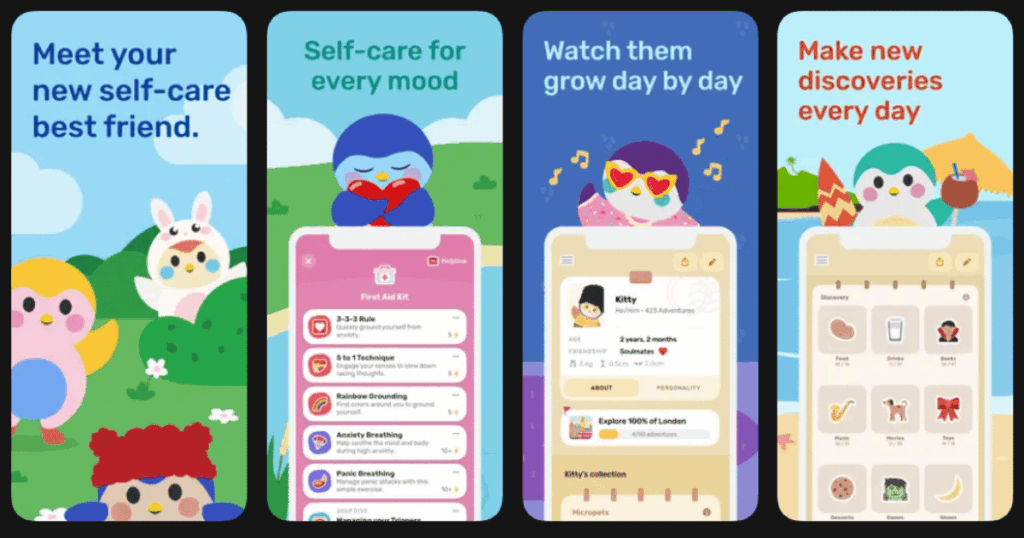
Finch brings back that Tamagotchi nostalgia but for your mental health. You care for an adorable virtual bird by taking care of yourself in real life.
The app has over 1 million downloads and maintains a 4.9 star rating. Every time you complete a self care task, your Finch gains energy to go on adventures.
The concept is simple but powerful. When you drink water, your bird thrives. When you journal, your bird explores new places. Self care becomes a shared journey.
Key Features:
- Virtual pet care system where your bird grows and thrives as you complete real world self care tasks
- Comprehensive activity library including breathing exercises, journaling prompts, gratitude practices, and movement routines
- Social vibes feature to send encouraging messages to friends without the pressure of full conversations
What I like: The app never punishes me for missing a day. The first aid section with breathing exercises for panic attacks is incredibly helpful. I genuinely care about my little bird, which motivates me to take care of myself.
What I don’t like: Recent updates have focused more on cosmetics than self care features. The shop system can feel cluttered. Some translations in the app feel awkward since it was developed in another language.
Pricing: Free version offers excellent features. Premium subscription unlocks additional soundscapes, exercises, and customization options.
Platforms: iOS and Android
#4. Happify – Best for Science Based Positive Psychology

Happify brings positive psychology research to your fingertips through games and activities. The app uses gamification to level up your emotional well being.
The science behind Happify is solid. Studies show 86% of users feel better about their lives within 2 months. The app draws from CBT, positive psychology, and mindfulness research.
You choose tracks based on your goals. Each track contains quizzes, games, and activities. Completing them earns points that contribute to leveling up your profile.
Key Features:
- Progress tracks organized around specific goals like conquering negative thoughts, coping with stress, or building self confidence
- Point and leveling system that unlocks new features as you complete therapeutic activities
- Happiness stats showing your personal data on Savor, Thank, Aspire, Give, and Empathize dimensions
What I like: The variety of mini games makes therapy feel fun rather than like homework. I love seeing my stats improve over time. The gratitude exercises and mindfulness activities really shifted my perspective on daily life.
What I don’t like: The best content sits behind the paywall. Learning tracks have fixed timelines that might not work for busy schedules. The app works better for beginners than those with established CBT skills.
Pricing: Free version with limited access. Premium subscription for full track access available monthly or yearly.
Platforms: iOS and Android
#5. Woebot – Best for AI Powered CBT Support

Woebot delivers cognitive behavioral therapy through a friendly robot chatbot. This little AI companion checks in with you daily and guides you through proven techniques.
Over 1.5 million people have talked to Woebot about anxiety, depression, stress, and more. The app has been featured on 60 Minutes and covered by The New York Times.
What sets Woebot apart is the science. The team has conducted 18 clinical trials. A Stanford study showed measurable decreases in anxiety after just two weeks of use.
Key Features:
- AI chatbot that delivers CBT techniques through friendly, conversational interactions available 24/7
- Daily mood tracking with progress reflection to identify patterns in your mental health
- Evidence based tools including gratitude journaling, mindfulness practice, and cognitive reframing exercises
What I like: Having support available at any hour is incredibly valuable. The chatbot feels warm and non judgmental. The techniques I learned through Woebot genuinely helped me change negative thought patterns.
What I don’t like: You need an access code from a provider or employer to use the app now. The conversations can feel scripted at times. It cannot replace professional therapy for serious conditions.
Pricing: Access typically through healthcare providers, employers, or partner organizations.
Platforms: iOS and Android
#6. Daylio – Best for Customizable Mood Tracking

Daylio turns mood tracking into a satisfying daily habit. The app gamifies journaling with achievement badges, streak tracking, and beautiful visual statistics.
The app is incredibly easy to use. Just select your mood with one tap and pick your activities. It takes less than 30 seconds but provides powerful insights over time.
Millions of users rely on Daylio to understand their emotional patterns. Many share the app with their therapists to track progress between sessions.
Key Features:
- One tap mood logging with customizable moods, activities, and emojis for quick daily entries
- Achievement badges and streak counters that reward consistent tracking and celebrate milestones
- Year in pixels visualization showing your entire emotional journey in one beautiful chart
What I like: The correlation stats blow my mind. I discovered that I feel best when I exercise and worst when I skip sleep. The complete customization lets me track exactly what matters to me.
What I don’t like: Setting up custom activities takes time upfront. The free version has ads and limited features. Some recent updates have caused minor glitches for some users.
Pricing: Free version available. Premium unlocks advanced stats, unlimited icons, and removes ads.
Platforms: iOS and Android
#7. Wysa – Best for AI Driven Emotional Support

Wysa pairs you with an adorable AI penguin that provides judgment free emotional support. This clinically validated app uses CBT, DBT, and mindfulness techniques.
The app scores 92% on the ORCHA health app ratings. It has helped users reduce anxiety and depression scores by an average of 31% in clinical studies.
Wysa offers 200 plus digital tools for every situation. Whether you’re dealing with work stress, relationship issues, or sleep problems, there’s a tool for you.
Key Features:
- AI penguin coach that provides anonymous, non judgmental emotional support through text based conversations
- Self care library with 200 plus evidence based tools covering anxiety, stress, sleep, relationships, and more
- SOS crisis feature with grounding techniques and emergency resources when you need immediate help
What I like: The penguin character makes opening up feel safe and low pressure. I can vent at any hour without worrying about judgment. The variety of tools means I always find something helpful for my current mood.
What I don’t like: The AI sometimes misses context in conversations. Premium features add up in cost. Deeper mental health issues need professional support beyond what the app offers.
Pricing: Free version with AI chat and basic tools. Premium self care subscription and optional coaching sessions available.
Platforms: iOS and Android
#8. Betwixt – Best for Story Driven Mental Health Gaming
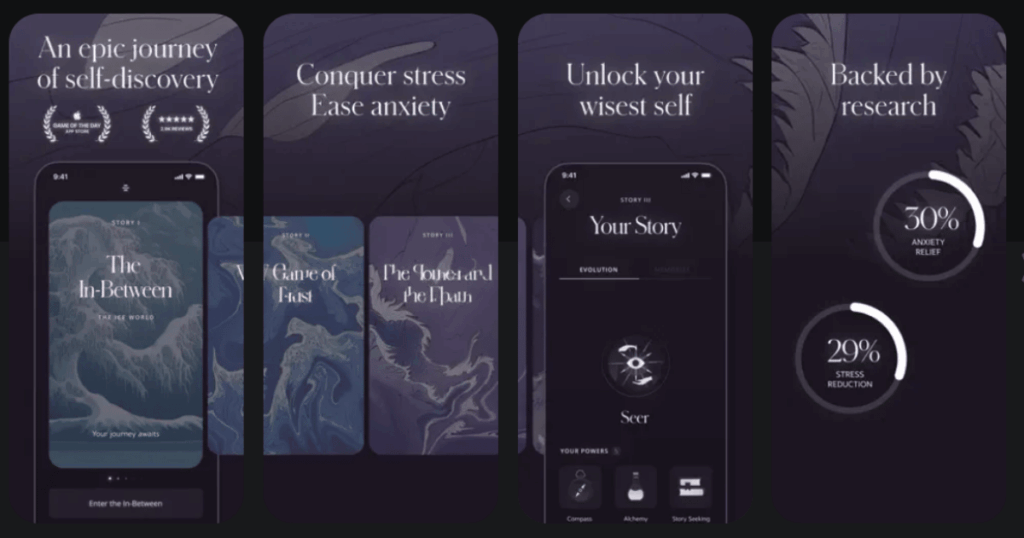
Betwixt takes a unique approach to mental wellness. It’s a fantasy text based game that guides you through your own mind using storytelling and sound.
The app combines play, narrative, and self reflection. You journey through a dreamlike world called the In Between while uncovering insights about yourself.
Users with ADHD particularly love Betwixt. The gamified format feels more accessible than traditional journaling or meditation apps.
Key Features:
- Text based adventure game format where choices guide you through psychological self exploration
- Enchanting story design that makes self reflection feel like a quest rather than a chore
- Chapter based structure with educational articles unlocked after completing each section
What I like: The adventure format hooked me from the start. I actually look forward to sessions because they feel like playing a game. The insights I gain about myself surprise me every time.
What I don’t like: The paid portion contains much of the deeper content. Story based therapy might not click for everyone. Limited replay value once you complete all chapters.
Pricing: Free content available. Premium subscription unlocks full game content and features.
Platforms: iOS and Android
#9. Headspace – Best for Meditation with Gamified Progress
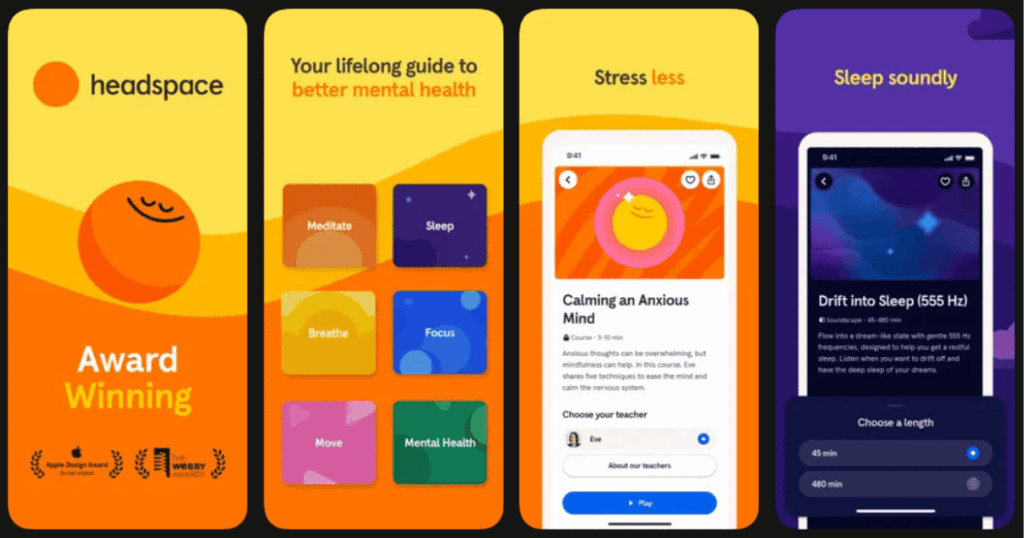
Headspace makes meditation approachable through animated lessons and gamified progress tracking. The app has become a household name in digital wellness for good reason.
Research shows Headspace users experience 29% fewer symptoms of depression after 8 weeks. The app works best when used consistently, which the gamification encourages.
You progress through courses, earn badges, and watch your meditation streak grow. The structure gives beginners a clear path while keeping experienced meditators engaged.
Key Features:
- Progressive meditation courses that build skills from beginner to advanced with clear milestones
- Streak tracking and achievement system that celebrates your consistency and dedication
- Focus music sessions and sleepcasts that complement meditation with scientifically designed audio
What I like: The animations explaining meditation concepts are brilliant for beginners. I love watching my streak grow and earning new badges. The variety of content means I never get bored.
What I don’t like: The full experience requires subscription. Some find the app too structured compared to open ended meditation. Content focuses more on meditation than comprehensive mental health.
Pricing: Free trial period available. Monthly and annual subscription plans with student and family options.
Platforms: iOS and Android
How Do Gamified Mental Health Apps Actually Work?
Gamified mental health apps use game elements to make self care more engaging. They tap into the same psychology that makes video games addictive. But instead of wasting time, you build healthy habits.
These apps typically include points, badges, streaks, and rewards. When you complete a meditation or log your mood, you earn something. This creates a dopamine loop that keeps you coming back.
The science supports this approach. Studies show gamification increases user engagement by up to 60%. People stick with apps longer when there’s a reward system involved. And consistency is key for mental health improvement.
Are Mental Health Apps a Replacement for Therapy?
Mental health apps work best as supplements to professional care. They cannot diagnose conditions or provide personalized treatment plans like a therapist can.
However, these apps offer valuable support between therapy sessions. They help you practice skills, track progress, and manage symptoms in daily life.
For mild anxiety or stress, apps might be enough. But for serious conditions like depression, PTSD, or bipolar disorder, please seek professional help. Many therapists actually recommend apps to their clients as homework tools.
What Makes a Good Gamified Mental Health App?
The best gamified mental health apps balance fun with effectiveness. Pure entertainment without therapeutic value wastes your time. But pure therapy without engagement means you won’t stick with it.
Look for apps backed by research. Check if clinical studies support their methods. Apps using CBT, positive psychology, or mindfulness have the strongest evidence behind them.
Consider your personal style too. Some people love virtual pets while others prefer quest systems. The best app is the one you’ll actually use every day.