9 Best Mental Health Apps For Adults
| App Name | Best For | Key Features | AC Rating | Pricing |
|---|---|---|---|---|
| Life7 | All in one mental wellness | Binaural beats, CBT, sleep stories, mood tracking | 4.9/5 | Free trial, then subscription |
| Calm | Sleep improvement and relaxation | Sleep stories, meditation, breathing exercises | 4.5/5 | Free version, premium subscription |
| Headspace | Learning meditation basics | Guided courses, sleepcasts, mindful movement | 4.5/5 | Free trial, then subscription |
| BetterHelp | Online therapy access | Video sessions, messaging, licensed therapists | 4.3/5 | Weekly subscription |
| Woebot | AI powered CBT support | Chatbot therapy, mood tracking, daily check ins | 4.4/5 | Free with access code |
| Daylio | Simple mood tracking | Journal entries, activity tracking, statistics | 4.6/5 | Free version, premium available |
| Sanvello | Anxiety and stress management | CBT tools, peer support, guided journeys | 4.4/5 | Free version, premium subscription |
| Happify | Building positive habits | Games, activities, tracks based on psychology | 4.2/5 | Free version, premium subscription |
| Talkspace | Text based therapy | Messaging therapist, video sessions, psychiatry | 4.3/5 | Weekly subscription |
#1. Life7 – Best for All in One Mental Wellness
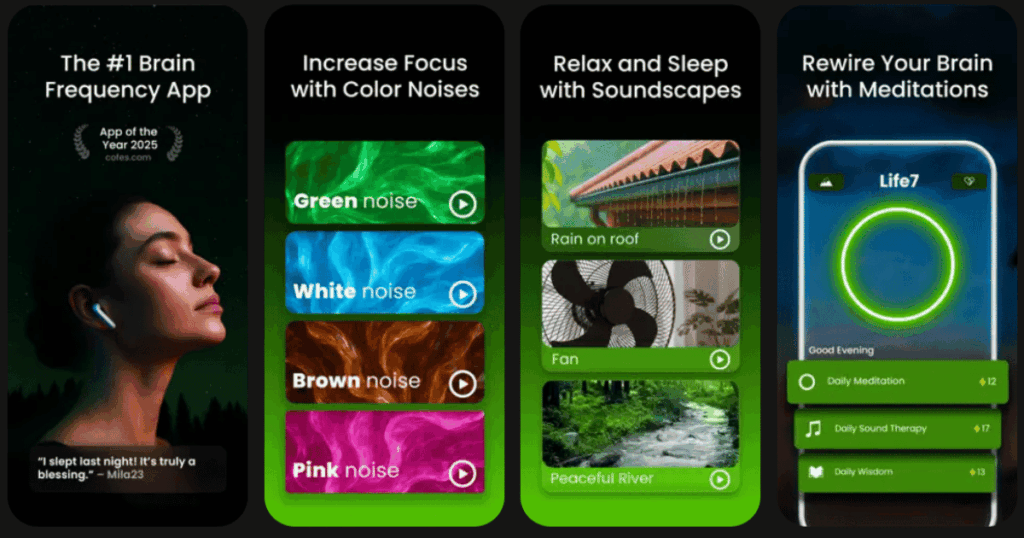
Life7 is my top pick for mental health apps. It offers everything you need in one place. This app combines meditation, sleep support, and therapy tools into a single platform.
With over 312 million meditation minutes logged and 1200+ editorial mentions, Life7 has proven itself in the wellness space. It helps with anxiety, sleep issues, stress, and emotional healing.
The app stands out because it gives you so many options. You can try binaural beats, solfeggio frequencies, or white noise. You can also explore CBT, hypnotherapy, and vagus nerve stimulation. There is something for everyone here.
Key Features:
- Green, white, brown, and pink noise plus delta, theta, alpha, beta, and gamma wave music for deep relaxation
- SOS sessions for panic attacks and breathing exercises to calm your nervous system quickly
- Daily sessions including meditation, music therapy, wisdom, and mood tracking with a gamified XP system
What I like: Life7 really shines with its variety of sound options. The 432 Hz and 528 Hz frequencies are perfect for deep focus. I love the backdrop mode that lets me mix soundscapes with sleep stories. The daily check ins keep me consistent, and the streak feature motivates me to show up each day. The lucid dreaming sessions and 8D sleep audio are unique features I have not seen elsewhere.
What I don’t like: The free content is a bit limited. You really need the subscription to unlock the full library. This can feel frustrating if you are just testing things out.
Pricing: 7 day free trial available. Weekly, monthly, and yearly plans offered. Special promotions happen frequently.
Platforms: iOS and Android
#2. Calm – Best for Sleep Improvement and Relaxation
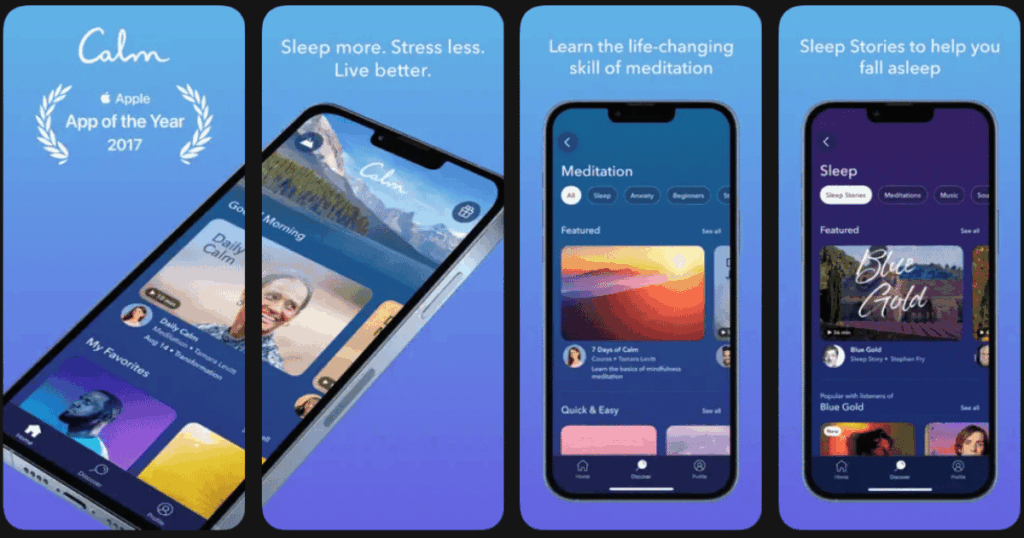
Calm is one of the most popular meditation apps out there. It focuses heavily on helping you relax and sleep better. The app has over 500 sleep stories narrated by celebrities and soothing voices.
The interface is beautiful and calming. Nature scenes welcome you each time you open the app. This sets the mood right away for relaxation.
Calm works well for both beginners and experienced meditators. The quick tools like the Breathe Bubble help you destress in just 60 seconds.
Key Features:
- Massive library of sleep stories read by famous voices to help you drift off peacefully
- Daily Calm sessions providing fresh meditation content every single day
- Panic SOS and breathing exercises for quick stress relief in tough moments
What I like: The sleep stories are honestly the best part. They work so well for winding down at night. I also appreciate how visually appealing the whole app is. The nature backgrounds make me feel peaceful before I even start meditating. The music section has great options for focus and relaxation too.
What I don’t like: Most of the good content requires the paid subscription. The free version feels very limited and almost like a teaser.
Pricing: Free version available with limited content. Premium subscription for full access. Family plan option available.
Platforms: iOS and Android
#3. Headspace – Best for Learning Meditation Basics
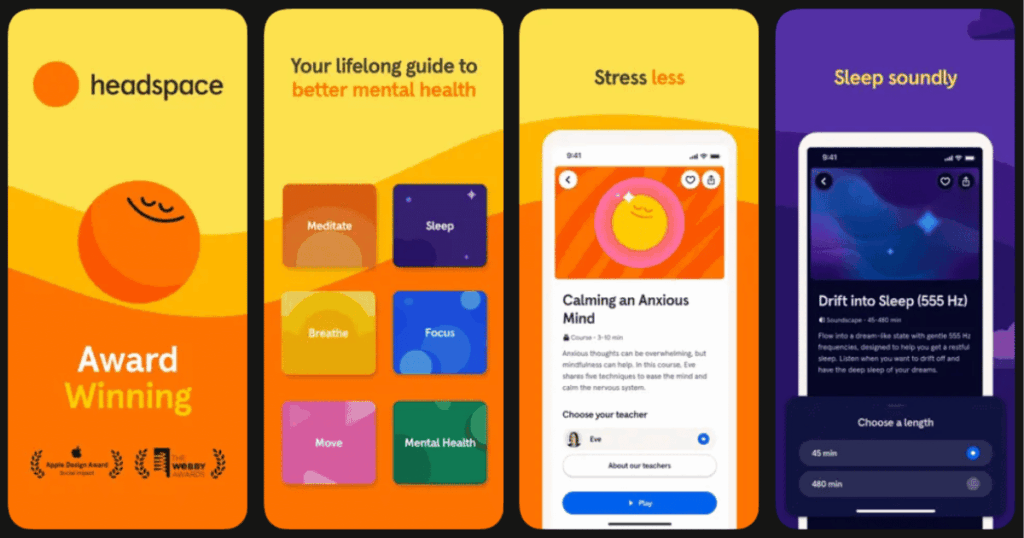
Headspace is perfect if you are new to meditation. The app teaches you how to meditate through structured courses. It breaks everything down into simple, easy steps.
The app uses friendly animations and a playful design. This makes meditation feel less intimidating. You get courses on everything from stress to sleep to focus.
Headspace also offers an AI companion called Ebb. This feature gives you personalized recommendations based on how you are feeling.
Key Features:
- Over 1000 guided meditations organized by topic and skill level for easy navigation
- Sleepcasts that combine music and storytelling to help you fall asleep faster
- Mindful movement exercises that combine physical activity with mental wellness
What I like: The structured approach really helped me build a habit. The courses feel like having a personal teacher guide you step by step. I also love the focus music for work. The app tracks your progress nicely, which keeps you motivated to continue your practice.
What I don’t like: Everything requires a paid subscription. There is no free content in the app itself, though you can find some free materials on their website and YouTube.
Pricing: Free trial available. Monthly or yearly subscription plans. Student discounts offered.
Platforms: iOS and Android
#4. BetterHelp – Best for Online Therapy Access

BetterHelp connects you with licensed therapists online. This is perfect if you need actual professional help. You can talk to your therapist through video, phone, or messaging.
The platform has over 30000 therapists. This means you can find someone who specializes in exactly what you need help with. Getting started is quick with their matching system.
Sessions happen on your schedule. You can reach out to your therapist anytime through the app’s messaging feature.
Key Features:
- Weekly live sessions via video, phone, or chat with your matched licensed therapist
- Unlimited messaging between sessions for ongoing support whenever you need it
- Access to group sessions and worksheets to supplement your individual therapy
What I like: The convenience is unbeatable. I can have therapy from my couch without driving anywhere. The therapist matching is pretty accurate. Being able to message my therapist between sessions makes me feel supported throughout the week, not just during appointments.
What I don’t like: It is more expensive than self help apps. Insurance is not accepted, which makes it out of reach for some people.
Pricing: Weekly subscription model. Financial aid available for qualifying individuals.
Platforms: iOS and Android
#5. Woebot – Best for AI Powered CBT Support

Woebot is an AI chatbot that uses cognitive behavioral therapy techniques. It feels like texting with a supportive friend who knows psychology. The bot checks in with you daily.
Clinical research backs up Woebot’s approach. Studies show it can reduce anxiety and depression symptoms in just two weeks. The conversations feel surprisingly natural.
This app is great for practicing CBT skills between therapy sessions. Or it works as a starting point before seeking professional help.
Key Features:
- Daily check ins and conversations using proven CBT techniques for thought reframing
- Mood tracking and progress reflection to help you see patterns over time
- Gratitude journaling and mindfulness practice tools built into the chat experience
What I like: Woebot is available 24/7, which is huge when you are struggling at 2am. The conversations actually help me identify negative thought patterns. I appreciate that it does not try to be a replacement for real therapy but instead complements it really well.
What I don’t like: You need an access code from a provider, employer, or partner organization. This limits who can actually use the app.
Pricing: Free with access code from healthcare provider or employer.
Platforms: iOS and Android
#6. Daylio – Best for Simple Mood Tracking

Daylio makes journaling super easy. You do not have to type anything. Just tap on your mood and select what activities you did that day.
The app shows you patterns over time. You can see which activities make you feel better or worse. This data helps you make smarter choices for your wellbeing.
Daylio is perfect for people who want to track their mental health but hate writing long entries.
Key Features:
- One tap mood and activity logging that takes just seconds to complete
- Beautiful statistics and charts showing your mood patterns over days, weeks, and months
- Goal setting and habit tracking to build positive routines alongside mood monitoring
What I like: The simplicity is brilliant. I actually stick with it because it takes no effort. Seeing my mood data over time has taught me so much about myself. The customization options let me track exactly what matters to me.
What I don’t like: It does not offer therapeutic guidance or support. You are just tracking data without getting help interpreting or improving it.
Pricing: Free version with robust features. Premium unlocks unlimited moods, goals, and extras.
Platforms: iOS and Android
#7. Sanvello – Best for Anxiety and Stress Management

Sanvello combines self help tools with professional support. It uses CBT techniques to help you manage stress, anxiety, and depression. The app offers guided journeys on specific topics.
A peer support community lets you connect with others going through similar struggles. This helps you feel less alone in your journey.
The app recently partnered with AbleTo for additional coaching and therapy services.
Key Features:
- Structured CBT courses and exercises teaching practical coping skills for daily life
- Peer support forums where you can share experiences and encourage other users
- Mood tracking and progress monitoring to visualize your improvement over time
What I like: The combination of self help and community support works really well. I can learn skills on my own and then connect with others who understand. The guided journeys feel very professional and well designed.
What I don’t like: The therapy and coaching features require specific insurance plans. You cannot just pay out of pocket for professional support.
Pricing: Free version with limited features. Premium self care plan available. Professional services through insurance.
Platforms: iOS and Android
#8. Happify – Best for Building Positive Habits

Happify takes a gamified approach to mental wellness. It uses activities and games based on positive psychology. The goal is to help you build lasting happiness habits.
The app creates personalized tracks based on a questionnaire you complete. Tracks include topics like conquering negative thoughts and building self confidence.
Science backs Happify’s methods. Studies show users feel better about their lives after two months of regular use.
Key Features:
- Interactive games and activities designed to interrupt negative thought patterns
- Personalized tracks targeting specific goals like stress reduction or building resilience
- Community features and articles from mental health experts for extra support
What I like: Making mental health feel like a game keeps me engaged. The activities are quick so they fit into busy days. I like earning points and seeing my progress. The variety of tracks means I always have something new to work on.
What I don’t like: The free version is very limited. Also, some activities feel repetitive after using the app for a while.
Pricing: Free version available. Premium subscription unlocks 65+ tracks. Monthly, yearly, and lifetime options.
Platforms: iOS and Android
#9. Talkspace – Best for Text Based Therapy
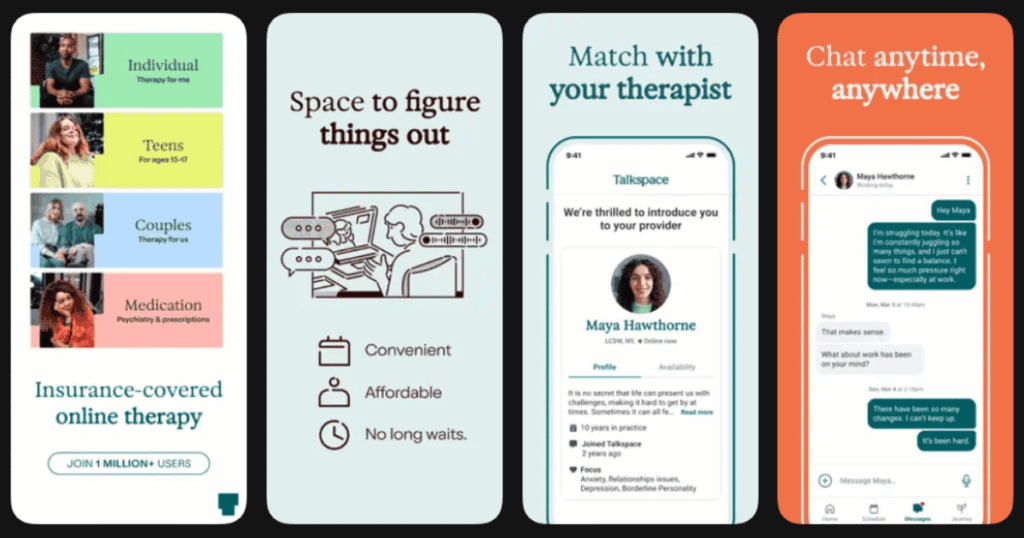
Talkspace lets you message your therapist anytime. This is perfect if you prefer writing over talking. You can also schedule video and phone sessions.
The platform accepts many insurance plans. This makes it more affordable than some competitors. Medicare is even accepted, which is rare for online therapy.
Psychiatry services are also available. You can get medication management alongside therapy.
Key Features:
- Unlimited text messaging with your licensed therapist throughout the subscription
- Video and phone session options for when you need face to face conversation
- Psychiatry services for medication evaluation and management if needed
What I like: Writing out my thoughts helps me process them better than talking sometimes. The insurance acceptance is a big deal for affordability. Having psychiatry in the same app is super convenient if you need medication.
What I don’t like: Response times from therapists can vary. Sometimes you wait hours for a reply, which can feel frustrating when you are struggling.
Pricing: Monthly subscription. Prices vary based on plan and insurance coverage.
Platforms: iOS and Android
Do Mental Health Apps Really Work?
Yes, many mental health apps are backed by research. Studies show that apps using CBT, mindfulness, and meditation can reduce symptoms of anxiety and depression. However, results depend on consistent use.
Apps work best as a supplement to overall mental wellness care. They should not replace professional therapy for serious conditions. Think of them as tools in your wellness toolkit.
The key is finding an app that matches your needs and using it regularly. Even just 10 minutes a day can make a difference over time.
Can I Use Mental Health Apps Instead of Therapy?
Mental health apps are not a replacement for professional therapy. They work great for general wellness, stress management, and building healthy habits. But serious mental health conditions need professional care.
Think of apps as support between therapy sessions. Or use them as a starting point before seeking professional help. They can teach you skills that make therapy more effective.
If you are experiencing a crisis or have severe symptoms, please reach out to a mental health professional or crisis line.
How Do I Choose the Right Mental Health App?
Start by identifying your main goal. Do you need help sleeping? Try Calm or Life7. Want to learn meditation? Headspace is great for beginners. Need professional support? Look at BetterHelp or Talkspace.
Consider your budget too. Many apps offer free versions to test before committing. Free trials let you explore premium features first.
Read reviews and check if the app uses evidence based approaches. Look for apps backed by clinical research or developed with mental health professionals. The right app feels intuitive and keeps you coming back.