9 Best Mental Health Apps For Android
| App Name | Best For | Key Features | AC Rating | Pricing |
|---|---|---|---|---|
| Life7 | All in one mental wellness | Binaural beats, CBT tools, sleep stories | 4.8/5 | Free trial, then subscription |
| Calm | Sleep and relaxation | Sleep stories, guided meditations, music | 4.6/5 | Free version, premium subscription |
| Headspace | Structured meditation practice | Daily meditations, focus tools, animations | 4.5/5 | Free trial, then subscription |
| Finch | Gamified self care routines | Virtual pet, habit tracking, journaling | 4.7/5 | Free version, optional premium |
| BetterHelp | Professional online therapy | Licensed therapists, video calls, messaging | 4.4/5 | Weekly subscription |
| Insight Timer | Free meditation content | 200,000+ free sessions, live events, community | 4.6/5 | Free with optional premium |
| Woebot | AI powered CBT support | Chatbot therapy, mood tracking, daily check ins | 4.3/5 | Free with access code |
| Daylio | Mood tracking without writing | One tap mood logging, habit tracking, insights | 4.5/5 | Free version, premium subscription |
| What’s Up? | Anxiety and depression help | CBT techniques, grounding exercises, diary | 4.2/5 | Free |
#1. Life7 – Best for All in One Mental Wellness
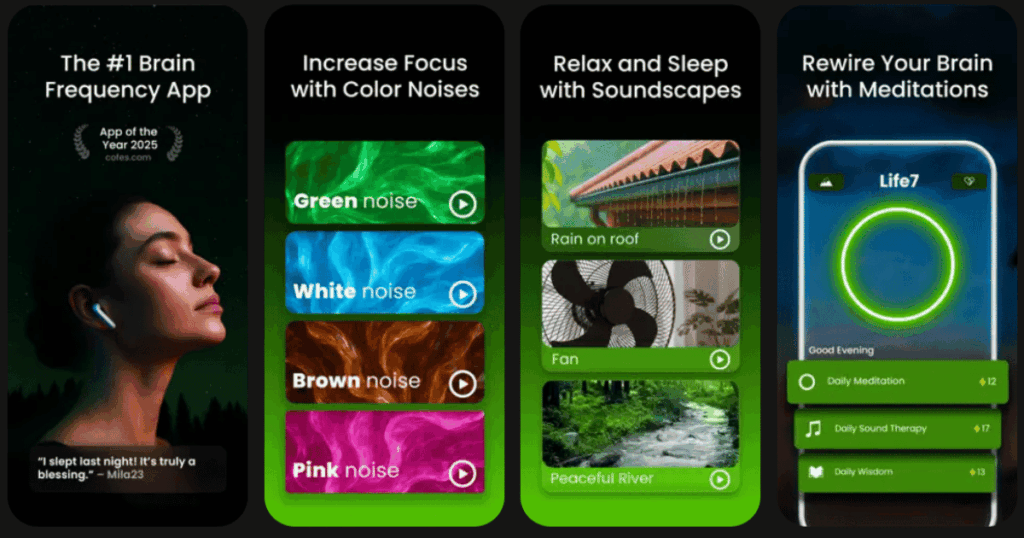
Life7 is my top pick for anyone looking to improve their mental health on Android. This app offers everything you need in one place. You get guided meditations, sleep stories, breathing exercises, and so much more.
What makes Life7 stand out is its science backed approach. The app uses binaural beats and solfeggio frequencies that actually help your brain relax. You also get cognitive behavioral therapy tools and hypnotherapy sessions.
The app has earned over 1200 editorial mentions. Users have logged more than 312 million meditation minutes. That tells you people trust this app!
Key Features:
- Green, white, brown, and pink noise plus delta, theta, alpha, beta, and gamma wave music for deep relaxation
- SOS sessions for panic attacks, vagus nerve stimulation, and CBT tools for anxiety relief
- New daily sessions including meditations, music therapy, wisdom quotes, and mood tracking dashboard
What I like: I love how Life7 combines so many tools in one app. The sound library is amazing with 432 Hz and 528 Hz frequencies that really calm my mind. The sleep stories work great for both adults and kids. The gamified approach keeps me coming back. I earn XP and unlock new content as I meditate. The backdrop mode lets me mix soundscapes with other audio which is super cool.
What I don’t like: The free content is a bit limited. You will want to get a subscription to unlock everything. But the good news is they offer frequent special offers and a 7 day free trial.
Pricing: 7 day free trial available. Weekly, monthly, and yearly plans offered. Frequent special promotions.
Platforms: iOS and Android
#2. Calm – Best for Sleep and Relaxation
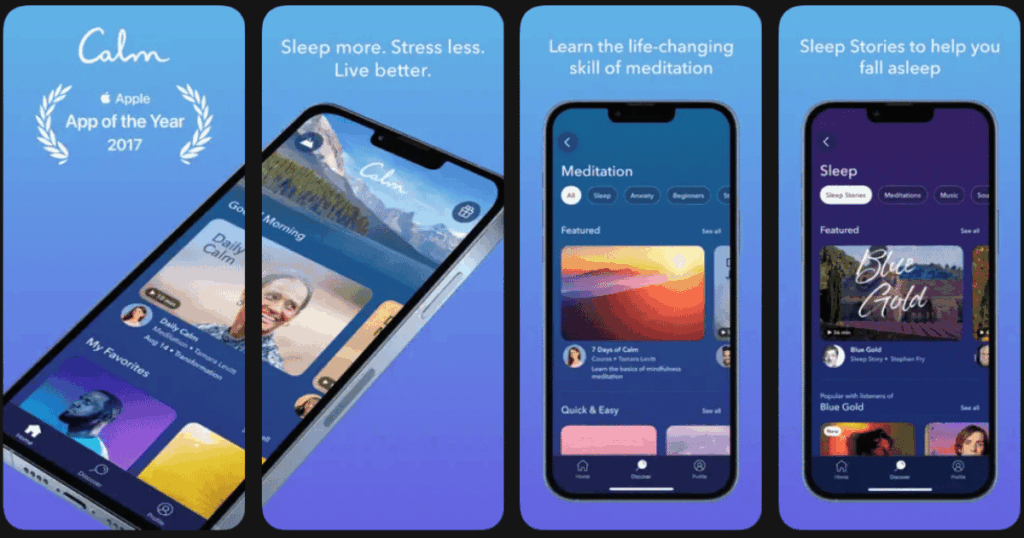
Calm is one of the most popular mental health apps in the world. It focuses on helping you sleep better, reduce stress, and live more mindfully.
The app has a huge library of sleep stories read by famous voices. Think Matthew McConaughey and Harry Styles reading you bedtime stories! The guided meditations cover everything from anxiety to self esteem.
Calm also offers breathing exercises and soothing music. The daily calm feature gives you a new 10 minute meditation every single day.
Key Features:
- Over 500 sleep stories with celebrity narrators to help you drift off peacefully
- Quick tools like the 60 second Breathe Bubble and Panic SOS for instant stress relief
- Expert led masterclasses on topics like anxiety, focus, and relationships
What I like: The sleep stories are genuinely helpful. I put one on and I am asleep before it ends every time. The interface is beautiful and calming. The daily calm keeps my practice consistent. I also love how many different meditation lengths they offer from 3 minutes to 25 minutes.
What I don’t like: The app is pretty expensive compared to others. The free version feels very limited. You need premium to access most of the good content.
Pricing: Free version with limited features. Premium subscription available with yearly or monthly options. Family plans and student discounts offered.
Platforms: iOS and Android
#3. Headspace – Best for Structured Meditation Practice
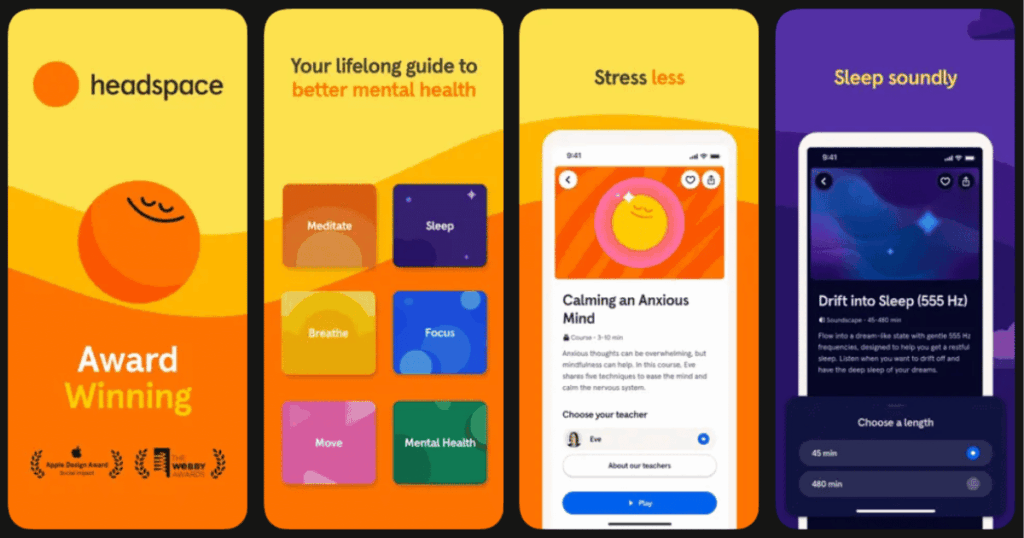
Headspace is perfect if you want to learn meditation the right way. The app uses fun animations to teach you techniques. It feels less intimidating than other meditation apps.
The courses are well organized with up to 30 sessions each. You can really dive deep into topics like stress, focus, or sleep. Headspace also offers focus music and movement exercises.
The beginner courses are amazing. They explain concepts simply without being boring. You actually understand why meditation works.
Key Features:
- Over 1000 guided meditations organized into easy to follow courses with progress tracking
- Sleep content including sleepcasts, wind downs, and ambient sounds for better rest
- Focus mode with curated music and soundscapes designed for concentration
What I like: The animations really help explain meditation concepts in a fun way. I appreciate how structured everything is. The app tells you exactly where to start. The sleep content is top notch and the sleepcasts are unique. I also love the SOS sessions for moments of panic.
What I don’t like: You need the subscription for most content. The app can feel a bit overwhelming with so many options. Some features feel hidden in the menus.
Pricing: Free trial available. Monthly or annual subscription options. Student and family plans offered.
Platforms: iOS and Android
#4. Finch – Best for Gamified Self Care Routines
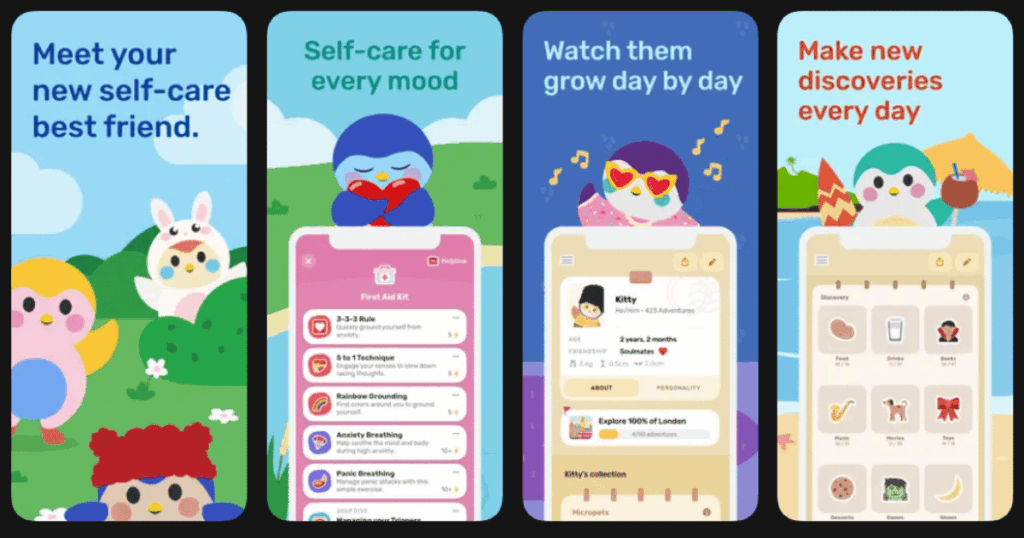
Finch takes a totally different approach to mental wellness. You adopt a cute virtual bird and take care of it by taking care of yourself. Complete self care tasks and your bird grows and goes on adventures!
This app makes building habits feel fun and rewarding. You earn coins for brushing your teeth or drinking water. Then you buy outfits for your bird.
Finch includes journaling, breathing exercises, and mood tracking. You can even connect with friends and send encouraging vibes to each other.
Key Features:
- Virtual pet that grows as you complete daily self care goals and healthy habits
- Mood tracking with insights and visualizations to spot patterns over time
- Breathing exercises, soundscapes, and guided reflections for anxiety relief
What I like: This app actually got me to build habits I struggled with for years. The cute bird makes me feel responsible. I want to complete tasks to keep it happy. The social features let me connect with my sister even though we live far apart. The free version is very generous with features.
What I don’t like: The learning curve is steep at first. There are many features to understand. The wait time between bird adventures can feel frustrating. Some users report pricing differences between iOS and Android.
Pricing: Free version with core features. Premium subscription unlocks more content and customization options.
Platforms: iOS and Android
#5. BetterHelp – Best for Professional Online Therapy

BetterHelp connects you with real licensed therapists. This is for people who want actual professional help, not just self guided tools.
You can communicate through text, voice, video, or live chat. The app matches you with a therapist based on your needs. You can switch therapists anytime if the fit is not right.
This is as close to traditional therapy as you can get on your phone. It removes barriers like location and scheduling.
Key Features:
- Access to over 30,000 licensed therapists covering various specialties and backgrounds
- Multiple communication options including unlimited messaging and weekly live sessions
- Convenient scheduling that works around your busy life with 24/7 availability
What I like: Having a real person to talk to makes a huge difference. The matching system worked well for me. I appreciated being able to message my therapist between sessions. The video calls feel professional. Financial aid is available if you qualify.
What I don’t like: This is the most expensive option on the list. It is a subscription you pay weekly. Insurance usually does not cover it. It is not meant for severe mental illness or emergencies.
Pricing: Weekly subscription based pricing. Financial aid available. Pricing varies by location and therapist.
Platforms: iOS and Android
#6. Insight Timer – Best for Free Meditation Content
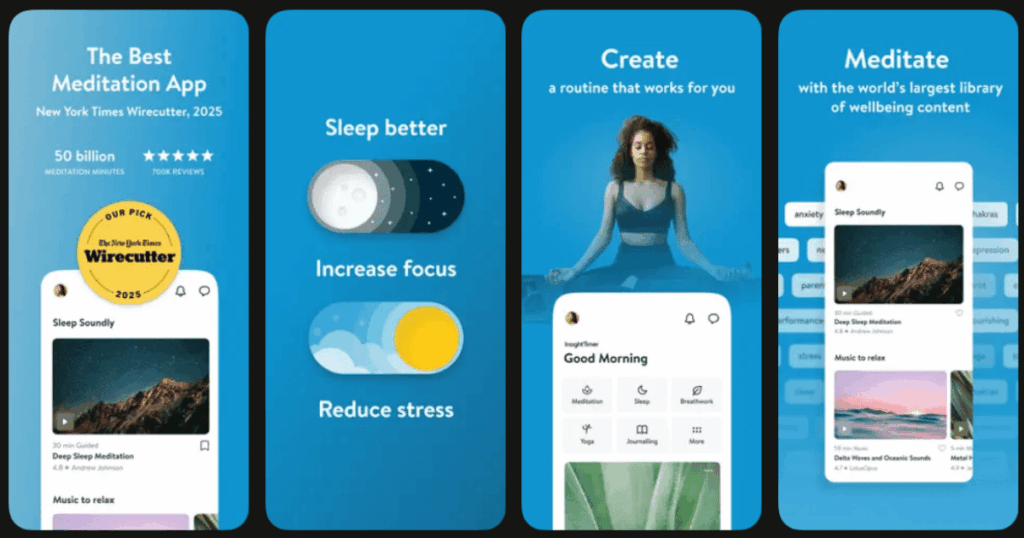
Insight Timer has over 200,000 free guided meditations. That is not a typo. This library is massive and it costs nothing to access most of it.
Teachers upload content directly to the app. This gives you tons of variety and new sessions daily. You can find everything from yoga nidra to sleep sounds.
The community features show how many people are meditating worldwide right now. It feels connecting knowing others are practicing with you.
Key Features:
- Massive free library with 200,000+ meditations from thousands of teachers worldwide
- Live events including group meditations, workshops, and courses with real instructors
- Customizable meditation timer with different bells and ambient background sounds
What I like: The free content is genuinely excellent. I have used this app for years without paying. The search function helps find exactly what you need. I love following my favorite teachers and getting notified of new content. The community feel keeps me motivated.
What I don’t like: The huge library can feel overwhelming. Quality varies since anyone can upload. The app can feel cluttered with so many options.
Pricing: Free with optional premium membership for additional features and courses.
Platforms: iOS and Android
#7. Woebot – Best for AI Powered CBT Support

Woebot is an AI chatbot trained in cognitive behavioral therapy. It checks in with you daily and helps you reframe negative thoughts.
The app uses proven CBT techniques in a conversational format. It feels like texting with a supportive friend who happens to know therapy.
Woebot tracks your moods and helps you spot patterns. The app has been studied in clinical trials and shown real results.
Key Features:
- AI chatbot using CBT, DBT, and IPT principles to guide you through difficult emotions
- Daily check ins with mood tracking and personalized coping strategies
- Evidence based approach backed by 18 clinical trials and research studies
What I like: Having something available 24/7 is incredibly helpful during rough nights. The CBT techniques actually work when you apply them. The app does not judge or rush you. I appreciate how the conversations feel natural. The gratitude journal feature is simple but effective.
What I don’t like: You need an access code from a provider or employer to use it. Responses are somewhat limited and can feel repetitive after a while. It is not a replacement for real therapy.
Pricing: Free with access code from healthcare provider, employer, or partner organization.
Platforms: iOS and Android
#8. Daylio – Best for Mood Tracking Without Writing

Daylio makes mood tracking incredibly simple. You just tap an emoji and select what you did that day. No writing required.
The app creates beautiful charts showing your mood patterns over time. You can see how activities affect your emotional state.
The habit tracker helps you build positive routines. You can set goals and watch your progress.
Key Features:
- One tap mood logging with customizable activities and emoji based tracking
- Detailed statistics and charts showing mood patterns over days, weeks, and months
- Habit tracker with reminders to help you build healthy daily routines
What I like: This is the easiest way to track your mental health. It takes literally 10 seconds. The insights after a few weeks are eye opening. I discovered patterns I never noticed before. The app runs smoothly and looks great.
What I don’t like: It is more of a tracking tool than an active treatment. The premium features cost extra. Some people may want more depth in their journaling.
Pricing: Free version available. Premium subscription unlocks additional features and removes ads.
Platforms: iOS and Android
#9. What’s Up? – Best for Anxiety and Depression Help

What’s Up? uses techniques from CBT and ACT to help you cope with anxiety, depression, and stress. The app is straightforward and focused.
You get breathing exercises, grounding techniques, and a thought diary. The habit tracker lets you monitor both positive and negative patterns.
The 100 questions game helps you stay grounded during panic attacks. This is a solid free option for basic mental health support.
Key Features:
- CBT and ACT based techniques specifically designed for anxiety, depression, and stress
- Grounding exercises and breathing techniques for panic attack relief
- Positive and negative habit tracker to monitor your patterns and progress
What I like: The app is completely free with no annoying ads. The techniques are genuinely helpful during anxious moments. The grounding game has saved me during panic attacks. Everything is explained in simple language.
What I don’t like: The design feels a bit dated compared to newer apps. There are no guided audio sessions. It lacks some advanced features found in premium apps.
Pricing: Completely free with optional donations.
Platforms: iOS and Android
Are Mental Health Apps Actually Effective?
Research shows that mental health apps can really help. Studies found that apps using CBT and meditation techniques reduce symptoms of anxiety and depression. They work especially well alongside traditional therapy or medication.
Apps are not meant to replace professional help for serious conditions. But they are great for daily stress, building habits, and learning coping skills.
The key is finding an app you will actually use. A fancy app does no good if it sits unopened on your phone. Try a few and stick with what feels right for you.
Can I Use Multiple Mental Health Apps Together?
Absolutely! Many people use several apps for different purposes. You might use Life7 for sleep and meditation. Then track your mood with Daylio. And maybe use Finch for daily habit building.
Just be careful not to overwhelm yourself. Start with one app and master it. Then add another if you feel you need more tools.
The goal is supporting your mental health, not collecting apps. Quality matters more than quantity.
How Much Should I Pay for a Mental Health App?
There is no right answer here. Free apps like Insight Timer and What’s Up? offer excellent value. Premium apps like Life7, Calm, and Headspace offer more polished experiences.
Think about what you can afford and what features matter most. Many apps offer free trials so you can test before committing.
If an app helps you sleep better, reduces anxiety, or improves your mood, it is probably worth the investment. Your mental health deserves that attention.