9 Best Mental Health Apps For iPhone
| App Name | Best For | Key Features | AC Rating | Pricing |
|---|---|---|---|---|
| Life7 | All in one mental wellness | Binaural beats, CBT tools, sleep stories, SOS sessions | 4.8/5 | Free trial, then subscription |
| Calm | Sleep and relaxation | 500+ sleep stories, breathing exercises, daily meditations | 4.7/5 | Free version, premium subscription |
| Headspace | Guided meditation for beginners | 1000+ meditations, sleep tools, mood tracking | 4.6/5 | Free trial, then subscription |
| BetterHelp | Online therapy access | Video/text therapy, licensed therapists, 24/7 access | 4.5/5 | Monthly subscription |
| Happify | Building positive habits | Science based games, mood tracking, personalized tracks | 4.4/5 | Free version, premium available |
| Insight Timer | Free meditation library | 200,000+ meditations, community groups, live events | 4.6/5 | Free with premium options |
| Woebot | AI powered mental health support | CBT techniques, daily check ins, mood tracking | 4.3/5 | Free |
| Wysa | Anxiety and stress relief | AI chatbot, breathing exercises, human coach access | 4.5/5 | Free version, premium subscription |
| Sanvello | Clinical anxiety and depression support | CBT tools, peer support, mood journaling | 4.4/5 | Free with insurance options |
#1. Life7 – Best for All in One Mental Wellness
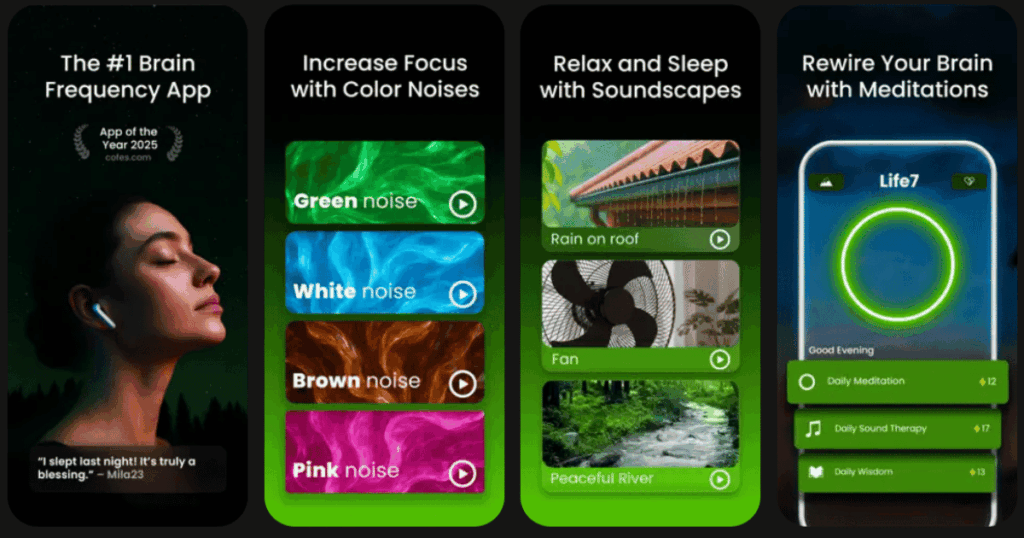
Life7 is the ultimate mental health app I recommend for anyone who wants everything in one place. This app combines meditation, sleep sounds, therapy techniques, and so much more. It has over 312 million meditation minutes and 1200+ editorial mentions.
What makes Life7 special is its huge variety of tools. You get binaural beats, solfeggio frequencies, and brain wave music. There are green noise, white noise, brown noise, and pink noise options too. The app includes CBT, hypnotherapy, and vagus nerve stimulation sessions.
Key Features:
- SOS sessions for panic attacks and anxiety plus daily meditations, sleep stories, and breathing exercises
- Brain frequency sounds including delta, theta, alpha, beta, and gamma waves with 432 Hz and 528 Hz frequencies
- Gamified approach with XP rewards, streak tracking, mood journaling, and progress dashboard
What I like: I love that Life7 covers literally everything. Whether I need help falling asleep or calming down during a panic attack, there is a session for it. The transcendental meditation and lucid dreaming sessions are unique features I have not seen in other apps. The daily check ins keep me on track, and the gamification makes meditation actually fun.
What I don’t like: The free version is a bit limited compared to the paid subscription. You really need the premium plan to unlock all the best content. But the 7 day free trial lets you test everything first.
Pricing: 7 day free trial available. Weekly, monthly, and yearly plans with frequent special offers.
Platforms: iOS and Android
#2. Calm – Best for Sleep and Relaxation
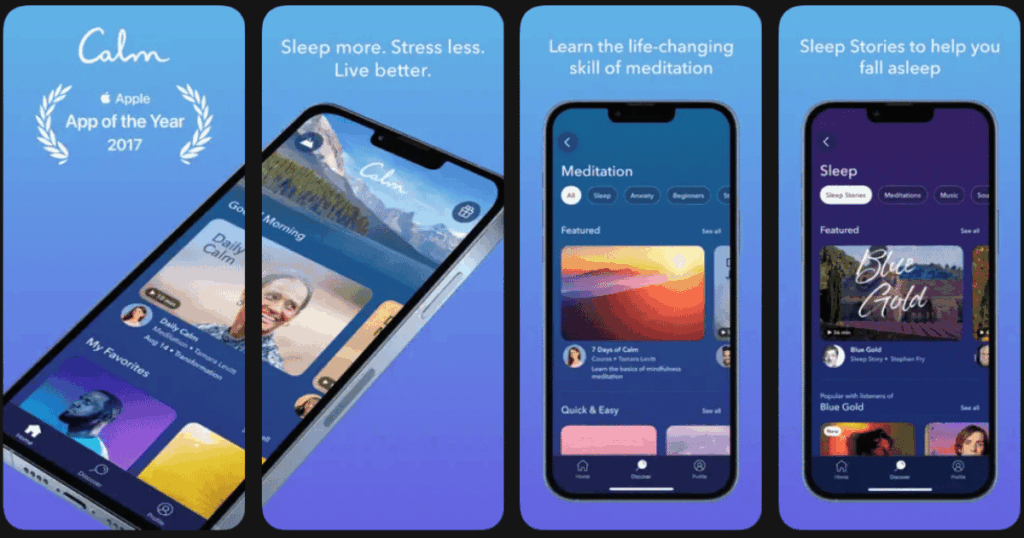
Calm has become one of the most popular meditation apps out there. It focuses on helping you sleep better, reduce stress, and live more mindfully. The app has won multiple awards and has millions of users worldwide.
The Sleep Stories feature is what really sets Calm apart. These are bedtime stories for adults narrated by celebrities. They help you drift off to sleep naturally. The app also has guided meditations for anxiety, focus, and gratitude.
Key Features:
- Over 500 Sleep Stories with new ones added weekly plus daily calm meditations
- 60 second Breathe Bubble for quick stress relief and Panic SOS feature
- Expert led sessions on stress, burnout, and emotional wellness
What I like: The Sleep Stories are amazing and I find myself looking forward to bedtime. The Breathe Bubble is super helpful when I feel overwhelmed at work. The app feels polished and easy to use. There is always something new to explore.
What I don’t like: The subscription price is on the higher end. The free version is very limited, so you almost need to pay to get real value from the app.
Pricing: Free version with limited features. Annual subscription available.
Platforms: iOS, Android, and Web
#3. Headspace – Best for Guided Meditation for Beginners
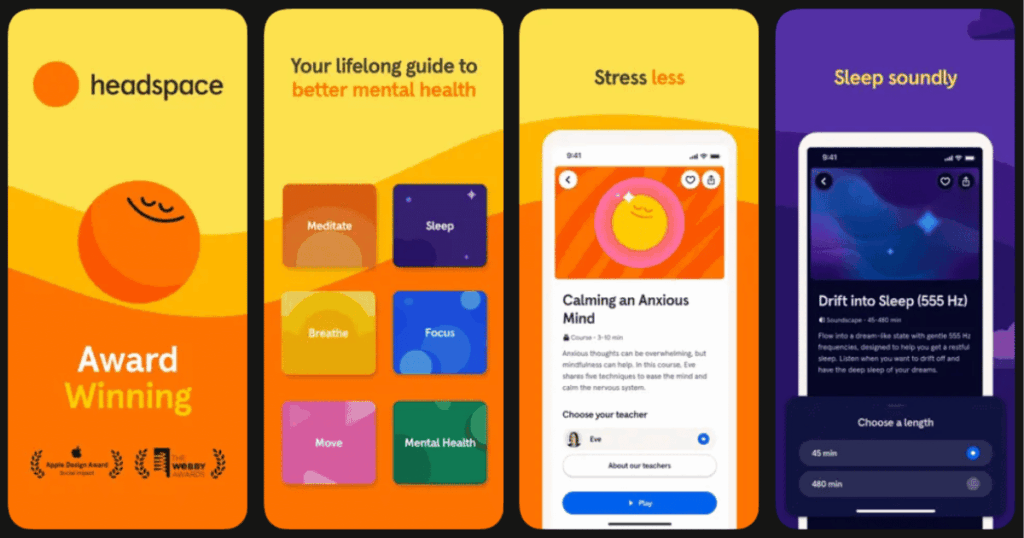
Headspace was created by a former Buddhist monk and has been around since 2010. It is known for making meditation simple and accessible. The app uses fun animations and clear instructions that anyone can follow.
If you are new to meditation, Headspace is a great starting point. It has beginner courses that teach you the basics step by step. The app also offers focus music, sleep sounds, and even mental health coaching.
Key Features:
- 1000+ expert led meditations covering stress, anxiety, focus, and sleep
- Beginner friendly courses with animated guides and progress tracking
- Mental health coaching and therapy options with licensed professionals
What I like: I appreciate how Headspace breaks everything down into small steps. The animations make learning about meditation enjoyable. The focus playlists help me concentrate during work. It feels like having a friendly teacher in my pocket.
What I don’t like: Some users find the guided meditations too structured. The app works best for beginners, so advanced users might want more variety.
Pricing: Free trial available. Monthly and annual subscriptions offered.
Platforms: iOS and Android
#4. BetterHelp – Best for Online Therapy Access

BetterHelp connects you with real licensed therapists. This is not just a self help app. You get to talk with an actual professional through video, phone, or text. It is like having a therapist available whenever you need one.
The app matches you with a therapist based on your needs and preferences. You can change therapists anytime if it is not a good fit. Financial aid is available for those who qualify.
Key Features:
- Access to licensed therapists via text, live chat, audio, and video calls
- Flexible scheduling with 24/7 messaging to your therapist
- Financial aid options and easy cancellation anytime
What I like: Having access to a real therapist from my phone is incredible. The matching process is quick and the therapists I have worked with were caring and helpful. Being able to message anytime takes the pressure off scheduled sessions.
What I don’t like: It is more expensive than other apps since you are paying for real therapy. It may not work for severe mental health conditions that need in person care.
Pricing: Monthly subscription required. Financial aid available.
Platforms: iOS and Android
#5. Happify – Best for Building Positive Habits

Happify uses science based games and activities to boost your mood. The app was built with input from psychologists and mindfulness experts. It makes improving your mental health feel like playing a game.
The app offers different tracks based on your goals. You might choose stress management, building confidence, or finding happiness. An AI coach named Anna guides you along the way.
Key Features:
- Science based games and activities developed with psychology experts
- Personalized tracks for specific goals like reducing stress or building self esteem
- AI coach and supportive community for encouragement
What I like: I enjoy that Happify turns self improvement into a game. The activities are quick and easy to fit into my day. Seeing my progress tracked over time keeps me motivated. The community feature helps me feel less alone.
What I don’t like: The games can feel repetitive after a while. Some people might prefer more traditional meditation over gamified activities.
Pricing: Free version available. Premium subscription unlocks all features.
Platforms: iOS and Android
#6. Insight Timer – Best for Free Meditation Library
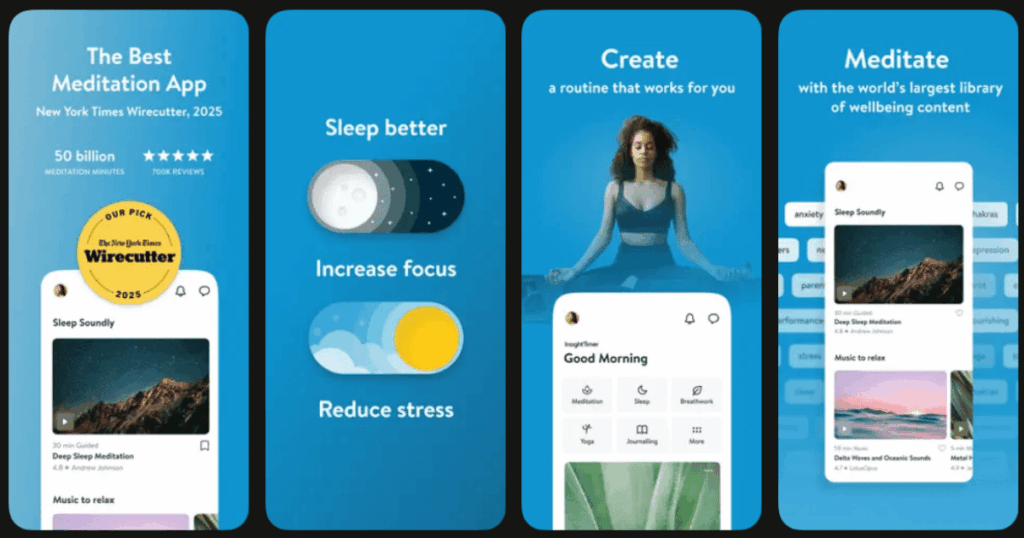
Insight Timer has one of the largest free meditation libraries in the world. There are over 200,000 guided meditations from teachers across the globe. You can also join live meditation events and connect with a community of meditators.
The app is great if you want variety without paying. You can find meditations for any situation or mood. There are options for sleep, anxiety, focus, relationships, and more.
Key Features:
- Over 200,000 free guided meditations from thousands of teachers
- Live meditation events and courses you can join in real time
- Community groups and discussion forums for support
What I like: The sheer amount of free content is amazing. I have discovered so many different meditation styles and teachers. The community aspect makes me feel connected to others on the same journey. Live events are a nice touch.
What I don’t like: The app can feel overwhelming with so many choices. It is harder to know where to start compared to more structured apps.
Pricing: Mostly free. Premium subscription offers extra features.
Platforms: iOS and Android
#7. Woebot – Best for AI Powered Mental Health Support

Woebot is a friendly AI chatbot that uses CBT techniques to help you. You chat with Woebot like you would text a friend. It helps you understand your thoughts and feelings without judgment.
The app is based on research from Stanford University. It offers daily check ins and teaches you skills to manage anxiety and depression. Best of all, it is completely free.
Key Features:
- AI chatbot using cognitive behavioral therapy techniques
- Daily mood check ins and personalized coping strategies
- Research backed approach developed with Stanford psychologists
What I like: Woebot feels like talking to a supportive friend who actually gets it. The CBT exercises have helped me spot negative thinking patterns. Having it available 24/7 means I can get support anytime. Being free is a huge bonus.
What I don’t like: It is still an AI, so it cannot replace human connection. Some conversations can feel scripted or limited.
Pricing: Free
Platforms: iOS and Android
#8. Wysa – Best for Anxiety and Stress Relief

Wysa is another AI mental health app, but it also offers access to human coaches. The cute penguin mascot makes it feel approachable. The app uses CBT, mindfulness, and other proven techniques to help you cope.
You can chat with Wysa anytime you are feeling stressed or anxious. It guides you through breathing exercises, meditations, and sleep stories. If you want more support, you can book sessions with real coaches.
Key Features:
- AI chatbot with warm, supportive conversations for emotional support
- Breathing exercises, meditation, and sleep stories built in
- Option to connect with human coaches for one on one sessions
What I like: The penguin mascot makes Wysa feel friendly and non intimidating. I love that I can get quick support through the AI and then book a human coach if I need more. The variety of tools covers many different needs.
What I don’t like: The premium version with coaching is pricey. The free AI chatbot has limitations over time.
Pricing: Free version available. Premium subscription and individual coaching sessions offered.
Platforms: iOS and Android
#9. Sanvello – Best for Clinical Anxiety and Depression Support

Sanvello was designed specifically to help with anxiety, depression, and stress. It uses clinically validated techniques and is used by over 3 million people. The app combines self care tools with peer support and coaching options.
What makes Sanvello unique is its clinical focus. The techniques are backed by research and feel more therapeutic than other apps. Many insurance plans cover the premium version.
Key Features:
- Clinically validated CBT tools for anxiety and depression
- Peer support community where you can connect with others
- Mood tracking and journaling to spot patterns over time
What I like: Sanvello feels more serious and clinical, which I appreciate. The tools are clearly designed by mental health professionals. Having peer support built in helps me feel less isolated. Insurance coverage makes it more affordable.
What I don’t like: The app is more focused on anxiety and depression, so it might not fit everyone. The interface is not as polished as some competitors.
Pricing: Free version available. Premium covered by many insurance plans.
Platforms: iOS and Android
Are Mental Health Apps Effective?
Research shows that mental health apps can be helpful, especially when combined with other forms of care. Studies have found that apps using CBT and mindfulness techniques can reduce symptoms of anxiety and depression. However, they work best as a supplement to traditional therapy, not a replacement.
Apps are great for building healthy habits and getting support between therapy sessions. They also help people who cannot access traditional mental health care due to cost or location. The key is choosing an evidence based app and using it consistently.
How Do I Choose the Right Mental Health App?
Start by thinking about what you need most. If you struggle with sleep, look for apps with sleep stories and relaxation tools. If you need help with anxiety, find apps that use CBT techniques. For overall wellness, an all in one app like Life7 covers all the bases.
Read reviews and look for apps backed by research. Many apps offer free trials, so take advantage of them. Try a few different options to see which one feels right for you. The best app is one you will actually use every day.
Can Mental Health Apps Replace Therapy?
Mental health apps are wonderful tools, but they cannot fully replace working with a licensed therapist. Apps are great for daily support, building skills, and managing mild to moderate symptoms. But serious mental health conditions need professional care.
Think of apps as part of your mental health toolkit. You might use an app for daily meditation and CBT exercises while also seeing a therapist. Apps like BetterHelp blur the line by offering access to real therapists. The key is knowing when you need more support than an app can provide.