9 Best Mental Health Apps For Men
| App Name | Best For | Key Features | AC Rating | Pricing |
|---|---|---|---|---|
| Life7 | All-in-one mental wellness | Binaural beats, CBT tools, sleep stories, breathing exercises | 4.8/5 | Free trial, then subscription plans |
| Mettle | Men’s mental fitness specifically | Hypnosis, breathwork, daily motivation tools | 4.5/5 | Free trial, then subscription |
| Headspace | Beginners learning meditation | 1,000+ guided meditations, sleep tools, CBT exercises | 4.6/5 | Free trial, then monthly or yearly subscription |
| Calm | Sleep improvement and stress relief | Sleep Stories, masterclasses, nature sounds | 4.5/5 | Free trial, then yearly subscription |
| BetterHelp | Professional online therapy | Licensed therapists, video/chat sessions, 24/7 messaging | 4.4/5 | Weekly subscription plans |
| Woebot | AI-powered CBT support | Daily check-ins, mood tracking, gratitude journaling | 4.3/5 | Free to use |
| Insight Timer | Free meditation content | 250,000+ meditations, community features, live events | 4.7/5 | Free with optional premium |
| Moodfit | Mood tracking and CBT tools | Daily goals, medication tracking, therapy companion | 4.5/5 | Free with premium upgrade |
| PTSD Coach | Veterans and trauma support | PTSD assessments, coping tools, crisis resources | 4.2/5 | Completely free |
#1. Life7 – Best for All-in-One Mental Wellness
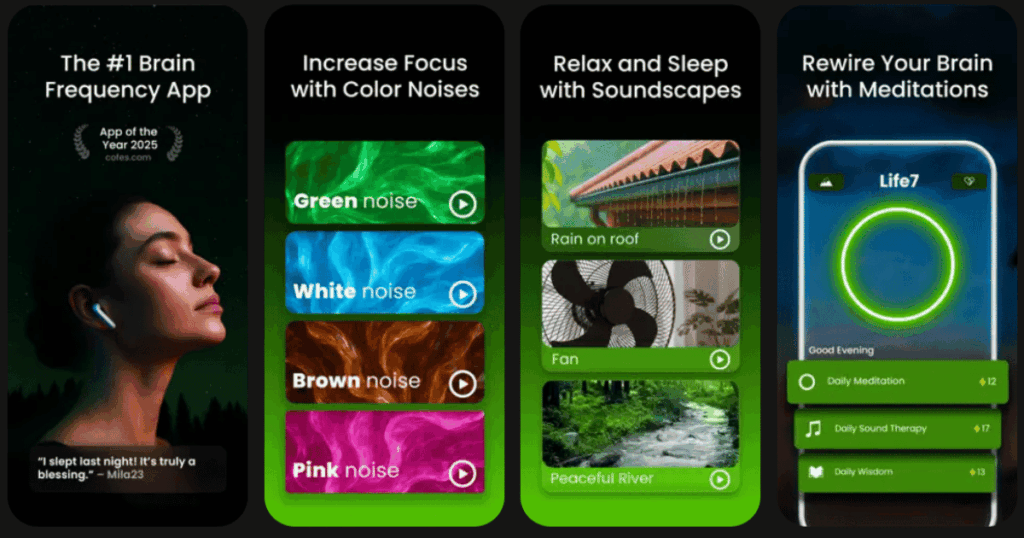
Life7 stands out as the top choice for men looking to improve their mental health in 2025. This powerful app combines science-backed sounds, frequencies, and guided meditations into one easy package. With over 312 million meditation minutes tracked and 1,200+ editorial mentions, Life7 has proven itself as a leader in the space.
What makes Life7 special is its variety. You get access to green noise, white noise, brown noise, and pink noise. There are also Delta, Theta, Alpha, Beta, and Gamma wave music options. Pure binaural beats and isochronic tones help you focus or relax. The app includes 432 Hz, 528 Hz, and Solfeggio frequencies for deeper healing.
Key Features:
- SOS sessions for calming anxiety and panic attacks quickly
- Hypnotherapy, CBT, and vagus nerve stimulation tools for deep emotional healing
- Gamified approach with XP rewards, streaks, and progress tracking
What I like: I really appreciate how Life7 covers so many areas of mental health. You get bedtime stories for better sleep, breathing exercises to calm your nervous system, and powerful affirmations to reprogram your mind. The daily sessions keep you engaged with new content every day. The dashboard helps you track your meditation progress and share achievements with friends.
What I don’t like: The free content is a bit limited. You will want to upgrade to a paid plan to get the full experience with all the premium soundscapes and features.
Pricing: 7 day free trial available. Weekly, monthly, and yearly plans offered with frequent special promotions.
Platforms: iOS and Android
#2. Mettle – Best for Men’s Mental Fitness Specifically
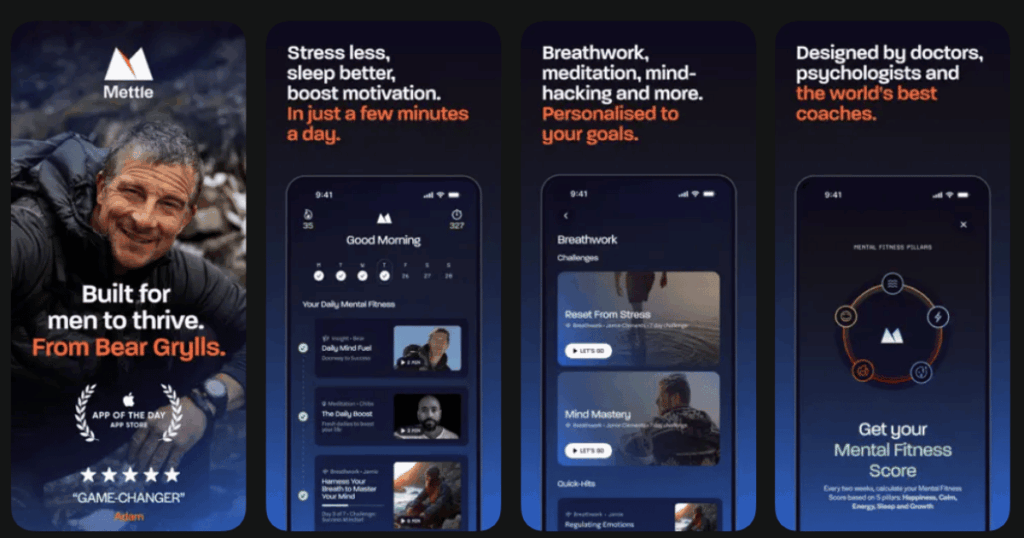
Mettle was built from the ground up just for men. Co-founded by Bear Grylls, this app brings together the best experts in men’s mental health. Paul McKenna and Dr Alex George have created content to help men deal with challenges and optimize their lives.
The app focuses on mental fitness rather than just mental health. This approach helps men who might feel weird about “meditation apps” get on board. The daily tools and challenges fit into busy schedules and take just a few minutes.
Key Features:
- AI-assisted personalization tailors content to your specific goals
- Mind-hacking and hypnosis sessions for peak performance
- Partnership with Imperial College London ensures science-backed methods
What I like: The masculine branding makes this app feel approachable for guys who normally avoid wellness apps. The focus on success, confidence, and performance speaks to how many men think about self-improvement. The 14 day free trial gives you plenty of time to test it out.
What I don’t like: Some users report that certain instructors don’t resonate with them. There’s no easy way to block specific guides from your recommendations yet.
Pricing: 14 day free trial, then subscription plans available.
Platforms: iOS and Android
#3. Headspace – Best for Beginners Learning Meditation
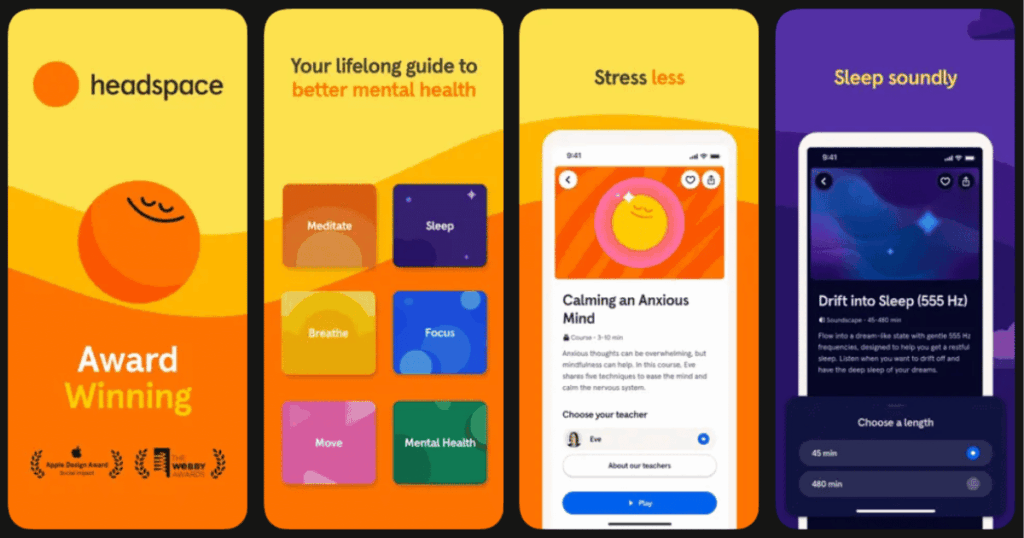
Headspace has become one of the most recognized names in meditation apps. The app teaches fundamental breathwork techniques and meditation exercises through easy courses. Over 500 guided meditations cover stress, anxiety, sleep, and focus.
The playful, cartoon-style design makes meditation feel less intimidating. Andy Puddicombe, the co-founder and a former Buddhist monk, guides many of the sessions. His calm voice has helped millions start their meditation journey.
Key Features:
- Ebb, an empathetic AI companion, provides personalized recommendations
- Daily mindfulness exercises and 3-minute mental resets for busy schedules
- Mental health coaching and therapy options available for deeper support
What I like: The structured approach works great for guys who have never meditated before. The Wake Up feature provides daily inspiration through short videos. You can track your progress and share with friends to stay accountable.
What I don’t like: All content sits behind a paywall after the free trial. The app design can feel a bit confusing when trying to find specific content.
Pricing: 7 to 14 day free trial depending on plan. Monthly subscription around $12.99 or yearly around $69.99.
Platforms: iOS, Android, and Web
#4. Calm – Best for Sleep Improvement and Stress Relief
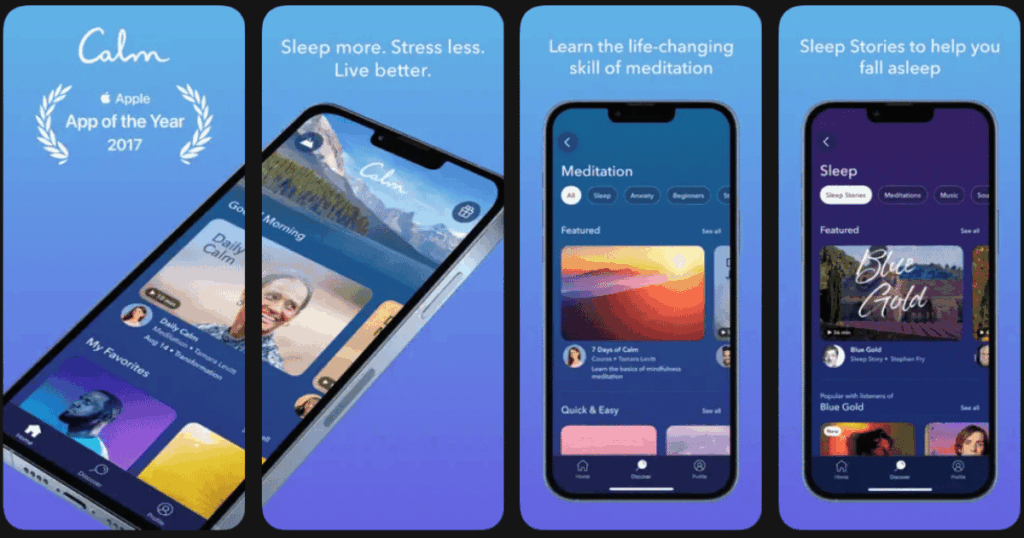
Calm focuses heavily on helping you sleep better and reduce stress. The app has won multiple Apple awards and features celebrity narrators for its famous Sleep Stories. Names like Matthew McConaughey and Idris Elba read bedtime stories designed to help adults fall asleep.
The Daily Calm feature gives you a new 10-minute meditation each day. This keeps the content fresh and builds a consistent habit. Nature scenes and relaxing sounds create a peaceful environment.
Key Features:
- 500+ Sleep Stories narrated by celebrities and meditation experts
- Masterclasses on wellness topics from world-class teachers
- Calm Body section with stretching and mindful movement exercises
What I like: The sleep content is unmatched. I found the Sleep Stories genuinely helpful for winding down at night. The nature backgrounds feel more mature than cartoon-style apps. The Panic SOS feature provides quick help during stressful moments.
What I don’t like: The app leans heavily on celebrity content, which can feel distracting. There’s no clear starting point for beginners, so it takes time to find your footing.
Pricing: 7 day free trial. Monthly around $16.99 or yearly around $79.99. Lifetime option available.
Platforms: iOS, Android, and Web
#5. BetterHelp – Best for Professional Online Therapy

BetterHelp connects you with licensed therapists through your phone. This makes it perfect for men who want real professional help but don’t want to sit in a waiting room. You can have sessions via video, phone, or text chat.
The platform has over 30,000 licensed therapists covering every specialty. Each one has at least a master’s degree and 1,000+ hours of hands-on experience. The matching system pairs you with someone who fits your needs.
Key Features:
- Unlimited messaging with your therapist between sessions
- Access to 20+ weekly group therapy sessions on various topics
- Easy therapist switching if your first match isn’t right
What I like: The convenience factor is huge. I could message my therapist whenever something came up, not just during scheduled sessions. The financial assistance program helps make it affordable for those who qualify.
What I don’t like: The cost adds up over time. It doesn’t accept insurance, which limits affordability for some. This is therapy, not a self-help app, so it requires more commitment.
Pricing: Plans range from $65 to $100 per week. Billed monthly at $260 to $400. Financial aid available.
Platforms: iOS, Android, and Web
#6. Woebot – Best for AI-Powered CBT Support

Woebot uses artificial intelligence to deliver cognitive behavioral therapy techniques. The friendly chatbot checks in with you daily and guides you through managing difficult thoughts and feelings. It’s available 24/7 whenever you need support.
More than 1.5 million people have talked to Woebot about stress, anxiety, relationships, sleep problems, and more. The app uses evidence-based approaches including CBT, interpersonal psychotherapy, and dialectical behavior therapy concepts.
Key Features:
- Daily check-ins that take just 5 minutes to complete
- Mood tracking to identify patterns in how you feel
- Gratitude journaling and mindfulness tools included
What I like: Woebot removes the barriers that stop men from seeking help. There’s no scheduling, no judgment, and no awkward conversations. The chatbot approach feels low-pressure while still teaching real coping skills.
What I don’t like: Responses can feel limited since many conversations use pre-written options. It’s not a replacement for actual therapy if you have serious mental health concerns.
Pricing: Currently free to use. May introduce pricing in the future.
Platforms: iOS and Android
#7. Insight Timer – Best for Free Meditation Content
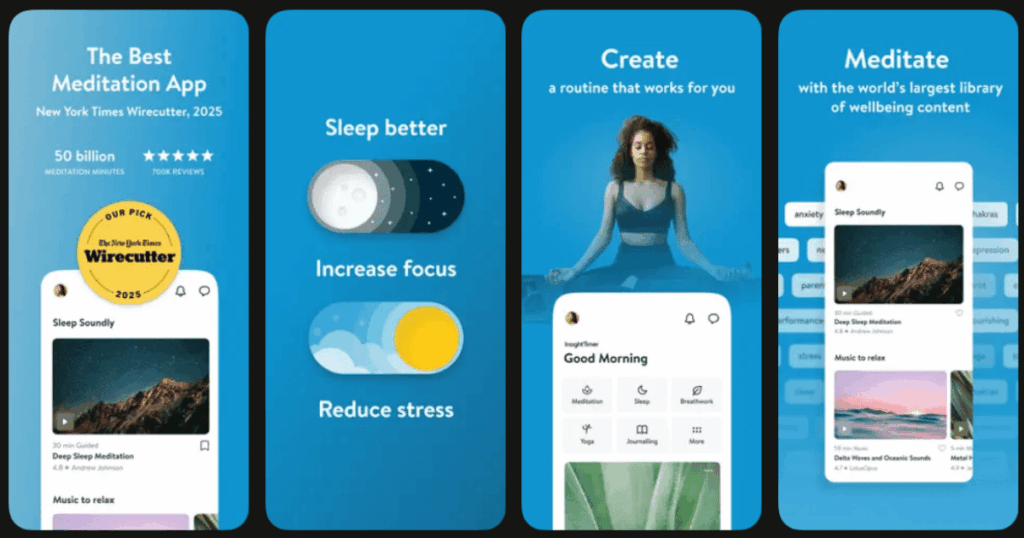
Insight Timer offers the largest free library of meditations available anywhere. Over 250,000 guided meditations from 17,000+ teachers cover every topic imaginable. You could use this app for months without paying a dime.
The community aspect sets it apart from other apps. You can join groups, attend live events, and connect with other meditators worldwide. Live yoga classes and meditation sessions happen every hour of the day.
Key Features:
- Customizable meditation timer for self-guided practice
- 250+ Sleep Stories to help you fall asleep naturally
- Panic SOS and body scan tools for acute stress management
What I like: The amount of free content is incredible. I found meditation teachers I really connected with through the variety available. The community features make you feel less alone in your mental health journey.
What I don’t like: The sheer volume of content can feel overwhelming. The app lacks good filtering for skill levels. Some users report bugs with the timer function.
Pricing: Free with full access to most content. Premium at $9.99 monthly or $59.99 yearly for courses and offline access.
Platforms: iOS, Android, and Web
#8. Moodfit – Best for Mood Tracking and CBT Tools

Moodfit helps you understand what affects your mood and build better mental health habits. Named Best Overall Mental Health App multiple years running by Verywell Mind, it combines many tools in one place. You get a mood journal, CBT exercises, gratitude practice, and medication tracking.
The app helps you see patterns between your mood and factors like sleep, exercise, nutrition, and social interactions. This data-driven approach works well for guys who like to track and measure progress.
Key Features:
- Validated assessments for depression (PHQ-9) and anxiety (GAD-7)
- Custom activity tracking for variables that affect your mood
- Therapy companion feature to share data with your mental health provider
What I like: The customization options are excellent. You can track whatever factors matter most to you. The free version includes almost all the important features, which is rare. Weekly reports help you spot patterns.
What I don’t like: The app can be buggy at times, especially with syncing. The interface isn’t as polished as some premium competitors.
Pricing: Free with most features. Premium upgrade available at around $40 per year.
Platforms: iOS, Android, and Web
#9. PTSD Coach – Best for Veterans and Trauma Support
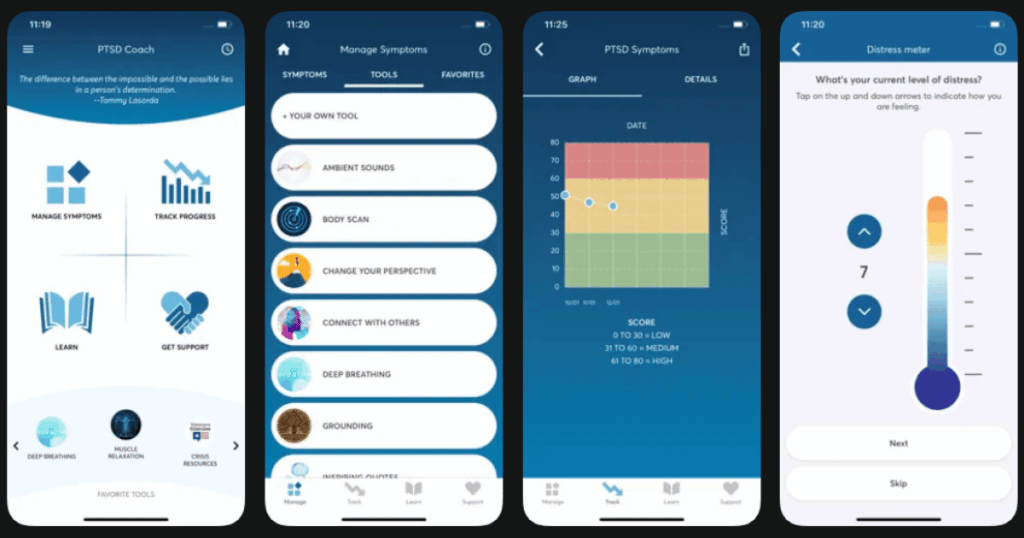
PTSD Coach was developed by the US Department of Veterans Affairs specifically for people dealing with trauma. While designed for veterans, anyone struggling with PTSD symptoms can benefit. The app provides education, assessment tools, and coping strategies.
This free resource offers a private, supportive space to learn about PTSD and manage symptoms. It connects directly to crisis support when needed, which makes it valuable for those in difficult moments.
Key Features:
- Self-assessment tools to track PTSD symptoms over time
- Direct links to support hotlines and crisis resources
- Daily stress management techniques and coping exercises
What I like: The app takes trauma seriously while providing practical tools. The fact that it’s completely free and developed by the VA gives it credibility. The crisis resources could genuinely save lives.
What I don’t like: The design feels dated compared to commercial apps. It’s specifically focused on PTSD, so it won’t help much with general stress or anxiety.
Pricing: Completely free.
Platforms: iOS and Android
FAQs About Mental Health Apps For Men
Are Mental Health Apps Actually Effective For Men?
Yes, research shows mental health apps can genuinely help men improve their wellbeing. Studies have found that apps using cognitive behavioral therapy techniques can reduce symptoms of depression and anxiety. One study showed that participants using mental health apps saw positive results, especially when combined with traditional therapy.
Men often face unique barriers to seeking help, including stigma and time constraints. Apps remove many of these obstacles by offering private, convenient access to tools and techniques. While apps work best as part of a broader mental health strategy, they provide a solid starting point for guys who might never walk into a therapist’s office.
The key is consistency. Using an app for just a few days won’t change much. But committing to 10 to 20 minutes daily for at least 10 to 30 days shows real improvements in most users.
Can Mental Health Apps Replace Traditional Therapy?
No, mental health apps cannot fully replace working with a licensed therapist. Apps work well for managing everyday stress, building healthy habits, and learning coping skills. They’re great for prevention and maintenance of mental health.
However, if you’re dealing with serious conditions like major depression, anxiety disorders, or trauma, professional help is important. Apps like BetterHelp can connect you with licensed therapists while still offering the convenience of technology.
Think of mental health apps as one tool in your toolkit. They complement professional treatment rather than replace it. Many men find success using apps between therapy sessions to reinforce what they’re learning.
How Do I Choose The Right Mental Health App For My Needs?
Start by identifying your main goal. If you want to learn meditation, try Headspace or Life7. For sleep issues, Calm excels. If you need professional therapy, BetterHelp provides licensed counselors. For tracking moods and understanding patterns, Moodfit works great.
Consider your budget too. Apps like Insight Timer and Woebot offer excellent free options. Premium apps like Calm and Headspace cost around $70 to $80 per year. Professional therapy through BetterHelp runs $260 to $400 monthly.
Try free trials before committing. Most apps offer 7 to 14 day trials so you can test the experience. The best app is one you’ll actually use consistently, so find one that fits your personality and schedule.