9 Best Mental Health Apps For Women
| App Name | Best For | Key Features | AC Rating | Pricing |
|---|---|---|---|---|
| Life7 | All-in-one mental wellness | Binaural beats, CBT, sleep stories, SOS sessions | 4.8/5 | Free trial, then subscription |
| Calm | Sleep and relaxation | Sleep stories, guided meditations, celebrity narrations | 4.5/5 | Free version, premium subscription |
| Headspace | Beginners to meditation | Structured courses, AI companion, mindful movement | 4.5/5 | Free trial, then subscription |
| BetterHelp | Online therapy access | Licensed therapists, video/text sessions, unlimited messaging | 4.4/5 | Weekly subscription |
| Moodfit | Mood tracking and CBT | Mood journal, breathwork, nervous system tools | 4.6/5 | Free with premium option |
| Happify | Positive psychology | Science-based games, tracks, community forums | 4.3/5 | Free version, premium subscription |
| Woebot | AI-powered CBT support | 24/7 chatbot, mood tracking, gratitude journaling | 4.4/5 | Free through partners |
| Sanvello | Anxiety and depression | Guided journeys, peer support, coaching | 4.3/5 | Free version, premium subscription |
| Shine | Women of color wellness | Inclusive content, daily meditations, self-care courses | 4.5/5 | Free version, premium subscription |
#1. Life7 – Best for All-in-One Mental Wellness
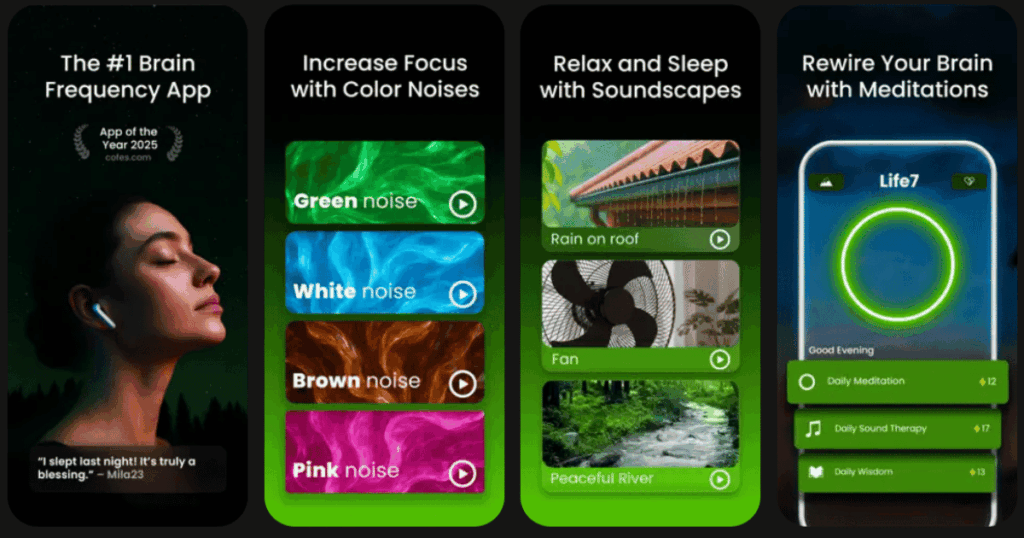
Life7 is the complete mental health app that women need in 2025. It combines sleep support, stress relief, meditation, and therapeutic techniques into one powerful package.
This app offers something for everyone. Whether you are dealing with daily stress, trouble sleeping, or need help managing anxiety, Life7 has you covered. It features over 312 million meditation minutes used by members worldwide. The app has also earned more than 1200 editorial mentions from trusted sources.
Key Features:
- SOS sessions designed to calm anxiety and panic attacks fast
- Multiple sound therapies including green noise, white noise, binaural beats, and Solfeggio frequencies
- CBT, hypnotherapy, vagus nerve stimulation, and guided lucid dreaming sessions
What I like: Life7 really stands out because it does not force you to choose between different apps. I can wake up with a morning meditation, use breathing exercises during a stressful workday, and then fall asleep to sleep stories at night. The daily sessions keep me coming back, and the gamified approach with XP and streaks makes building healthy habits actually fun. The backdrop mode is genius because it lets me mix soundscapes with other audio.
What I don’t like: The free content is a bit limited compared to what you get with a subscription. You will need to upgrade to access most of the premium features and full library of sounds and meditations.
Pricing: 7-day free trial available. Weekly, monthly, and yearly plans offered with frequent special promotions.
Platforms: iOS and Android
#2. Calm – Best for Sleep and Relaxation
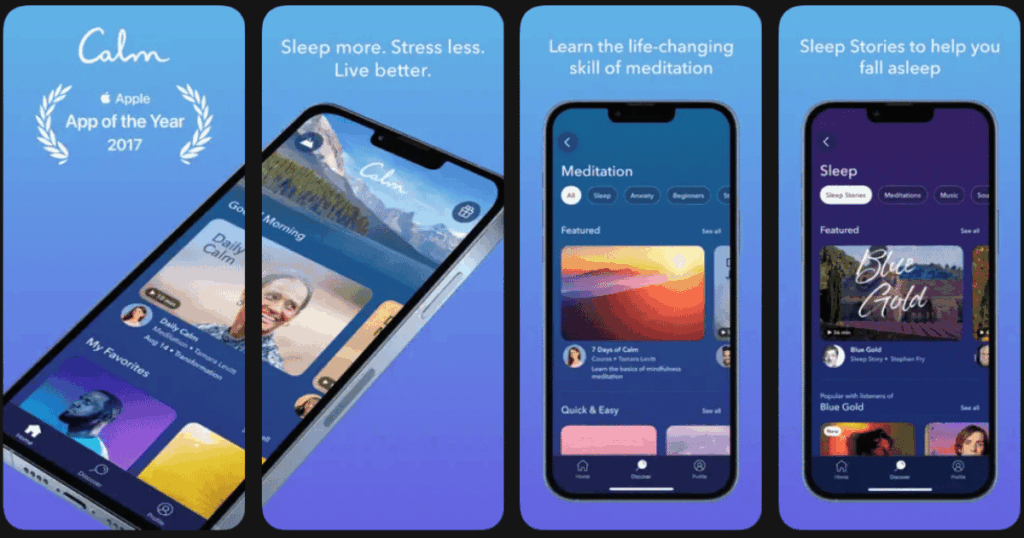
Calm has become one of the most recognizable names in the mental health app space. It focuses heavily on helping you sleep better and manage stress through guided content.
The app features celebrity-narrated sleep stories from voices like Matthew McConaughey and Harry Styles. It also includes an extensive library of meditations and relaxing soundscapes. Nearly 80% of Calm subscribers are women, making it a great fit for female users.
Key Features:
- Daily Calm sessions that provide new content each day
- Extensive sleep story library with calming narrations
- Mood check-ins and breathwork exercises
What I like: The production quality of Calm is top tier. The sleep stories genuinely help me wind down at night, and the Daily Calm gives me a reason to open the app every morning. I appreciate how the app covers everything from kids content to workplace wellness. The mood tracking feature helped me notice patterns in my stress levels.
What I don’t like: Most of the best content sits behind the paywall. The yearly subscription price has increased recently, which makes it one of the more expensive options on this list.
Pricing: Free content available. Premium subscription for full access with yearly and lifetime options.
Platforms: iOS and Android
#3. Headspace – Best for Beginners to Meditation
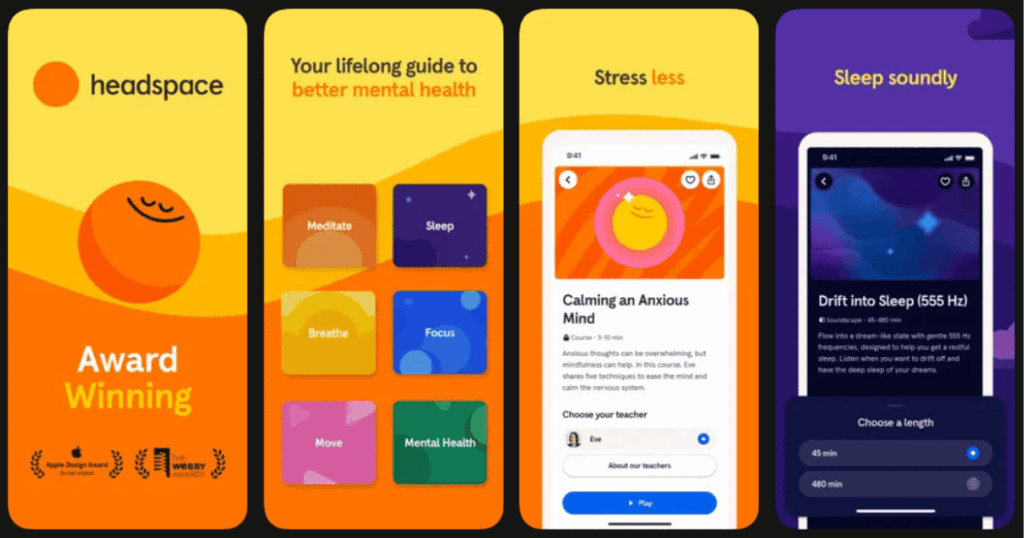
Headspace makes meditation feel approachable and less intimidating. The app uses structured courses that teach you mindfulness step by step. It is perfect if you have never meditated before.
Over 1000 guided exercises are available. The app also recently added Ebb, an AI mental health companion that gives personalized recommendations based on your mood. Headspace has been backed by research showing it can reduce stress in just 10 days.
Key Features:
- Beginner-friendly courses that teach meditation basics
- Sleepcasts with relaxing stories and sounds
- Mindful movement exercises for body and mind connection
What I like: I love how Headspace holds your hand through the learning process. The animations explaining meditation concepts are charming and easy to understand. The sleepcast feature has become my nightly ritual. Having access to therapy and coaching options through the same platform is convenient.
What I don’t like: The app can feel a bit repetitive once you have been using it for a while. All the content is behind a paywall, so there is nothing substantial in the free tier. The interface can also be confusing to navigate at times.
Pricing: 7 to 14 day free trial depending on plan. Monthly and yearly subscriptions available.
Platforms: iOS and Android
#4. BetterHelp – Best for Online Therapy Access

BetterHelp connects you directly with licensed therapists. This is not just a self-help app. You get real professional support from trained counselors.
Over 30,000 therapists are available on the platform. You can communicate through video calls, phone sessions, live chat, or messaging. BetterHelp matches you with a therapist based on your specific needs and preferences.
Key Features:
- Unlimited messaging with your assigned therapist
- Weekly live sessions via video, phone, or chat
- Access to group webinars and worksheets
What I like: The flexibility is unmatched. I could message my therapist whenever I needed to get something off my chest. The matching system worked well for me, and switching therapists is easy if the first match does not click. It removed all the barriers that kept me from traditional therapy like scheduling and commuting.
What I don’t like: The cost adds up quickly since you pay weekly. Insurance is not accepted, so everything is out of pocket. The platform also cannot prescribe medication, so you may need additional help elsewhere.
Pricing: Weekly billing with costs varying by location and therapist availability. Financial aid options available.
Platforms: iOS and Android
#5. Moodfit – Best for Mood Tracking and CBT

Moodfit helps you understand what affects your mood. It combines tracking with practical tools based on cognitive behavioral therapy.
The app has earned multiple awards including Best Mental Health App from Verywell Mind. It offers validated assessments for depression and anxiety. Most features are available for free, which is rare in this space.
Key Features:
- Customizable mood journal with pattern insights
- CBT thought records to challenge negative thinking
- Nervous system tool to understand emotional regulation
What I like: I finally understood why certain days felt harder than others. The app helped me connect my mood to things like sleep, exercise, and social interactions. My therapist actually recommended it because she could see my progress too. The fact that most features are free makes this accessible to everyone.
What I don’t like: The app can be a bit buggy at times, especially when logging entries around midnight. The interface feels a little dated compared to some competitors.
Pricing: Free with most features included. Premium subscription available for additional tools.
Platforms: iOS and Android
#6. Happify – Best for Positive Psychology
Happify uses science-based games and activities to help you build happiness habits. It is grounded in research from positive psychology and CBT.
The app guides you through tracks designed to help with specific goals like reducing stress or building confidence. An AI coach named Anna helps guide you through activities. Community features let you connect with others on similar journeys.
Key Features:
- Interactive games designed to boost mood
- Personalized tracks based on your goals
- Community forums for peer support
What I like: The gamified approach makes mental health work feel less like a chore. I found myself looking forward to completing activities because they were genuinely fun. The science explanations behind each exercise helped me trust the process. Seeing my happiness score improve over time was motivating.
What I don’t like: The best content requires a premium subscription. Some tracks seem free at first but lock activities behind payment as you progress. The premium cost is higher than similar apps.
Pricing: Free version with limited tracks. Premium subscriptions available monthly, yearly, or lifetime.
Platforms: iOS and Android
#7. Woebot – Best for AI-Powered CBT Support

Woebot is an AI chatbot that uses cognitive behavioral therapy techniques. It feels like texting with a supportive friend who is available 24/7.
The app has been featured on 60 Minutes and in major publications like The New York Times. It has helped over 1.5 million people work through issues like anxiety, loneliness, and grief. Research shows it can reduce depression symptoms in just two weeks.
Key Features:
- Daily check-ins with personalized CBT exercises
- Mood tracking with visual progress charts
- Gratitude journal and mindfulness tools
What I like: I could message Woebot at 2am without feeling guilty about bothering anyone. The chatbot feels surprisingly empathetic and remembers our previous conversations. Learning CBT skills through casual conversation made them stick better than reading about them.
What I don’t like: You need an access code from a provider, employer, or partner organization to use the app now. The pre-written response options can feel limiting when you want to express something specific.
Pricing: Currently free through partner organizations. May require employer or healthcare provider access.
Platforms: iOS and Android
#8. Sanvello – Best for Anxiety and Depression

Sanvello combines self-care tools with professional support options. It uses CBT and mindfulness to help with stress, anxiety, and depression.
The app has been clinically validated and offers guided journeys that teach coping skills step by step. Over 3 million people have used it. Many insurance plans now cover premium access at no extra cost.
Key Features:
- Guided journeys with audio lessons and activities
- Peer support community forums and chat groups
- Professional coaching and therapy options
What I like: The peer support community helped me feel less alone. Connecting with others who understood what I was going through made a real difference. The guided journeys broke down complex therapy concepts into manageable pieces. I also appreciated being able to share my progress with my healthcare provider.
What I don’t like: Sanvello recently merged with AbleTo, so the app experience is changing. Some users have reported confusion about accessing features after the transition. The therapy option is limited to certain states and insurance plans.
Pricing: Free version available. Premium subscription or free access through qualifying insurance.
Platforms: iOS and Android
#9. Shine – Best for Women of Color Wellness

Shine was built by two women of color specifically for underrepresented communities. It focuses on mental health challenges faced by BIPOC, LGBTQ+, and women.
The app features content from diverse voices with over 90% of meditations voiced by Black women. It includes playlists for specific communities including Latinx, Black, AAPI+, and LGBTQ+ users. Shine earned Apple’s Best of 2020 recognition.
Key Features:
- Daily meditations with diverse representation
- Community-specific playlists and content
- Weekly courses on topics like resilience and boundaries
What I like: Finally, an app where I see myself reflected in the content. The meditations address experiences like representation burnout and race-based trauma that other apps ignore. The daily check-ins feel personal and relevant to my life. The voices and stories resonate with my experiences as a woman of color.
What I don’t like: Shine has been acquired by Headspace, so some content is now available through that platform instead. The standalone app experience has changed, and longtime users may need to adapt.
Pricing: Free daily content. Premium subscription for full access to courses and workshops.
Platforms: iOS and Android
What is the best free mental health app for women?
Moodfit stands out as the best free option for women. Unlike most apps that lock important features behind paywalls, Moodfit gives you access to mood tracking, CBT tools, breathwork, and journaling without paying.
The app helps you understand what impacts your mental health. You can track sleep, exercise, nutrition, and social interactions alongside your mood. Over time, you see patterns that help you make better choices.
Life7 also offers a generous free trial if you want to explore comprehensive wellness features. Woebot is free through partner organizations and provides excellent CBT support.
How do mental health apps help with anxiety?
Mental health apps help with anxiety through several proven techniques. Most use cognitive behavioral therapy to help you identify and challenge anxious thoughts. This teaches your brain new patterns over time.
Breathing exercises and guided meditations calm your nervous system quickly. Apps like Life7 include SOS sessions specifically designed for panic attacks and acute anxiety. These give you immediate tools when anxiety spikes.
Mood tracking helps you spot anxiety triggers. When you see that certain situations or times consistently cause anxiety, you can prepare or avoid them. Many apps also offer sleep support because poor sleep makes anxiety worse.
Are mental health apps a replacement for therapy?
Mental health apps are helpful tools, but they do not replace professional therapy. Apps work best as a supplement to treatment or for managing mild to moderate symptoms.
If you are experiencing severe depression, suicidal thoughts, or serious mental health conditions, please seek help from a licensed professional. Apps cannot diagnose conditions or prescribe medication.
That said, apps like BetterHelp offer actual therapy with licensed counselors. This provides professional support through a convenient platform. For everyday stress and building healthy habits, self-guided apps like Life7, Calm, and Headspace can make a meaningful difference in your mental wellness journey.