9 Best Mid-Life Crisis Apps For Your Phone
| App Name | Best For | Key Features | AC Rating | Pricing |
|---|---|---|---|---|
| Life7 | All-in-one mental wellness | Binaural beats, sleep stories, CBT tools, meditation | 4.8/5 | Free trial, then subscription |
| Headspace | Beginners to meditation | Guided meditations, sleep tools, daily mindfulness | 4.6/5 | Free trial, then subscription |
| Calm | Sleep improvement and stress relief | Sleep stories, relaxation music, celebrity narration | 4.7/5 | Free trial, then subscription |
| BetterHelp | Online therapy access | Licensed therapists, video/chat sessions, journaling | 4.3/5 | Monthly subscription |
| Insight Timer | Free meditation content | 200,000+ free meditations, live events, community | 4.5/5 | Free with premium option |
| Daylio | Mood tracking without writing | Quick mood logging, habit tracking, visual stats | 4.6/5 | Free with premium option |
| MindDoc | Depression and anxiety screening | CBT courses, mood tracking, personalized insights | 4.4/5 | Free trial, then subscription |
| Fabulous | Building healthy daily habits | Habit stacking, coaching, guided routines | 4.5/5 | Free trial, then subscription |
| Stoic | Journaling and reflection | Morning/evening routines, breathing exercises, prompts | 4.4/5 | Free with premium option |
#1. Life7 – Best for All-in-One Mental Wellness
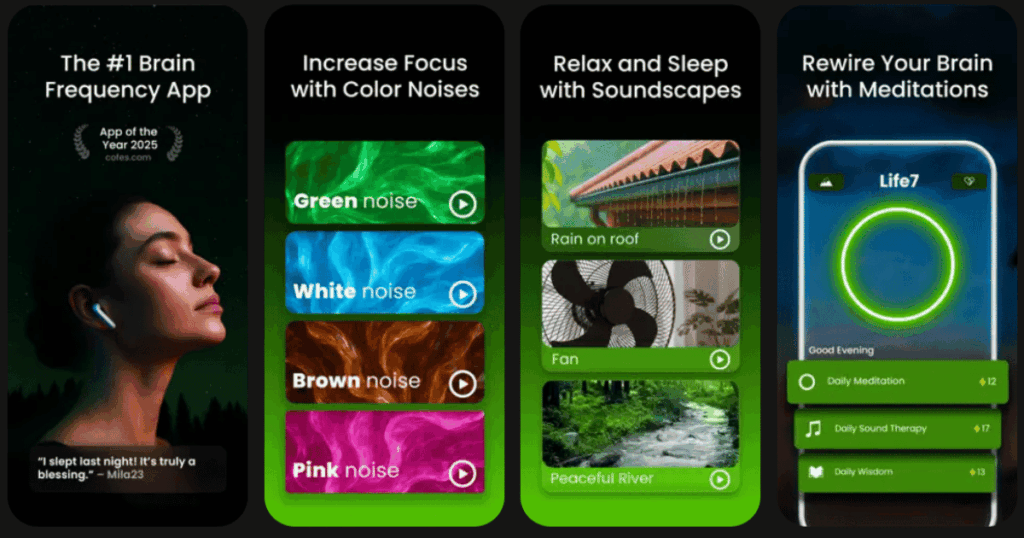
Life7 is my top pick for anyone going through a midlife transition. This app brings together everything you need for mental wellness in one place. It has over 312 million meditation minutes logged by users worldwide. That tells you people are really using it!
The app offers something for everyone. You get binaural beats, sleep stories, breathing exercises, and even CBT tools. It uses special sound frequencies like 432 Hz and 528 Hz. These are designed to help your brain relax and heal.
What makes Life7 stand out is its gamified approach. You earn XP and unlock content as you practice. This keeps you coming back.
Key Features:
- Complete library of guided meditations, sleep stories, and breathing exercises for all skill levels
- Specialized SOS sessions for panic attacks and anxiety plus daily check-ins to track your progress
- Unique sound therapy including brown noise, pink noise, and brain wave frequencies
What I like: I really appreciate how Life7 covers every angle of mental wellness. Whether you need help sleeping, want to calm anxiety fast, or just want to build a meditation habit, it has you covered. The daily sessions keep things fresh so you never get bored. The gamification makes you want to keep your streak going. Plus, the variety of sounds and frequencies feels like having a whole wellness center in your pocket.
What I don’t like: The free content is a bit limited. You will probably need to subscribe to get the full experience. This might frustrate users who want more before committing.
Pricing: 7 day free trial. Weekly, monthly, and yearly plans available. Special offers pop up often.
Platforms: iOS and Android
#2. Headspace – Best for Beginners to Meditation
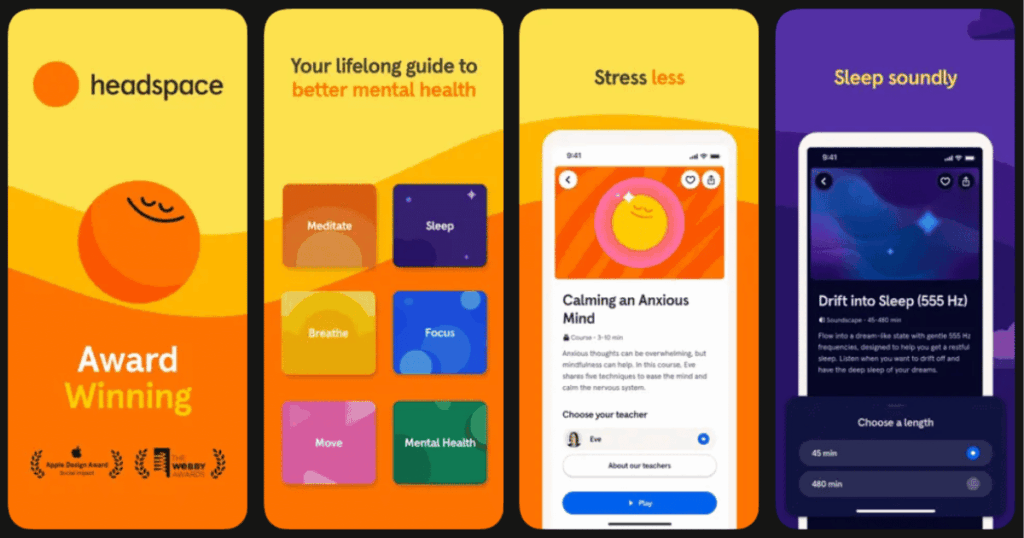
Headspace makes meditation feel easy and approachable. Over 70 million people have downloaded this app. It breaks down mindfulness into simple daily practices that anyone can do.
The app was built with clinical research in mind. Studies show using Headspace for just 10 days can reduce stress. The animations explain meditation concepts in ways that make sense. You do not need any prior experience.
Key Features:
- Over 500 guided meditations with sessions from 3 minutes to 45 minutes long
- Sleep tools including sleepcasts, soundscapes, and wind down exercises
- Focus music and movement exercises for complete mind-body wellness
What I like: Headspace really shines for people new to meditation. The structured courses guide you step by step. I love that the app shows you a daily plan for morning, afternoon, and evening. The visuals are calming and the voices are soothing. It feels like a gentle friend helping you learn.
What I don’t like: Most of the good content sits behind a paywall. The free content is very limited. Also, advanced meditators might find the sessions too basic. There are not many options over 30 minutes.
Pricing: Free trial available. Monthly and annual subscription options.
Platforms: iOS and Android
#3. Calm – Best for Sleep Improvement and Stress Relief
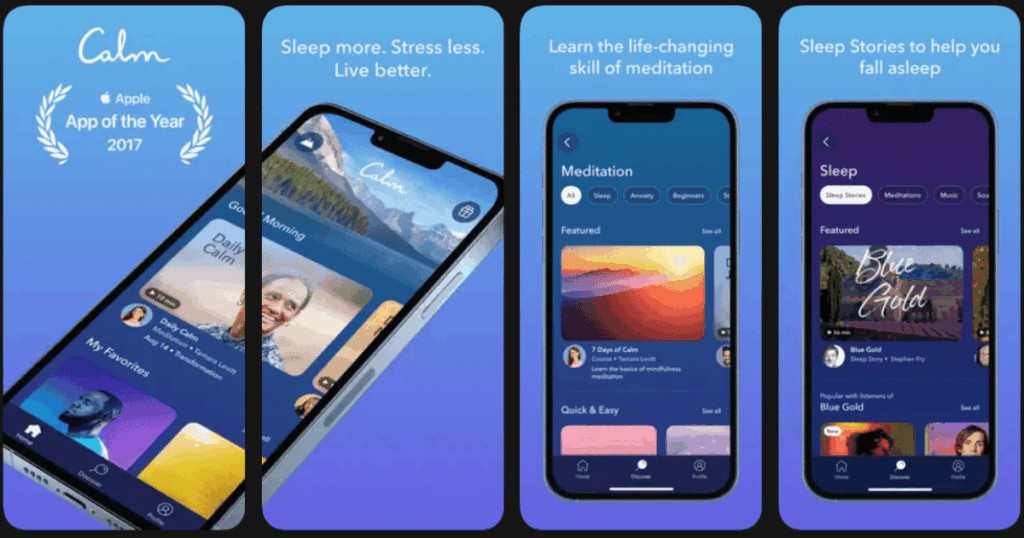
Calm is one of the most popular apps on the market with 1.5 million ratings. It has become the go-to app for people who struggle with sleep. Calm is designed to help you manage stress, sleep better, and live a happier, healthier life.
The sleep stories are the star feature here. They are narrated by well-known mindfulness voices and celebrities, including Matthew McConaughey, Tom Hardy, Idris Elba, Cillian Murphy, and Harry Styles. These voices help you drift off to dreamland.
Key Features:
- Hundreds of sleep stories narrated by celebrities and expert storytellers
- Daily guided meditations ranging from 3 to 25 minutes for busy schedules
- Breathing exercises and relaxing soundscapes for instant stress relief
What I like: The relaxed approach eases users into meditative practices. The sleep stories feel like being a kid again with someone reading you a bedtime story. I find the Breathe Bubble feature perfect for those moments when stress hits hard. The music library is extensive and really well curated for different moods.
What I don’t like: The subscription cost is on the higher end compared to similar apps. Some users feel the content gets repetitive after a while. The app can also feel overwhelming with so many options to choose from.
Pricing: Free trial. Then annual subscription required for full access.
Platforms: iOS and Android
#4. BetterHelp – Best for Online Therapy Access

BetterHelp offers online therapy via text, live chat, telephone, and video, with 24/7 access to a therapist. If you are going through a real midlife crisis, sometimes you need more than an app. You need a real person to talk to.
BetterHelp has a user-friendly platform and one of the largest networks of qualified therapists. The matching process helps you find someone who understands your situation.
Key Features:
- Access to licensed therapists through video, phone, chat, and messaging options
- Easy therapist switching if your first match is not the right fit
- Built-in journaling and goal tracking tools to support your therapy journey
What I like: The ability to change therapists in the app with just a few clicks, no guilt attached is a game changer. I appreciate that you can reach out anytime through messaging. The BetterHelp app offers a journaling feature for jotting down thoughts that can be shared with your therapist and a tool for creating actionable therapeutic goals.
What I don’t like: The price point is significant compared to meditation apps. Some users say the therapist bios were often incorrect or misleading. Video quality can sometimes lag during sessions.
Pricing: Monthly subscription. Financial aid available for those who qualify.
Platforms: iOS and Android
#5. Insight Timer – Best for Free Meditation Content
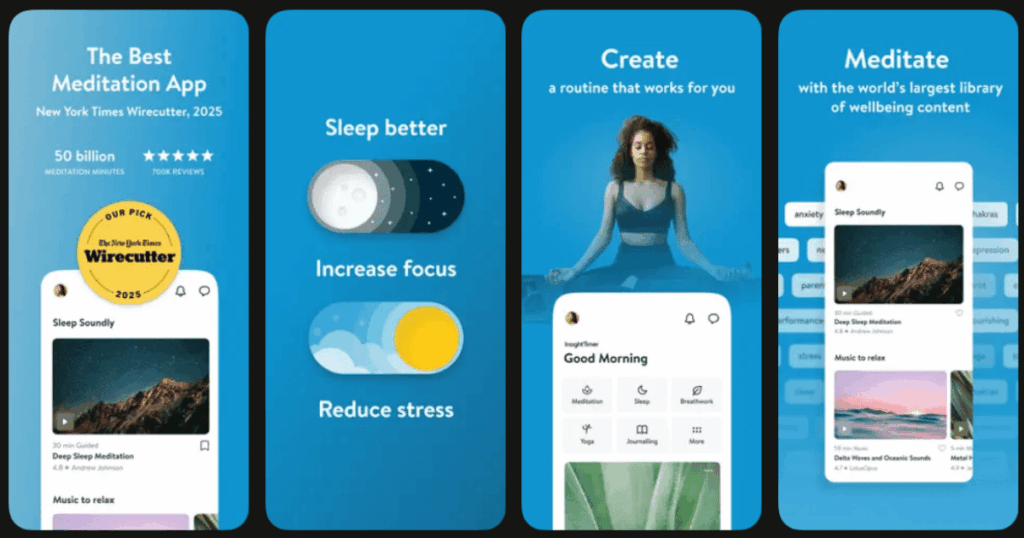
Insight Timer has gained recognition worldwide, boasting over 25 million users globally. The free version of their app provides everything you could need and doesn’t hide any necessary features behind a paywall.
The app offers over 220,000 free guided meditations, music tracks, and talks from various teachers and experts. That is more free content than any other meditation app out there.
Key Features:
- Massive library of free guided meditations from thousands of teachers worldwide
- Customizable meditation timer with bells and ambient sounds
- Live events and community groups to connect with other meditators
What I like: The app tells you how many other users are meditating right at that moment. This makes you feel connected to something bigger. Insight Timer will keep track of how long you meditate, how many days in a row, and how many meditations you’ve completed. The variety of teachers means you can always find something that fits your mood.
What I don’t like: Some users updated their reviews to report issues and general complaints about the app’s updates. Every time Insight Timer rolled out a new update, users reported that the app started to glitch, time-out, or crash entirely. The social features can feel cluttered if you just want to meditate in peace.
Pricing: Free! Premium optional for offline access and advanced features.
Platforms: iOS and Android
#6. Daylio – Best for Mood Tracking Without Writing

Keep a diary and capture your day without writing down a single word. Daylio makes tracking your emotions super quick and easy. Journal entries typically take under five minutes.
The simplistic interface design consisting of the ability to tap an icon to record a mood and an activity is a major success. This is perfect for busy people in midlife who do not have time for long journaling sessions.
Key Features:
- Quick mood logging using emoji icons with no writing required
- Activity and habit tracking to see what affects your mood
- Visual statistics and year in pixels view to spot patterns over time
What I like: It helped me begin to track what was making me happy and what was making me sad and spotting the consistency of these activities correlating with my moods. The customization options are fantastic. You can change colors, icons, and activities to make it truly yours. The data is stored locally and they don’t send your data to their servers.
What I don’t like: If you prefer dedicating time to writing, Daylio may not be the best fit. The app allows for a short note for each day but it is not designed for long memories or journaling.
Pricing: Free version with lots of features. Premium unlocks advanced stats and backup options.
Platforms: iOS and Android
#7. MindDoc – Best for Depression and Anxiety Screening

Trusted by over 3 million users worldwide, MindDoc is rated 4.7 stars from 26,000+ reviews. Developed by clinical psychologists and researchers, MindDoc is designed to support individuals facing common mental health challenges including depression, anxiety, insomnia, and eating disorders.
The app asks you questions throughout the day to understand your emotional patterns. After two weeks, it creates a report you can share with a therapist.
Key Features:
- Daily mood tracking questions that capture real-time emotional states
- CBT-based courses and psychological exercises for self-improvement
- Personalized reports to share with healthcare providers
What I like: One of my favorite features of MindDoc is that it prompts you multiple times throughout the day to catch you in your real feelings. Having many months worth of data and trends recorded that I can simply export and share with a therapist makes starting therapy less scary.
What I don’t like: The best features require a premium subscription. Some users find the frequent notifications annoying. The app works best as a companion to actual therapy, not a replacement.
Pricing: Free basic version. Premium subscription for full course access.
Platforms: iOS and Android
#8. Fabulous – Best for Building Healthy Daily Habits

Fabulous is an award-winning self-care coaching app that harnesses the power and wisdom of behavioral science to help you develop lasting healthy habits. Fabulous was incubated in Duke University’s Behavioral Economics Lab.
The app helps you build routines through a technique called habit stacking. You start with one tiny habit and build from there.
Key Features:
- Guided habit building journeys that start small and grow over time
- Daily coaching prompts and motivational letters to keep you on track
- Community challenges and circles to connect with others on similar journeys
What I like: Building new habits is hard, but Fabulous breaks it down into manageable, bite-sized tasks. By starting with something easy, like drink water each day, it gave them a sense that they could complete other tasks. The colorful design and encouraging letters make self improvement feel achievable.
What I don’t like: Many reviewers stated that the Fabulous app sends out a lot of notifications and emails. There is no customization available in the app for the home screen. The subscription pricing can be confusing.
Pricing: Free trial. Annual subscription for full access.
Platforms: iOS and Android
#9. Stoic – Best for Journaling and Reflection
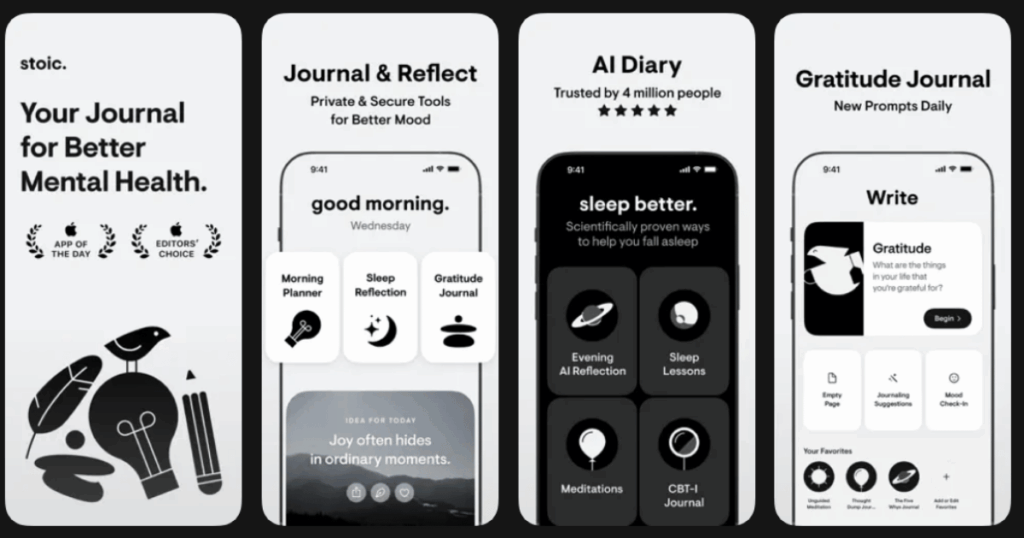
Stoic is your mental health companion – it helps you understand your emotions and provides insights on how to be happier, more productive, and overcome obstacles. Stoic is praised for its intuitive design and comprehensive features that support mental health, including journaling, meditation, and breathing exercises.
The app is based on Stoic philosophy. It helps you prepare for your day in the morning and reflect on it in the evening.
Key Features:
- Morning preparation and evening reflection routines with guided prompts
- Breathing exercises and meditation sessions to calm your mind
- Mood tracking and insights to understand what affects your emotional state
What I like: Stoic has to be the best journaling app I’ve seen so far. It’s clean, works super well. It’s just about perfect. The thought-provoking questions help you dig deeper than surface level. I’m able to customize how I want to journal to fit my current goals and space in life.
What I don’t like: There is no Windows application and the web-based application only allows login with Apple ID. Some users report bugs with saving journal entries. The philosophy angle might not appeal to everyone.
Pricing: Free basic version. Premium for additional features and syncing.
Platforms: iOS, Android, Mac, Apple Watch, Web
Can Apps Really Help With a Midlife Crisis?
Yes, apps can absolutely help you navigate a midlife transition. Of course, they are not magic solutions. But they give you tools to understand your emotions better.
Think of these apps as pocket-sized support systems. They help you build healthy habits. They give you space to reflect. And they connect you with resources when you need them most.
The best approach combines app-based tools with real-world support. This might mean therapy, talking to friends, or joining a community. Apps work best as one part of your wellness toolkit.
What Features Should I Look For in a Mental Wellness App?
Look for apps that match your specific needs. If sleep is your issue, choose an app with strong sleep content. If you need therapy, consider BetterHelp or similar services.
Key features to consider include ease of use, offline access, and privacy settings. Check if the app sends too many notifications. Read reviews from people in similar situations to yours.
Free trials help you test before committing. Most premium apps offer 7 to 14 day trials. Use this time to see if the app actually fits into your daily routine.
Are These Apps Safe and Private?
Most reputable mental wellness apps take privacy seriously. They use encryption and secure storage for your data. Always read the privacy policy before signing up.
Look for apps that store data locally on your device. This gives you more control. Be careful with apps that require extensive personal information upfront.
If you are sharing sensitive information in therapy apps like BetterHelp, know that licensed therapists follow confidentiality rules. Your conversations are protected just like in-person therapy sessions.