9 Best Mood Tracker Apps For Your Phone
| App Name | Best For | Key Features | AC Rating | Pricing |
|---|---|---|---|---|
| Life7 | All in one mental wellness | Mood tracking, meditation, CBT tools, binaural beats, sleep stories | 4.8/5 | 7 day free trial, then subscription plans |
| Daylio | Quick visual mood logging | Icon based tracking, activity linking, statistics dashboard | 4.7/5 | Free with premium upgrade option |
| Wysa | AI powered emotional support | AI chatbot, CBT exercises, mood check ins, coaching | 4.6/5 | Free basic version, premium subscription |
| Calm | Meditation and relaxation | Sleep stories, guided meditations, mood check ins, music | 4.5/5 | Free trial, then annual or monthly plans |
| Reflectly | Journaling and self reflection | AI prompts, mood graphs, daily challenges, voice notes | 4.4/5 | Free basic, premium subscription |
| Moodfit | Data driven mental fitness | CBT tools, mood journaling, breathing exercises, insights | 4.5/5 | Free with premium features |
| Sanvello | Comprehensive mental health tools | Therapy techniques, coaching, community support, tracking | 4.3/5 | Free basic, premium and coaching tiers |
| Bearable | Detailed symptom tracking | Health correlations, custom factors, detailed reports | 4.6/5 | Free basic, premium subscription |
| Moodpath | Mental health assessments | Psychological screening, progress reports, educational content | 4.2/5 | Free basic, premium for full access |
#1. Life7 – Best for All in One Mental Wellness
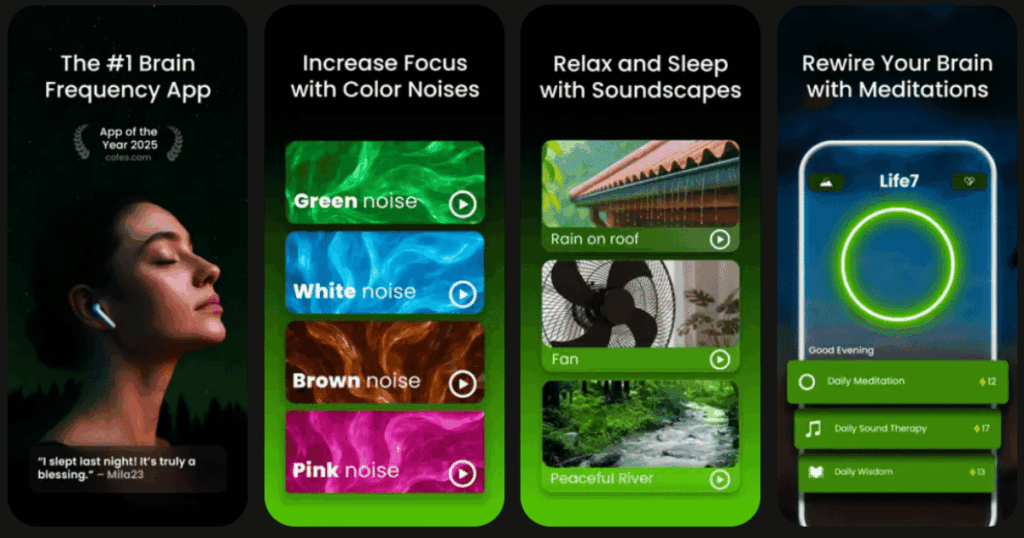
Life7 is your complete mental wellness companion that does so much more than just track your mood. This app combines mood tracking with a massive library of meditation content, sleep tools, and therapeutic techniques. I love how it brings everything together in one place.
With over 312 million meditation minutes logged and 1200+ editorial mentions, Life7 has proven itself as a trusted wellness tool. The app offers daily check ins where you can track your mood and save thoughts. You also get access to breathing exercises, CBT tools, hypnotherapy sessions, and even vagus nerve stimulation content.
Key Features:
- Track your mood daily and save personal thoughts through the custom dashboard
- Access binaural beats, solfeggio frequencies, and brain wave music for deep relaxation
- Use SOS sessions for instant anxiety and panic attack relief
What I like: I really enjoy how Life7 gamifies the wellness journey. You earn XP for completing sessions and can unlock premium soundscapes as you progress. The streak feature keeps me motivated to check in daily. The variety of content is incredible too. From lucid dreaming sessions to ASMR and 8D sleep audio, there is something for every mood and need. The backdrop mode is genius because you can mix soundscapes with meditations.
What I don’t like: The free content is somewhat limited compared to the premium library. You really need to subscribe to get the full experience. However, the 7 day free trial lets you explore everything first.
Pricing: 7 day free trial available. Weekly, monthly, and yearly subscription plans with frequent special offers.
Platforms: iOS and Android
#2. Daylio – Best for Quick Visual Mood Logging

Daylio is an award winning mood tracker that makes logging your emotions incredibly easy. You do not need to type a single word. Just tap on emoji style icons to record how you feel. This makes it perfect for people who want to track consistently but hate writing.
The app lets you link activities to your moods so you can discover patterns over time. Did exercise make you happier? Did staying up late worsen your mood? Daylio shows you these connections through beautiful charts and statistics.
Key Features:
- One tap mood logging with customizable icons and emoji style moods
- Statistics and calendar views that reveal your emotional patterns over time
- Habit tracking integrated with mood data to spot lifestyle connections
What I like: The simplicity is what keeps me coming back. It takes literally seconds to log an entry. The year in pixels feature is a beautiful way to visualize your entire year of moods at a glance. I also appreciate that you can add photos, notes, and even audio recordings if you want more detail.
What I don’t like: The free version has limited customization options. Some advanced statistics and features require the premium subscription. The app also lacks guided content like meditations.
Pricing: Free to download with optional premium subscription for advanced features.
Platforms: iOS and Android
#3. Wysa – Best for AI Powered Emotional Support

Wysa is a clever mental health app that uses an adorable AI penguin chatbot to support your emotional wellbeing. It combines mood tracking with cognitive behavioral therapy techniques. The penguin asks how you feel and guides you through helpful exercises based on your answers.
This app offers a mood tracker, mindfulness coach, anxiety helper, and mood boosting buddy all in one. It has been validated by research and is even used by healthcare organizations.
Key Features:
- AI chatbot that provides supportive conversations and emotional check ins anytime
- Over 150 evidence based exercises for anxiety, depression, and stress relief
- Optional access to real human coaches for deeper support
What I like: The penguin chat feels surprisingly comforting and judgment free. I can vent at any time of day without feeling embarrassed. The app has strong privacy practices and does not sell your personal information. The themed packs covering topics like self esteem, sleep, and anger are really helpful.
What I don’t like: The AI responses can feel repetitive after extended use. The penguin gets repetitive, but the repetitive questions still guide your thoughts in the right direction. Also, therapy sessions are text only with no voice call option.
Pricing: Free version available with basic chatbot access. Premium subscription unlocks all exercises and features.
Platforms: iOS and Android
#4. Calm – Best for Meditation and Relaxation
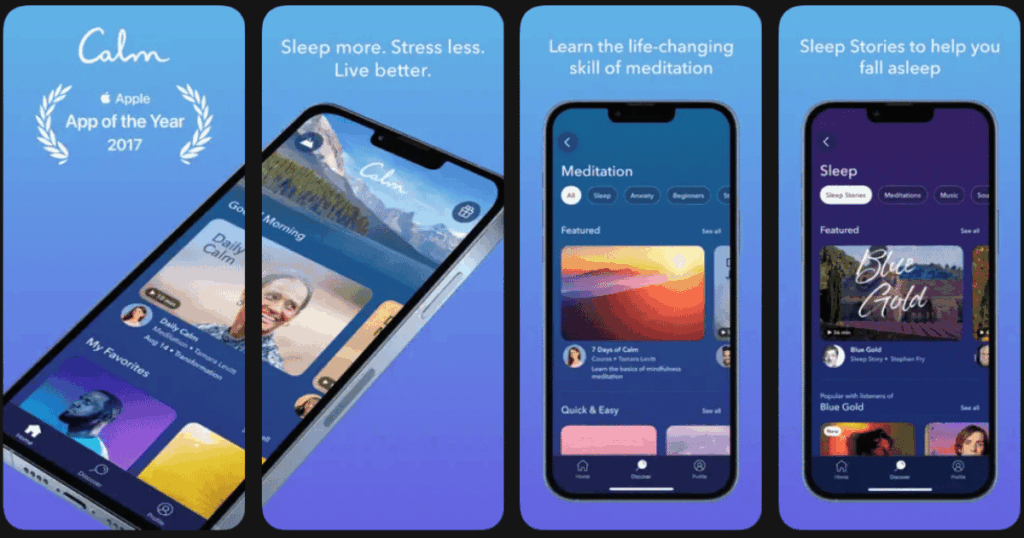
Calm is one of the most popular wellness apps in the world with over 100 million downloads. While it is primarily known for meditation, it also includes solid mood tracking features. The mood check ins let you log how you feel using emojis and add notes about your day.
The app features meditations on a range of topics, has excellent content for kids, and offers some beginner level meditations. The signature Daily Calm feature provides fresh meditation content every single day.
Key Features:
- Mood check ins with emoji selection and journaling prompts
- Sleep Stories narrated by celebrities like Matthew McConaughey and Stephen Fry
- Extensive library of guided meditations, breathing exercises, and calming music
What I like: The production quality is outstanding. Everything from the soothing sounds when you open the app to the celebrity narrated sleep stories feels premium. Calm’s mood check ins incorporate some light journaling and the breathwork section helps you learn various techniques. The kids content is also fantastic for families.
What I don’t like: Most features require a paid subscription and the cost is higher than many competitors. Some reviews note there are many alternatives available at a lower price than Calm.
Pricing: Free trial available. Monthly or annual premium subscription required for full access.
Platforms: iOS and Android
#5. Reflectly – Best for Journaling and Self Reflection
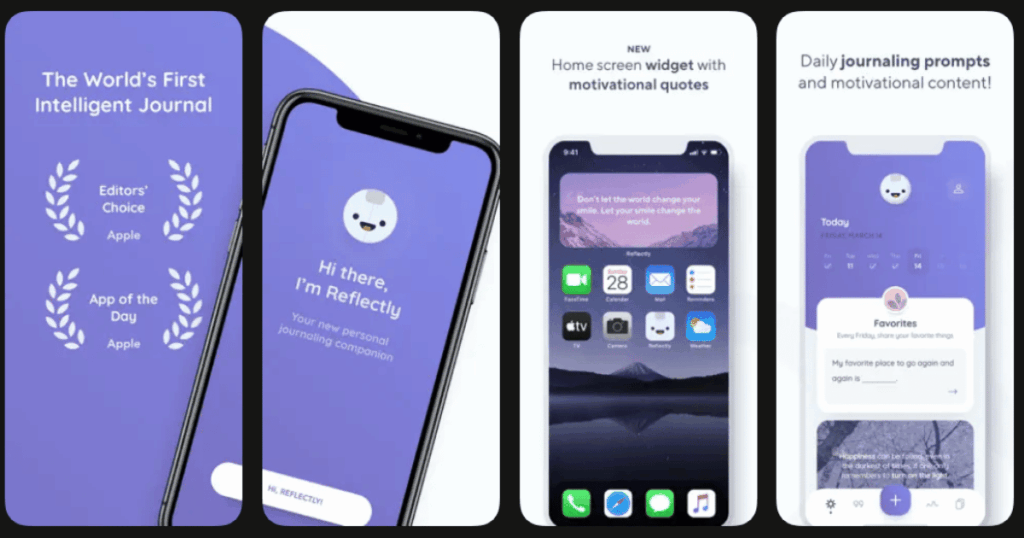
Reflectly markets itself as the first intelligent journal app. It uses artificial intelligence to personalize your experience and help you reflect deeper. It is the world’s first intelligent journal app and mood tracker that gives you personalized motivation and prompts the more you use it.
The app combines mood tracking with guided journaling so you do not stare at a blank page. Each day you log your mood with a slider and then answer personalized questions based on how you feel.
Key Features:
- AI generated prompts that adapt to your mood and previous entries
- Visual mood graphs and statistics showing emotional patterns over time
- Daily challenges and motivational quotes to encourage positive habits
What I like: The app solves the blank page problem perfectly. The playful questions nudged me to think deeper without feeling like homework. I appreciate being able to add voice notes and photos to entries. The mood visualization helps me spot what affects my emotions.
What I don’t like: There does not seem to be any difference between the free version and the premium version other than ads being removed. Also the pricing differs significantly between iOS and Android stores which feels inconsistent.
Pricing: Free basic version available. Premium subscription removes ads and adds features.
Platforms: iOS and Android
#6. Moodfit – Best for Data Driven Mental Fitness

Moodfit takes a scientific approach to mood tracking. It earned recognition as the Best Mood Tracker by Verywell Mind. The app helps you understand and manage your mood through tools grounded in cognitive behavioral therapy and mindfulness.
You can track factors like sleep, water intake, and exercise to see how they connect to your emotional state. The app includes mood journals, gratitude exercises, and CBT tools to work through negative thoughts.
Key Features:
- Comprehensive tracking of mood alongside health factors like sleep and exercise
- CBT based tools for identifying and reframing negative thought patterns
- Live meditation sessions and breathing exercises for immediate relief
What I like: The holistic approach really helps you see the bigger picture. Tracking multiple health factors alongside mood revealed surprising connections for me. The gratitude feature has noticeably improved my outlook. Mental health assessments help me check in on my overall wellbeing.
What I don’t like: The interface feels less polished compared to some competitors. There are many features which can be overwhelming for someone just starting their mental health journey.
Pricing: Free version with core features. Premium subscription unlocks additional tools and content.
Platforms: iOS and Android
#7. Sanvello – Best for Comprehensive Mental Health Tools

Sanvello offers a complete mental health toolkit that goes beyond simple mood tracking. The app combines self care tools with professional support options. It uses clinically validated techniques like CBT and mindfulness meditation.
What sets Sanvello apart is the community feature where you can connect with others on similar journeys. This social support adds an extra layer of encouragement to your mental wellness routine.
Key Features:
- Mood and health tracking with detailed insights about emotional patterns
- Guided journeys based on CBT for anxiety, depression, and stress management
- Peer community support and optional professional coaching
What I like: The guided journeys are thoughtfully designed and feel like mini therapy courses. Having a supportive community within the app reduces feelings of isolation. Some health insurance plans cover Sanvello which makes it more accessible.
What I don’t like: The free version is quite limited compared to premium. The coaching add on increases costs significantly. Navigation can feel cluttered with so many features.
Pricing: Free basic version. Premium subscription for full features. Additional coaching sessions available.
Platforms: iOS and Android
#8. Bearable – Best for Detailed Symptom Tracking
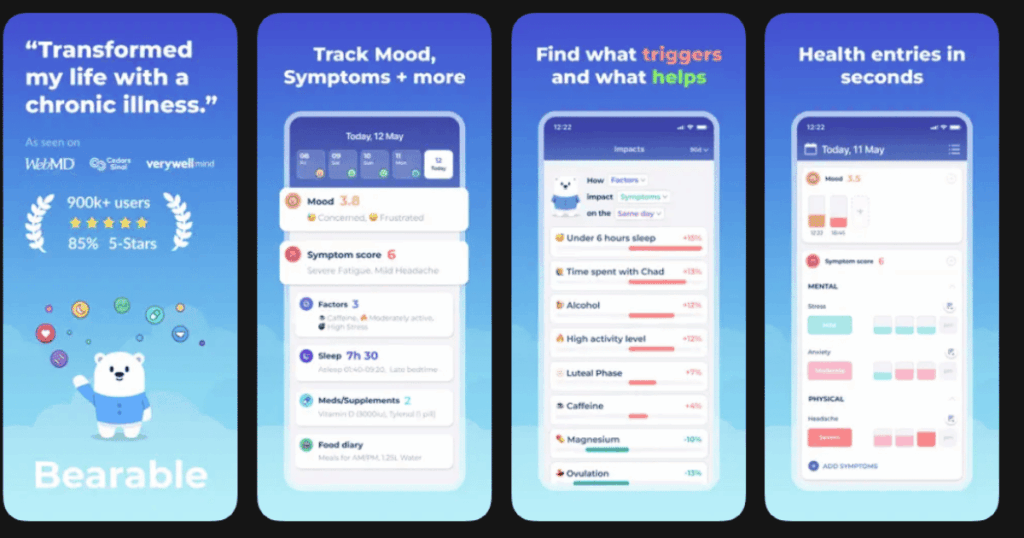
Bearable is perfect for people who want deep insights into their mental and physical health patterns. The app lets you track mood alongside symptoms, medications, sleep, diet, and countless other factors. It then shows you correlations between everything.
This level of detail makes Bearable especially useful for those managing chronic conditions or working with healthcare providers. You can export detailed reports to share with your doctor.
Key Features:
- Custom tracking for mood, symptoms, activities, and any other factors you choose
- Correlation insights that show which factors impact your wellbeing most
- Exportable reports in multiple formats for sharing with healthcare providers
What I like: The customization is unmatched. You can track literally anything and the app will analyze patterns for you. The insights feature helped me discover that certain foods were affecting my mood. Being able to share data with my therapist improved our sessions.
What I don’t like: The learning curve is steeper than simpler mood trackers. All those tracking options can feel overwhelming at first. Some advanced features require premium.
Pricing: Free basic tracking. Premium subscription unlocks advanced insights and unlimited tracking.
Platforms: iOS and Android
#9. Moodpath – Best for Mental Health Assessments

Moodpath focuses on helping you understand your mental health through regular psychological assessments. The app asks you questions throughout the day to screen for symptoms of depression and anxiety. After two weeks it generates a detailed report you can discuss with a professional.
The educational content teaches you about mental health conditions so you better understand what you experience. This makes it a great starting point for anyone questioning their mental wellbeing.
Key Features:
- Daily mental health assessments based on psychological screening methods
- Progress reports generated after two weeks of tracking
- Educational courses explaining depression, anxiety, and coping strategies
What I like: The assessment approach gives real actionable insights rather than just a daily mood log. The reports are detailed enough to bring to a therapy session. The educational content genuinely helped me understand my anxiety better.
What I don’t like: The question prompts can interrupt your day since they notify you multiple times daily. Premium is required for full course access and detailed analytics.
Pricing: Free basic assessments. Premium subscription for courses and detailed features.
Platforms: iOS and Android
Do Mood Tracker Apps Actually Help?
Yes, mood tracker apps can genuinely improve your mental wellbeing when used consistently. The practice of logging your emotions brings awareness to how you feel throughout the day. Many people go through life without stopping to check in with themselves.
Research supports that mood tracking helps identify triggers and patterns you might miss otherwise. When you notice that certain activities, people, or situations consistently affect your mood, you gain power to make changes.
However, mood tracker apps work best as a supplement to other wellness practices. They are not a replacement for professional help when you need it. Think of them as one tool in your mental health toolkit.
How Often Should I Track My Mood?
Most experts recommend tracking your mood at least once daily to get meaningful insights. Many apps like Moodpath encourage multiple check ins throughout the day for more accurate data. However, the right frequency depends on your goals and lifestyle.
The most important thing is consistency over frequency. Tracking once a day every day beats tracking three times daily for a week then forgetting about it. Set a reminder that fits your routine. Many people find bedtime or morning works best since it becomes part of their daily ritual.
If you are tracking to identify specific triggers, more frequent logging during particular situations can be helpful. But do not let tracking feel like a chore or it will not stick.
Are Free Mood Tracker Apps Worth Using?
Free mood tracker apps absolutely offer value, especially for beginners. Most apps on this list have free versions with solid basic features. You can log moods, view basic statistics, and build the habit of daily tracking without spending anything.
However, premium versions typically unlock deeper insights, advanced analytics, and additional therapeutic content. If you find a free app helpful and want more from it, upgrading usually provides good value. The investment in your mental health pays dividends.
I recommend starting with free versions to find an app that fits your style. Once you know what works for you, consider premium features if they address your specific needs. Life7’s free trial is a great way to experience premium features before committing.