9 Best Self-Sabotage Apps For Your Phone
| App Name | Best For | Key Features | AC Rating | Pricing |
|---|---|---|---|---|
| Life7 | Complete mental wellness transformation | All-in-one meditation, sleep sounds, binaural beats, CBT tools, hypnotherapy | 4.8/5 | Free trial, then weekly/monthly/yearly plans |
| Headspace | Beginners learning meditation basics | Guided meditations, sleep casts, mindful moments, focus sessions | 4.5/5 | Free trial, then monthly or yearly subscription |
| Calm | Sleep improvement and relaxation | Sleep stories, nature sounds, masterclasses, daily calm sessions | 4.4/5 | Free trial, then monthly or yearly subscription |
| BetterHelp | Professional therapy access | Licensed therapists, video/text sessions, 24/7 messaging | 4.3/5 | Weekly subscription |
| Happify | Positive psychology games | CBT activities, mood games, AI coach, community support | 4.2/5 | Free version, premium monthly or yearly |
| Wysa | AI-guided emotional support | AI chatbot, CBT exercises, mood tracking, optional coaching | 4.3/5 | Free version, premium yearly |
| Sanvello | CBT skill building | Guided journeys, peer support, mood tracking, therapy access | 4.2/5 | Free version, premium monthly or yearly |
| Woebot | Daily mental health check-ins | CBT chatbot, mood tracking, gratitude journaling, coping tools | 4.1/5 | Free with employer/healthcare access |
| MindShift CBT | Anxiety and panic relief | Fear ladders, belief experiments, relaxation exercises, goal setting | 4.0/5 | Free |
#1. Life7 – Best for Complete Mental Wellness Transformation
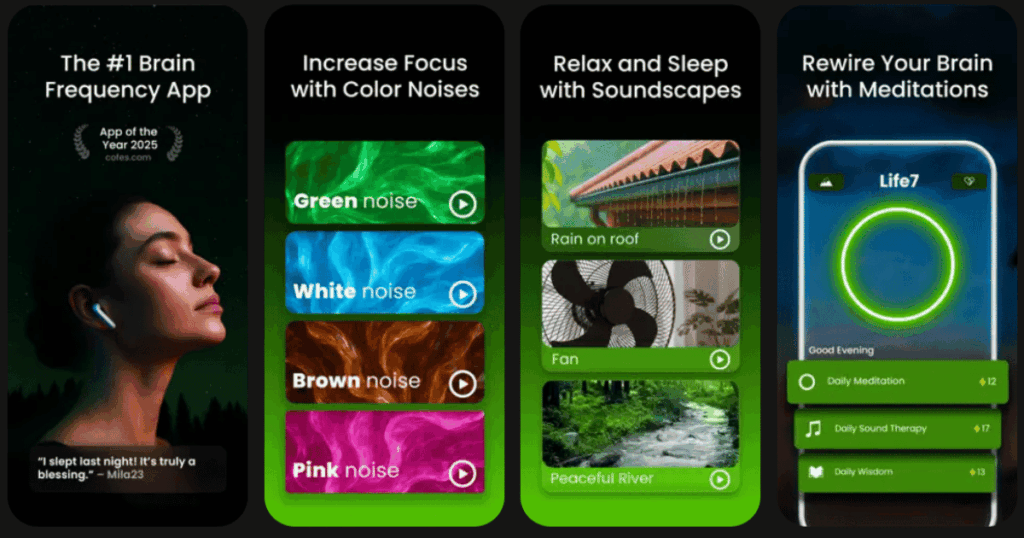
Life7 is an all-in-one mental wellness app that goes way beyond basic meditation. It tackles self-sabotage from every angle. The app combines ancient practices with modern science. You get everything from binaural beats to cognitive behavioral therapy tools.
What makes Life7 stand out is its huge library of content. With over 1200 editorial mentions and 312 million meditation minutes logged by users, this app has proven results. It offers green, white, brown, and pink noise options for sleep. Plus, you can mix soundscapes with meditations using Backdrop Mode.
Key Features:
- SOS sessions for anxiety and panic attacks plus vagus nerve stimulation for nervous system reset
- Hypnotherapy, CBT, and transcendental meditation all in one place
- Daily sessions including check-ins, meditations, music therapy, and wisdom content
What I like: I really appreciate how Life7 covers every aspect of mental wellness. The gamified approach keeps me coming back. Earning XP and unlocking soundscapes feels rewarding. The 8D sleep audio is incredible for relaxation. Having bedtime stories for both adults and kids means the whole family can benefit.
What I don’t like: The free content is a bit limited. You really need the premium version to get the full experience. But the 7-day free trial lets you test everything first.
Pricing: 7-day free trial available. Weekly, monthly, and yearly plans with frequent special offers.
Platforms: iOS and Android
#2. Headspace – Best for Beginners Learning Meditation Basics
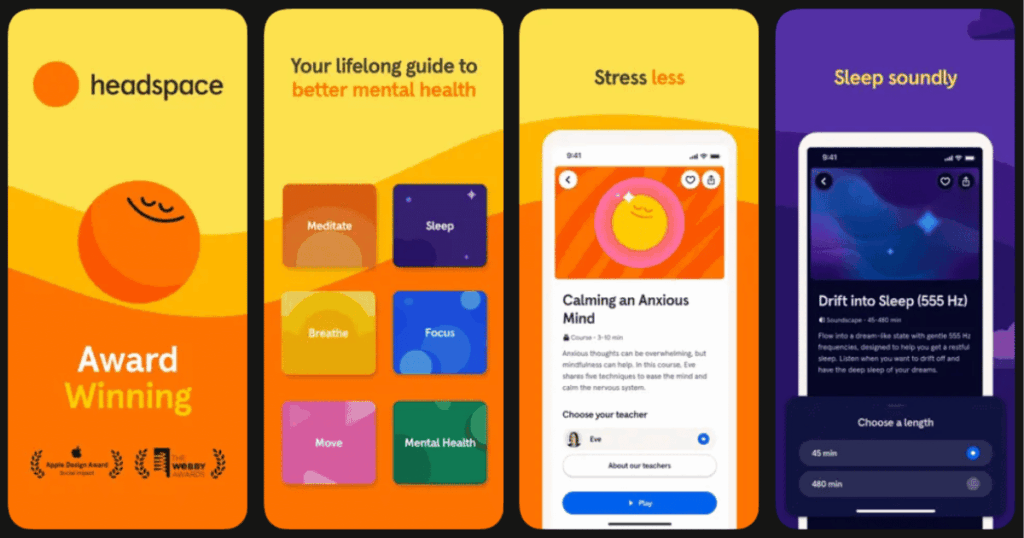
Headspace makes meditation feel fun and approachable. The colorful animations and friendly design help newcomers feel comfortable. Co-founder Andy Puddicombe guides many sessions with his calm British voice. The app has been downloaded millions of times worldwide.
The structured approach works great for building habits. You start with basics and progress to deeper practices. Focus sessions help during afternoon slumps at work. Sleepcasts are audio stories that help you drift off peacefully.
Key Features:
- Over 500 guided meditations ranging from 3 to 20 minutes for various needs
- Move Mode combines physical exercises with mindful techniques from Olympic trainers
- Mindful Moments feature sends reminders throughout the day to take breaks
What I like: The beginner-friendly approach is perfect for people new to meditation. I love how the app explains the science behind each practice. The student discount makes it super affordable for young people. Wake Up videos offer daily inspiration.
What I don’t like: The cartoon style feels too playful for some users. Sleep content is not as extensive as competitors. Customer service can be slow to respond sometimes.
Pricing: Free trial available. Monthly subscription or annual plan with student discounts.
Platforms: iOS and Android
#3. Calm – Best for Sleep Improvement and Relaxation
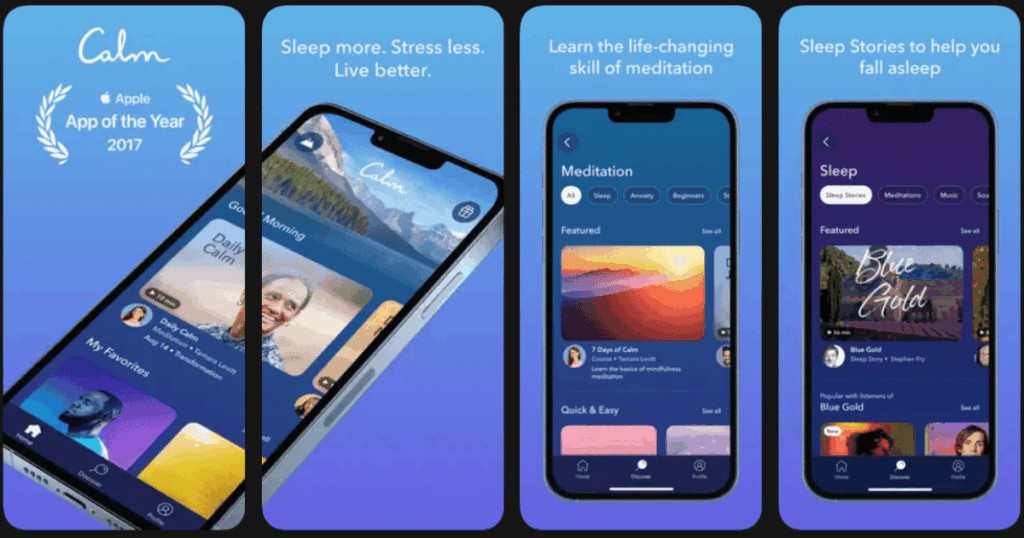
Calm focuses heavily on helping you sleep better. About half of all users come to the app specifically for sleep support. The celebrity-narrated Sleep Stories are a huge draw. Names like Matthew McConaughey and LeBron James read bedtime tales.
The app has beautiful nature scenes and calming sounds. Daily Calm offers 10-minute sessions perfect for morning routines. Masterclasses teach about topics like gratitude and mindfulness from experts.
Key Features:
- Hundreds of Sleep Stories read by celebrities and meditation experts
- Vast library of nature sounds, music, and soundscapes for different moods
- 7-day and 21-day programs to establish regular meditation habits
What I like: The sleep content is unmatched. I find the nature backgrounds genuinely calming. The Daily Calm feature fits easily into busy mornings. Kids section keeps the whole family engaged.
What I don’t like: Most content requires a paid subscription. The app can feel overwhelming with so many options. No clear starting point for new users.
Pricing: 7-day free trial. Monthly, yearly, or lifetime payment options available.
Platforms: iOS and Android
#4. BetterHelp – Best for Professional Therapy Access

BetterHelp connects you with licensed therapists from your phone. With over 30,000 therapists on the platform, you can find someone who fits your needs. All therapists have at least 3 years of experience. You can communicate through video, phone, text, or live chat.
The matching process considers your preferences and needs. If your first therapist is not the right fit, switching is easy. No awkward conversations needed. Group therapy sessions are also available.
Key Features:
- Unlimited messaging with your therapist between scheduled sessions
- Flexible session formats including video calls, phone calls, and text messaging
- Easy therapist switching without guilt or complicated processes
What I like: Having a real human to talk to makes a huge difference. The flexibility to message anytime feels supportive. I appreciate how easy it is to change therapists. The initial questionnaire matches you well.
What I don’t like: No insurance is accepted. Therapists cannot prescribe medication. Not suitable for severe mental health crises.
Pricing: Weekly subscription ranging from various price points based on location and needs.
Platforms: iOS and Android
#5. Happify – Best for Positive Psychology Games

Happify takes a unique approach to mental health. It uses science-backed games and activities to boost happiness. The app combines CBT, mindfulness, and positive psychology. You follow “tracks” designed to help with specific goals.
An AI coach named Anna guides you through activities. The community feature connects you with others on similar journeys. Progress tracking shows how your skills are growing over time.
Key Features:
- Over 65 tracks targeting stress management, self-confidence, mindfulness, and negative thoughts
- Games and activities that feel fun while teaching real mental health skills
- Character strength assessment in partnership with the VIA Institute
What I like: Learning through games makes the process enjoyable. I like seeing my progress over time. The research behind each activity is explained clearly. Community features reduce feelings of isolation.
What I don’t like: Some games feel disconnected from mental health goals. Free version is quite limited. Premium pricing is higher than some competitors.
Pricing: Free version available. Monthly subscription, yearly plan, or lifetime access option.
Platforms: iOS and Android
#6. Wysa – Best for AI-Guided Emotional Support

Wysa features a friendly penguin chatbot that uses AI to support your mental health. The app incorporates CBT, DBT, yoga, and meditation techniques. You can talk anonymously without judgment. Optional coaching from real humans is available.
The chatbot responds to your emotions and offers personalized guidance. Daily check-ins help track your progress. Wysa can detect crisis situations and direct you to appropriate resources.
Key Features:
- AI-powered chatbot available 24/7 for emotional support and coping strategies
- Anonymous conversations provide a safe space to express difficult feelings
- Optional one-on-one coaching sessions with certified mental health professionals
What I like: Talking to the penguin feels less intimidating than human therapy. The anonymity helps me open up more. Quick breathing exercises work great during anxious moments. Affordable compared to traditional therapy.
What I don’t like: AI responses can feel scripted or repetitive sometimes. Not equipped to handle serious mental health conditions. Chatbot sometimes redirects conversations unexpectedly.
Pricing: Free version with limited features. Premium yearly subscription for full access. Coaching sessions available for additional cost.
Platforms: iOS and Android
#7. Sanvello – Best for CBT Skill Building
Sanvello teaches practical CBT skills through structured lessons. Guided Journeys walk you through modules on different topics. Peer support lets you connect with others facing similar challenges. Mood tracking helps identify patterns in your mental health.
The app targets stress, anxiety, and depression specifically. Coping tools offer quick relief techniques. Many insurance plans now cover premium access to Sanvello.
Key Features:
- Guided Journeys with audio lessons and activities designed by psychologists
- Peer support community for sharing experiences and encouraging others
- Comprehensive mood and health tracking to identify patterns and triggers
What I like: The structured approach builds skills over time. I appreciate the peer support community. Insurance coverage makes it affordable for many users. The CBT techniques are practical and usable.
What I don’t like: Now acquired by AbleTo, requiring membership. Interface can feel dated. Some content needs updating.
Pricing: Free version available. Premium access through monthly or yearly subscription. Many insurance plans cover access.
Platforms: iOS and Android
#8. Woebot – Best for Daily Mental Health Check-Ins

Woebot is an AI chatbot created by experts in psychology and technology. The friendly robot checks in with you daily. It tracks your mood and teaches CBT techniques. Everything Woebot says is written by clinical experts and reviewed carefully.
The app has been tested in 18 clinical trials. Over 1.5 million people have talked to Woebot about anxiety, depression, stress, and more. The gratitude journaling feature helps shift focus to positives.
Key Features:
- Daily check-ins that track mood patterns and offer personalized support
- CBT techniques including thought challenges, reframing, and coping strategies
- Gratitude journaling and toolbox of coping exercises for different situations
What I like: Consistency of daily check-ins builds healthy habits. The sense of humor makes conversations enjoyable. Evidence-based approach backed by real research. Privacy protections are strong.
What I don’t like: Currently requires employer benefit or healthcare provider access. Responses can feel scripted. Cannot fully understand nuanced emotional situations.
Pricing: Free through employer benefit programs or healthcare providers.
Platforms: iOS and Android
#9. MindShift CBT – Best for Anxiety and Panic Relief
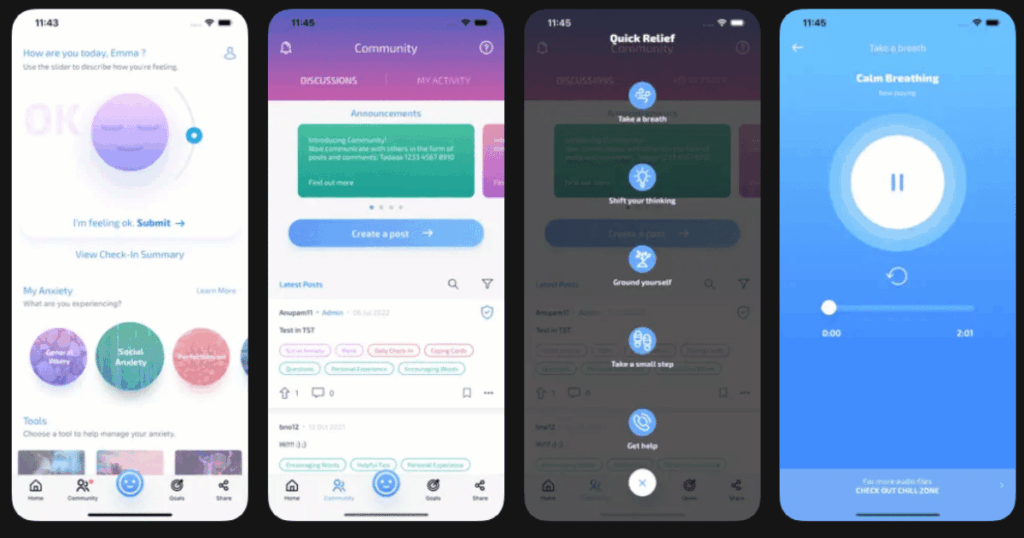
MindShift CBT comes from Anxiety Canada and focuses specifically on anxiety management. It provides tools for panic, social anxiety, perfectionism, and worry. Fear ladders help you gradually face fears. Belief experiments challenge negative thinking patterns.
The app is completely free with no premium version required. Research shows significant improvements in anxiety and depression after 16 weeks of use. Quick relief tools help during panic attacks.
Key Features:
- Fear ladders to gradually overcome specific phobias and anxious situations
- Belief experiments that challenge and test negative thought patterns
- Guided relaxation exercises and breathing techniques for immediate relief
What I like: Completely free with no paywalls or premium features. Evidence-based approach developed by anxiety specialists. Fear ladder tool is incredibly practical. Community forum connects users for support.
What I don’t like: App is closing after March 2025, so plan accordingly. Limited to anxiety-related issues. Interface design is not the most engaging.
Pricing: Completely free.
Platforms: iOS and Android
What is Self-Sabotage and How Can Apps Help?
Self-sabotage happens when we get in our own way. We set goals but then do things that prevent us from reaching them. This might look like procrastination, negative self-talk, or avoiding opportunities. Fear of failure or success often drives these behaviors.
Apps can help by building awareness of these patterns. Many use CBT techniques to challenge negative thoughts. Mood tracking reveals triggers you might not notice otherwise. Regular check-ins create accountability. Having tools in your pocket means support is always available.
Are Mental Health Apps a Replacement for Therapy?
Mental health apps should complement professional help, not replace it. They work great for mild to moderate symptoms. They also help between therapy sessions. However, severe mental health conditions need professional treatment.
Think of these apps as daily practice tools. Just like an athlete needs more than a gym app, you may need more than a mental health app. If you are in crisis or having thoughts of self-harm, please reach out to a professional. Apps can direct you to crisis resources but cannot provide emergency care.
How Do I Choose the Right Self-Sabotage App?
Consider your specific needs first. Do you want guided meditation? AI chat support? Professional therapy? Each app excels at different things. Life7 offers the most comprehensive toolkit. Headspace and Calm focus on meditation. BetterHelp provides real human therapists.
Budget matters too. Some apps are completely free. Others require subscriptions. Many offer free trials. Start with a trial to see what clicks with you. The best app is one you will actually use consistently.