9 Best Mindfulness Apps For Your Phone
| App Name | Best For | Key Features | AC Rating | Pricing |
|---|---|---|---|---|
| Life7 | All-in-one mental wellness | Binaural beats, 8D sleep audio, CBT tools, daily sessions | 4.8/5 | Free trial, weekly/monthly/yearly plans |
| Headspace | Beginners learning meditation | 1,000+ guided meditations, sleepcasts, mindful movement | 4.6/5 | Free trial, monthly/yearly subscription |
| Calm | Sleep and relaxation | Sleep Stories, celebrity narrations, breathing exercises | 4.5/5 | Free trial, monthly/yearly/lifetime plans |
| Insight Timer | Free meditation library | 250,000+ free meditations, live events, meditation timer | 4.7/5 | Free with optional premium upgrade |
| Balance | Personalized meditation journeys | Adaptive daily sessions, skill tracking, immersive meditations | 4.6/5 | 1-year free trial, then yearly subscription |
| Smiling Mind | Families and children | 700+ meditations, programs for all ages, mental fitness tracking | 4.5/5 | Completely free |
| Breethe | Everyday stress relief | Hypnotherapy sessions, Made4You meditations, sleep stories | 4.4/5 | Free version, monthly/yearly/lifetime plans |
| Healthy Minds | Science-backed free meditation | Structured learning modules, active meditations, offline access | 4.5/5 | Completely free |
| Aura | AI-personalized experience | 3-minute micro meditations, mood tracking, personalized content | 4.3/5 | Free trial, monthly/yearly subscription |
#1. Life7 – Best for All-in-One Mental Wellness
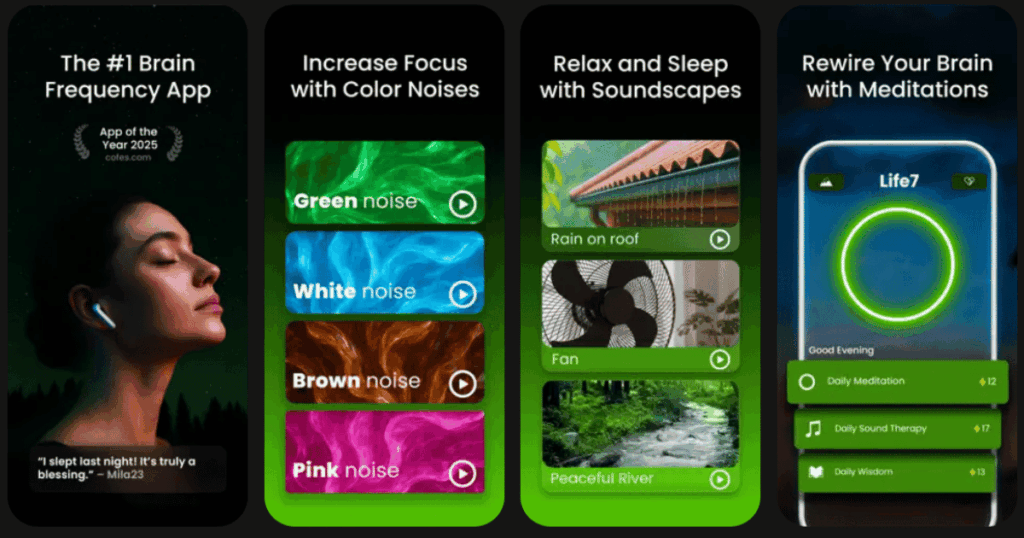
Life7 is a complete mental wellness app that gives you everything in one place. It blends guided meditations, sleep tools, and therapeutic techniques into a single package. You get access to binaural beats, solfeggio frequencies, and brain wave music designed to shift your mental state fast.
The app stands out with its unique sound library. It includes green noise, white noise, brown noise, and pink noise options. You also get 8D sleep audio, ASMR content, and Buddhist sound therapy. Whether you need help sleeping, managing anxiety, or building a daily mindfulness habit, Life7 has you covered.
Key Features:
- Delta, Theta, Alpha, Beta, and Gamma wave music with pure binaural beats and isochronic tones
- SOS sessions for panic attacks, vagus nerve stimulation, and CBT tools for deep emotional healing
- Gamified approach with XP rewards, streak tracking, mood journals, and daily check-ins
What I like: I really enjoy how Life7 brings so many wellness tools together. The backdrop mode is fantastic because you can mix soundscapes with meditations or sleep stories. This creates a totally custom experience. The new daily content keeps things fresh. I never get bored because there is always something new to try. The gamification aspect also makes meditation feel fun rather than like a chore.
What I don’t like: The free content is somewhat limited. You will need to upgrade to a paid plan to unlock the full experience. This might be frustrating if you want to explore everything before committing.
Pricing: 7-day free trial available. Weekly, monthly, and yearly plans offered with frequent special promotions.
Platforms: iOS and Android
#2. Headspace – Best for Beginners Learning Meditation
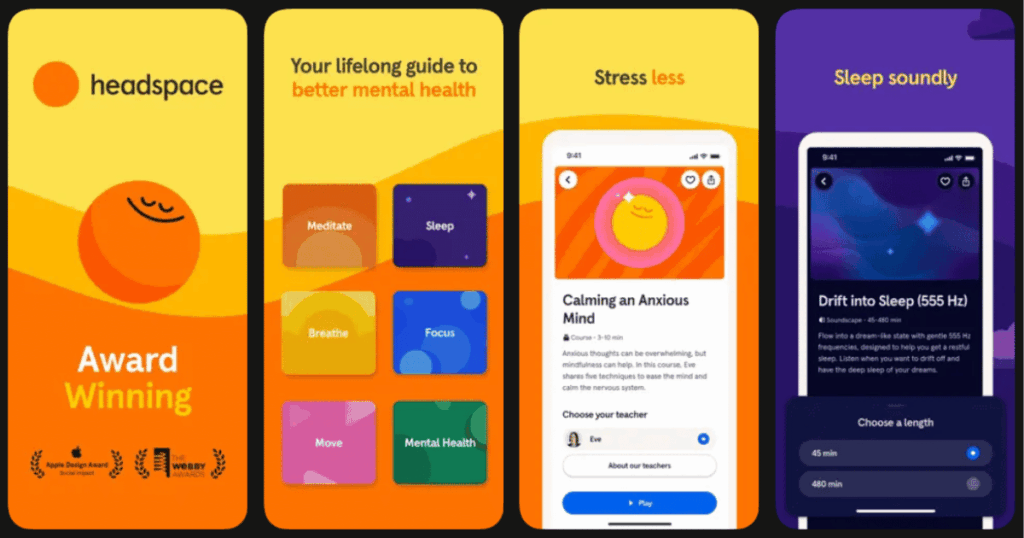
Headspace has been helping people learn meditation for nearly 15 years. The app has over 70 million users worldwide. It uses colorful animations and friendly guidance to make meditation feel approachable.
The structured courses are what make Headspace shine. You progress through sessions that build on each other. This teaches you real skills over time. The app covers topics from stress relief to better sleep to improved focus.
Key Features:
- 1,000+ guided meditations organized into progressive courses
- Sleepcasts and wind-down exercises designed for better sleep
- Multiple instructors to match your personal preferences
What I like: The step-by-step approach works really well for building a lasting habit. I appreciate how you can choose different instructors for each course. Sometimes a certain voice just clicks better with your brain. The app design is clean and fun to use.
What I don’t like: The premium price can feel steep compared to some alternatives. Most of the good content requires a paid subscription. The free trial period is also quite short at just 7 to 14 days.
Pricing: Free trial available. Monthly and annual subscription options offered.
Platforms: iOS and Android
#3. Calm – Best for Sleep and Relaxation

Calm is famous for its Sleep Stories. These are bedtime tales narrated by celebrities like Matthew McConaughey. The app has helped millions of people fall asleep faster and wake up feeling more rested.
Beyond sleep, Calm offers hundreds of guided meditations and breathing exercises. The production quality is top notch. The nature sounds and scenes create a peaceful escape whenever you need it.
Key Features:
- 500+ Sleep Stories with celebrity narrators and weekly additions
- Breathing exercises including the 60-second Breathe Bubble for instant calm
- Daily Calm sessions and masterclasses from wellness experts
What I like: The Sleep Stories are genuinely helpful for my racing mind at night. The voices are soothing and the stories are boring enough to drift off to. The app feels premium and polished. Everything from the sounds to the interface feels carefully designed.
What I don’t like: The free version is very limited. You barely get a taste of what Calm offers without paying. The subscription price is also on the higher end of meditation apps.
Pricing: 7-day free trial. Monthly, annual, and lifetime subscription options available.
Platforms: iOS and Android
#4. Insight Timer – Best for Free Meditation Library

Insight Timer offers the largest free meditation library of any app. You get access to over 250,000 guided meditations from 17,000 teachers. This includes everything from Buddhist mindfulness to yoga nidra to sleep music.
The app started as a simple meditation timer. It has grown into a full community platform with live events, group discussions, and courses. You can meditate for free for months without running out of content.
Key Features:
- 250,000+ free guided meditations and music tracks
- Live meditation and yoga events happening every hour
- Customizable meditation timer with ambient sounds and bells
What I like: The variety is unbelievable. No matter what style of meditation you prefer, you will find teachers and content that fit. The community aspect adds accountability. Seeing other people meditating around the world makes me feel connected.
What I don’t like: The huge library can feel overwhelming at first. Finding exactly what you need takes some digging. The app interface has become more cluttered over time as features have been added.
Pricing: Free with extensive content library. Optional premium subscription for additional features.
Platforms: iOS and Android
#5. Balance – Best for Personalized Meditation Journeys

Balance learns about you through daily questions. It then creates custom meditations tailored to your mood, goals, and skill level. No two sessions are exactly the same. The app tracks which techniques work best for you over time.
The personalization sets Balance apart from other apps. It feels like having a private meditation coach in your pocket. The app teaches concrete skills like breath focus, body scans, and visualization.
Key Features:
- Daily meditations personalized to your current mood and experience level
- 10-day progressive plans that build specific mindfulness skills
- Immersive meditations with vibration and sound effects
What I like: The one-year free trial is incredible. Most apps give you a week at best. This lets you really develop a practice before deciding to pay. The personalization works well. The app remembers what I respond to and keeps improving.
What I don’t like: The content library is smaller than apps like Calm or Insight Timer. If you want tons of variety, Balance might feel limited. The app is also newer so it lacks some features competitors have built up over years.
Pricing: One-year free trial for new users. Monthly and annual subscription after trial ends.
Platforms: iOS and Android
#6. Smiling Mind – Best for Families and Children

Smiling Mind is a nonprofit app from Australia that is completely free. It offers programs designed for different age groups from young children to adults. Families can meditate together with content everyone can enjoy.
The app focuses on building lifelong mental fitness skills. Programs cover everything from classroom focus to sports performance to workplace stress. Schools widely use Smiling Mind as part of their curriculum.
Key Features:
- 700+ lessons and practices organized by age group from 5 years old and up
- Mental fitness model teaching five core skill sets for wellbeing
- Programs for families, schools, and workplaces with offline access
What I like: Being completely free makes this app accessible to everyone. The kids content is genuinely engaging and age appropriate. I love that the whole family can use one app together. The nonprofit mission means they care about impact not profits.
What I don’t like: The Australian accents in some recordings might not appeal to everyone. The app design is not as polished as premium competitors. Some features feel basic compared to paid apps.
Pricing: Completely free for individuals and families.
Platforms: iOS and Android
#7. Breethe – Best for Everyday Stress Relief

Breethe calls itself the friendliest wellness app. It focuses on practical, real-life situations with a sense of humor. You will find meditations for topics like “My Boss is a Jerk” and “Tax Season Adulting is Hard.”
The app includes hypnotherapy sessions which are rare among meditation apps. It blends guided meditations, sleep stories, music, and breathing exercises into an approachable package.
Key Features:
- 2,500+ meditations including hypnotherapy and Made4You personalized sessions
- 12-week Learn to Meditate program for beginners
- Quick relief tools for sleeplessness, anxiety, and overwhelm
What I like: The relatable approach makes mindfulness feel less intimidating. I appreciate that Breethe does not take itself too seriously. The hypnotherapy sessions offer something different from typical meditation apps. Content is organized well for morning, afternoon, and evening use.
What I don’t like: The free version has distracting ads. The subscription price is moderate but adds up over time. Some users report occasional app crashes and bugs.
Pricing: Free version with ads. Premium monthly, annual, and lifetime options available.
Platforms: iOS and Android
#8. Healthy Minds – Best for Science-Backed Free Meditation

Healthy Minds was developed by neuroscientists at the University of Wisconsin. The app is based on decades of research into meditation and the brain. Best of all, it is completely free with no premium tier.
The app teaches meditation through a structured curriculum. You progress through learning modules that build on each other. Active meditations let you practice while walking or doing other activities.
Key Features:
- Evidence-based content developed by leading neuroscience researchers
- Structured skill-building curriculum with four core pillars
- Active and seated meditation options with offline download
What I like: Having scientifically validated content gives me confidence in the practice. The donation-based model means quality meditation is available to everyone regardless of budget. The structure helps build real skills rather than just relaxation.
What I don’t like: The app lacks the variety of commercial competitors. If you want sleep stories or lots of music options, look elsewhere. The design is functional but not as engaging as premium apps.
Pricing: Completely free with donation-based funding.
Platforms: iOS and Android
#9. Aura – Best for AI-Personalized Experience

Aura uses artificial intelligence to learn your preferences and deliver custom meditation recommendations. Each day starts with questions about how you feel. The app then suggests the perfect three-minute meditation for your current state.
The app features content from over 100 coaches, clinicians, and mindfulness teachers. It also includes mood tracking and journaling features to help you understand your mental health patterns.
Key Features:
- AI-powered personalization that learns from your feedback
- Three-minute micro meditations perfect for busy schedules
- Mood tracking and journaling with pattern insights
What I like: The short sessions make it easy to fit meditation into any day. The AI recommendations get better over time as the app learns what works for me. The variety of teachers means finding voices and styles that resonate.
What I don’t like: The premium subscription feels expensive for what you get. Some users find the frequent questions annoying. The app pushes upgrades more aggressively than some alternatives.
Pricing: Free trial with limited content. Monthly and annual premium subscriptions available.
Platforms: iOS and Android
What Is the Best Free Mindfulness App?
Insight Timer and Smiling Mind stand out as the best free options. Insight Timer offers over 250,000 meditations without paying anything. Smiling Mind is run by a nonprofit and is completely free forever with no premium tier.
If you want a mix of free and paid, Healthy Minds is another excellent choice. Neuroscientists developed this app and it remains donation-based. You get research-backed content without any paywalls.
For the most complete experience that balances free and premium features, I recommend trying Life7. The seven-day free trial gives you access to explore the full range of features including unique offerings like binaural beats and 8D audio.
How Long Should I Meditate Each Day as a Beginner?
Start with just five minutes daily. This feels manageable and builds the habit without overwhelming you. Most mindfulness apps offer short sessions specifically designed for beginners.
Consistency matters more than length. Five minutes every day beats thirty minutes once a week. As you get comfortable, gradually increase to ten or fifteen minutes.
Many apps like Aura specialize in three-minute micro meditations. These work great for busy people who struggle to find time. Even brief moments of mindfulness can reduce stress and improve focus throughout your day.
Do Mindfulness Apps Really Work?
Yes, research supports the effectiveness of mindfulness apps. Studies show that regular use can reduce stress, improve sleep, and boost emotional regulation. Apps like Headspace and Calm have published research demonstrating their benefits.
The key is consistent practice over time. Using an app once will not change your life. But building a daily habit can lead to real improvements in mental wellbeing. Choose an app that fits your lifestyle so you actually stick with it.
Apps make meditation accessible and convenient. You can practice anywhere at any time. This removes many barriers that stop people from trying mindfulness. For best results, pair app use with other healthy habits like regular exercise and good sleep.