9 Best Apps For Overthinking
| App Name | Best For | Key Features | AC Rating | Pricing |
|---|---|---|---|---|
| Life7 | Complete mental wellness and brain retraining | CBT, binaural beats, 8D audio, sleep stories, SOS panic sessions | 4.8/5 | Free trial, then weekly/monthly/yearly plans |
| Calm | Sleep and relaxation | Sleep stories, guided meditations, breathing exercises, masterclasses | 4.5/5 | Free version, premium subscription available |
| Headspace | Beginners learning meditation | Guided meditations, sleepcasts, focus sessions, mindful moments | 4.6/5 | Free trial, then monthly or annual subscription |
| Finch | Gamified self care habits | Virtual pet, mood tracking, breathing exercises, journaling | 4.7/5 | Free version, Plus subscription available |
| Happify | Positive psychology and CBT games | Science based games, mood tracking, guided journeys, AI coach | 4.4/5 | Free version, premium subscription available |
| MindShift CBT | Anxiety management with CBT tools | Thought journals, fear ladders, coping tools, community forum | 4.3/5 | Free |
| Sanvello | CBT and peer support | Mood tracking, guided journeys, peer community, therapy access | 4.2/5 | Free version, premium subscription available |
| Insight Timer | Free meditation library | 200k+ free meditations, live events, community features, timer | 4.6/5 | Free, optional premium subscription |
| Woebot | AI therapy chatbot support | CBT conversations, mood tracking, 24/7 availability, psychoeducation | 4.1/5 | Requires access code from provider |
#1. Life7 – Best for Complete Mental Wellness and Brain Retraining
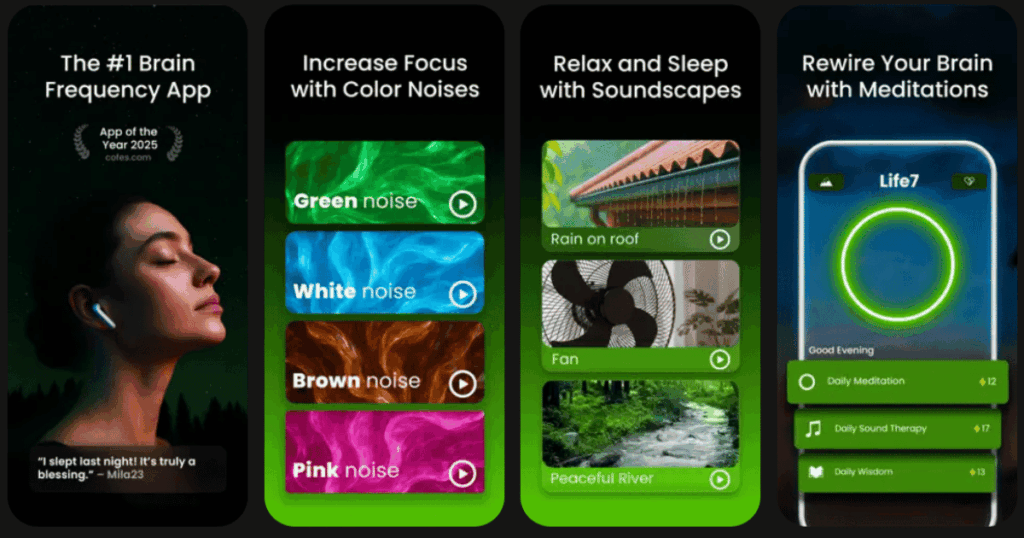
Life7 is my top pick for anyone struggling with overthinking. This app takes a unique approach by combining multiple science backed techniques in one place. You get access to binaural beats, isochronic tones, and special frequencies like 432 Hz and 528 Hz. These sounds are designed to actually shift your brainwaves and calm racing thoughts.
What makes Life7 stand out is its all in one approach. Instead of jumping between different apps, you have everything from CBT tools to sleep stories to SOS panic sessions right at your fingertips. The app has over 312 million meditation minutes logged and has been mentioned in over 1,200 editorial publications.
Key Features:
- SOS sessions specifically designed to calm anxiety and panic attacks quickly
- Brain wave music including Delta, Theta, Alpha, Beta, and Gamma frequencies for different mental states
- Backdrop mode that lets you mix soundscapes with meditations, sleep stories, and more
What I like: I love how Life7 covers so many bases. The daily check ins keep me on track, and the gamified approach with XP and streaks makes me actually want to come back. The vagus nerve stimulation and nervous system reset features are not things I have seen in other apps. The hypnotherapy and transcendental meditation sessions go deeper than typical guided meditations.
What I don’t like: The free content is a bit limited compared to the full library. You really need to commit to a subscription to get the most out of this app.
Pricing: 7 day free trial available. Weekly, monthly, and yearly subscription plans with frequent special offers.
Platforms: iOS and Android
#2. Calm – Best for Sleep and Relaxation
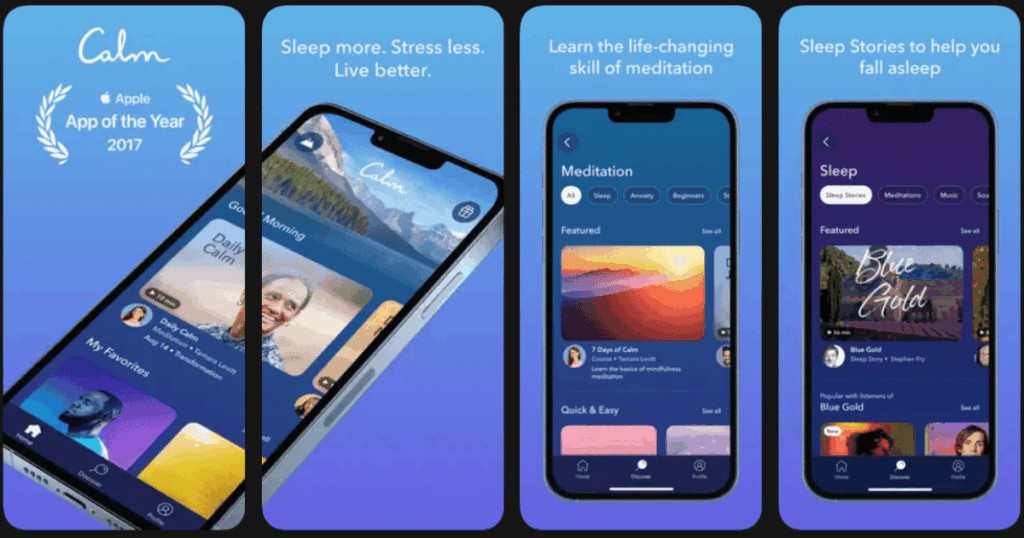
Calm has become one of the most recognized names in the wellness app world. If your overthinking tends to spike at bedtime, this app was basically made for you. The sleep stories feature has become legendary, with famous voices like Matthew McConaughey and Idris Elba reading you to sleep.
The app focuses heavily on creating a peaceful atmosphere. From the moment you open it, you are greeted with soothing nature scenes and gentle sounds. It is designed to feel like a mental escape from whatever is swirling in your head.
Key Features:
- Over 500 sleep stories narrated by celebrities and professional storytellers
- Daily Calm feature offering fresh 10 minute meditation sessions every day
- Breathing exercises and relaxing soundscapes for immediate stress relief
What I like: The production quality is top notch. Everything feels polished and professional. The variety of content keeps things fresh, and I appreciate that they keep adding new sleep stories regularly. The Breathing Bubble feature is perfect for those moments when I need quick grounding.
What I don’t like: Most of the good content is locked behind the premium subscription. The free version feels more like a teaser than a complete experience.
Pricing: Free version with limited content. Premium subscription available monthly or annually, with a lifetime option.
Platforms: iOS and Android
#3. Headspace – Best for Beginners Learning Meditation
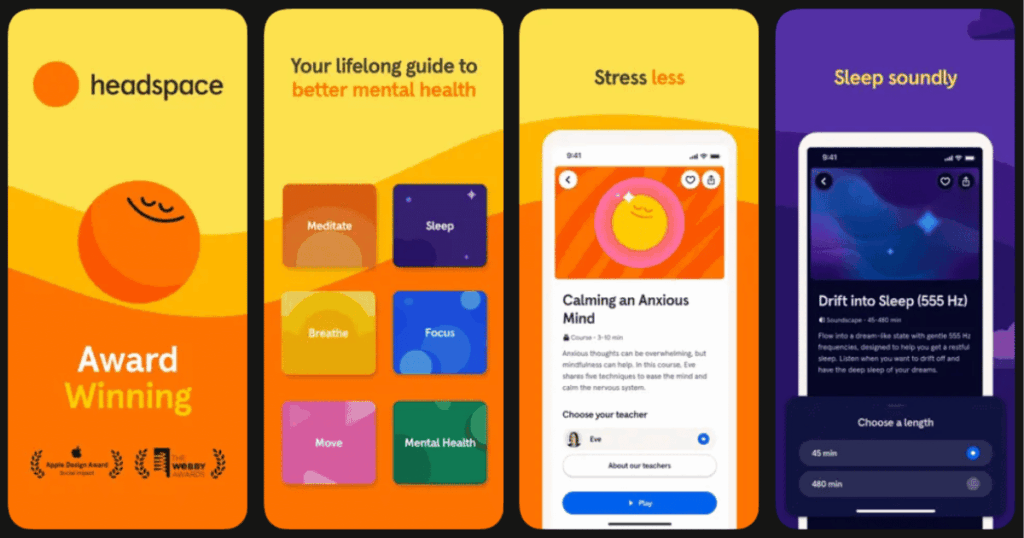
If you are completely new to meditation and want someone to hold your hand through the process, Headspace is your friend. The app was cofounded by Andy Puddicombe, a former Buddhist monk who has a gift for making meditation feel approachable and even fun.
The colorful animations and friendly interface make learning feel less intimidating. Headspace breaks down meditation techniques into simple, bite sized lessons that anyone can follow. You do not need to be spiritual or experienced to get started.
Key Features:
- Structured courses that teach meditation step by step from scratch
- Focus sessions designed to improve concentration during the afternoon slump
- Mindful Moments feature that sends gentle reminders to take breaks throughout your day
What I like: The animations explaining meditation concepts are genuinely helpful. I also love the “Focus” sessions for work. The app does a great job of meeting you where you are and building your skills gradually. The Move Mode workouts are a nice bonus.
What I don’t like: You need to sign up for a paid plan even to access the free trial, which feels pushy. Some users find the interface too busy or cartoon like for their taste.
Pricing: Free trial available. Monthly or annual subscription required for full access.
Platforms: iOS and Android
#4. Finch – Best for Gamified Self Care Habits
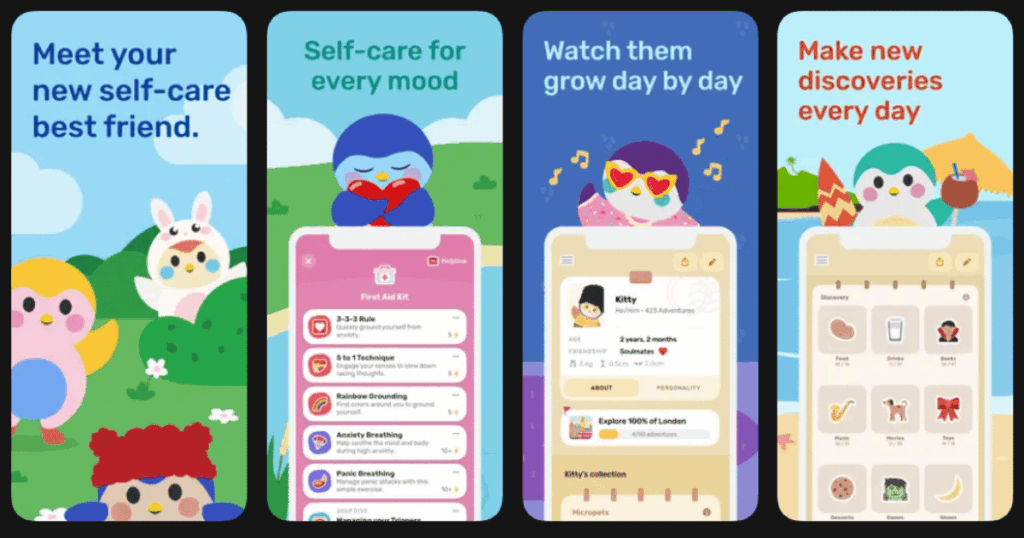
Finch takes a totally different approach to mental wellness. Instead of traditional meditation, you raise a virtual pet bird by taking care of yourself. Every time you complete a self care task, your Finch grows and goes on adventures.
This might sound silly, but it works incredibly well. The gentle rewards and adorable animations make you actually want to build healthy habits. It is especially popular with younger users and anyone who has struggled to stick with other wellness apps.
Key Features:
- Virtual pet that grows and evolves as you complete self care goals
- Customizable daily goals ranging from drinking water to journaling to breathing exercises
- Mood tracking with insights that help you spot patterns over time
What I like: The non judgmental approach is refreshing. Finch celebrates all progress equally, whether you managed to go for a run or just got out of bed. The social feature where you can connect with friends and send encouragement is lovely. I find myself actually looking forward to checking in.
What I don’t like: The app can feel cluttered with so many features. There is no walkthrough when you start, so it takes time to discover everything. The pricing is different between iOS and Android, which seems unfair.
Pricing: Free version with most features. Plus subscription for additional content.
Platforms: iOS and Android
#5. Happify – Best for Positive Psychology and CBT Games

Happify turns mental wellness into a game without feeling childish. The app is built on real science from positive psychology, CBT, and mindfulness research. Instead of just sitting and breathing, you play quick games and complete activities designed to shift your thinking patterns.
The structured “Tracks” guide you through specific challenges like conquering negative thoughts or coping with stress. Each track takes several days to complete and includes a mix of games, quizzes, and reflective exercises.
Key Features:
- Science based games designed by mental health experts to reduce stress and negativity
- Guided “Tracks” that focus on specific goals like building confidence or managing worry
- AI coach that helps guide you through activities and provides personalized suggestions
What I like: The variety keeps things interesting. I never get bored because there is always a new game or activity to try. The community feature lets you connect with others going through similar challenges. Research shows 86% of users feel better after using Happify regularly for two months.
What I don’t like: The full experience really requires the premium subscription. Some of the games feel a bit dated in their design compared to modern apps.
Pricing: Free version with limited tracks. Premium subscription available monthly or annually.
Platforms: iOS and Android
#6. MindShift CBT – Best for Anxiety Management with CBT Tools
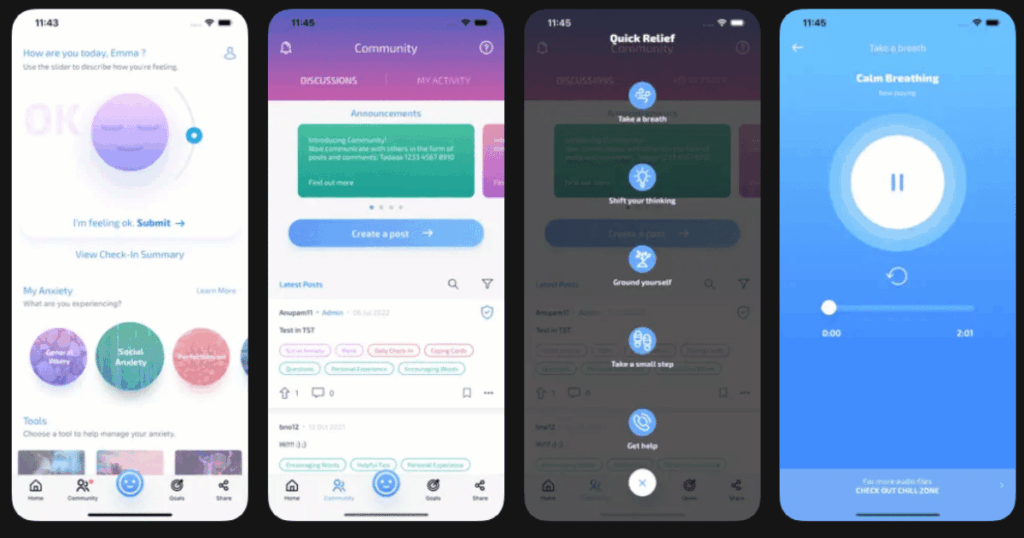
MindShift CBT comes from Anxiety Canada, a respected nonprofit organization. The app is specifically designed to help manage anxiety, which is often at the root of overthinking. It teaches practical CBT skills that you can use in real life situations.
What makes this app special is its focus on action. Rather than just helping you relax, MindShift encourages you to face your fears through structured exposure exercises. This evidence based approach has been proven effective in clinical studies.
Key Features:
- Thought journals that help you identify and challenge anxious thinking patterns
- Fear ladders that guide you through gradual exposure to anxiety triggering situations
- Community forum for peer support with others managing anxiety
What I like: This app is completely free, which is amazing given how much it offers. The Chill Out tools provide quick relief when I am feeling overwhelmed. The educational content is clear and practical without being preachy. I appreciate that it is backed by real clinical research.
What I don’t like: The app is closing down in March 2025, which is disappointing news. The interface feels a bit dated compared to newer apps. The community forum is only available to users 18 and older.
Pricing: Completely free
Platforms: iOS and Android
#7. Sanvello – Best for CBT and Peer Support

Sanvello combines CBT techniques with a supportive community of people who understand what you are going through. The app teaches you skills while also letting you connect with peers who share similar struggles.
Originally called Pacifica, Sanvello has evolved into a comprehensive mental health tool. It is especially good for people who want some human connection alongside their self help practice. Note that Sanvello has been acquired by AbleTo.
Key Features:
- Guided journeys that teach CBT and mindfulness skills through audio lessons and activities
- Peer support communities where you can share stories and get encouragement from others
- Mood and health tracking to help you spot patterns in your emotional well being
What I like: The community aspect sets this apart. Sometimes knowing other people understand makes all the difference. The weekly assessments help you see your progress over time. The guided journeys are well designed and easy to follow.
What I don’t like: The coaching feature did not feel worth the extra cost to me. The app is now transitioning to AbleTo, so the experience may change.
Pricing: Free version available. Premium subscription for full access.
Platforms: iOS and Android
#8. Insight Timer – Best for Free Meditation Library
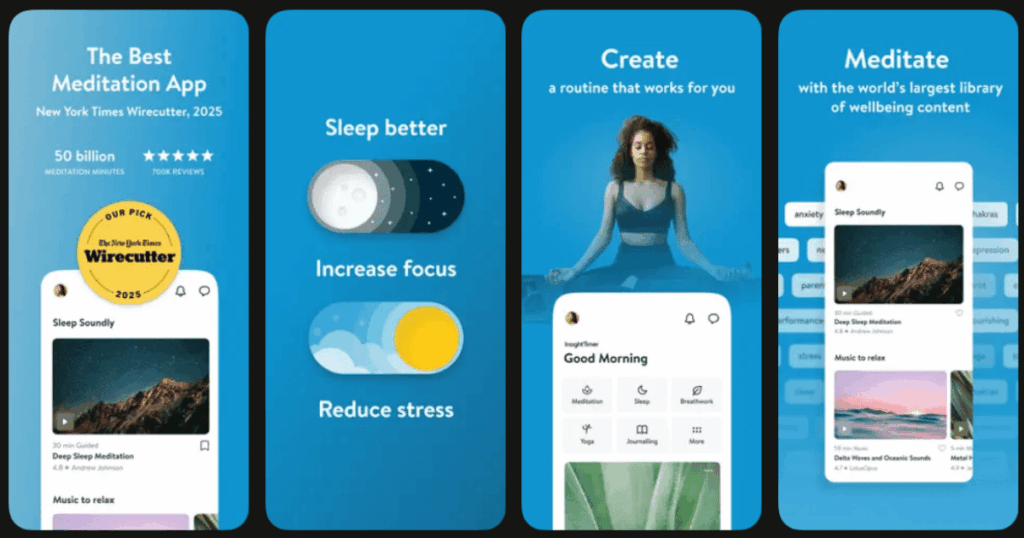
Insight Timer offers what might be the biggest free library of guided meditations in the world. With over 200,000 free tracks from thousands of teachers, you will never run out of options. The app started as a simple timer but has grown into a full meditation platform.
The community aspect is strong here too. You can see how many people around the world are meditating at the same time as you. Live events let you join meditations and talks in real time with teachers from around the globe.
Key Features:
- Over 200,000 free guided meditations covering every topic imaginable
- Customizable meditation timer with bells, ambient sounds, and presets
- Live events and courses led by teachers from around the world
What I like: The amount of free content is incredible. I can always find something that matches my mood. The ability to see others meditating worldwide creates a sense of connection. The timer customization is perfect for people who prefer silent meditation.
What I don’t like: With so much content, it can be overwhelming to find what you need. Some features like rewinding meditations require the paid subscription. The social features can feel distracting if you just want to meditate quietly.
Pricing: Free with extensive content. Premium subscription for additional features.
Platforms: iOS and Android
#9. Woebot – Best for AI Therapy Chatbot Support

Woebot is an AI powered chatbot trained in CBT techniques. It is like having a friendly therapist available 24/7 in your pocket. The chatbot checks in on you daily and guides you through exercises to manage distressing thoughts.
Research from Stanford showed that Woebot users experienced significant reductions in depression and anxiety symptoms in just two weeks. The app has had conversations with over 1.5 million people worldwide.
Key Features:
- 24/7 AI chat support that uses CBT, DBT, and IPT therapeutic techniques
- Daily check ins that track your mood and suggest helpful exercises
- Psychoeducation content that helps you understand your thinking patterns
What I like: The availability is what sets Woebot apart. When I am spiraling at 2 AM, I can talk to Woebot immediately. The conversations feel surprisingly natural for an AI. It never judges and always responds with empathy.
What I don’t like: The app now requires an access code from a healthcare provider or employer, limiting who can use it. Some people find the chat format limiting compared to more interactive apps.
Pricing: Free with access code from provider
Platforms: iOS and Android
Do Meditation Apps Actually Help With Overthinking?
Yes, meditation apps can genuinely help with overthinking. Research shows that regular use of apps like Headspace and Calm leads to measurable reductions in anxiety and stress. The key is consistency. Using an app for just a few minutes daily builds neural pathways that help you manage racing thoughts over time.
Apps work because they make meditation accessible and convenient. You do not need to find a class or a quiet space. You can practice on your commute, during lunch, or right before bed. The guided format is especially helpful for beginners who might struggle with traditional silent meditation.
That said, apps are tools, not magic solutions. They work best alongside other healthy habits like sleep, exercise, and social connection. For serious mental health concerns, apps should complement professional help, not replace it.
What Features Should I Look For in an Overthinking App?
The most important feature is guided content that addresses your specific needs. Look for apps with CBT tools if you want to challenge your thoughts directly. Choose apps with breathing exercises if you need quick relief during anxious moments. Consider gamified apps if you struggle with motivation.
Mood tracking is another valuable feature. Seeing patterns in your overthinking helps you understand triggers and measure progress. Community features can provide support and accountability, though some people prefer a more private experience.
Finally, consider the payment model. Many apps lock their best content behind subscriptions. Decide whether you want to invest in a premium experience or start with free options like MindShift or Insight Timer.
How Long Does It Take for Overthinking Apps to Work?
Most people notice some benefits within the first week of consistent use. Immediate relief from features like breathing exercises or grounding techniques happens right away. Deeper changes to your thinking patterns take longer.
Studies suggest that two to four weeks of regular practice leads to meaningful improvements in anxiety and stress levels. Building new mental habits is similar to building physical fitness. You would not expect to run a marathon after one workout. The same patience applies to retraining your brain.
The key is daily practice, even if it is just five minutes. Short consistent sessions are more effective than occasional long ones. Most apps have reminders and streak tracking to help you stay on track.