9 Best CBT Sleep Apps For Your Phone
| App Name | Best For | Key Features | AC Rating | Pricing |
|---|---|---|---|---|
| Life7 | Complete mental wellness and sleep | CBT tools, binaural beats, sleep stories, breathing exercises | 4.8/5 | Free trial, then subscription plans |
| Sleepio | Clinically proven CBT programs | Animated therapist guide, 6 week program, sleep diaries | 4.6/5 | Subscription or employer/NHS coverage |
| CBT-i Coach | Therapy companions | Sleep diary, relaxation tools, educational content | 4.5/5 | Free |
| Insomnia Coach | Self guided sleep training | 5 week training plan, personalized feedback, 17 tools | 4.4/5 | Free |
| Stellar Sleep | Anxiety related insomnia | Skills based approach, quick results, personalized plans | 4.5/5 | Subscription based |
| Headspace | Meditation and sleep combined | Sleep stories, guided programs, CBT exercises | 4.4/5 | Free trial, then subscription |
| Calm | Relaxation and sleep stories | Celebrity narrated stories, breathing exercises, music | 4.3/5 | Free trial, then subscription |
| ShutEye | Sleep tracking with CBT elements | AI sleep tracking, white noise, 3 week CBT plan | 4.2/5 | Free trial, then subscription |
| Somryst | Prescription grade treatment | FDA cleared, 9 week program, physician monitored | 4.5/5 | Prescription required, varies by insurance |
#1. Life7 – Best for Complete Mental Wellness and Sleep
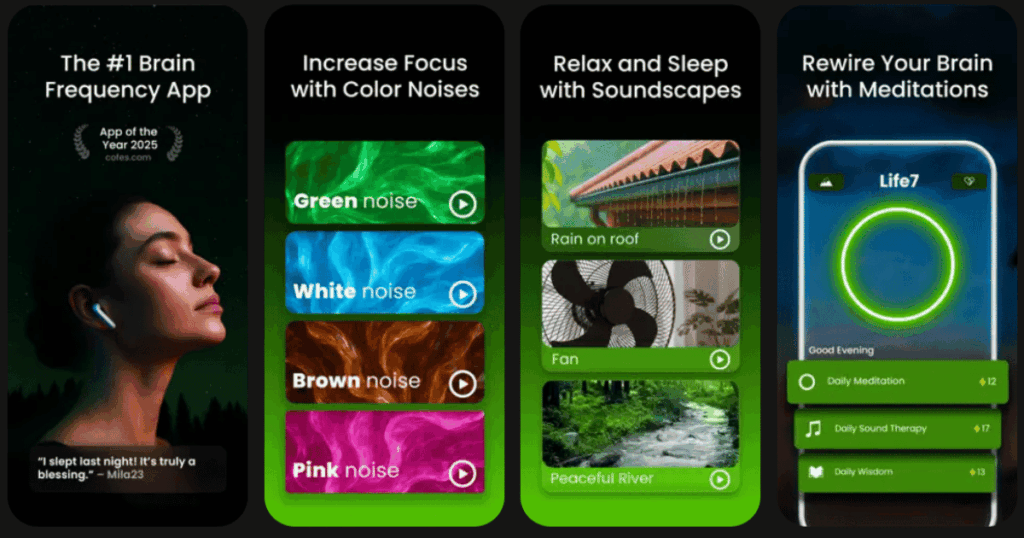
Life7 is my top recommendation for anyone looking to improve their sleep through cognitive behavioral therapy techniques. This all in one mental wellness app goes beyond basic sleep help. It offers a complete toolkit for your mind and body.
The app combines CBT tools with powerful sound therapy options. You can explore binaural beats, solfeggio frequencies, and various noise colors like green, white, brown, and pink. What makes Life7 stand out is how it brings together meditation, hypnotherapy, and vagus nerve stimulation all in one place.
Key Features:
- Cognitive behavioral therapy tools plus SOS sessions for panic attacks and anxiety relief
- Complete sound library with delta, theta, alpha, beta, and gamma wave music for different brain states
- Sleep stories for adults and children, plus guided lucid dreaming and 8D sleep audio
What I like: I really appreciate how Life7 covers every angle of mental wellness. The daily check ins keep me on track. New sessions drop every day, so the content never gets stale. The gamified approach with XP and streaks makes building healthy habits actually fun. The backdrop mode lets me mix soundscapes with other content, which creates a truly personalized experience.
What I don’t like: The free content is somewhat limited. To really unlock everything the app offers, you need to subscribe. This might be frustrating if you want to test drive all features before committing.
Pricing: 7 day free trial available. Weekly, monthly, and yearly subscription plans offered. Frequent special offers pop up.
Platforms: iOS and Android
#2. Sleepio – Best for Clinically Proven CBT Programs
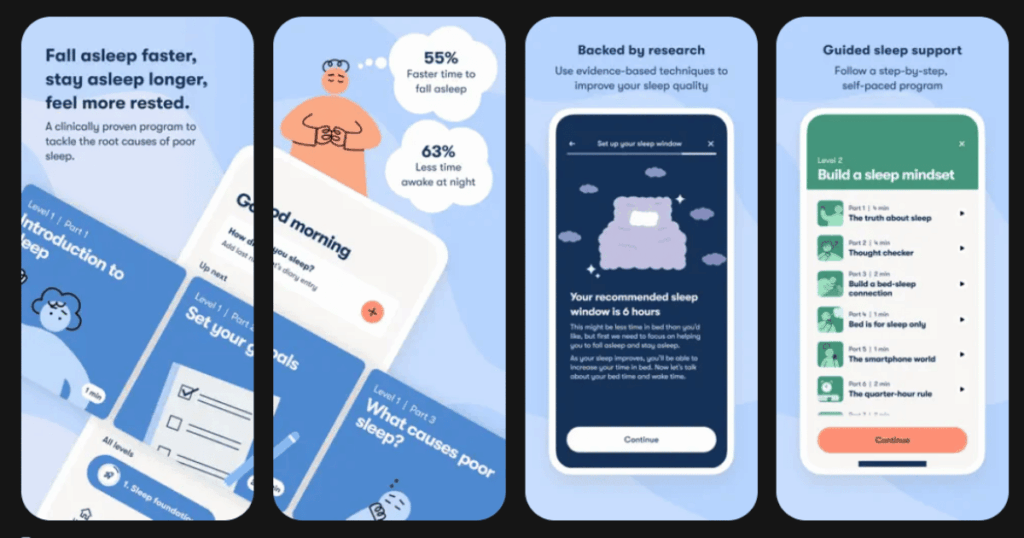
Sleepio is a digital sleep improvement program featuring cognitive behavioral therapy techniques. It delivers a six week CBT program that helps you fall asleep faster and feel better during the day. The Lancet described Sleepio as “a proven intervention for sleep disorders using the internet,” and Nature noted it was “about as effective as CBT delivered in person.”
The program tailors your treatment to suit your symptoms, lifestyle, and goals. Brief 10 minute sessions make it easy to fit into your day.
Key Features:
- Animated virtual sleep expert called “The Prof” guides you through each module with interactive quizzes
- Daily sleep diaries and progress graphs to track your improvement over time
- Complete CBT-I components including sleep restriction, stimulus control, and cognitive restructuring
What I like: This app is backed by serious clinical evidence from 12 randomized controlled trials. NICE found that Sleepio is more effective at reducing insomnia than sleep hygiene education and sleeping pills. The structured approach feels like having a real therapist in your pocket. A 2020 study with over 7,000 NHS patients found success rates of 56% and users gained nearly six hours of sleep per week.
What I don’t like: The program requires sustained and significant effort to see improvements. It is not a passive solution. Some users might find the weekly pacing slow when they want faster relief.
Pricing: Free through NHS in parts of the UK. Otherwise subscription based. Some employers offer coverage.
Platforms: iOS, Android, and web browser
#3. CBT-i Coach – Best for Therapy Companions

CBT-i Coach is designed for people engaged in Cognitive Behavioral Therapy for Insomnia with a health provider. The app guides users through learning about sleep, developing positive routines, and improving their sleep environments.
This app was a collaborative effort between the VA’s National Center for PTSD, Stanford School of Medicine, and DoD’s National Center for Telehealth and Technology.
Key Features:
- Sleep diary with structured tracking and sleep prescription recommendations
- Cognitive restructuring tools to help shift problematic thought patterns about sleep
- Integration with Apple Health and Fitbit for comprehensive tracking
What I like: The user experience is both intuitive and user friendly. Experts rated it 5 out of 5 for appropriateness of content. I love that it is completely free with no ads. The app works perfectly alongside therapy sessions. The educational content really helped me understand my sleep patterns better.
What I don’t like: Some users report frustration that you can only list one sleep session per day and viewing past data is limited to about 10 days. The app works best with a therapist, so standalone users might feel unsupported.
Pricing: Completely free
Platforms: iOS and Android
#4. Insomnia Coach – Best for Self Guided Sleep Training
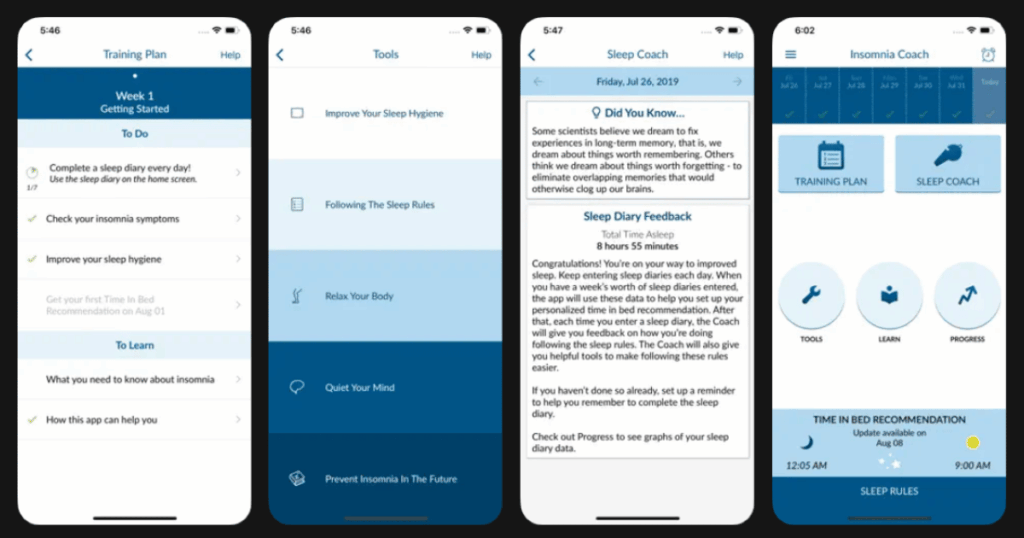
The Insomnia Coach app was created for everyone, including Veterans and Service members, to help manage insomnia. It can be used as a standalone education and self care tool, or as a supplement to professional mental health care.
The app provides a guided, weekly training plan to help you track and improve your sleep. It includes a sleep coach with personal feedback about your sleep and fun sleep tips.
Key Features:
- 5 week structured training plan designed to be used daily
- Interactive sleep diary to track daily changes in your sleep patterns
- 17 tools to help you get your sleep back on track
What I like: One user shared: “After over 20 years of sleep problems, I have a tool that works. I went from 3-4 hours of interrupted sleep to 7-8 solid hours.” Research found that three quarters of participants continued using the app through 6 weeks and perceptions were very favorable. The personalized feedback each morning makes a real difference.
What I don’t like: Some users find frustration when the app locks sleep diary entries after updating sleep prescriptions. This can create unwanted gaps in tracking data.
Pricing: Completely free
Platforms: iOS and Android
#5. Stellar Sleep – Best for Anxiety Related Insomnia
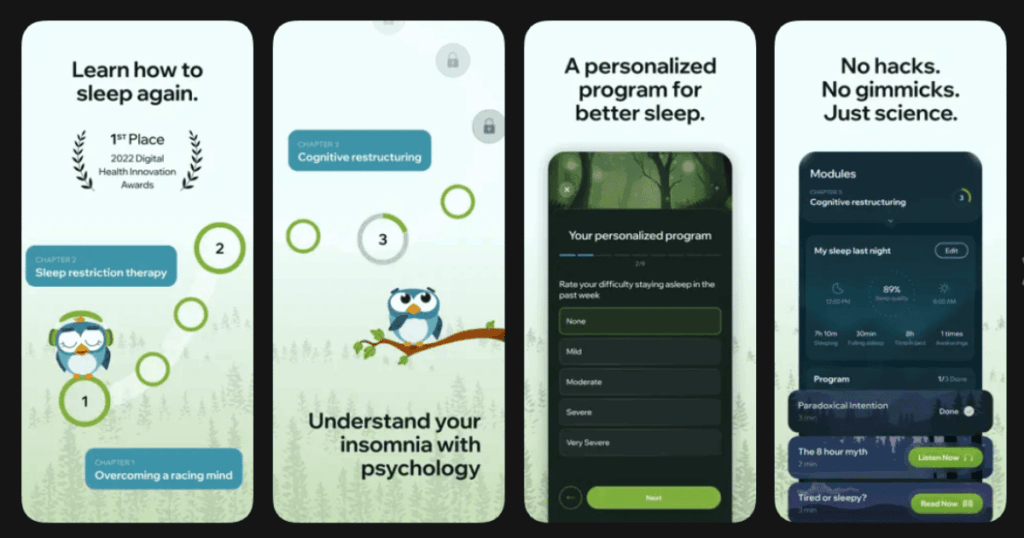
Stellar Sleep was born from the frustration of insomniacs waiting for solutions that came too late. The founders worked with sleep experts, converting shared experiences into a digital solution. In 2021, they started as a venture at Harvard Innovation Labs.
Their program is deeply rooted in proven behavioral therapy for insomnia techniques. They distilled this rich clinical heritage into a convenient and accessible format.
Key Features:
- Skills based approach that addresses underlying anxiety and stress
- Fast results with clinically significant differences within 2 weeks
- Fits any lifestyle and takes just 10 minutes a day
What I like: Users report life changing results. One shared: “I literally went from 6 hours being a ‘good’ night to regular 7 to 8 hours nights.” The emphasis on building skills rather than just calming you down with generic meditation sets this app apart. It helped me recognize how anxiety was affecting my sleep.
What I don’t like: The program takes 5 or so weeks to complete, which requires commitment. Results do not happen overnight, even though improvement can start within two weeks.
Pricing: Subscription based with free trial available
Platforms: iOS and Android
#6. Headspace – Best for Meditation and Sleep Combined
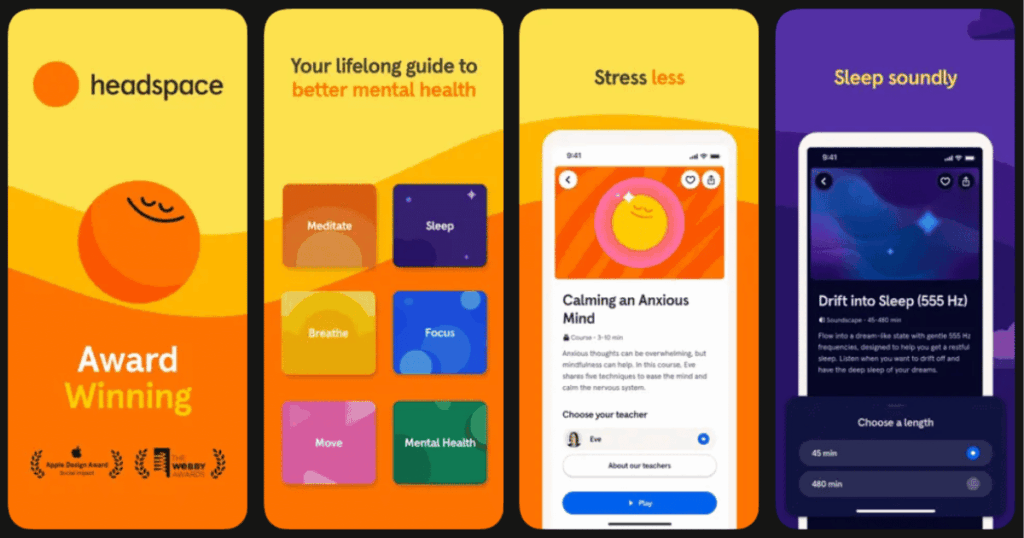
Headspace is your lifelong guide to better mental health. Through evidence based meditation and mindfulness tools, sleep resources, and mental health coaching, Headspace helps you create life changing habits.
Headspace’s “Finding Your Best Sleep” program is an 18 day program rooted in cognitive behavioral therapy for insomnia. Participants experienced a 29% decrease in self reported insomnia symptoms.
Key Features:
- Practice CBT techniques and CBT therapy exercises to reduce stress and anxiety
- Sleep more soundly with bedtime meditations, proven exercises, and relaxing sounds
- 18 session sleep program that takes less than 10 minutes per day to complete
What I like: Clinical research showed the program improved objective sleep quality including sleep efficiency and reduced wake time after falling asleep. Users also saw a 22% decrease in depression symptoms. The courses help new users build confidence as they learn meditation exercises and mindfulness techniques.
What I don’t like: All meditations and exercises are locked behind a paywall. Those looking for free content will not find it in the Headspace app.
Pricing: $12.99 per month or $69.99 per year with free trial available
Platforms: iOS and Android
#7. Calm – Best for Relaxation and Sleep Stories
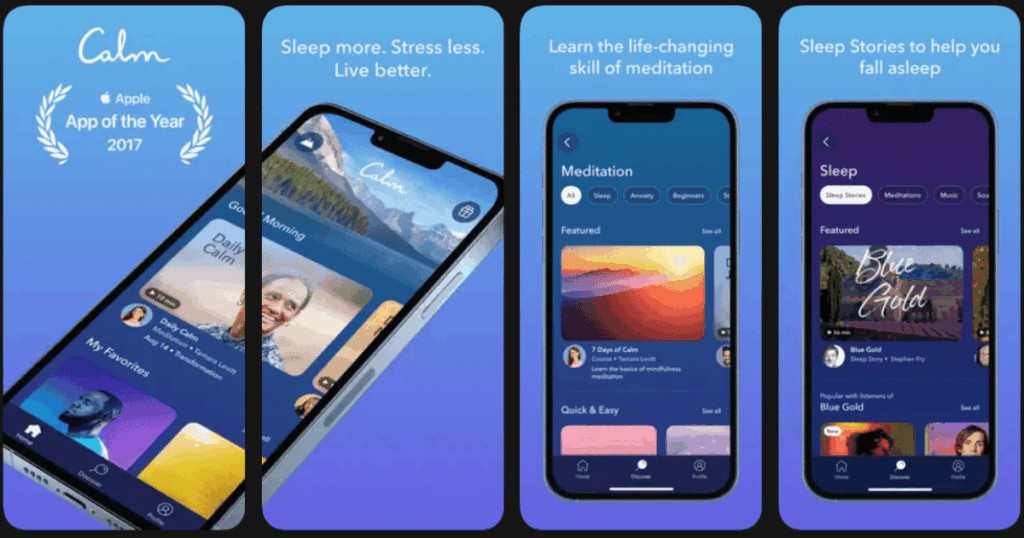
Calm is the number one mental health app designed to help you manage stress, sleep better, and live a happier, healthier life. Research based tools help you build life changing habits.
If you are having trouble falling asleep, their 500+ Sleep Stories, soundscapes, and guided sleep meditations can lull you to sleep.
Key Features:
- Entire library of over 100 Sleep Stories with new stories added every week
- Exclusive music tracks for focus, relaxation, and sleep with new music added weekly
- 60 second Breathe Bubble for immediate relief from spiraling thoughts
What I like: App users say the sleep stories are one of the most helpful features. Many reviewers say they fall asleep before the story ends, usually within 5 to 10 minutes. The celebrity narrated content from stars like Matthew McConaughey makes bedtime something to look forward to.
What I don’t like: Most features require a paid subscription and there are many alternatives available at a lower price. While Calm may help reduce insomnia, it is not a substitute for professional mental health support.
Pricing: Free trial available. Then $14.99 per month or $69.99 per year
Platforms: iOS and Android
#8. ShutEye – Best for Sleep Tracking with CBT Elements
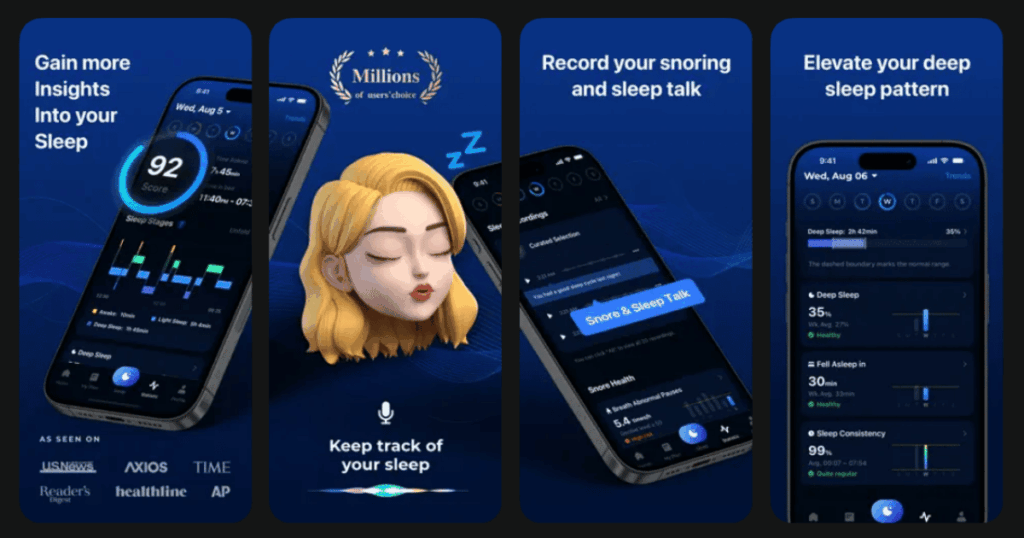
ShutEye uses an artificial intelligence algorithm to detect your sleeping time, the time taken to sleep, and the patterns you opted for. ShutEye uses machine learning to accurately track sleep by identifying sounds like snoring with top 90th percentile accuracy.
The app offers a 3 week CBT-I sleep plan with 8 minutes of daily time. This plan guides you through positive sleep routines and provides structured strategies.
Key Features:
- Sleep tracking that categorizes your sleep into 5 different stages including light, deep, and REM sleep
- White noise library with mind soothing sounds plus sleep stories and guided meditations
- Personalized CBT-I plan created just for you with doctor provided tips on sleep efficiency
What I like: The detailed metrics including breathing abnormal pauses, sleep consistency, and noise levels throughout the night provide incredible insight. I love the wide variety of sleep sounds, bedtime stories and guided meditations designed to help you fall asleep quickly.
What I don’t like: Some users report issues with accuracy and frustration with the subscription process. A few complained about being charged before their free trial ended.
Pricing: 7 day free trial. Then $59.99 per year for VIP features
Platforms: iOS and Android
#9. Somryst – Best for Prescription Grade Treatment
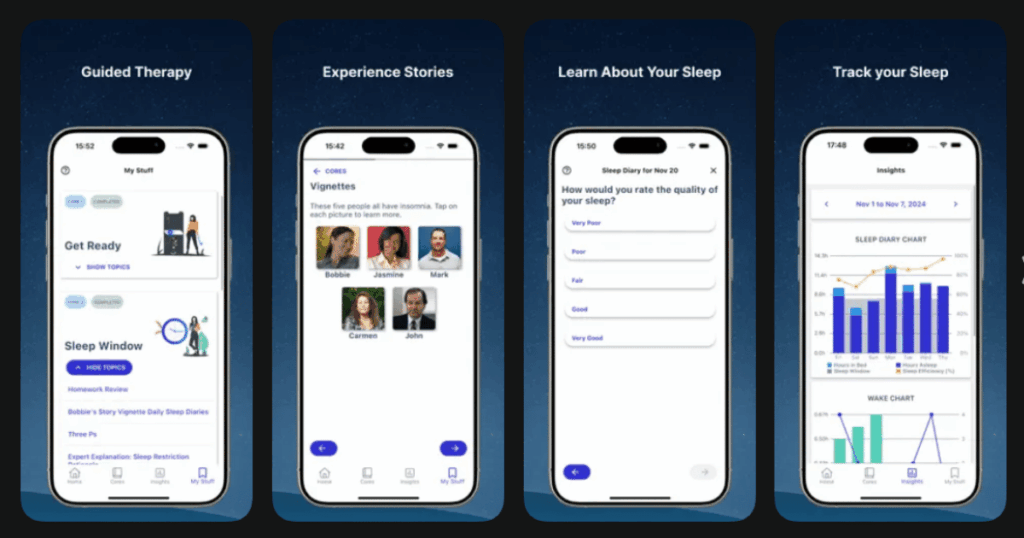
Somryst is a 9 week Prescription Digital Therapeutic for chronic insomnia. It is the first FDA cleared prescription digital therapeutic for chronic insomnia.
Somryst delivers cognitive behavioral therapy for insomnia via a mobile application. CBT-I is the guideline recommended, first line treatment for chronic insomnia.
Key Features:
- 6 treatment Cores focused on CBT-I concepts including Sleep Restriction, Stimulus Control, and Cognitive Restructuring
- Clinical trials showed 45% reduction in time to fall asleep and 52% reduction in time spent awake at night
- Provider dashboard so your doctor can review your progress and adjust treatment
What I like: This is serious, FDA cleared treatment backed by randomized controlled trials. Clinical studies demonstrated persistent results at 6 and 12 month follow ups. For people who need more than a wellness app, this brings clinical grade CBT-I right to your smartphone.
What I don’t like: You need a prescription from a licensed healthcare provider. Out of pocket cost can reach $900 without insurance coverage, though savings cards can bring it down to $100.
Pricing: Requires prescription. Some insurers cover it. Savings programs available for uninsured patients.
Platforms: iOS and Android
What Is CBT for Insomnia and How Do These Apps Use It?
Cognitive Behavioral Therapy for Insomnia, often called CBT-I, is the gold standard treatment for sleep problems. CBT-I is a neurobehavioral treatment which focuses on addressing the maladaptive behaviors, routines, and dysfunctional thoughts that perpetuate sleep problems.
CBT trains people to use techniques that address the mental factors associated with insomnia, such as the racing mind, and to overcome the worry and other negative emotions that accompany being unable to sleep.
These apps deliver CBT-I through modules that cover sleep restriction, stimulus control, cognitive restructuring, and sleep hygiene education. Research consistently shows CBT-I’s effectiveness, often outperforming sedative medications without the side effects, with benefits persisting over time.
Are Free CBT Sleep Apps as Effective as Paid Ones?
Both free and paid options can help improve your sleep, but there are differences worth knowing. Research reviewed efficacy and quality data on self management CBT-I smartphone apps. Two apps, CBT-i Coach and Insomnia Coach, had positive empirical findings across all efficacy and quality assessment approaches and both are completely free.
Paid apps often offer more content, better personalization, and extra features like sleep tracking or premium soundscapes. When evaluating sleep technologies, clinicians should be aware that other than Somryst and Sleepio, most digital CBT-I apps have few or no published studies.
The best choice depends on your needs. Free apps work great as therapy companions or for mild sleep issues. Paid apps might be worth it for deeper features and comprehensive programs. What matters most is that you stick with whichever app you choose.
How Long Does It Take to See Results from CBT Sleep Apps?
Results vary from person to person, but most people start noticing improvements within a few weeks. Stellar Sleep reports clinically significant differences within 2 weeks. Sleepio users in clinical trials showed improvements maintained through 48 weeks of follow up.
Research on Insomnia Coach found that treatment effects emerged at follow up for insomnia severity, sleep onset latency, and global sleep quality.
The key is consistency. CBT-I works best when you follow the program daily and give the techniques time to rewire your sleep habits. Most structured programs run 5 to 9 weeks. Stick with it, track your progress, and trust the process. The changes you make now can lead to lasting improvements in your sleep quality.