9 Best Sleep Diary Apps For Your Phone
| App Name | Best For | Key Features | AC Rating | Pricing |
|---|---|---|---|---|
| Life7 | All-in-one mental wellness and sleep | Binaural beats, sleep stories, CBT tools, breathing exercises | 4.8/5 | Free trial, subscription plans available |
| Sleep Cycle | Detailed sleep pattern analysis | Sound-based tracking, smart alarm, sleep graphs | 4.7/5 | Free with premium option |
| ShutEye | Comprehensive sleep sounds and tracking | AI sound recognition, sleep diary, snore detection | 4.6/5 | Free with premium option |
| Pillow | Apple ecosystem users | Automatic tracking, heart rate analysis, Apple Watch integration | 4.7/5 | Free with premium option |
| SleepScore | Science-backed sleep improvement | Sonar technology, personalized advice, doctor reports | 4.5/5 | Free with premium option |
| Sleep As Android | Android users who need alarm variety | CAPTCHA alarms, sonar tracking, wearable support | 4.6/5 | Free trial, one-time purchase |
| Sleepzy | Sleep debt tracking | Smart alarm, sleep cycle analysis, snore recording | 4.4/5 | Free with premium option |
| CBT-I Coach | Insomnia relief through therapy | Sleep diary, CBT-I techniques, relaxation tools | 4.3/5 | Free |
| Consensus Sleep Diary | Clinical sleep research | Standardized diary format, research-backed design | 4.2/5 | Free |
#1. Life7 – Best for All-in-One Mental Wellness and Sleep
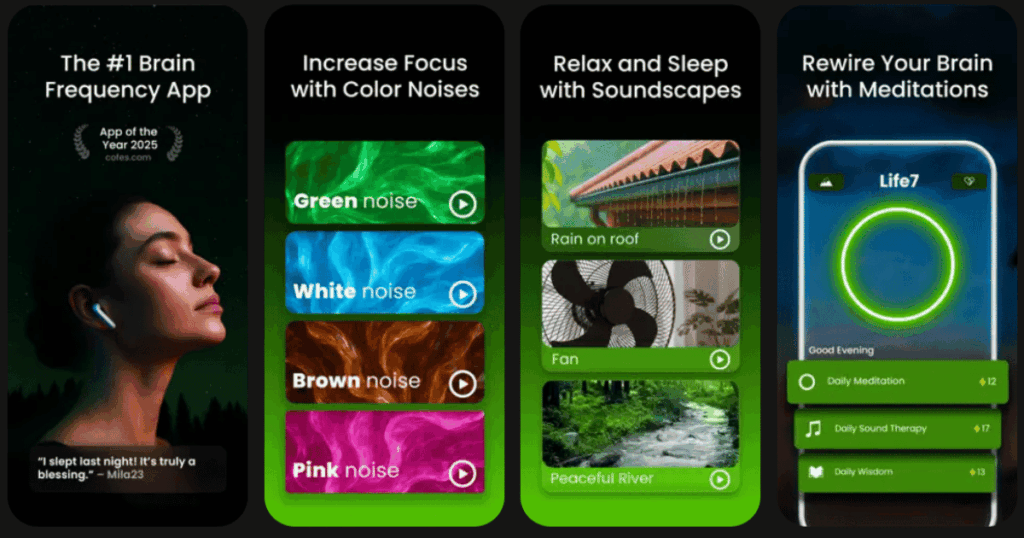
Life7 stands out as the top choice for anyone serious about improving their sleep and mental wellness. This app goes far beyond simple sleep tracking. It offers a complete toolkit for better rest and reduced stress.
The app features an impressive library of sounds and frequencies. You can choose from green noise, white noise, brown noise, and pink noise. It also includes delta, theta, alpha, beta, and gamma wave music. Plus, there are pure binaural beats and solfeggio frequencies like 432 Hz and 528 Hz.
Key Features:
- Sleep stories for adults and children, bedtime visualizations, and REM sleep music
- SOS sessions for anxiety and panic attacks, plus breathing exercises for your nervous system
- CBT tools, hypnotherapy, vagus nerve stimulation, and transcendental meditation
What I like: I really appreciate how Life7 combines everything in one place. The backdrop mode is genius because you can mix soundscapes with meditations or sleep stories. The daily check-ins keep me accountable. And the gamified approach makes mindfulness fun. I earn XP and unlock new content as I progress. The dream wave hypnosis and 8D sleep audio are truly unique features I haven’t found elsewhere.
What I don’t like: The free content is somewhat limited. You really need the subscription to unlock the full power of this app. But the 7-day free trial lets you test everything before committing.
Pricing: 7-day free trial available. Offers weekly, monthly, and yearly subscription plans with frequent special offers.
Platforms: iOS and Android
#2. Sleep Cycle – Best for Detailed Sleep Pattern Analysis
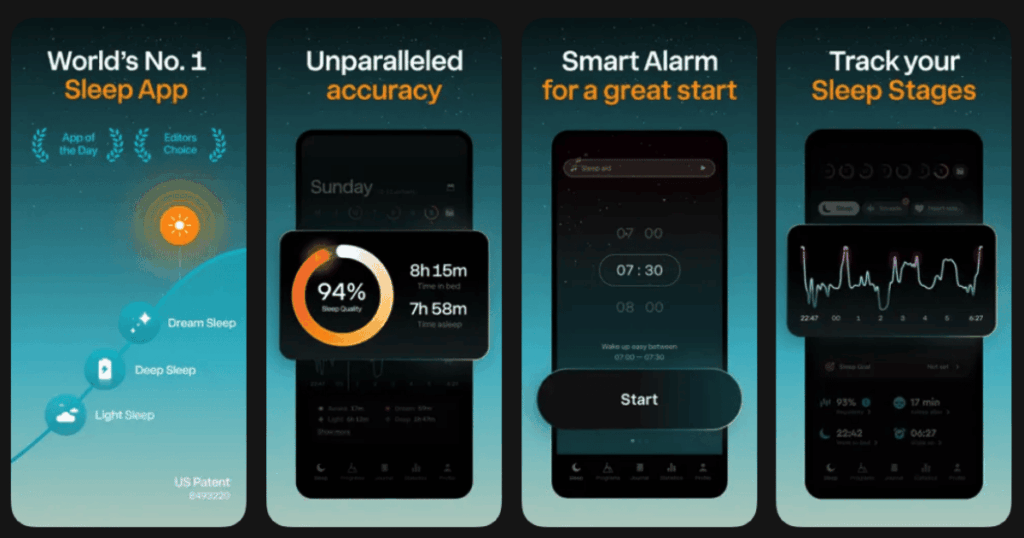
Sleep Cycle has been helping millions track their sleep for over a decade. The app uses your phone’s sound sensor to analyze your sleep patterns without needing a wearable device.
It tracks your movements and sounds throughout the night. Then it creates detailed graphs showing your sleep stages. The smart alarm wakes you during your lightest sleep phase. This means you feel more refreshed in the morning.
Key Features:
- Patented sound analysis technology that tracks sleep from your nightstand
- Smart alarm that wakes you at the optimal time in your sleep cycle
- Detection of snoring, coughing, and sleep talking with audio playback
What I like: The sleep graphs are really detailed and easy to understand. I can see exactly when I was in deep sleep versus light sleep. The snore detection feature helped me realize I snore more after drinking alcohol. The app also integrates well with Apple Health and other fitness apps.
What I don’t like: Some of the best features require a premium subscription. The free version has become more limited over time. Also, the amount of data can feel overwhelming if you just want simple tracking.
Pricing: Free basic version. Premium subscription available yearly.
Platforms: iOS and Android
#3. ShutEye – Best for Comprehensive Sleep Sounds and Tracking
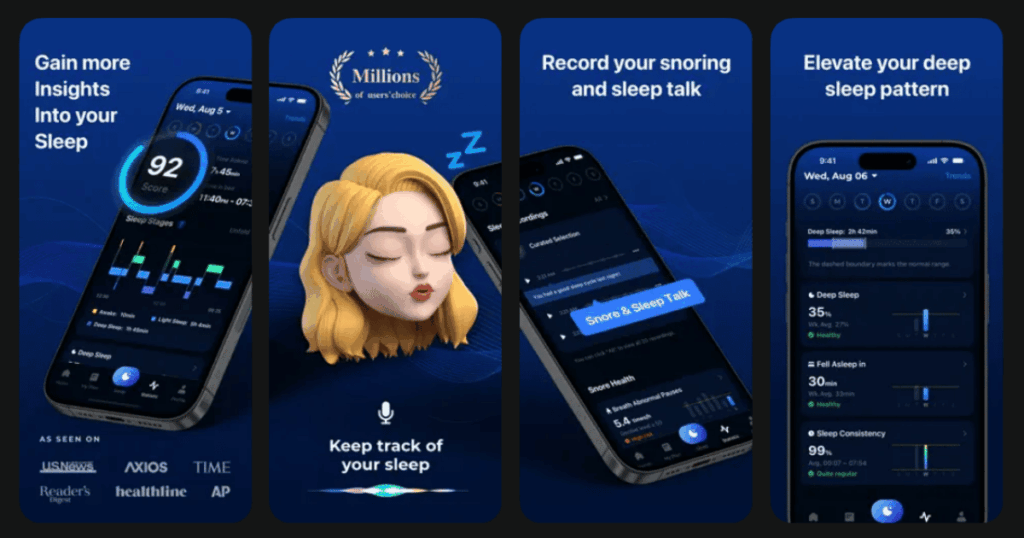
ShutEye combines powerful sleep tracking with a huge library of relaxing sounds. The app uses AI to recognize different sounds you make at night. This helps identify issues that might be affecting your sleep quality.
Over 8 million users trust ShutEye for their sleep needs. The app gives you a sleep score each morning. This score helps you understand how well you actually rested.
Key Features:
- AI-powered sound recognition for snoring, sleep talking, and breathing changes
- Extensive library of sleep sounds, meditation guides, and bedtime stories
- Sleep diary feature with detailed insights and trend analysis
What I like: The sound library is massive and high quality. I love falling asleep to the nature sounds or ambient music. The dream interpretation feature is a fun bonus. The app also offers sleep challenges that motivate me to build better habits.
What I don’t like: Some users report issues with the free trial unexpectedly converting to paid. Make sure to check your subscription settings. The app can also drain your battery if you forget to plug in at night.
Pricing: Free with limited features. Premium subscription available yearly.
Platforms: iOS and Android
#4. Pillow – Best for Apple Ecosystem Users
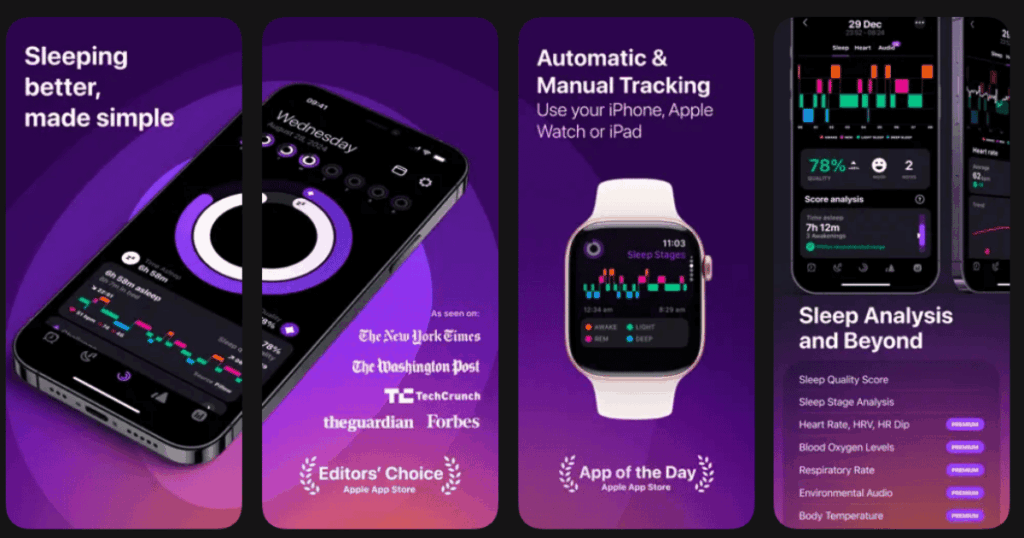
Pillow is designed specifically for Apple devices. It works beautifully with your iPhone, iPad, and Apple Watch. The automatic sleep tracking feature means you don’t have to do anything. Just wear your watch to bed.
The app analyzes your sleep stages, heart rate, and audio. It then creates detailed reports about your sleep quality. You can compare your sleep to your steps, caffeine intake, and other health metrics.
Key Features:
- Automatic sleep detection when wearing Apple Watch
- Heart rate analysis and blood oxygen level tracking during sleep
- Mood tracking that correlates with sleep quality patterns
What I like: The integration with Apple Health is seamless. I can see how my workouts and caffeine affect my sleep. The nap modes are helpful for power naps. The interface is beautiful and easy to navigate. Sleep aid audio content helps me wind down.
What I don’t like: This app only works on Apple devices. Android users are out of luck. Also, automatic mode doesn’t allow audio recordings or alarms due to technical limitations.
Pricing: Free basic version. Premium subscription available monthly or yearly.
Platforms: iOS only (iPhone, iPad, Apple Watch)
#5. SleepScore – Best for Science-Backed Sleep Improvement
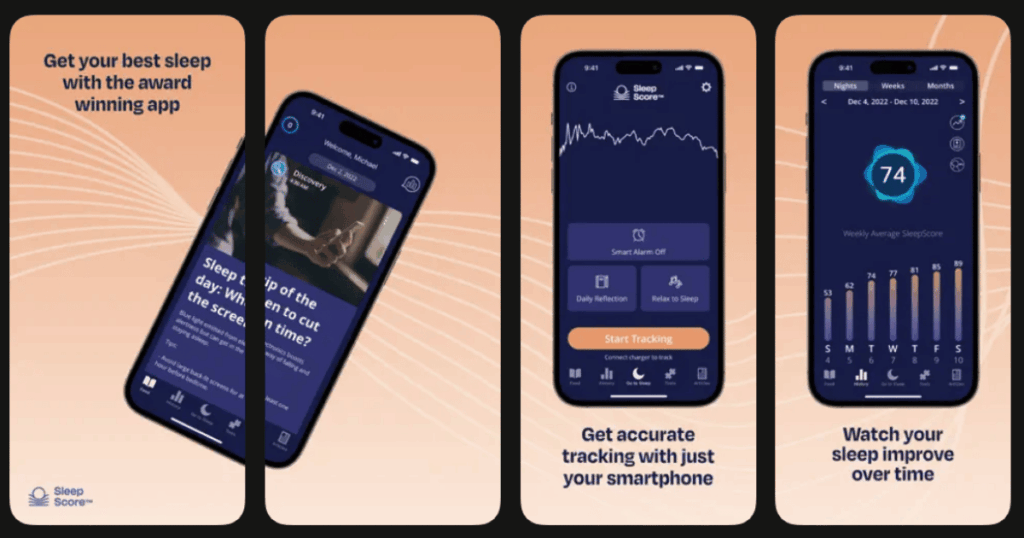
SleepScore uses patented sonar technology to track your sleep. Your phone’s speaker sends out sound waves. The microphone picks up how they bounce back. This measures your breathing and movement with high accuracy.
The technology has been validated in over 12 peer-reviewed studies. That means you can trust the data you’re getting.
Key Features:
- Non-contact sonar tracking that doesn’t require wearing anything to bed
- Personalized sleep advice based on your specific patterns
- Printable doctor’s report to share sleep concerns with your physician
What I like: The science behind this app is impressive. I feel confident the data is accurate. The personalized tips actually make sense for my lifestyle. Being able to generate a report for my doctor is incredibly useful.
What I don’t like: You need to position your phone carefully for the sonar to work. The app doesn’t automatically detect when you go to sleep. You have to manually start tracking each night.
Pricing: Free to download. Premium subscription for advanced features.
Platforms: iOS and Android
#6. Sleep As Android – Best for Android Users Who Need Alarm Variety
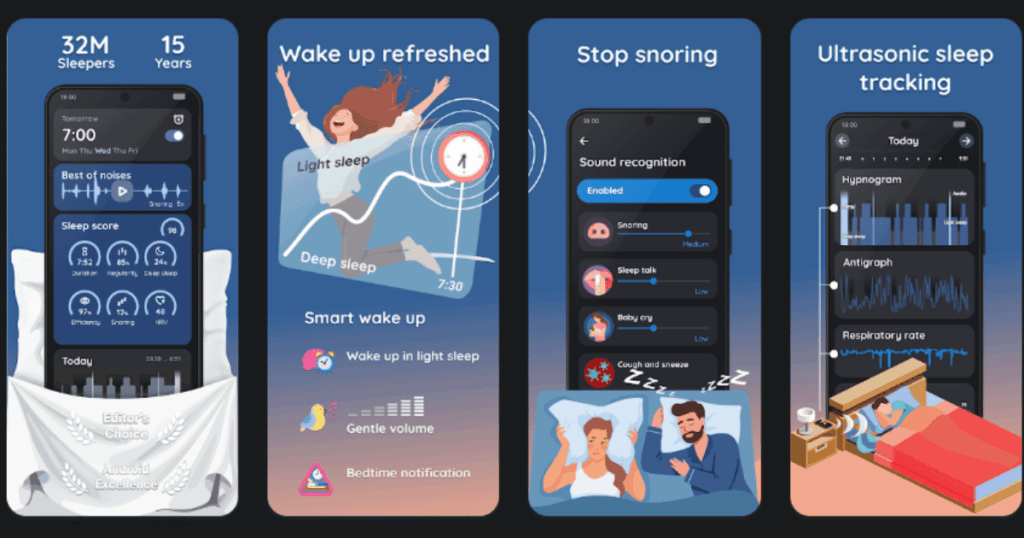
Sleep As Android is a powerhouse app for Android users. It’s packed with features that go way beyond basic tracking. The CAPTCHA alarms ensure you actually wake up. You might need to solve a math problem or scan a QR code in your bathroom.
The app also features sonar tracking so you don’t need your phone in bed. It integrates with many popular wearables including Wear OS, Garmin, and Fitbit.
Key Features:
- CAPTCHA tasks like math problems, QR codes, or NFC tags to dismiss alarms
- Sonar contactless tracking that works from your nightstand
- Anti-snoring feature that vibrates your wearable when it detects snoring
What I like: This app is incredibly customizable. The alarm options are endless. I use the NFC tag in my bathroom, so I have to get out of bed. The lucid dreaming feature is cool for dream enthusiasts. The sleep talk recording has caught some hilarious moments.
What I don’t like: The app can feel overwhelming with so many options. The interface isn’t as polished as some competitors. Some users report occasional bugs with certain Android versions.
Pricing: Free two-week trial. One-time purchase for full version.
Platforms: Android only
#7. Sleepzy – Best for Sleep Debt Tracking
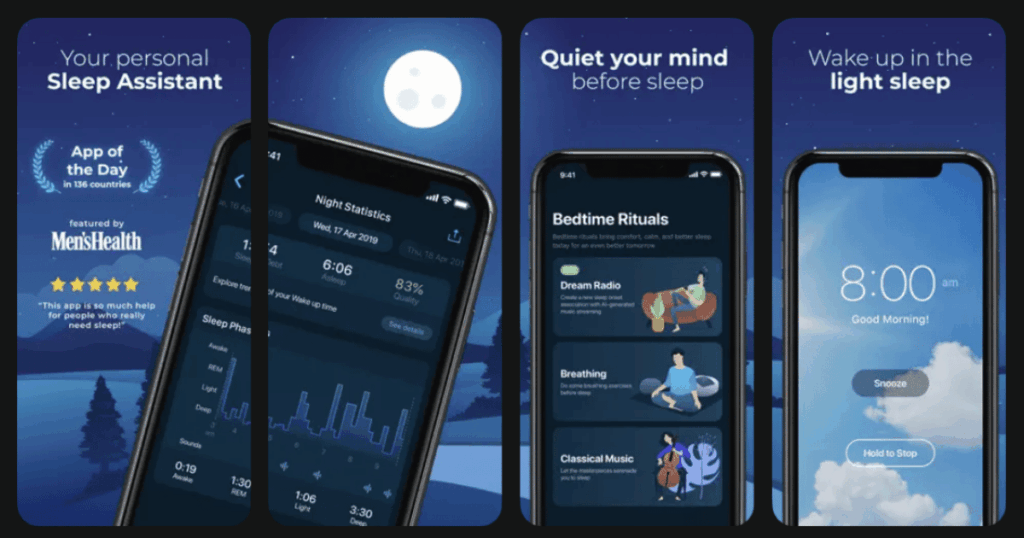
Sleepzy focuses on helping you understand your sleep debt. This is the difference between how much sleep you need and how much you actually get. The app tracks this debt over time and helps you catch up.
The smart alarm wakes you during your lightest sleep phase. This makes mornings feel less groggy. You can also set sleep goals and track your progress.
Key Features:
- Sleep debt calculator that shows how much rest you need to catch up
- Smart alarm with 30-minute wake window for optimal wake timing
- Sleep journal for noting daily activities that affect your rest
What I like: The sleep debt feature is eye-opening. Seeing the accumulated hours I owe my body motivates me to prioritize rest. The relaxing sounds help me fall asleep faster. The weather forecast feature helps me plan my mornings.
What I don’t like: The tracking can sometimes be inaccurate if you move around a lot while awake in bed. Some features are locked behind the premium paywall. The app has gone through ownership changes affecting quality.
Pricing: Free with ads. Premium subscription available.
Platforms: iOS and Android
#8. CBT-I Coach – Best for Insomnia Relief Through Therapy

CBT-I Coach was developed by the VA and Stanford. It’s based on Cognitive Behavioral Therapy for Insomnia. This is the gold standard treatment for chronic sleep problems. The app teaches you proven techniques to overcome insomnia.
It’s designed to work alongside treatment with a healthcare provider. But you can also use it on your own for self-help.
Key Features:
- Structured sleep diary that automatically calculates sleep efficiency
- Educational content about healthy sleep habits and CBT-I techniques
- Relaxation tools and exercises for when you can’t sleep
What I like: This app addresses the root causes of insomnia. It’s not just about tracking or sounds. The techniques actually work because they’re backed by real research. And it’s completely free with no in-app purchases.
What I don’t like: The interface feels a bit dated compared to newer apps. You can only log one sleep session per day. The app works best alongside professional treatment.
Pricing: Completely free
Platforms: iOS and Android
#9. Consensus Sleep Diary – Best for Clinical Sleep Research
The Consensus Sleep Diary was created by insomnia experts worldwide. It’s the first standardized sleep diary used in clinical research and practice. If you’re working with a sleep specialist, this is the tool they likely recommend.
The app is simple and focused. It captures the essential information doctors need without extra bells and whistles.
Key Features:
- Standardized format used in clinical research worldwide
- Web-based access from any device with internet connection
- Free for personal and clinical use
What I like: The simplicity is refreshing. There’s no learning curve or complicated features. It captures exactly what sleep specialists need to see. The data is easy to share with your healthcare provider.
What I don’t like: The app lacks the engaging features of consumer apps. There are no sounds, no smart alarms, no gamification. It’s purely a clinical tool that feels utilitarian.
Pricing: Free for personal use
Platforms: iOS, Android, and web
What Makes a Good Sleep Diary App?
A good sleep diary app should be easy to use every day. It needs to track the basics like bedtime, wake time, and how you feel. But the best apps go further. They offer insights that help you improve.
Look for apps that show patterns over time. Weekly and monthly trends are more useful than daily snapshots. Smart alarms that wake you at the right time are valuable. And sound libraries can help you fall asleep faster.
Most importantly, choose an app you’ll actually use consistently. The fanciest features are worthless if the app sits unused on your phone.
Can Sleep Apps Really Improve Your Sleep?
Yes, sleep apps can genuinely help you sleep better. They work by increasing your awareness of sleep habits. When you track something, you naturally pay more attention to it.
Many apps offer proven techniques like CBT-I and relaxation exercises. Sound libraries with white noise or nature sounds help many people fall asleep faster. Smart alarms can reduce morning grogginess.
However, apps aren’t magic. They work best when combined with good sleep hygiene. This means keeping a consistent schedule, limiting screens before bed, and creating a comfortable sleep environment.
How Accurate Are Phone-Based Sleep Trackers?
Phone-based sleep trackers are reasonably accurate for most people. They use sound analysis and accelerometer data to detect your movements. This gives a good estimate of when you’re asleep versus awake.
However, they’re not as precise as clinical sleep studies. A polysomnography test in a sleep lab measures brain waves directly. Phone apps can only infer sleep stages from external signals.
For everyday use, the accuracy is good enough to spot patterns and trends. If you have serious sleep concerns, see a doctor who can order proper testing. Use apps as a supplement, not a replacement for medical care.