9 Best Self-Awareness Apps For Your Phone
| App Name | Best For | Key Features | AC Rating | Pricing |
|---|---|---|---|---|
| Life7 | All-in-one mental wellness | Binaural beats, sleep stories, CBT therapy | 4.9/5 | Free trial, then subscription |
| Headspace | Guided meditation for beginners | 500+ meditations, sleep tools, AI companion | 4.7/5 | Free trial, then subscription |
| Calm | Sleep and relaxation | Sleep Stories, celebrity narrators, Daily Calm | 4.6/5 | Free trial, then subscription |
| Insight Timer | Free meditation content | 200,000+ free meditations, live sessions | 4.8/5 | Free with optional premium |
| Daylio | Mood tracking without writing | Icon-based journaling, mood charts, goal tracking | 4.8/5 | Free with premium option |
| Finch | Gamified self-care | Virtual pet, mood check-ins, breathing exercises | 4.9/5 | Free with premium option |
| Reflectly | AI-guided journaling | Smart prompts, mood graphs, daily challenges | 4.5/5 | Free with premium option |
| Fabulous | Building healthy habits | Science-backed routines, coaching sessions, challenges | 4.6/5 | Free trial, then subscription |
| Moodfit | CBT-based mental fitness | Thought records, gratitude journal, medication tracking | 4.7/5 | Free with premium option |
| The Mindvalley | Personal growth courses | Expert-led programs, meditation library, coaching | 4.5/5 | Free trial, then subscription |
#1. Life7 – Best for All-in-One Mental Wellness
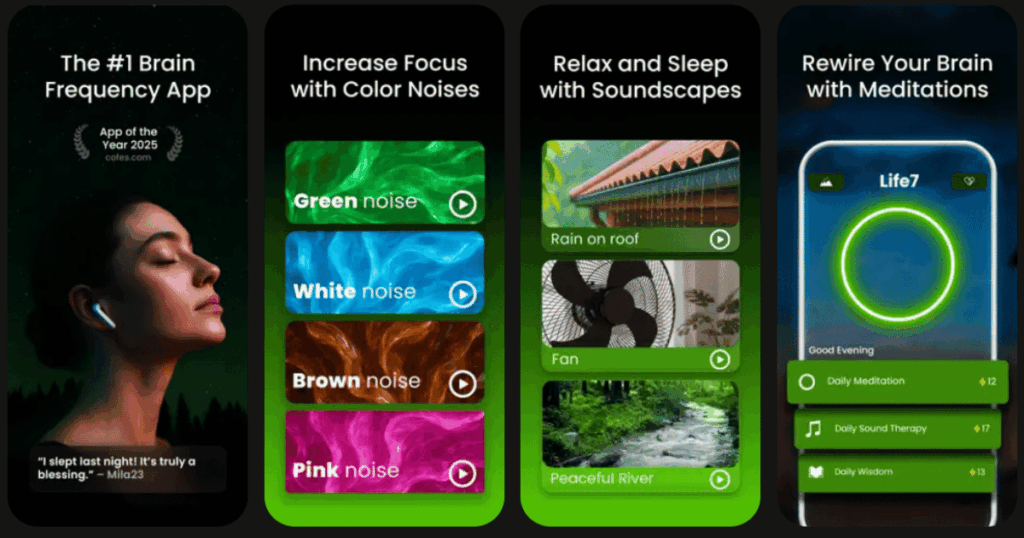
Life7 stands out as the most complete self-awareness app on the market. It packs everything you need into one place. You get meditation, sleep sounds, breathing exercises, and even therapy tools. The app has earned over 1200 editorial mentions and helped users log more than 312 million meditation minutes.
What makes Life7 special is its variety. You can choose from green noise, white noise, brown noise, and pink noise. There are binaural beats and solfeggio frequencies for deep relaxation. The app also offers CBT therapy, vagus nerve stimulation, and hypnotherapy sessions. New content drops every single day!
Key Features:
- Complete sound library with delta, theta, alpha, beta, and gamma wave music plus 432 Hz and 528 Hz frequencies
- Daily sessions including meditation, music therapy, wisdom, and personalized check-ins
- SOS panic attack relief sessions and breathing exercises for instant calm
What I like: I really appreciate how Life7 covers every aspect of mental wellness. The gamified approach keeps me coming back. I earn XP for completing sessions and unlock new soundscapes. The mood tracker helps me spot patterns in my emotions. The sleep stories work for both adults and kids, which is perfect for families. The backdrop mode lets me mix soundscapes with meditations, creating my own custom experience.
What I don’t like: The free content is somewhat limited. You really need the premium subscription to access the full library. This might be frustrating if you want to try everything before committing.
Pricing: 7 day free trial available. Weekly, monthly, and yearly plans offered with frequent special discounts.
Platforms: iOS and Android
#2. Headspace – Best for Guided Meditation Beginners
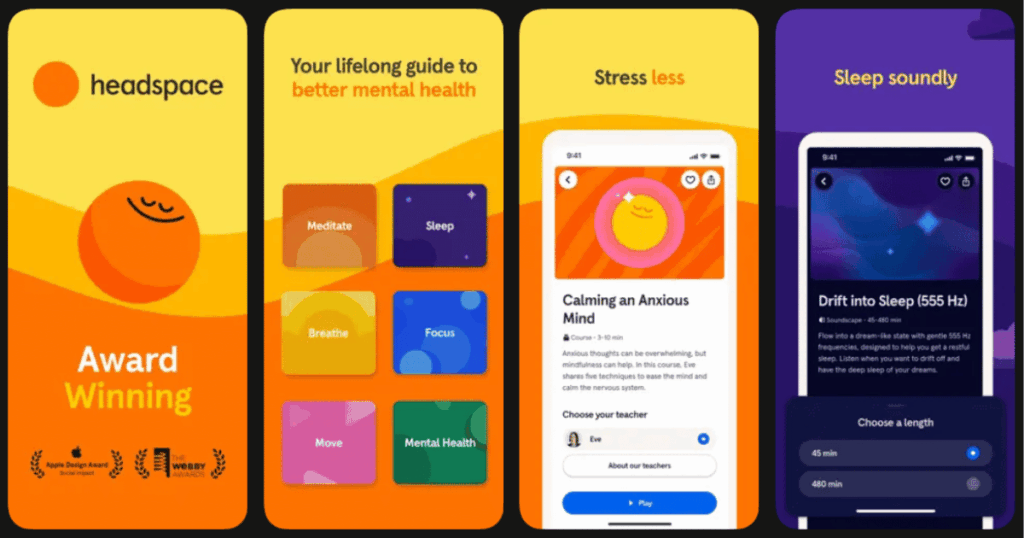
Headspace makes meditation simple and fun. The app was founded by a former Buddhist monk who wanted to bring mindfulness to everyone. With over 500 guided meditations, you will never run out of content. The animations and lessons make learning easy, even if you have never meditated before.
The app breaks everything down into small, manageable sessions. You can start with just 3 minutes a day. The courses guide you step by step through meditation basics. Headspace also includes Ebb, an AI companion that gives personalized recommendations based on your mood.
Key Features:
- Structured courses for beginners with progressive difficulty levels
- Sleep sounds, bedtime meditations, and relaxing music for better rest
- CBT exercises and mental health coaching for anxiety and stress management
What I like: The step by step approach really works for newbies. I love how the app tracks my progress and celebrates small wins. The animations explain complex concepts in simple ways. The Apple Watch integration is fantastic for quick breathing exercises on the go. The content quality is consistently high, and new sessions drop regularly.
What I don’t like: Everything sits behind a paywall. There is basically no free content in the app itself. The subscription price is higher than some competitors, which might not fit every budget.
Pricing: Monthly and annual subscription options available with a 7 to 14 day free trial.
Platforms: iOS and Android
#3. Calm – Best for Sleep and Relaxation
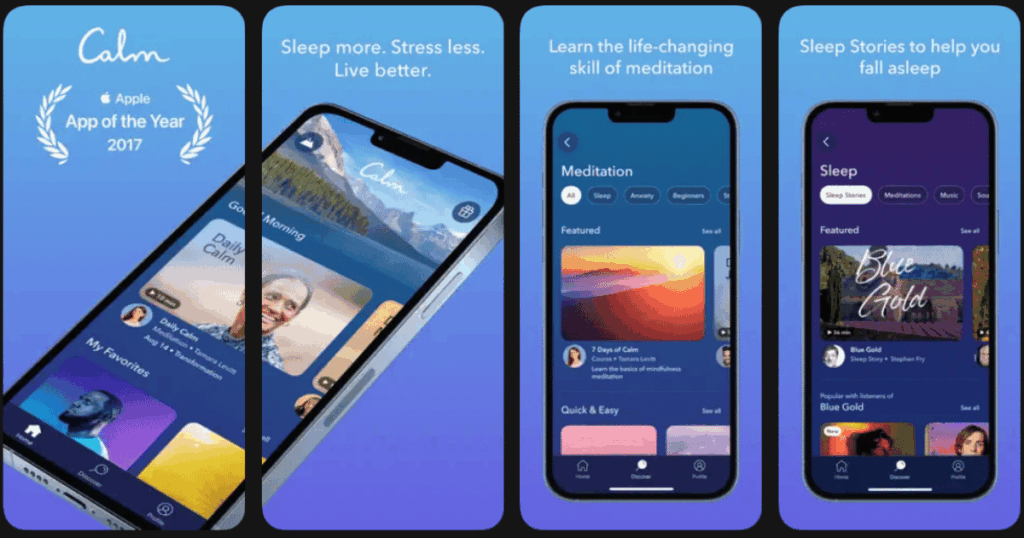
Calm has become famous for its Sleep Stories. Imagine falling asleep to Matthew McConaughey or Stephen Fry telling you a bedtime tale. The app focuses heavily on helping you relax and get better sleep. It has won multiple awards including Apple’s App of the Year.
Beyond sleep content, Calm offers meditation programs, breathing exercises, and music tracks. The Daily Calm feature gives you a fresh 10 minute meditation every morning. There is also great content for kids, making it a family friendly choice.
Key Features:
- Over 500 Sleep Stories narrated by celebrities and professional storytellers
- Masterclasses taught by mindfulness experts on topics like self-compassion and anxiety
- Soundscapes including nature sounds, rain, and ocean waves for deep relaxation
What I like: The Sleep Stories are absolutely magical. They help my racing mind slow down at night. The production quality is top notch with soothing voices and gentle music. I appreciate the variety of soundscapes available. The Calm Kids section gives parents a tool to help children wind down before bed.
What I don’t like: The free version is very limited. The interface can feel overwhelming with so many options. Some beginners might feel lost without a clear starting point.
Pricing: Monthly and annual subscriptions available with a 7 day free trial. Lifetime membership also offered.
Platforms: iOS and Android
#4. Insight Timer – Best for Free Meditation Content
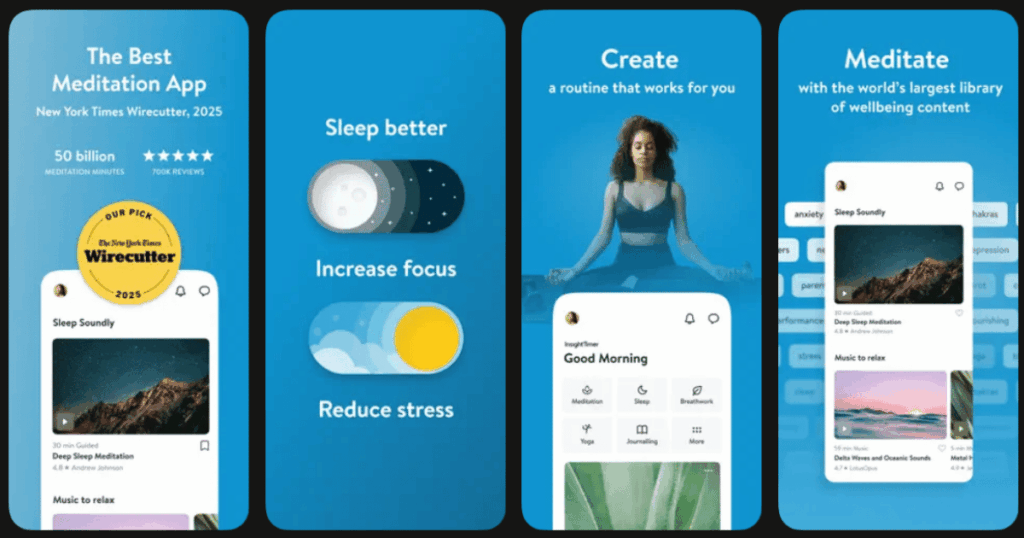
Insight Timer offers the largest free meditation library in the world. You get access to over 200,000 guided meditations from 17,000 teachers. That is not a typo. The app started as a simple meditation timer and grew into something massive.
The community aspect sets Insight Timer apart. You can see how many people are meditating right now around the world. Live sessions happen daily. Groups let you connect with others on similar journeys. All of this is available without paying a dime.
Key Features:
- Massive library covering every meditation style from Buddhist mindfulness to Kundalini yoga
- Customizable meditation timer with ambient sounds and interval bells
- Live events, courses, and community groups for ongoing support
What I like: The free content is genuinely impressive. I have used this app for months without needing premium. The variety of teachers and styles means I always find something new. The stats tracking shows my meditation streak and total time practiced. The app feels like a supportive community rather than just a tool.
What I don’t like: The interface can feel cluttered and overwhelming. Finding specific content takes some digging. Quality varies between teachers since anyone can upload content.
Pricing: Free with most features included. Premium subscription available for offline access and advanced features.
Platforms: iOS and Android
#5. Daylio – Best for Mood Tracking Without Writing
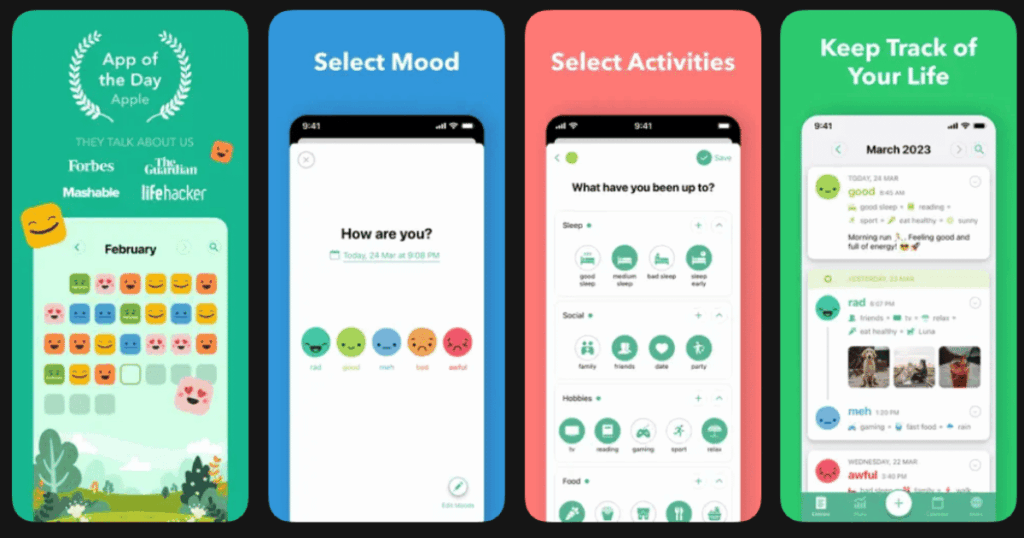
Daylio changed how I think about journaling. You track your mood and activities without typing a single word. Just tap icons that represent your feelings and what you did that day. Over time, the app shows you patterns you never noticed before.
The visual approach makes tracking feel effortless. Even on your worst days, you can log an entry in seconds. The statistics and charts help you understand what activities boost or hurt your mood. Many therapists now recommend Daylio to their clients.
Key Features:
- Icon-based mood and activity logging that takes just seconds to complete
- Beautiful charts showing mood trends over weeks, months, and years
- Year in Pixels view that displays your entire year as colored dots
What I like: The simplicity is brilliant. I actually stick with this tracker because it asks so little of me. The correlation stats showed me that exercise really does improve my mood. I love customizing the icons and creating my own activities. The backup feature keeps my data safe across devices.
What I don’t like: There is no in-depth journaling option if you want to write more. The app focuses only on tracking without offering guidance or therapy tools. Some advanced stats require the premium version.
Pricing: Free version available with solid features. Premium unlocks advanced statistics and removes ads.
Platforms: iOS and Android
#6. Finch – Best for Gamified Self-Care
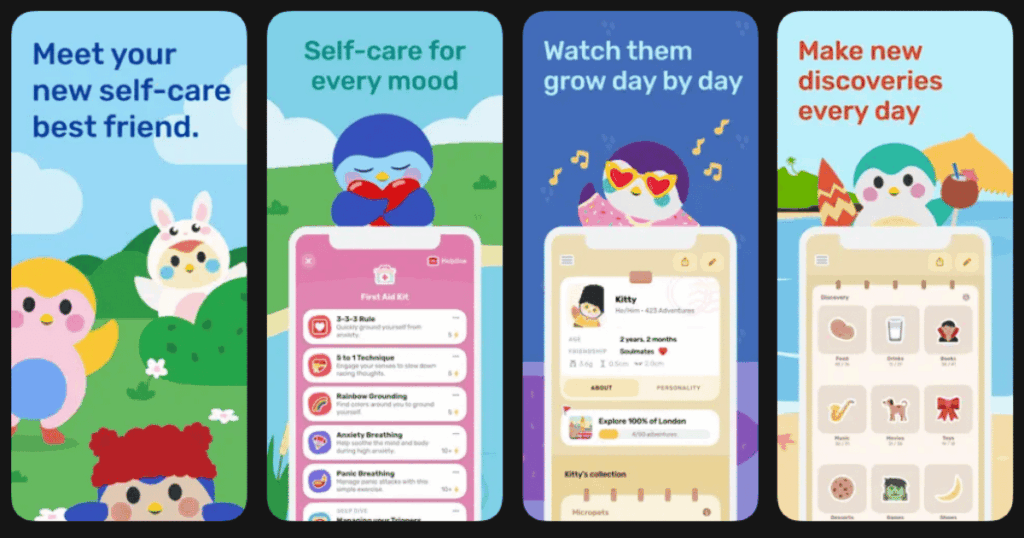
Finch turns self-care into an adorable game. You adopt a virtual bird and help it grow by taking care of yourself. Complete daily goals like drinking water or doing breathing exercises, and your bird thrives. It sounds silly but it works.
The app uses positive psychology to make healthy habits feel rewarding. Your Finch goes on adventures, discovers new things, and grows bigger as you check off tasks. You can connect with friends and send each other supportive vibes.
Key Features:
- Virtual pet that grows and evolves as you complete self-care activities
- Mood check-ins with insights that reveal emotional patterns over time
- Breathing exercises, soundscapes, journaling prompts, and guided reflections
What I like: This app got me to actually do self-care daily. Seeing my little bird happy motivates me in a way other apps never did. The inclusive design with pronouns and accessibility options feels welcoming. The community feature lets me support friends without awkward conversations. The free version offers tons of content.
What I don’t like: The interface can feel cluttered with so many features. Some important tools are hard to find at first. The pricing differs between iOS and Android which feels unfair.
Pricing: Generous free version. Premium subscription unlocks extra soundscapes and customization.
Platforms: iOS and Android
#7. Reflectly – Best for AI-Guided Journaling
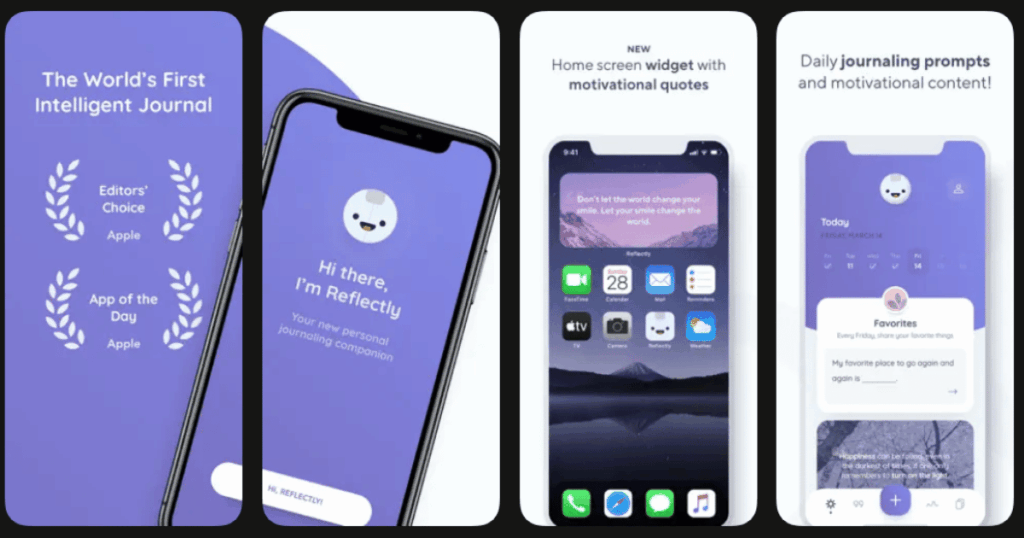
Reflectly uses artificial intelligence to guide your journaling practice. Instead of staring at a blank page, you answer smart prompts tailored to your mood. The AI learns about you over time and asks better questions.
The app focuses on helping you process thoughts and feelings without overwhelming you. Daily challenges push you to grow. Mood tracking with graphs reveals emotional patterns. Everything feels modern and easy to use.
Key Features:
- AI-powered prompts that adapt based on your previous entries and current mood
- Mood tracking with visual graphs showing trends and patterns
- Voice-to-text option for hands-free journaling when you prefer to talk
What I like: The prompts take away the pressure of figuring out what to write. I appreciate how the app celebrates small wins with encouraging messages. The colorful interface makes journaling feel pleasant rather than like homework. The free version includes most core features which is refreshing.
What I don’t like: The premium pricing differs significantly between iOS and Android. Some promised features like CBT exercises are not really present. The app feels better suited for beginners than experienced journalers.
Pricing: Free version with solid features. Premium removes ads with annual subscription options.
Platforms: iOS and Android
#8. Fabulous – Best for Building Healthy Habits
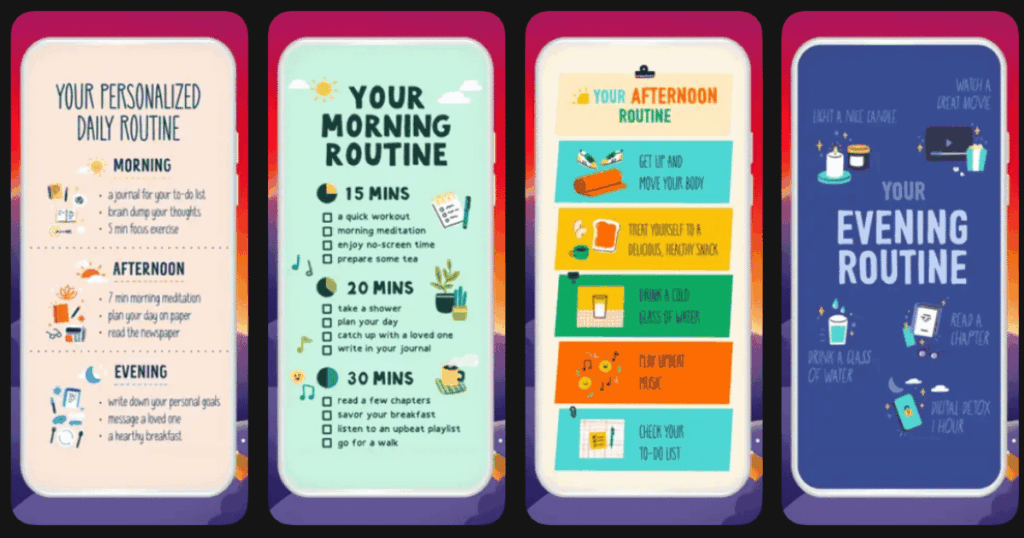
Fabulous was created at Duke University using behavioral science research. The app helps you build habits through a technique called habit stacking. You start with one tiny habit and slowly add more until you have a full routine.
The coaching style approach makes you feel supported throughout your journey. Journeys guide you toward big goals like better sleep or more energy. Challenges keep things interesting. The app truly understands that lasting change happens gradually.
Key Features:
- Science-backed habit building with structured Journeys and Challenges
- Daily coaching sessions with motivational content and practical tips
- Community Circles where you can connect with others working on similar goals
What I like: Starting with something as simple as drinking water gave me confidence to tackle bigger habits. The letters and coaching content feel personal and encouraging. The beautiful design makes opening the app enjoyable. Live challenges with other users add accountability and fun.
What I don’t like: The app sends lots of notifications which can feel overwhelming. Some users find the pricing structure confusing. Customization options are limited compared to other habit trackers.
Pricing: Limited free version. Premium subscription unlocks full features with annual billing.
Platforms: iOS and Android
#9. Moodfit – Best for CBT-Based Mental Fitness
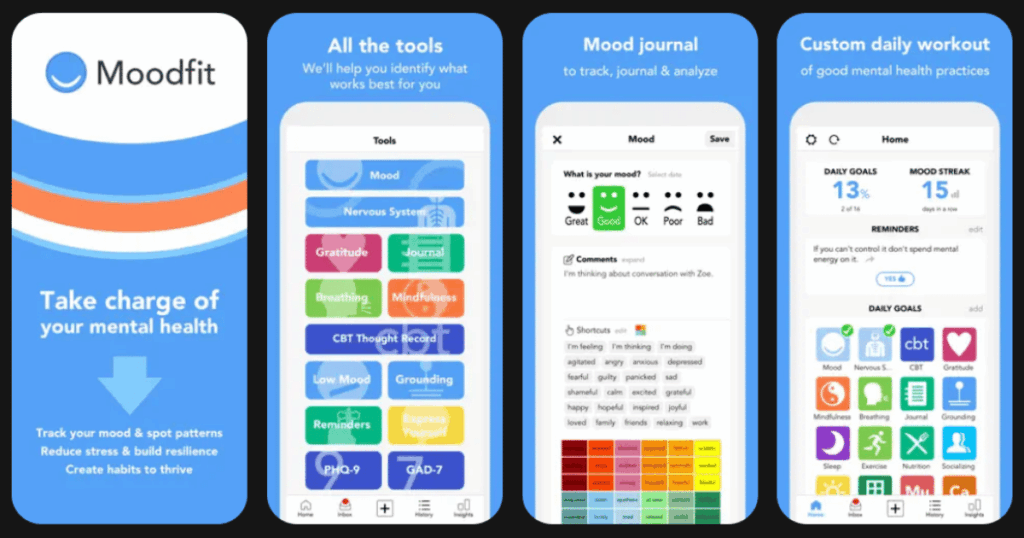
Moodfit treats mental health like physical fitness. You do daily workouts for your mind using proven techniques. The app combines mood tracking with cognitive behavioral therapy tools. It has won multiple awards as a top mental health app.
What sets Moodfit apart is the comprehensive toolkit approach. You get breathing exercises, gratitude journaling, meditation, and CBT thought records all in one place. The insights feature shows how sleep, exercise, and nutrition affect your mood.
Key Features:
- CBT thought records that help challenge and change negative thinking patterns
- Comprehensive tracking for mood, medication, sleep, nutrition, and exercise
- Validated assessments for depression and anxiety to monitor progress over time
What I like: The CBT tools actually work and feel based on real therapy techniques. I love seeing the connections between my lifestyle choices and mood. The free version offers impressive functionality without holding back important features. My therapist appreciates the reports I can share from the app.
What I don’t like: The interface feels a bit dated compared to newer apps. Some users report occasional bugs and freezing issues. There is no flashy design or gamification which might bore some people.
Pricing: Generous free version with most tools included. Premium subscription unlocks additional features.
Platforms: iOS and Android
#10. Mindvalley – Best for Personal Growth Courses
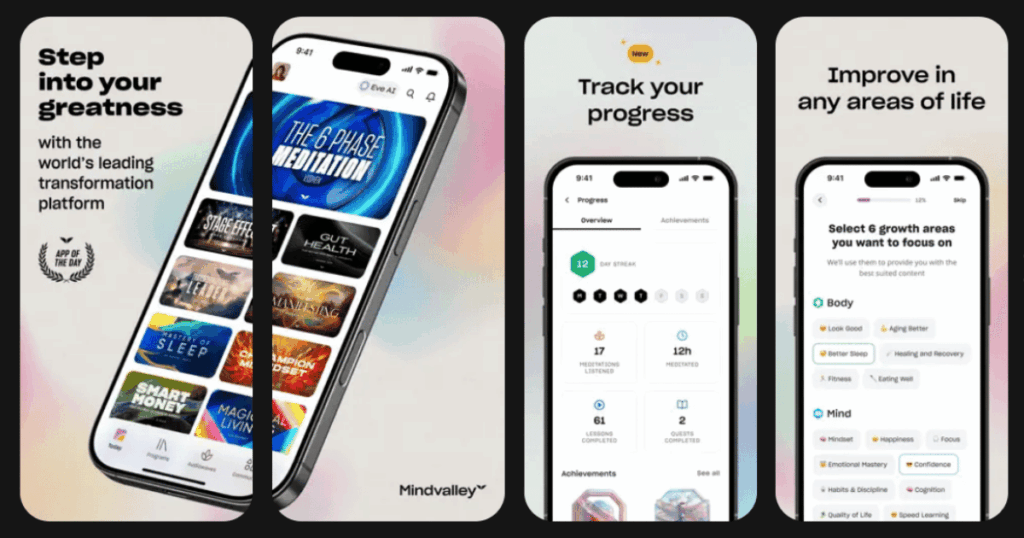
Mindvalley goes beyond simple meditation to offer complete personal transformation programs. You learn from world-renowned experts on topics from mindfulness to productivity. The app combines education with practical exercises you can do daily.
This is for people who want to go deep into self-improvement. The courses cover everything from meditation techniques to building better habits. Live coaching sessions and a supportive community keep you motivated long term.
Key Features:
- Expert-led courses on meditation, productivity, relationships, and personal growth
- Library of over 1000 guided meditations for various purposes and skill levels
- Daily programs that combine learning with practical mindfulness exercises
What I like: The production quality of courses is outstanding. Learning from actual experts rather than app developers makes a difference. The variety means I can work on many areas of my life from one app. The community aspect provides ongoing support and accountability.
What I don’t like: The subscription cost is higher than most meditation apps. Some content feels more like self-help seminars than practical tools. The app can feel overwhelming with so much available.
Pricing: Free trial available. Annual subscription required for full access.
Platforms: iOS and Android
What Is the Best Self-Awareness App for Beginners?
For beginners, I recommend Life7 or Headspace. Life7 works great because it offers something for everyone. You can start with simple breathing exercises and work up to deeper practices like hypnotherapy or CBT. The daily sessions guide you without overwhelming you.
Headspace is another excellent choice for newbies. The animated lessons explain meditation concepts simply. The structured courses take you step by step from complete beginner to confident practitioner. Both apps offer free trials so you can find your fit.
The key is starting small. Pick an app that lets you begin with short 3 to 5 minute sessions. Build consistency before worrying about advanced features. Self-awareness is a skill that develops over time with regular practice.
Can Self-Awareness Apps Replace Therapy?
Self-awareness apps are wonderful tools but they cannot replace professional therapy. They work best as supplements to therapy or for people with mild symptoms. Apps teach skills and provide daily support between therapy sessions.
If you struggle with serious mental health issues, please seek help from a licensed professional. Apps like Moodfit and Life7 can support your therapy journey. Many therapists actually recommend these apps to clients for homework between sessions.
Think of self-awareness apps like going to the gym for your mind. They help you build mental fitness. But just like you would see a doctor for a broken bone, you should see a therapist for serious emotional struggles.
How Much Time Should I Spend on Self-Awareness Apps Daily?
Most experts recommend starting with just 5 to 10 minutes daily. Consistency matters more than duration. A short daily practice beats an hour long session once a week. Many apps like Life7 offer quick sessions designed for busy schedules.
As you build the habit, you might naturally want to spend more time. Some people enjoy 20 to 30 minute morning routines with meditation and journaling. Others prefer multiple short check-ins throughout the day.
Listen to your needs. Some days you might only have time for a 2 minute breathing exercise. Other days you might dive into a full meditation course. The best self-awareness practice is one you actually do consistently.