9 Best Self-Care Apps For Your Phone
| App Name | Best For | Key Features | AC Rating | Pricing |
|---|---|---|---|---|
| Life7 | All-in-one mental wellness | Binaural beats, guided meditations, sleep stories, CBT tools | 4.8/5 | Free trial, then weekly/monthly/yearly plans |
| Headspace | Beginners learning meditation | Structured courses, daily meditations, sleepcasts | 4.5/5 | Free trial, then monthly or yearly subscription |
| Calm | Sleep improvement and relaxation | Sleep stories, celebrity narrations, nature sounds | 4.4/5 | Free trial, then monthly or yearly subscription |
| Finch | Gamified self-care habits | Virtual pet companion, mood journaling, breathing exercises | 4.6/5 | Free with optional premium upgrade |
| Insight Timer | Free guided meditation library | 200,000+ free meditations, live events, community features | 4.5/5 | Free, optional premium subscription |
| Daylio | Mood tracking without writing | One-tap mood logging, habit tracking, visual statistics | 4.7/5 | Free with optional premium upgrade |
| Fabulous | Building healthy routines | Science-based habit building, coaching letters, journeys | 4.3/5 | Free trial, then yearly subscription |
| Aloe Bud | Gentle daily reminders | Customizable push notifications, journaling, activity log | 4.4/5 | Free with optional premium upgrade |
| Shine | Inclusive self-care content | Daily motivation, audio meditations, BIPOC-focused content | 4.2/5 | Free trial, then monthly or yearly subscription |
#1. Life7 – Best for All-in-One Mental Wellness
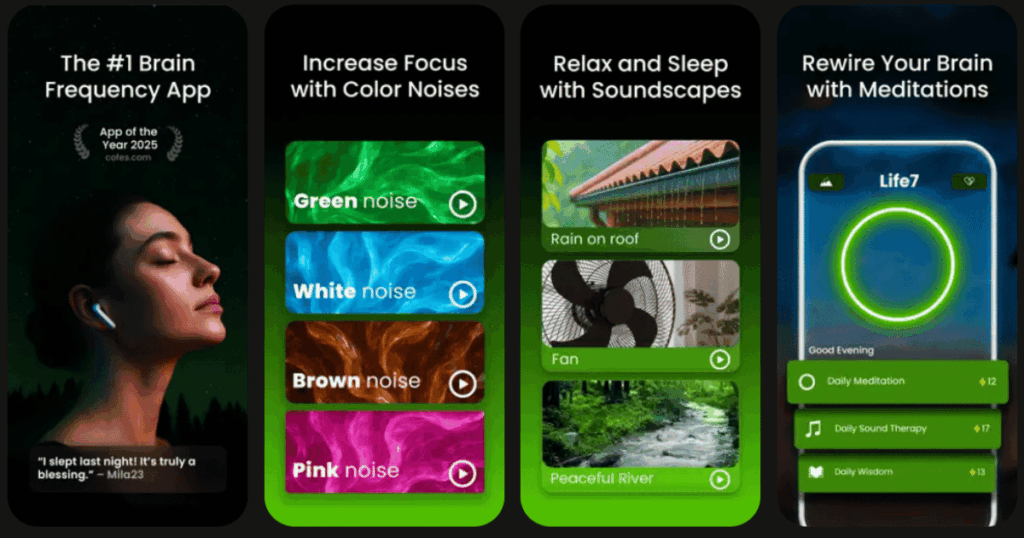
Life7 is the most complete mental wellness app I have come across. It packs everything you need to sleep better, reduce stress, and feel calmer into one easy-to-use package.
What makes this app special is its huge library of content. You get guided meditations for beginners and advanced users alike. There are sleep stories for adults and kids, breathing exercises, and even panic attack relief sessions. The app also includes unique features like binaural beats, solfeggio frequencies, and 8D audio that you won’t find anywhere else.
Life7 has been featured in over 1,200 editorial mentions. Users have logged more than 312 million meditation minutes on the platform!
Key Features:
- CBT therapy, hypnotherapy, and vagus nerve stimulation techniques all in one app
- Backdrop Mode lets you mix soundscapes with meditations and sleep stories
- Daily sessions including meditation, music therapy, and wisdom content that refresh every day
What I like: I love how Life7 covers every aspect of mental wellness without needing multiple apps. The gamified approach keeps me coming back. You earn XP and unlock premium soundscapes as you complete sessions. The variety of sleep sounds is incredible too. From green noise and white noise to brown and pink noise, there is something for every preference. The daily check-ins help me track my mood and stay consistent with my practice.
What I don’t like: The free content is somewhat limited. To access the full library and best features, you need a subscription. This might frustrate users who want more before committing.
Pricing: 7-day free trial available. Weekly, monthly, and yearly plans with frequent special offers.
Platforms: iOS and Android
#2. Headspace – Best for Beginners Learning Meditation
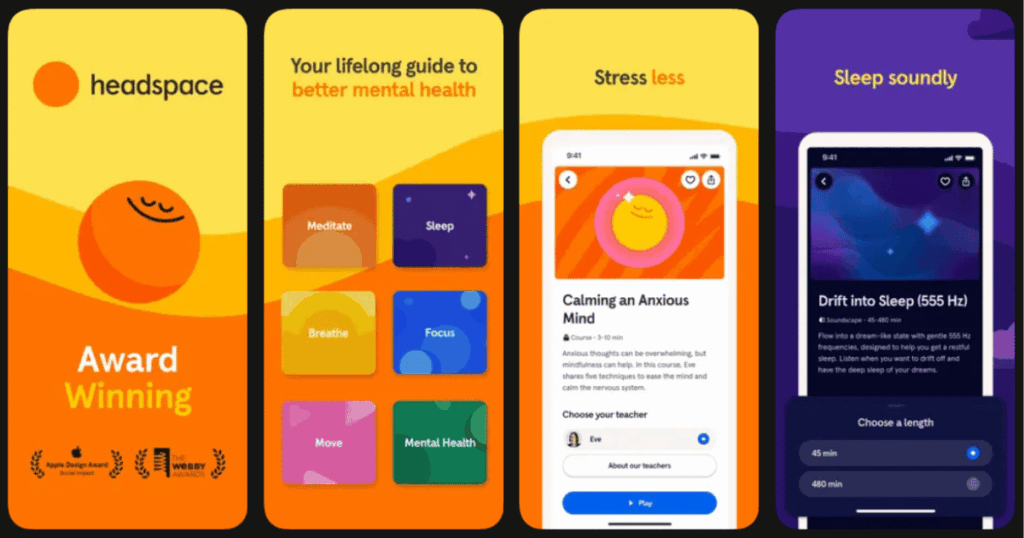
Headspace is perfect if you have never tried meditation before. The app holds your hand through every step of the learning process. There is no judgment and no confusing philosophy. Just simple, clear instructions to help calm your mind.
When you first open the app, it asks what you want help with. Whether it is stress, sleep, focus, or anxiety, Headspace creates a custom path for you. The structured courses build your skills over time. You do not have to figure out which meditation to do. The app lines them up in a thoughtful order for you.
Key Features:
- Progressive courses that teach meditation fundamentals step by step
- Sleepcasts and wind-down content for better rest
- Focus music playlists and movement exercises for mind-body wellness
What I like: The animations and design are friendly and inviting. It feels like learning from a caring teacher rather than a cold app. The beginner courses are outstanding. Bite-sized meditations fit into even the busiest schedules. I appreciate how the app builds long-term skills rather than just offering quick fixes.
What I don’t like: All the good content sits behind a paywall. There is no substantial free tier to explore before subscribing. The app can also feel repetitive since it uses the same few teachers throughout.
Pricing: Free trial available. Monthly and yearly subscription options.
Platforms: iOS and Android
#3. Calm – Best for Sleep Improvement and Relaxation
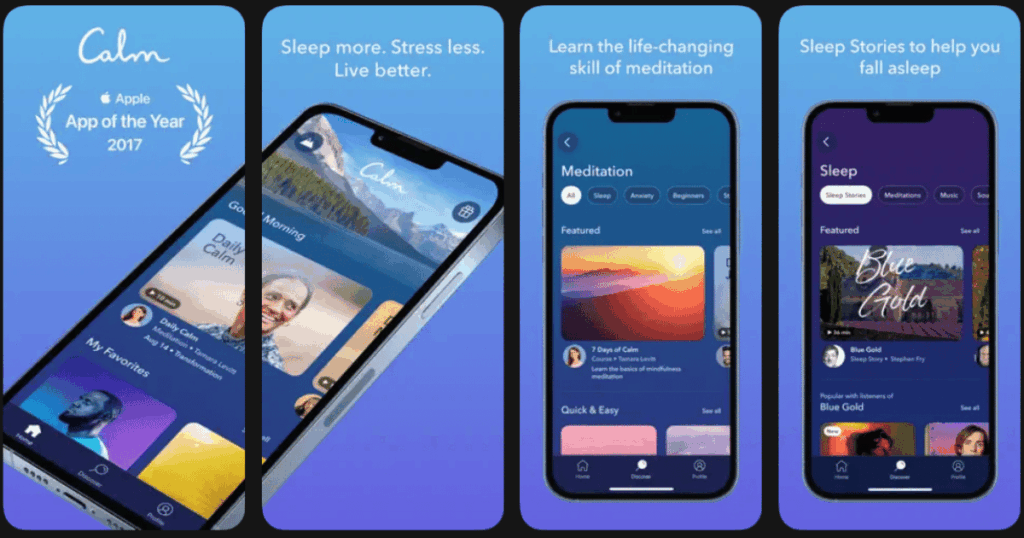
Calm shines brightest when it comes to sleep. If you struggle to fall asleep at night, this app might become your new best friend. The Sleep Stories feature offers bedtime tales narrated by celebrities like Matthew McConaughey and Idris Elba.
Beyond sleep, Calm provides guided meditations, breathing exercises, and a huge music library. The app has a beautiful nature-focused design that feels peaceful the moment you open it. Daily sessions help you build a consistent mindfulness habit.
Key Features:
- Celebrity-narrated Sleep Stories that lull you into dreamland
- Daily Calm sessions with a new mindful theme each day
- Extensive library of relaxing music and nature soundscapes
What I like: The variety of content is impressive. There is something for every mood and need. The kids section is fantastic for families. The nature backgrounds and real-world imagery create a calming atmosphere. Calm updates regularly with fresh content so things never get stale.
What I don’t like: The app can feel overwhelming at first. There is no defined starting point, so you might wander around not knowing where to begin. Many meditations seem geared toward people who already know the basics.
Pricing: Free trial available. Monthly and yearly subscription options with lifetime option.
Platforms: iOS and Android
#4. Finch – Best for Gamified Self-Care Habits
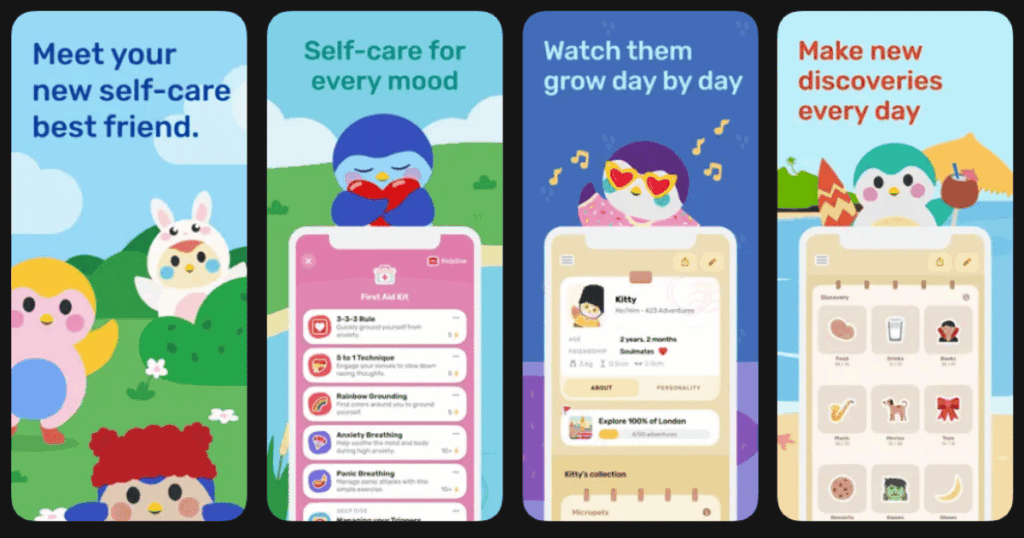
Finch makes self-care feel like a game rather than a chore. You adopt an adorable virtual pet bird and help it grow by completing real-life wellness tasks. As you take care of yourself, your Finch levels up and goes on little adventures.
The app prompts you to do small, manageable things each day. Write down how you feel. Do a breathing exercise. Set an intention. As you complete these, you earn rewards and watch your bird discover new things.
Key Features:
- Virtual pet companion that grows as you complete self-care goals
- Mood journaling and reflection tools to track your emotional state
- Guided breathing exercises and personalized wellness activities
What I like: This app makes self-care fun and rewarding. I actually look forward to checking in. The gamification works brilliantly for building lasting habits. The community features let you connect with friends on similar journeys. Most importantly, it never feels preachy or overwhelming.
What I don’t like: The cute approach might not appeal to everyone. Some adults may find the virtual pet concept too childish for their taste. The gamification style of self-care is not for everyone.
Pricing: Free with many features available. Optional Finch Plus upgrade for advanced tools.
Platforms: iOS and Android
#5. Insight Timer – Best for Free Guided Meditation Library
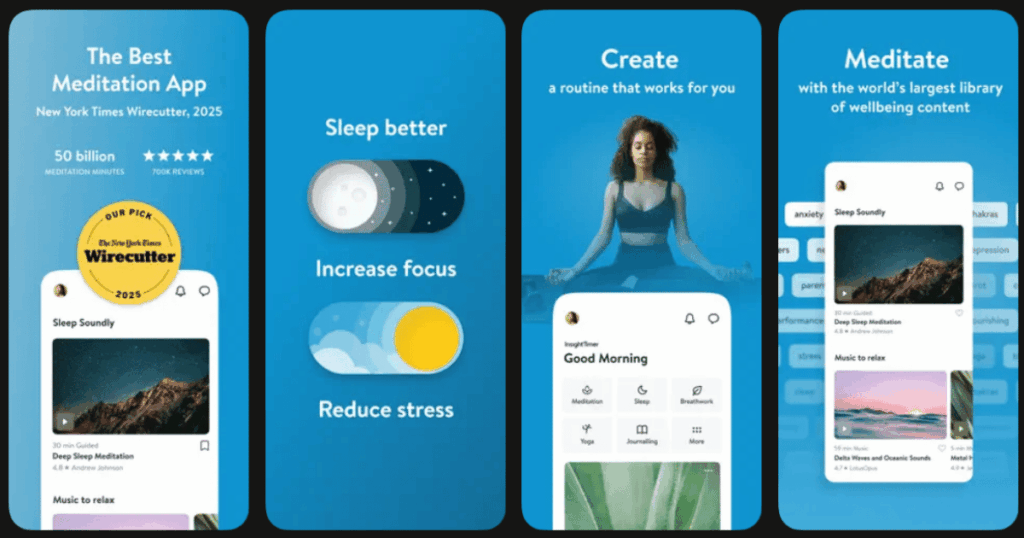
Insight Timer offers the biggest free meditation library you will find anywhere. With over 200,000 guided meditations from more than 17,000 teachers, you could meditate for months without repeating anything.
The app covers every style of meditation imaginable. Buddhist mindfulness, Kundalini yoga, walking meditation, and many others. Live events happen every hour where you can join group sessions and connect with teachers in real time.
Key Features:
- Massive library of 200,000+ free guided meditations
- Live meditation and yoga events throughout the day
- Community features connecting millions of meditators worldwide
What I like: The amount of free content is truly unmatched. You can explore for months without spending a penny. The variety of teachers and styles means you can always find something fresh. The community aspect adds accountability and connection to your practice.
What I don’t like: The app can feel cluttered and hard to navigate. With so much content, finding exactly what you need takes effort. Some courses are only available with a premium subscription.
Pricing: Free for the vast library. Optional premium subscription for advanced features.
Platforms: iOS and Android
#6. Daylio – Best for Mood Tracking Without Writing
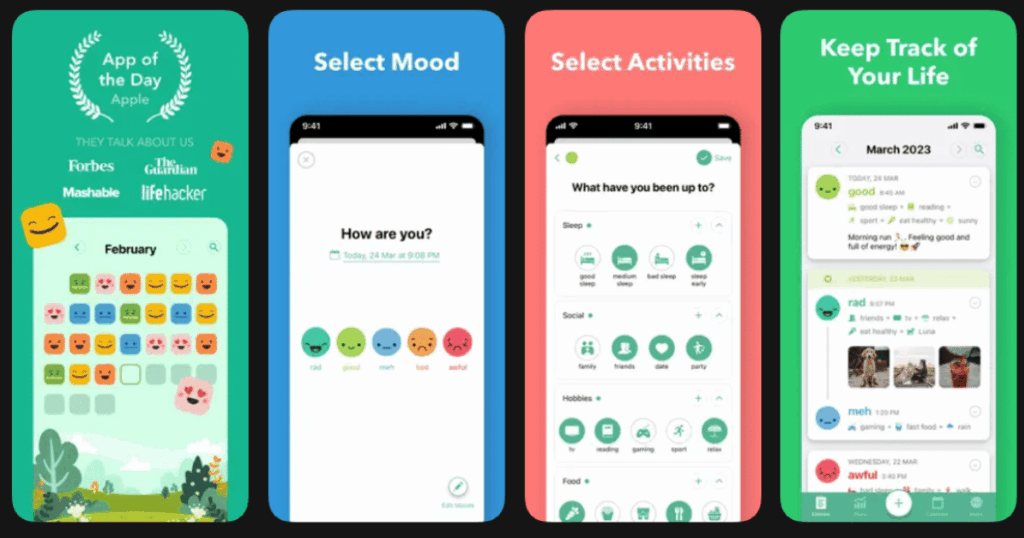
Daylio is perfect for people who want to track their mental health without typing paragraphs. You simply tap an emoji that matches your mood and select activities you did. That is it. Two taps and you have logged your day.
Over time, the app reveals patterns in your life. You will see which activities boost your mood and which bring you down. The visual statistics turn your emotional data into actionable insights.
Key Features:
- One-tap mood tracking with customizable emoji options
- Activity logging to connect daily habits with emotional states
- Visual charts and Year in Pixels display for spotting patterns
What I like: The simplicity is genius. Even on my worst days, I can manage two taps to log how I feel. The statistics have helped me identify triggers I never noticed before. Privacy is strong too. All data stays on my device. Nobody else can access my entries.
What I don’t like: If you prefer detailed journaling, this might feel too basic. The app focuses on quick check-ins rather than deep reflection. Some advanced stats require the premium version.
Pricing: Free version available. Premium unlocks advanced features for monthly or yearly fee.
Platforms: iOS and Android
#7. Fabulous – Best for Building Healthy Routines
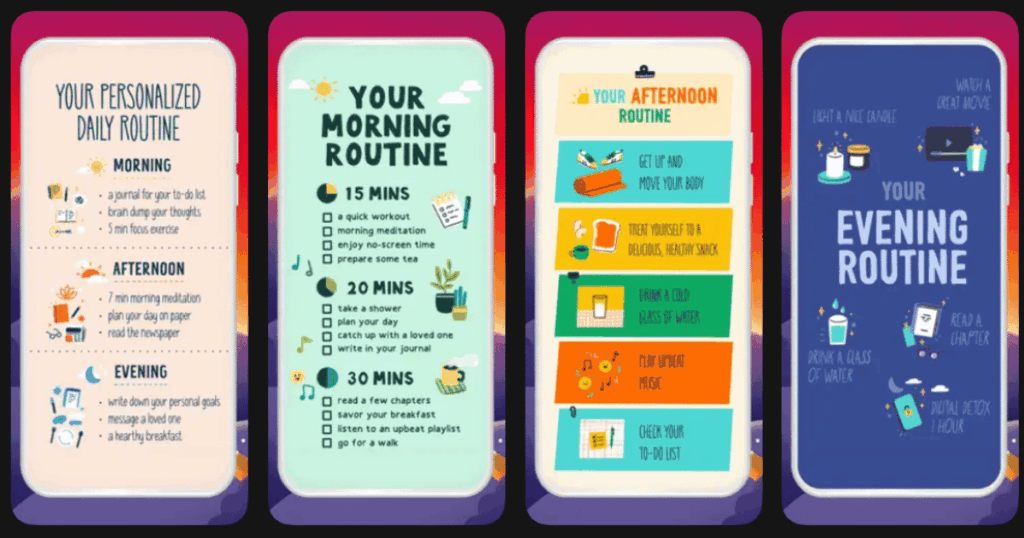
Fabulous was born at Duke University’s Behavioral Economics Lab. It uses real science to help you build habits that actually stick. The app focuses on creating structured morning and evening routines that transform your life.
You will choose a journey like sleeping better or increasing productivity. Then Fabulous breaks your goal into small daily steps. You receive coaching letters filled with insights and encouragement along the way.
Key Features:
- Science-based habit building developed with behavioral psychologists
- Personalized journeys and challenges for specific wellness goals
- Daily coaching sessions covering topics from anxiety to productivity
What I like: The gradual approach works. You start with something tiny like drinking water and build from there. The coaching letters feel personal and motivating. Live challenges connect you with a global community working toward similar goals.
What I don’t like: The onboarding asks many questions before you can explore the app. The pricing can be confusing. Some users find the design too busy and overwhelming for a wellness app.
Pricing: Free trial available. Yearly subscription for full access.
Platforms: iOS and Android
#8. Aloe Bud – Best for Gentle Daily Reminders
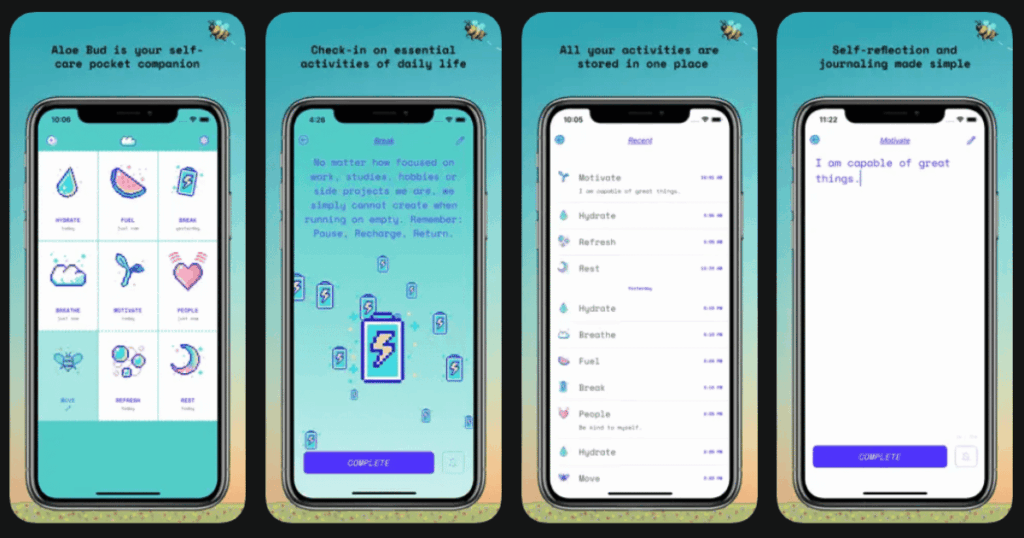
Aloe Bud sends friendly nudges to help you remember basic self-care. Unlike apps that shame you for missing goals, this one uses encouragement and kindness. The notifications feel like texts from a caring friend.
You can set reminders for anything. Hydrate, breathe, take medication, move your body, or connect with loved ones. The charming pixel art design makes the whole experience feel warm and welcoming.
Key Features:
- Customizable push notification reminders for self-care tasks
- Personal activity log to celebrate tiny victories
- Journal and reflection prompts for deeper self-awareness
What I like: The gentle approach is refreshing. There is no guilt or shame when I miss something. The pixel art style brings a smile to my face. All my data stays private on my device. This is ideal for people who forget basic self-care due to busy schedules or mental health challenges.
What I don’t like: The app is intentionally minimal. If you want deep mood tracking, guided meditation, or detailed analytics, you will need something else. It focuses on basics rather than advanced wellness tools.
Pricing: Free with limited features. Optional premium for expanded customization.
Platforms: iOS (Android availability may be limited)
#9. Shine – Best for Inclusive Self-Care Content
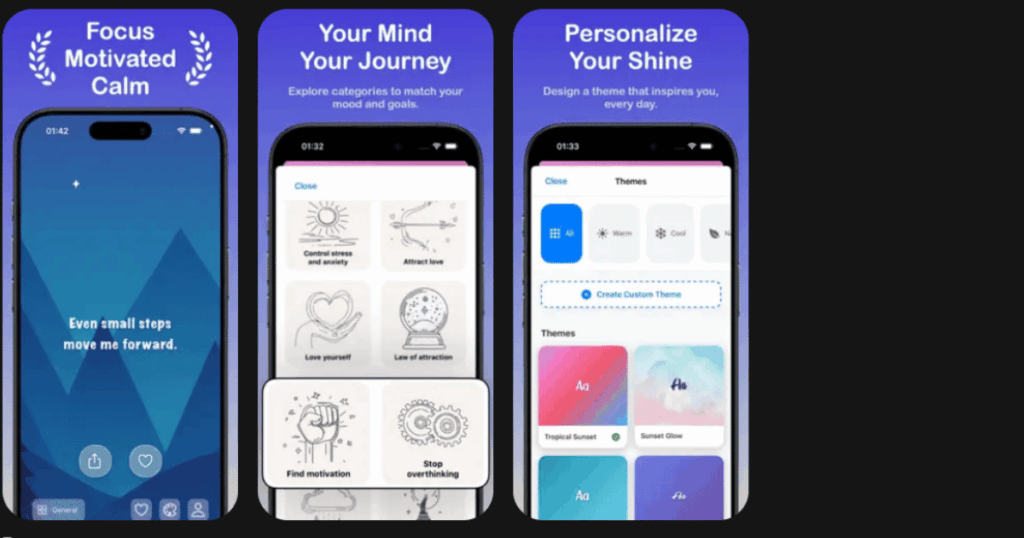
Shine was built specifically to make mental health care more accessible for everyone. The app features content created by diverse experts who understand the unique challenges different communities face.
You get daily motivation, audio meditations, self-care courses, and community support. Weekly challenges keep things fresh. Discussion prompts let you share with others and receive real-time support.
Key Features:
- Daily audio motivation and meditation sessions
- Content created by diverse BIPOC counselors and experts
- Community features for sharing and supporting one another
What I like: Representation matters in mental health. Seeing experts who look like me and understand my experiences makes the content more meaningful. The app updates frequently with fresh content. Seven-day challenges keep me engaged over time.
What I don’t like: Some features require a subscription to access. The focus on specific communities may not resonate with everyone. The app could use more variety in meditation styles.
Pricing: Free trial available. Monthly and yearly subscription options.
Platforms: iOS and Android
Are Self-Care Apps Actually Effective?
Yes, research supports the benefits of self-care apps. Studies show that using meditation apps consistently can reduce stress by significant amounts. One study found that mobile meditation programs led to a 24% reduction in stress levels.
The key word here is consistently. Apps work best when you use them regularly over time. They cannot replace professional mental health care for serious conditions. But they are excellent tools for building healthy habits and managing everyday stress.
Think of self-care apps as supplements to a healthy lifestyle. They support your wellbeing between therapy sessions or when professional help is not available. Many therapists actually recommend these apps to their clients.
How Do I Choose the Right Self-Care App for Me?
Start by identifying your main goal. Do you want to sleep better? Reduce anxiety? Build healthy habits? Different apps excel at different things.
Consider your personality too. Some people love gamification and virtual pets. Others prefer minimalist designs with no distractions. Try free versions or trials before committing to a subscription.
Think about your schedule as well. If you only have three minutes a day, choose an app with short sessions. If you can dedicate twenty minutes, look for deeper meditation courses.
Finally, check the pricing model. Some apps offer generous free versions. Others lock most content behind paywalls. Make sure the pricing works for your budget long-term.
Can Self-Care Apps Replace Therapy?
No, self-care apps should not replace professional mental health care. If you are experiencing serious depression, anxiety, trauma, or other mental health conditions, please seek help from a licensed therapist or counselor.
That said, apps can be valuable companions alongside therapy. They help you practice skills between sessions. They offer support during moments when you cannot reach a therapist. Many mental health professionals actively encourage clients to use wellness apps as part of their treatment plan.
Think of these apps as one tool in your mental health toolkit. They work best when combined with other healthy practices like exercise, sleep hygiene, social connection, and professional support when needed.
Self-care is not selfish. Taking care of your mental health helps you show up better for everyone in your life. Whether you choose Life7 or another app from this list, the most important step is starting. Download one today and begin your wellness journey!