9 Best Emotion Labeling Apps For Your Phone
| App Name | Best For | Key Features | AC Rating | Pricing |
|---|---|---|---|---|
| Life7 | All-in-one mental wellness | Mood tracking, binaural beats, CBT tools, sleep stories | 4.8/5 | Free trial, then subscription plans available |
| How We Feel | Science-based emotion vocabulary | 144 emotion words, Yale research-backed, pattern insights | 4.7/5 | Free |
| Daylio | Quick wordless journaling | One-tap mood logging, activity tracking, statistics | 4.6/5 | Free version, premium subscription available |
| Moodfit | CBT-based mental fitness | Cognitive therapy tools, breathing exercises, medication tracking | 4.5/5 | Free version, premium from monthly to yearly |
| Finch | Gamified self-care | Virtual pet companion, mood check-ins, guided journaling | 4.7/5 | Free version, Finch Plus available |
| Reflectly | AI-guided journaling | AI prompts, mood tracking, daily challenges | 4.4/5 | Free version, premium subscription available |
| Pixels | Visual mood tracking | Year in Pixels chart, customizable colors, detailed statistics | 4.5/5 | Free with optional premium features |
| eMoods | Bipolar and mood disorder tracking | Symptom logging, medication tracking, doctor reports | 4.6/5 | Free with premium options |
| Moodistory | Calendar-based emotion tracking | Interactive calendar views, customizable scale, Apple Health sync | 4.5/5 | Free version, premium available |
#1. Life7 – Best for All-in-One Mental Wellness
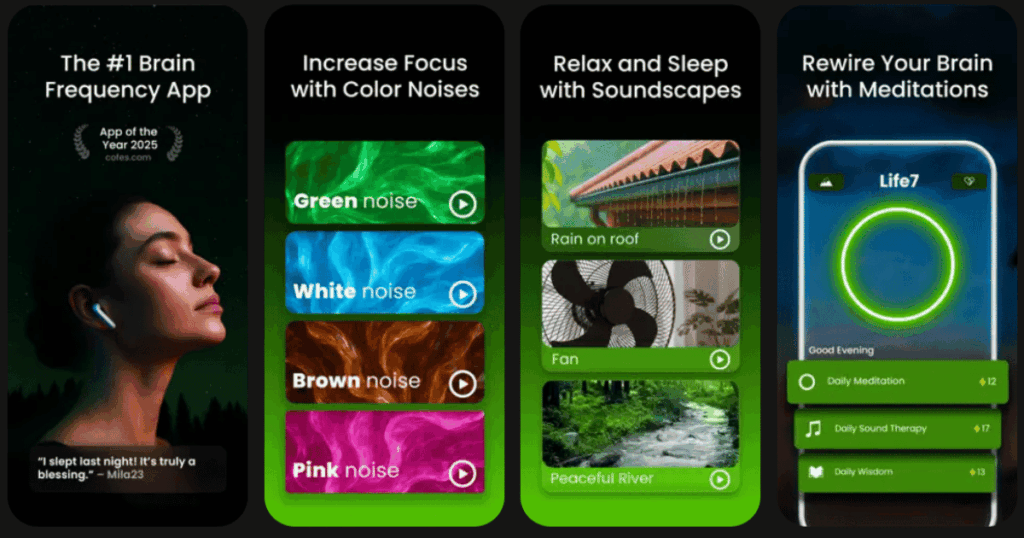
Life7 is the top pick for anyone serious about their emotional health. This app goes beyond simple mood tracking. It offers a complete mental wellness toolkit in one place.
With over 312 million meditation minutes logged and 1200+ editorial mentions, Life7 has proven itself. You get access to binaural beats, solfeggio frequencies, and brain wave music. The app includes guided meditations, sleep stories, and CBT tools. It also offers breathing exercises and SOS sessions for panic attacks.
The mood tracking feature lets you save thoughts and track your emotional patterns daily. You can build streaks and share progress with friends. The gamified approach makes wellness fun by letting you earn XP as you meditate.
Key Features:
- Comprehensive audio library with green noise, white noise, brown noise, and various frequencies
- Daily check-ins including meditation, music therapy, and wisdom sessions
- CBT, hypnotherapy, and vagus nerve stimulation for deep emotional healing
What I like: I really appreciate how Life7 combines so many wellness tools into one app. The variety is incredible. From 8D sleep audio to Buddhist sound therapy, there is something for every mood. The backdrop mode is genius. It lets you mix soundscapes with meditations or sleep stories. The gamification keeps me coming back, and the streak feature helps build habits.
What I don’t like: The free content is somewhat limited. You really need the subscription to unlock the full experience. This might be a barrier for some users who want to try everything before committing.
Pricing: 7-day free trial available. Frequent special offers with weekly, monthly, and yearly subscription options.
Platforms: iOS and Android
#2. How We Feel – Best for Science-Based Emotion Vocabulary
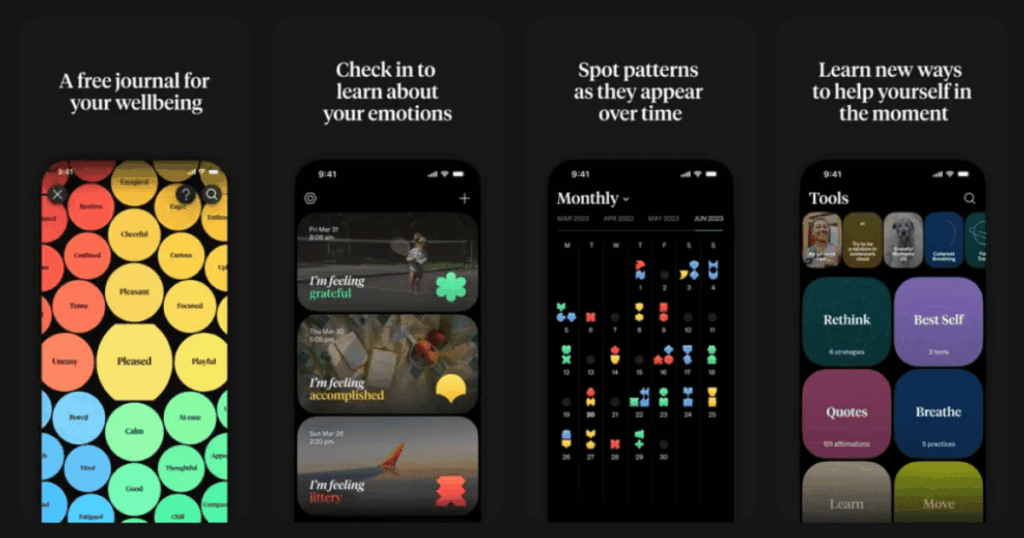
How We Feel was created by Yale scientists and the Pinterest co-founder. It is designed to help you find the exact words for your feelings. The app features a mood meter with 144 different emotion words.
This app is all about building your emotional vocabulary. Research shows that naming your emotions precisely helps you manage them better. How We Feel guides you through check-ins and helps you spot patterns over time.
Key Features:
- Mood Meter tool based on decades of Yale research on emotional intelligence
- Integration with Apple Health to track how sleep and exercise affect your emotions
- Sharing feature that lets you connect with friends on your emotional wellness journey
What I like: The scientific backing of this app really stands out to me. It was developed by actual researchers at Yale who study emotions for a living. The 144-word vocabulary is perfect for those moments when “sad” or “happy” just does not cut it. I also love that it is completely free with no hidden paywalls.
What I don’t like: The app could use more guidance on what to do with your emotions once you label them. It is great for awareness but light on regulation strategies.
Pricing: Free
Platforms: iOS and Android
#3. Daylio – Best for Quick Wordless Journaling

Daylio is perfect if you hate typing but still want to track your emotions. You can log your entire day in just two taps. Pick a mood emoji and select your activities. Done!
The app turns your data into beautiful charts and statistics. Over time, you will see patterns emerge. Maybe you feel better on days you exercise. Or perhaps certain activities bring you down. Daylio makes these connections visible.
Key Features:
- Create entries without writing a single word using emoji-based mood selection
- Advanced statistics that show correlations between activities and moods
- Full customization of moods, activities, and color themes
What I like: The simplicity of Daylio is what keeps me using it. Some days I just do not want to write. Being able to log my mood with a couple of taps means I actually stick with it. The correlation stats have helped me realize that my mood dips on days I skip walks.
What I don’t like: The free version is quite limited. You need premium to unlock yearly stats and unlimited moods. It can feel restrictive if you are not ready to pay.
Pricing: Free basic version. Premium subscription available for monthly, yearly, or lifetime purchase.
Platforms: iOS and Android
#4. Moodfit – Best for CBT-Based Mental Fitness

Moodfit treats your mental health like physical fitness. It provides a gym-like experience for your mind. The app includes CBT thought records, breathing exercises, gratitude journaling, and more.
Named Best Overall Mental Health App multiple years by Verywell Mind, Moodfit stands out for its comprehensive approach. You can track moods, medications, sleep, and nutrition all in one place. The CBT tools help you identify and reframe negative thinking patterns.
Key Features:
- CBT thought recording tool to identify cognitive distortions and build healthy thinking habits
- Medication tracking with reminders and mood effect monitoring
- Gratitude journal and mindfulness meditation built right into the app
What I like: Moodfit offers incredible value even in the free version. The CBT tools are particularly helpful for challenging negative thoughts. I appreciate that it combines so many tracking features. Seeing how my sleep affects my mood has been eye-opening.
What I don’t like: The app can be buggy at times. Some users report freezing issues, especially with poor internet connection. This can be frustrating when trying to log entries quickly.
Pricing: Generous free version available. Premium subscription for additional features.
Platforms: iOS and Android
#5. Finch – Best for Gamified Self-Care
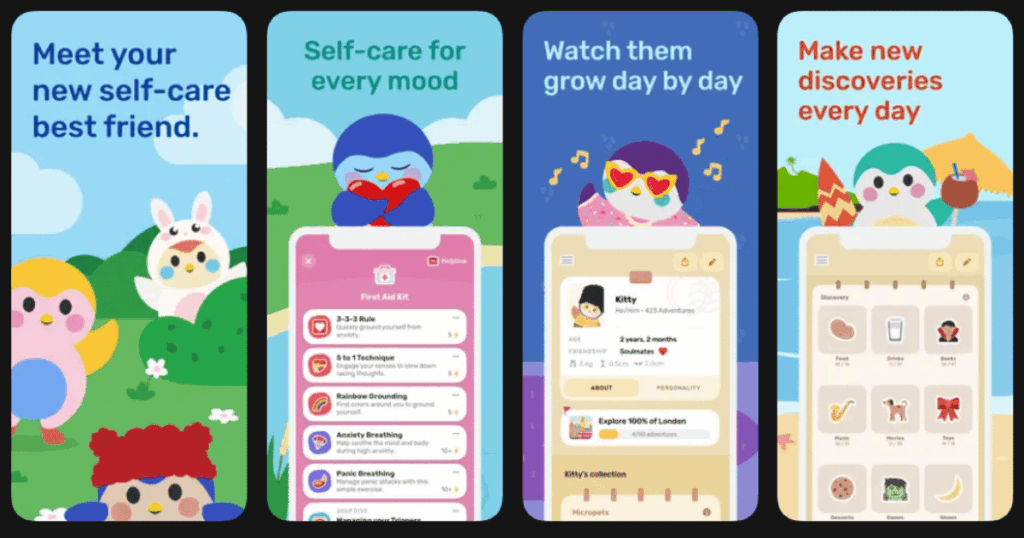
Finch turns self-care into an adorable game. You raise a virtual bird by taking care of yourself. Complete daily goals and your Finch grows, goes on adventures, and unlocks new outfits.
This app is perfect for people who struggle with motivation. The cute pet adds a layer of accountability. You are not just doing self-care for yourself. You are helping your little bird thrive too.
Key Features:
- Virtual pet companion that grows based on your self-care activities
- Mood check-ins throughout the day with trend tracking over time
- Breathing exercises, guided journaling, and mental health quizzes
What I like: Finch makes self-care feel rewarding rather than like a chore. The pet mechanic is surprisingly effective at keeping me engaged. I also appreciate the non-judgmental tone. If I miss a day, my bird does not suffer. The app just gently welcomes me back.
What I don’t like: Recent updates have focused heavily on cosmetics and gamification rather than core self-care features. Some users feel the app is becoming more about collecting outfits than emotional wellness.
Pricing: Robust free version. Finch Plus subscription for extra features.
Platforms: iOS and Android
#6. Reflectly – Best for AI-Guided Journaling
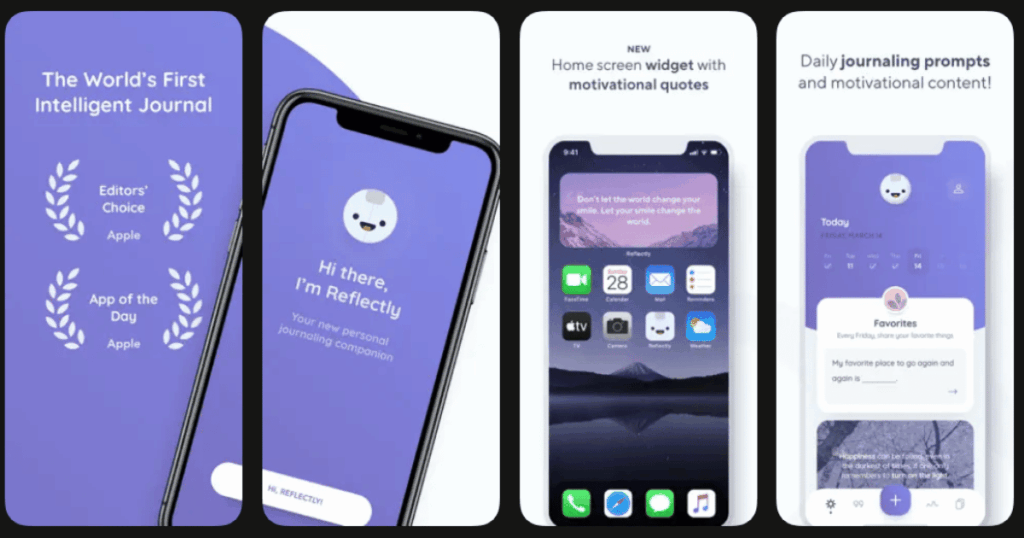
Reflectly uses artificial intelligence to guide your daily reflections. The AI asks you questions about your day and helps you identify patterns in your thinking.
The app makes journaling easier for people who struggle with blank pages. The prompts get you started. The mood tracking builds awareness over time. It is designed to help you develop a consistent reflection habit.
Key Features:
- AI-powered prompts that adapt based on your mood and previous entries
- Mood tracking with visual graphs showing your emotional trends
- Daily challenges like positive affirmations or gratitude exercises
What I like: The guided nature of Reflectly takes the pressure off journaling. I do not have to figure out what to write. The app asks me questions and I just answer. The voice-to-text feature is great for capturing thoughts quickly.
What I don’t like: There is a significant price difference between iOS and Android versions which feels unfair. Also, the premium upgrade mostly just removes ads without adding much extra value.
Pricing: Free version available. Premium varies by platform from yearly to monthly options.
Platforms: iOS and Android
#7. Pixels – Best for Visual Mood Tracking
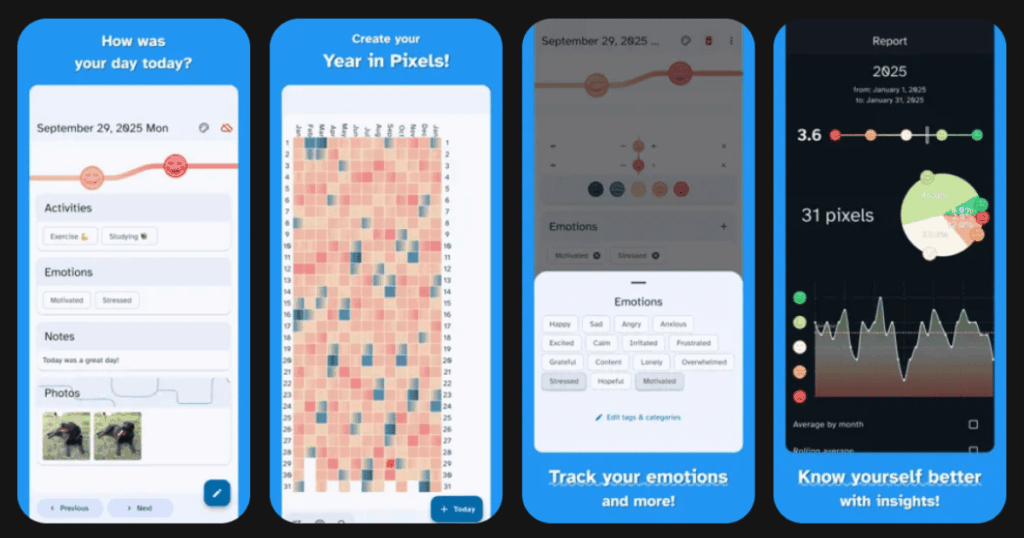
Pixels is based on the popular “Year in Pixels” journaling trend. Each day becomes a colored pixel on a grid. Over time, you create a beautiful visual map of your year.
The app is created by a solo developer and respects your privacy. Your data stays on your device. Pixels is highly customizable and works for more than just mood tracking. You can track habits, gratitude, and more.
Key Features:
- Year in Pixels visualization that shows your entire year at a glance
- Customizable color palette and categories for different tracking needs
- Reports and statistics to understand your emotional patterns
What I like: The visual nature of Pixels appeals to me. Seeing my year laid out in colors is both beautiful and insightful. I love that there are no intrusive ads during logging. The developer clearly cares about user experience over profit.
What I don’t like: The app is quite basic compared to others. If you want advanced features like guided meditations or breathing exercises, you will need a different app.
Pricing: Free with optional support purchases.
Platforms: iOS and Android
#8. eMoods – Best for Bipolar and Mood Disorder Tracking
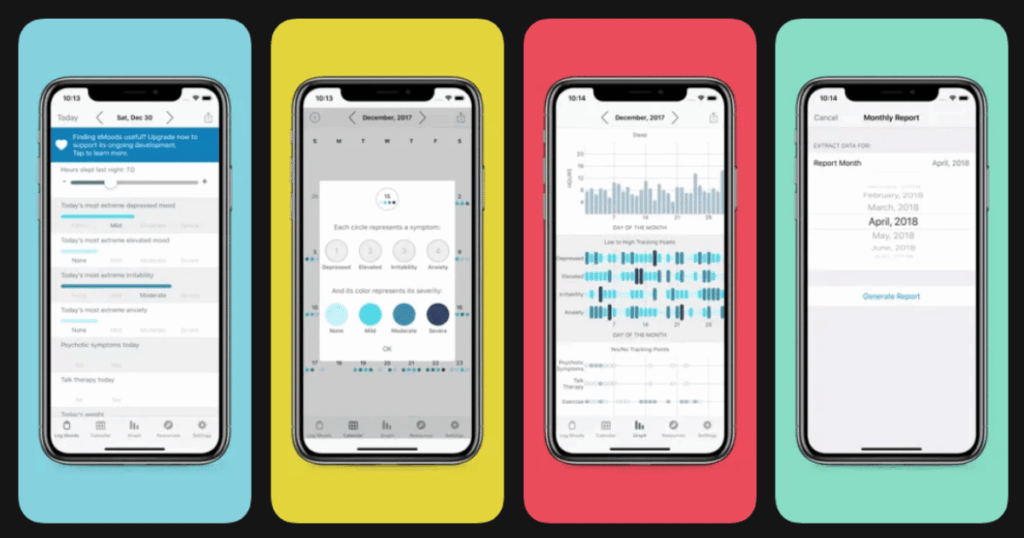
eMoods is designed specifically for people managing bipolar disorder or other mood conditions. It lets you track highs, lows, sleep, and medications all in one place.
The standout feature is the ability to generate reports for your doctor. No more trying to remember how you felt over the past month. Just email the report before your appointment.
Key Features:
- Track multiple mood states including elevated, depressed, and irritable in a single day
- Medication and sleep tracking with detailed history logs
- Printable reports designed for sharing with healthcare providers
What I like: eMoods understands that mood disorders are complex. Other apps force you to pick one mood per day. eMoods knows you can feel depressed in the morning and elevated at night. The doctor report feature has made my appointments so much more productive.
What I don’t like: The interface looks dated compared to newer apps. It is functional but not pretty. Some users might prefer something more visually appealing.
Pricing: Free basic version with premium options for additional features.
Platforms: iOS, Android, and web browser
#9. Moodistory – Best for Calendar-Based Emotion Tracking
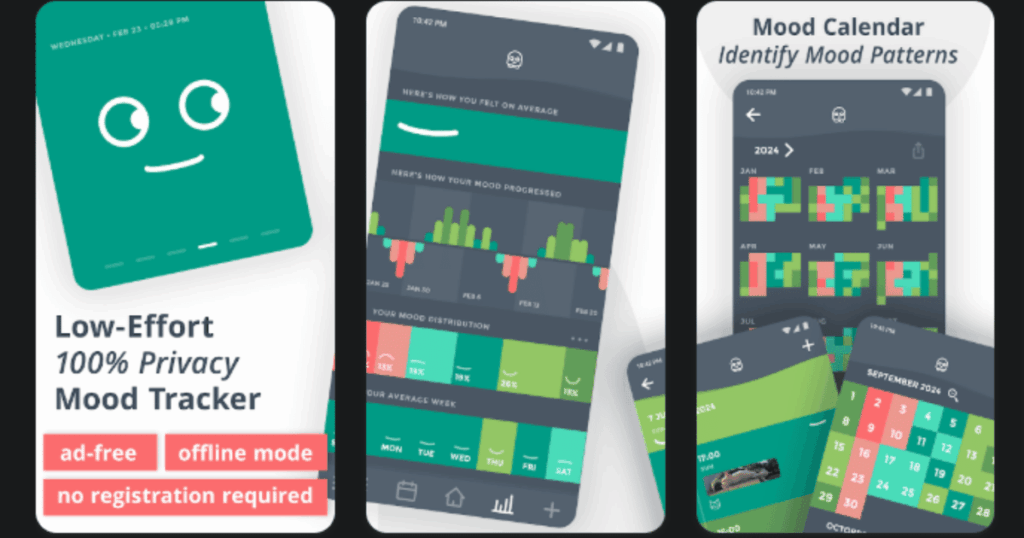
Moodistory presents your mood data in familiar calendar views. You see monthly and yearly spreads plus the classic Year in Pixels chart. The interactive design lets you tap any day to see your full entry.
The app connects with Apple Health to show how factors like sleep affect your emotions. You can customize everything from the mood scale to the color palette.
Key Features:
- Interactive calendar views showing monthly, yearly, and Year in Pixels perspectives
- Customizable mood scale from 2 to 11 points depending on your needs
- PDF export feature to save or share your mood history
What I like: The calendar view feels natural and intuitive. I already think about my life in terms of weeks and months. Moodistory fits that mental model perfectly. The Apple Health integration is genuinely useful for spotting connections between physical and emotional health.
What I don’t like: The app is iOS-only for the full experience. Android users miss out on the Apple Watch support and Health integration.
Pricing: Free version with premium available.
Platforms: iOS and Android
What is Emotion Labeling and Why Does It Matter?
Emotion labeling means putting words to what you feel. It sounds simple but it is actually a powerful skill. Neuroscience research shows that naming your emotions can reduce their intensity.
When you say “I feel frustrated” instead of just feeling bad, your brain processes the emotion differently. This is called affect labeling. It activates the prefrontal cortex which helps regulate emotional responses.
Apps make this practice easier by giving you emotion words to choose from. Many people have limited emotional vocabulary. They know “happy,” “sad,” and “angry.” But what about “content,” “melancholy,” or “irritated”? These nuances matter for understanding yourself.
How Do Emotion Labeling Apps Help with Mental Health?
These apps help you become more aware of your emotional patterns. You might notice you always feel anxious on Sundays. Or that your mood dips after certain activities. This awareness is the first step to change.
The apps also create a record you can share with therapists or doctors. Instead of trying to remember how you felt, you have data. This makes conversations about your mental health more productive.
Many apps include additional tools like breathing exercises or CBT techniques. These go beyond awareness to active emotion regulation.
Which Emotion Labeling App Should I Choose?
Your choice depends on your goals and preferences. If you want a complete wellness solution, Life7 offers the most features. For scientific credibility, How We Feel comes from Yale researchers. If you hate typing, Daylio lets you log moods without words.
For people managing mood disorders, eMoods is purpose-built for that need. If motivation is your struggle, Finch gamifies the experience. Visual thinkers might prefer Pixels or Moodistory with their calendar views.
Consider starting with free versions to find what clicks for you. The best app is the one you will actually use consistently.